
Judges 7:20
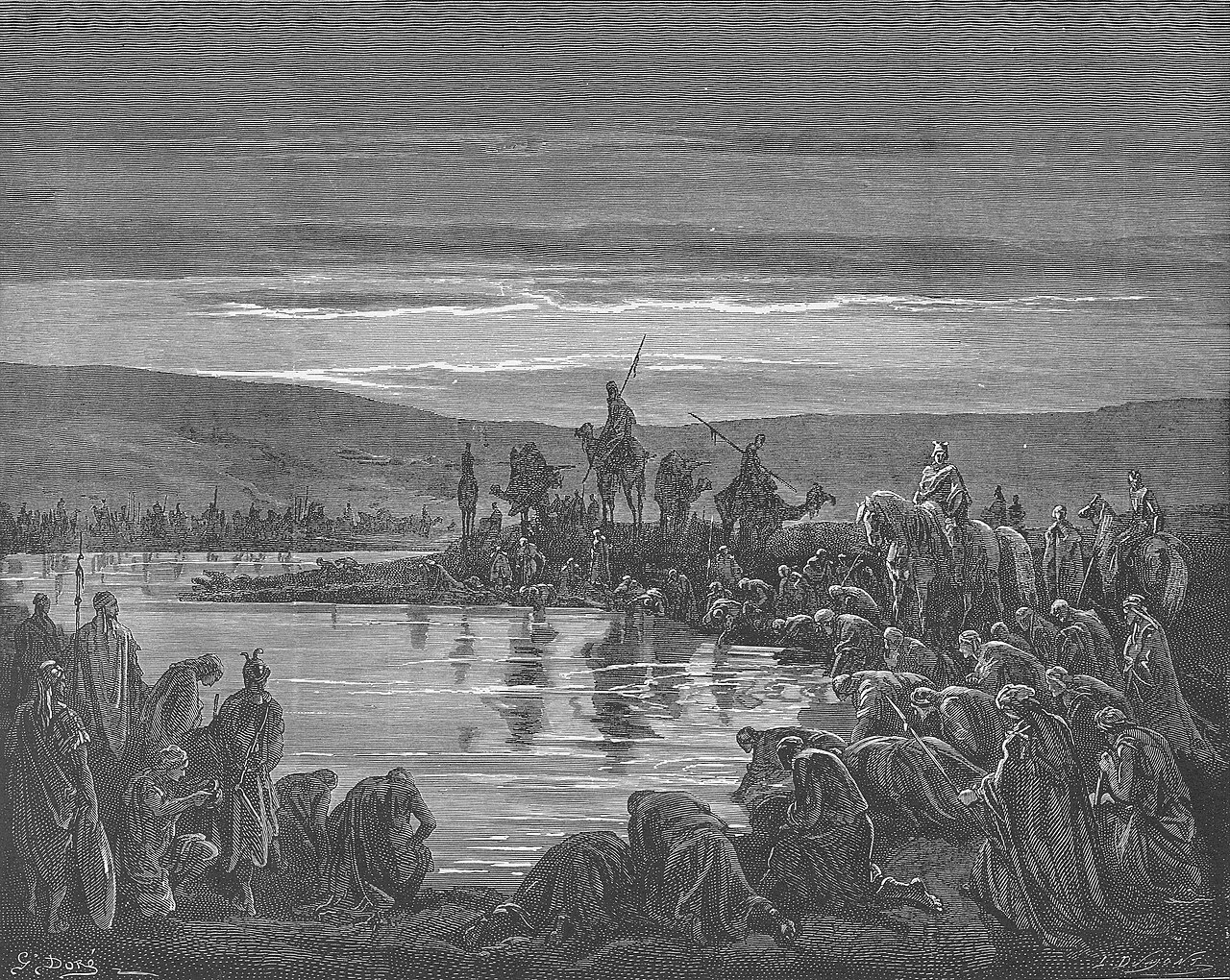
in Judges 7The three companies blew their horns and shattered their jars. Holding the torches in their left hands and the horns in their right hands, they shouted, “A sword for the LORD and for Gideon!”
BSB
The same verse in ASV and KJV ▾
ASV
And the three companies blew the trumpets, and brake the pitchers, and held the torches in their left hands, and the trumpets in their right hands wherewith to blow; and they cried, The sword of Jehovah and of Gideon.
KJV
And the three companies blew the trumpets, and brake the pitchers, and held the lamps in their left hands, and the trumpets in their right hands to blow withal: and they cried, The sword of the Lord, and of Gideon.
⋯
This verse in Judges 7
Commentary
7 notes on this verseFor the same reason was it that when Gideon was about to overcome the Midianites, he commanded three hundred men to take pitchers, and to hold lighted torches inside the pitchers, and trumpets in their right hands. Our predecessors have preserved the explanation received from the apostles, that the pitchers are our bodies, fashioned of clay, which do not know fear if they burn with the fervor of the grace of the Spirit, and bear witness to the passion of the Lord Jesus with a loud confession of the voice.
This site's exposition
the beginning of the middle
on Judges 7:19-21
The middle watch begins near midnight, just after the guard changed, so the sentries were the least settled and the camp was asleep. Israel divided the night into three watches, which is why Exodus 14:24 can speak of the morning watch. The three hundred break their jars, then "Each Israelite took his position around the camp" while Midian fled, the posture Moses called for at Exodus 14:13.
This site's exposition
shattered their jars
The cry of verse 18 now adds a sword. Adam Clarke pictures three hundred torches flaring at once on half-woken eyes, with the horns and the shout around them. Gregory the Dialogist reads the horns as preaching, the torches as miracles and the jars as frail bodies.
The record, by era
The Medieval Church1 voice
They go forth therefore to battle with trumpets, with lamps, and with pitchers. This, as we have said, was an unusual order of battle. They sounded with the trumpets, and the pitchers were held in their left hands. But lamps were placed within the pitchers; but, when the pitchers were broken, the lamps appeared, and by their flashing light the affrighted enemies are put to flight. By the trumpets is designated therefore the loud voice of preachers, by the lamps the brightness of their miracles, by the pitchers the frailness of their bodies.
The Puritans and the Awakening1 voice
And the three companies blew the trumpets, and brake the pitchers,....
The Nineteenth Century2 voices
Blew the trumpets, and brake the pitchers - How astonishing must the effect be, in a dark night, of the sudden glare of three hundred torches, darting their splendor, in the same instant, on the half-awakened eyes of the terrified Midianites, accompanied with the clangour of three hundred trumpets, alternately mingled with the thundering shout of חרב ליהוה ולגדעון chereb layhovah ulegidon, “A sword for the Lord and for Gideon!” Origen, in his ninth homily on this book, makes these three hundred men types of the preachers of the Gospel; their trumpets of the preaching of Christ crucified; and their lights or torches, of the holy conduct of righteous men.
A commentator
Jamieson, Fausset & Brown1802–1910
Commentary Critical and Explanatory on the Whole Bible (1871)
proposed
The sleepers started from their rest; not a blow was dealt by the Israelites; but the enemy ran tumultuously, uttering the wild, discordant cries peculiar to the Arab race.
The words behind it
18 Hebrew wordsEvery Hebrew word of this verse in the order it stands, with what it means and the door to its own study. The last column counts the times a word stands in the whole Bible: the rarer the word, the more the places it appears belong together.
| Hebrew | Sound | Meaning | Word study | In the Bible |
|---|---|---|---|---|
| וַֽ֠יִּתְקְעוּ | vaiyitkeu | and they gave a blast | H8628 → | 69 times |
| שְׁלֹ֨שֶׁת | sheloshet | [the] three | H7969 → | 432 times |
| הָרָאשִׁ֥ים | harashim | the companies | H7218 → | 599 times |
| בַּשּֽׁוֹפָרוֹת֮ | bashofarot | on the trumpets | H7782 → | 72 times |
| וַיִּשְׁבְּר֣וּ | vaiyishberu | and they broke | H7665 → | |
| הַכַּדִּים֒ | hakadim | the jars | H3537 → | 18 times |
| וַיַּחֲזִ֤יקוּ | vaiyachaziku | and they took hold | H2388 → | 291 times |
| בְיַד־ | veyad- | in [the] hand of | H3027 → | 1618 times |
| שְׂמאוֹלָם֙ | semolam | left their | H8040 → | 54 times |
| בַּלַּפִּדִ֔ים | balapidim | on the torches | H3940 → | 13 times |
| וּבְיַ֨ד־ | uveyad- | and in [the] hand of | H3027 → | 1618 times |
| יְמִינָ֔ם | yeminam | right their | H3225 → | 140 times |
| הַשּׁוֹפָר֖וֹת | hashofarot | the trumpets | H7782 → | 72 times |
| לִתְק֑וֹעַ | litkoa' | to give a blast | H8628 → | 69 times |
| וַֽיִּקְרְא֔וּ | vaiyikreu | and they called out | H7121 → | 733 times |
| חֶ֥רֶב | cherev | a sword | H2719 → | 413 times |
| לַֽיהוָ֖ה | layahweh | for Yahweh | H3068 → | 6520 times |
| וּלְגִדְעֽוֹן׃ | ulegidon | and for Gideon | H1439 → | 39 times |
וַֽ֠יִּתְקְעוּand they gave a blast
vaiyitkeuH8628 →69 times
שְׁלֹ֨שֶׁת[the] three
sheloshetH7969 →432 times
הָרָאשִׁ֥יםthe companies
harashimH7218 →599 times
בַּשּֽׁוֹפָרוֹת֮on the trumpets
bashofarotH7782 →72 times
וַיִּשְׁבְּר֣וּand they broke
vaiyishberuH7665 →
הַכַּדִּים֒the jars
hakadimH3537 →18 times
וַיַּחֲזִ֤יקוּand they took hold
vaiyachazikuH2388 →291 times
בְיַד־in [the] hand of
veyad-H3027 →1618 times
שְׂמאוֹלָם֙left their
semolamH8040 →54 times
בַּלַּפִּדִ֔יםon the torches
balapidimH3940 →13 times
וּבְיַ֨ד־and in [the] hand of
uveyad-H3027 →1618 times
יְמִינָ֔םright their
yeminamH3225 →140 times
הַשּׁוֹפָר֖וֹתthe trumpets
hashofarotH7782 →72 times
לִתְק֑וֹעַto give a blast
litkoa'H8628 →69 times
וַֽיִּקְרְא֔וּand they called out
vaiyikreuH7121 →733 times
חֶ֥רֶבa sword
cherevH2719 →413 times
לַֽיהוָ֖הfor Yahweh
layahwehH3068 →6520 times
וּלְגִדְעֽוֹן׃and for Gideon
ulegidonH1439 →39 times
A shaded row is a word that stands 400 times or fewer in the Bible.
The walk
8 stopsEach card is a verse this one points to, and under it the verses that one points to in turn. Where several paths arrive at the same place, that place is listed first: the text keeps returning to it.
Through
1 Corinthians 15:52in an instant, in the twinkling of an eye, at the last trumpet. For the trumpet will sound, the dead will be raised imperishable, and we will be changed.
it leads to
- Matthew 24:31
And He will send out His angels with a loud trumpet call, and they will gather His elect from the four winds, from one end of the heavens to the other.
Reached by 2 separate paths from here.
- 1 Thessalonians 4:16–17
For the Lord Himself will descend from heaven with a loud command, with the voice of an archangel, and with the trumpet of God, and the dead in Christ will be the first to…
- John 5:28
Do not be amazed at this, for the hour is coming when all who are in their graves will hear His voice
- Matthew 24:31
Through
2 Corinthians 4:7Now we have this treasure in jars of clay to show that this surpassingly great power is from God and not from us.
it leads to
- 2 Corinthians 3:5–6
Not that we are competent in ourselves to claim that anything comes from us, but our competence comes from God.
- 2 Corinthians 5:1
Now we know that if the earthly tent we live in is dismantled, we have a building from God, an eternal house in heaven, not built by human hands.
- Ephesians 2:8–9
For it is by grace you have been saved through faith, and this not from yourselves; it is the gift of God,
- 1 Corinthians 1:28
He chose the lowly and despised things of the world, and the things that are not, to nullify the things that are,
- Colossians 2:3
in whom are hidden all the treasures of wisdom and knowledge.
- 2 Corinthians 3:5–6
Where this verse is studied
On this page
About Judges
Who and where
1 name in this verse with a page on the site.
This page draws on Adam Clarke, Commentary on the Bible; Albert Barnes, Notes on the Old Testament; Ambrose of Milan, On the Holy Spirit 1.143-46; Gregory the Dialogist, Morals on the Book of Job 30.25; Jamieson, Fausset & Brown, Commentary Critical and Explanatory on the Whole Bible and John Gill, Exposition of the Old Testament (1748-1763).