
Judges 19:22
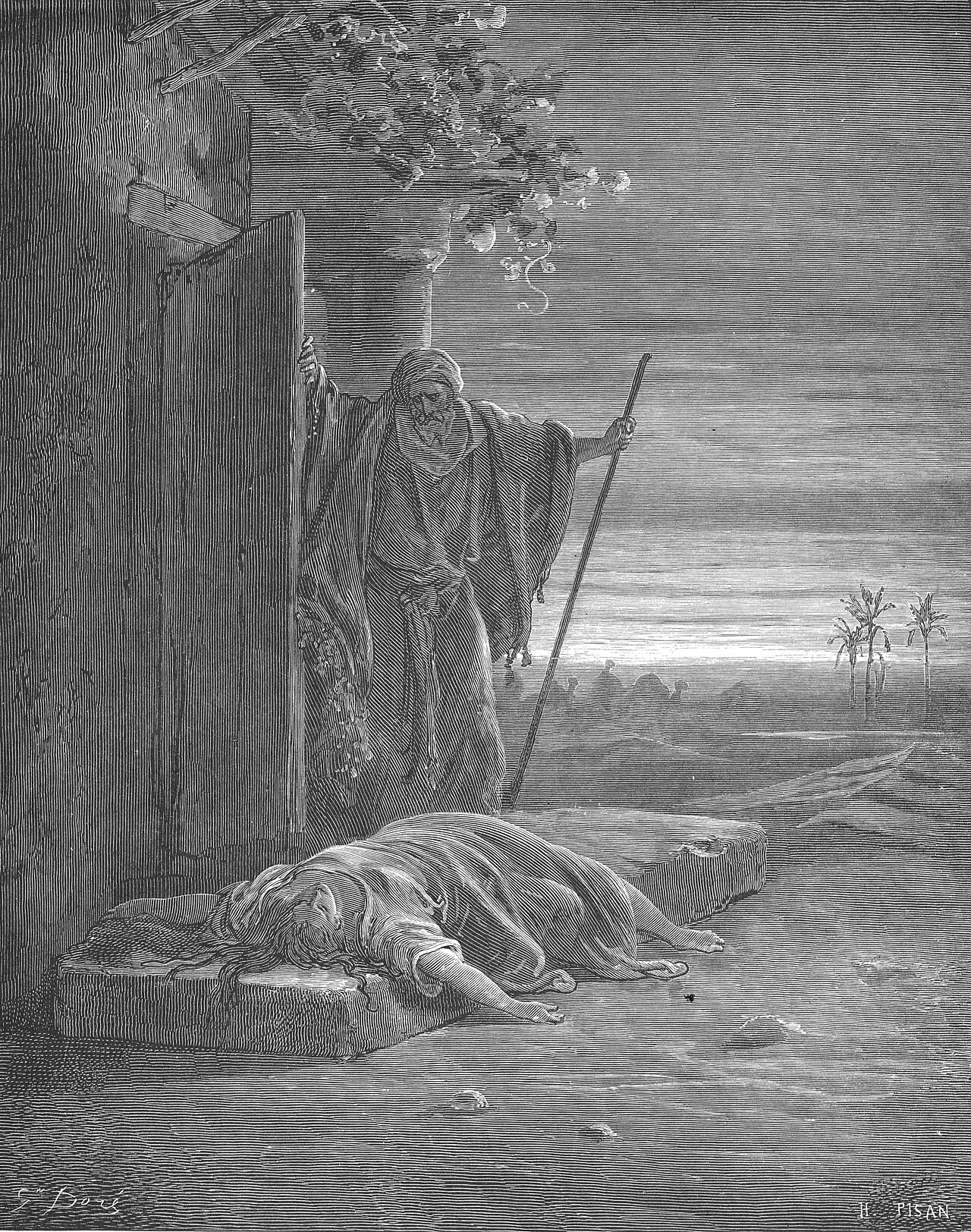
in Judges 19While they were enjoying themselves, suddenly the wicked men of the city surrounded the house. Pounding on the door, they said to the old man who owned the house, “Bring out the man who came to your house, so we can have relations with him!”
BSB
The same verse in ASV and KJV ▾
ASV
As they were making their hearts merry, behold, the men of the city, certain base fellows, beset the house round about, beating at the door; and they spake to the master of the house, the old man, saying, Bring forth the man that came into thy house, that we may know him.
KJV
Now as they were making their hearts merry, behold, the men of the city, certain sons of Belial, beset the house round about, and beat at the door, and spake to the master of the house, the old man, saying, Bring forth the man that came into thine house, that we may know him.
⋯
This verse in Judges 19
Commentary
9 notes on this verseSons of Belial - Profligate fellows. See the notes on Deu 13:13. That we may know him - See Gen 19:5. These were genuine sodomites as to their practice; sons of Belial, rascals and miscreants of the deepest dye; worse than brutes, being a compound of beast and devil inseparably blended.
This site's exposition
Let me supply everything you need
on Judges 19:20-22
Washing the feet at verse 21 is the courtesy of Genesis 18:4 and 19:2. Verse 22 follows Genesis 19:4 and 19:5, the house surrounded, the door beaten, and the demand, “Bring out the man who came to your house”. The Hebrew calls them sons of Belial, a word first used at Deuteronomy 13:13, again of these men at Judges 20:13, and once in the New Testament at 2 Corinthians 6:15.
This site's exposition
the wicked men of the city surrounded
Ambrose places the attack after the meal was cleared away. Henry observes that a man's house should be his safe place, and in those days there was no king in Israel to keep the peace.
The record, by era
The Church Fathers2 voices
And when they were satisfied and the tables were removed, vile men rushed up and surrounded the house.
The old man kept urging them to be glad and kept inviting them to drink more wine so that they would forget their cares, when all of a sudden they were surrounded by young men of Gaba [Gibeah], given to lust, all lacking esteem for moderation. The woman's beauty had bewitched them and thrown them into utter folly. They were captivated by her beauty and, because of the old man's age and lack of help, with high hope of getting her, they demanded the woman and kept pounding at the door.
The Puritans and the Awakening3 voices
Now as they were making their hearts merry,....
A man's house is his castle, in which he ought to be both safe and quiet, and, where there is law, it is taken under the special protection of it; but there was no king in Israel to keep the peace and secure honest men from the sons of violence.
If the mirth was sinful and excessive, let it be a warning to us to keep a strict guard upon ourselves, that we grow not intemperate in the use of lawful things, nor be transported into indecencies by our cheerfulness; for the end of that mirth is heaviness.
1 more voice on this verse
The Nineteenth Century1 voice
A commentator
Jamieson, Fausset & Brown1802–1910
Commentary Critical and Explanatory on the Whole Bible (1871)
proposed
certain sons of Belial beset the house--The narrative of the horrid outrage that was committed; of the proposal of the old man; the unfeeling, careless, and in many respects, inexplicable conduct of the Levite towards his wife, disclose a state of morality that would have appeared incredible, did it not rest on the testimony of the sacred historian.
quarantine:debris (2026-07-29) — starts-lowercase
The words behind it
31 Hebrew wordsEvery Hebrew word of this verse in the order it stands, with what it means and the door to its own study. The last column counts the times a word stands in the whole Bible: the rarer the word, the more the places it appears belong together.
| Hebrew | Sound | Meaning | Word study | In the Bible |
|---|---|---|---|---|
| הֵמָּה֮ | hemah | they | H1992 → | 553 times |
| מֵיטִיבִ֣ים | meitivim | [were] making good | H3190 → | 117 times |
| אֶת־ | ʾet- | <obj.> | H853 → | 10935 times |
| לִבָּם֒ | libam | heart their | H3820 → | 595 times |
| וְהִנֵּה֩ | vehineh | and there! | H2009 → | 843 times |
| אַנְשֵׁ֨י | ʾanshei | [the] men of | H582 → | 566 times |
| הָעִ֜יר | hair | the city | H5892 → | 1090 times |
| אַנְשֵׁ֣י | ʾanshei | men of | H582 → | 566 times |
| בְנֵֽי־ | venei- | sons of | H1121 → | 4930 times |
| בְלִיַּ֗עַל | veliyaal | worthlessness | H1100 → | |
| נָסַ֙בּוּ֙ | nasabu | they surrounded | H5437 → | 161 times |
| אֶת־ | ʾet- | <obj.> | H853 → | 10935 times |
| הַבַּ֔יִת | habayit | the house | H1004 → | 2046 times |
| מִֽתְדַּפְּקִ֖ים | mitdapekim | beating violently | H1849 → | |
| עַל־ | ʾal- | on | H5921 → | 5755 times |
| הַדָּ֑לֶת | hadalet | the door | H1817 → | 88 times |
| וַיֹּאמְר֗וּ | vaiyomeru | and they said | H559 → | 5305 times |
| אֶל־ | ʾel- | to | H413 → | 5510 times |
| הָ֠אִישׁ | haish | the man | H376 → | 1663 times |
| בַּ֣עַל | baal | [the] master of | H1167 → | 84 times |
| הַבַּ֤יִת | habayit | the house | H1004 → | 2046 times |
| הַזָּקֵן֙ | hazaken | <the> old | H2205 → | 178 times |
| לֵאמֹ֔ר | lemor | <to> saying | H559 → | 5305 times |
| הוֹצֵ֗א | hotze' | bring out | H3318 → | 1067 times |
| אֶת־ | ʾet- | <obj.> | H853 → | 10935 times |
| הָאִ֛ישׁ | haish | the man | H376 → | 1663 times |
| אֲשֶׁר־ | ʾasher- | who | H834 → | 5497 times |
| בָּ֥א | ba' | he came | H935 → | 2568 times |
| אֶל־ | ʾel- | to | H413 → | 5510 times |
| בֵּיתְךָ֖ | beitekha | house your | H1004 → | 2046 times |
| וְנֵדָעֶֽנּוּ׃ | venedaenu | so we may know him | H3045 → | 945 times |
הֵמָּה֮they
hemahH1992 →553 times
מֵיטִיבִ֣ים[were] making good
meitivimH3190 →117 times
אֶת־<obj.>
ʾet-H853 →10935 times
לִבָּם֒heart their
libamH3820 →595 times
וְהִנֵּה֩and there!
vehinehH2009 →843 times
אַנְשֵׁ֨י[the] men of
ʾansheiH582 →566 times
הָעִ֜ירthe city
hairH5892 →1090 times
אַנְשֵׁ֣יmen of
ʾansheiH582 →566 times
בְנֵֽי־sons of
venei-H1121 →4930 times
בְלִיַּ֗עַלworthlessness
veliyaalH1100 →
נָסַ֙בּוּ֙they surrounded
nasabuH5437 →161 times
אֶת־<obj.>
ʾet-H853 →10935 times
הַבַּ֔יִתthe house
habayitH1004 →2046 times
מִֽתְדַּפְּקִ֖יםbeating violently
mitdapekimH1849 →
עַל־on
ʾal-H5921 →5755 times
הַדָּ֑לֶתthe door
hadaletH1817 →88 times
וַיֹּאמְר֗וּand they said
vaiyomeruH559 →5305 times
אֶל־to
ʾel-H413 →5510 times
הָ֠אִישׁthe man
haishH376 →1663 times
בַּ֣עַל[the] master of
baalH1167 →84 times
הַבַּ֤יִתthe house
habayitH1004 →2046 times
הַזָּקֵן֙<the> old
hazakenH2205 →178 times
לֵאמֹ֔ר<to> saying
lemorH559 →5305 times
הוֹצֵ֗אbring out
hotze'H3318 →1067 times
אֶת־<obj.>
ʾet-H853 →10935 times
הָאִ֛ישׁthe man
haishH376 →1663 times
אֲשֶׁר־who
ʾasher-H834 →5497 times
בָּ֥אhe came
ba'H935 →2568 times
אֶל־to
ʾel-H413 →5510 times
בֵּיתְךָ֖house your
beitekhaH1004 →2046 times
וְנֵדָעֶֽנּוּ׃so we may know him
venedaenuH3045 →945 times
A shaded row is a word that stands 400 times or fewer in the Bible.
The walk
8 stopsEach card is a verse this one points to, and under it the verses that one points to in turn. Where several paths arrive at the same place, that place is listed first: the text keeps returning to it.
Through
1 Corinthians 6:9Do you not know that the wicked will not inherit the kingdom of God? Do not be deceived: Neither the sexually immoral, nor idolaters, nor adulterers, nor men who submit to or perform homosexual…
it leads to
- 1 Timothy 1:9–10
We realize that law is not enacted for the righteous, but for the lawless and rebellious, for the ungodly and sinful, for the unholy and profane, for killers of father or mother, for murderers,
- Galatians 5:19–21
The acts of the flesh are obvious: sexual immorality, impurity, and debauchery;
- Ephesians 5:4–5
Nor should there be obscenity, foolish talk, or crude joking, which are out of character, but rather thanksgiving.
- Leviticus 20:13
If a man lies with a man as with a woman, they have both committed an abomination. They must surely be put to death; their blood is upon them.
- Leviticus 18:22
You must not lie with a man as with a woman; that is an abomination.
- 1 Timothy 1:9–10
Through
Deuteronomy 13:13that wicked men have arisen from among you and have led the people of their city astray, saying, “Let us go and serve other gods” (which you have not known),
it leads to
- 1 John 2:19
They went out from us, but they did not belong to us. For if they had belonged to us, they would have remained with us. But their departure made it clear that none of…
- Deuteronomy 13:2
and if the sign or wonder he has spoken to you comes about, but he says, “Let us follow other gods (which you have not known) and let us worship them,”
- Deuteronomy 13:6
If your very own brother, or your son or daughter, or the wife you embrace, or your closest friend secretly entices you, saying, “Let us go and worship other gods” (which neither you nor…
- 1 John 2:19
About Judges
This page draws on Adam Clarke, Commentary on the Bible; Ambrose of Milan, On the Duties of the Clergy; Ambrose of Milan, On the Duties of the Clergy 3.19.114; Ambrose of Milan, LETTER 33; Jamieson, Fausset & Brown, Commentary Critical and Explanatory on the Whole Bible; John Gill, Exposition of the Old Testament (1748-1763); Keil and Delitzsch, Biblical Commentary on the Old Testament: Joshua, Judges, Ruth and Matthew Henry, Commentary on the Whole Bible.