
Isaiah 30:11
in Isaiah 30Get out of the way; turn off the road. Rid us of the Holy One of Israel!”
BSB
The same verse in ASV and KJV ▾
ASV
get you out of the way, turn aside out of the path, cause the Holy One of Israel to cease from before us.
KJV
Get you out of the way, turn aside out of the path, cause the Holy One of Israel to cease from before us.
⋯
This verse in Isaiah 30
Commentary
4 notes on this verseon Isaiah 30:9-11
(v. 9 et seq.) For the people provoke to anger, and the sons are liars, sons unwilling to listen to the law of God. They say to the seers, "Do not see"; and to the prophets, "Do not prophesy to us what is right; speak to us pleasant words; see us errors. Depart from me the way; turn aside from me the path; let the Holy One of Israel cease from before us." It is clear that they have provoked the Lord to anger, not wanting to hear the words of Jeremiah (Jer. 43).
This site's exposition
speak unto us smooth things
on Isaiah 30:10-11
The people's own request to the seers is quoted directly, see not, prophesy not right things, speak unto us smooth things, prophesy deceits, a nation asking its prophets to lie comfortably rather than warn truly. Get you out of the way, cause the Holy One of Israel to cease from before us, presses the demand to its end, not merely softer words but the removal of God's own title from their hearing. Henry reads the request as the clearest possible picture of a people choosing blindness over correction.
The record, by era
The Nineteenth Century2 voices
A commentator
Albert Barnes1798–1870
Notes, Explanatory and Practical, on the Old and New Testaments (1832-1869)
Get ye out of the way - Or, rather, ‘Recede from the way;’ or ‘Turn aside from the way.’ The words “way” and “path” are used to denote the true religion, or the true doctrines of God Mat 7:14; Mat 22:16; Joh 14:4; Act 18:26; Act 19:9, Act 19:23; 2Pe 2:15. The request here was that the true prophets would recede from the stern and true precepts of religion, and turn to the ways of falsehood and deceit.
A commentator
Jamieson, Fausset & Brown1802–1910
Commentary Critical and Explanatory on the Whole Bible (1871)
Depart from the true "way" (so in Ac 19:9, 23) of religion. cause . . . to cease--Let us hear no more of His name. God's holiness is what troubles sinners most.
How the passage was read
What the Jewish commentators add
On the verses either side of this one
Who say to the prophets, Prophesy ye not: and as for doctrines, teach us not the doctrine of the law: speak ye with us with signs, relate unto us various things:
This section is reception history: how the passage was read and kept in the Jewish tradition. Where a reading parts from an essential of the Christian faith, the section says so at that point.
Texts and citation data: Sefaria; each excerpt follows its version’s licence. 7 further sources are cited on this chapter that carry no English text this site may quote or only restate the verse.
The words behind it
11 Hebrew wordsEvery Hebrew word of this verse in the order it stands, with what it means and the door to its own study. The last column counts the times a word stands in the whole Bible: the rarer the word, the more the places it appears belong together.
| Hebrew | Sound | Meaning | Word study | In the Bible |
|---|---|---|---|---|
| ס֚וּרוּ | suru | turn away | H5493 → | 299 times |
| מִנֵּי־ | minei- | from | H4480 → | 1188 times |
| דֶ֔רֶךְ | derekh | [the] way | H1870 → | 707 times |
| הַטּ֖וּ | hatu | turn aside | H5186 → | 214 times |
| מִנֵּי־ | minei- | from | H4480 → | 1188 times |
| אֹ֑רַח | ʾorach | [the] path | H734 → | 58 times |
| הַשְׁבִּ֥יתוּ | hashbitu | cause to cease | H7673 → | 71 times |
| מִפָּנֵ֖ינוּ | mipaneinu | from before us | H6440 → | 2123 times |
| אֶת־ | ʾet- | <obj.> | H853 → | 10935 times |
| קְד֥וֹשׁ | kedoosh | [the] holy [one] of | H6918 → | 116 times |
| יִשְׂרָאֵֽל׃ ס | yisrael | Israel | H3478 → | 2507 times |
ס֚וּרוּturn away
suruH5493 →299 times
מִנֵּי־from
minei-H4480 →1188 times
דֶ֔רֶךְ[the] way
derekhH1870 →707 times
הַטּ֖וּturn aside
hatuH5186 →214 times
מִנֵּי־from
minei-H4480 →1188 times
אֹ֑רַח[the] path
ʾorachH734 →58 times
הַשְׁבִּ֥יתוּcause to cease
hashbituH7673 →71 times
מִפָּנֵ֖ינוּfrom before us
mipaneinuH6440 →2123 times
אֶת־<obj.>
ʾet-H853 →10935 times
קְד֥וֹשׁ[the] holy [one] of
kedooshH6918 →116 times
יִשְׂרָאֵֽל׃ סIsrael
yisraelH3478 →2507 times
A shaded row is a word that stands 400 times or fewer in the Bible.
The walk
8 stopsEach card is a verse this one points to, and under it the verses that one points to in turn. Where several paths arrive at the same place, that place is listed first: the text keeps returning to it.
Through
Romans 1:28Furthermore, since they did not see fit to acknowledge God, He gave them up to a depraved mind, to do what ought not to be done.
it leads to
- 2 Thessalonians 2:10–12
and with every wicked deception directed against those who are perishing, because they refused the love of the truth that would have saved them.
Reached by 2 separate paths from here.
- Titus 1:16
They profess to know God, but by their actions they deny Him. They are detestable, disobedient, and unfit for any good deed.
- Romans 1:21
For although they knew God, they neither glorified Him as God nor gave thanks to Him, but they became futile in their thinking and darkened in their foolish hearts.
- Jeremiah 9:6
You dwell in the midst of deception; in their deceit they refuse to know Me,” declares the LORD.
- Romans 1:24
Therefore God gave them over in the desires of their hearts to impurity for the dishonoring of their bodies with one another.
- 2 Thessalonians 2:10–12
Through
Romans 8:7because the mind of the flesh is hostile to God: It does not submit to God’s law, nor can it do so.
it leads to
- 1 Corinthians 2:14
The natural man does not accept the things that come from the Spirit of God. For they are foolishness to him, and he cannot understand them, because they are spiritually discerned.
- 1 John 2:15–16
Do not love the world or anything in the world. If anyone loves the world, the love of the Father is not in him.
- James 4:4
You adulteresses! Do you not know that friendship with the world is hostility toward God? Therefore, whoever chooses to be a friend of the world renders himself an enemy of God.
- 1 Corinthians 2:14
About Isaiah
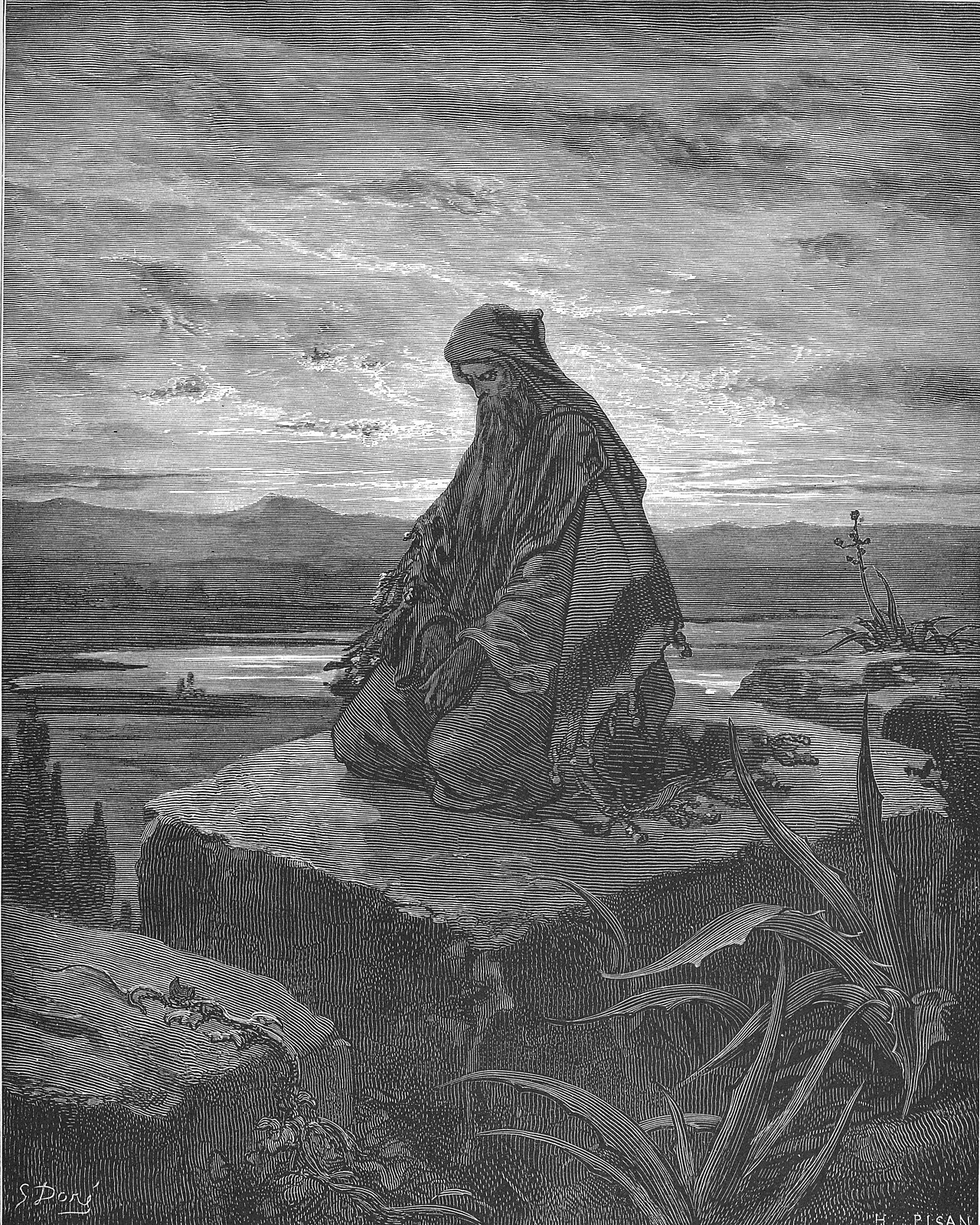
This page draws on Albert Barnes, Notes on the Book of Isaiah; Albert Barnes, Notes, Explanatory and Practical, on the Old and New Testaments (1832-1869); Jamieson, Fausset & Brown, Commentary Critical and Explanatory on the Whole Bible; Jerome, Commentary on Isaiah and Matthew Henry, Commentary on the Whole Bible.