
Daniel 6:24
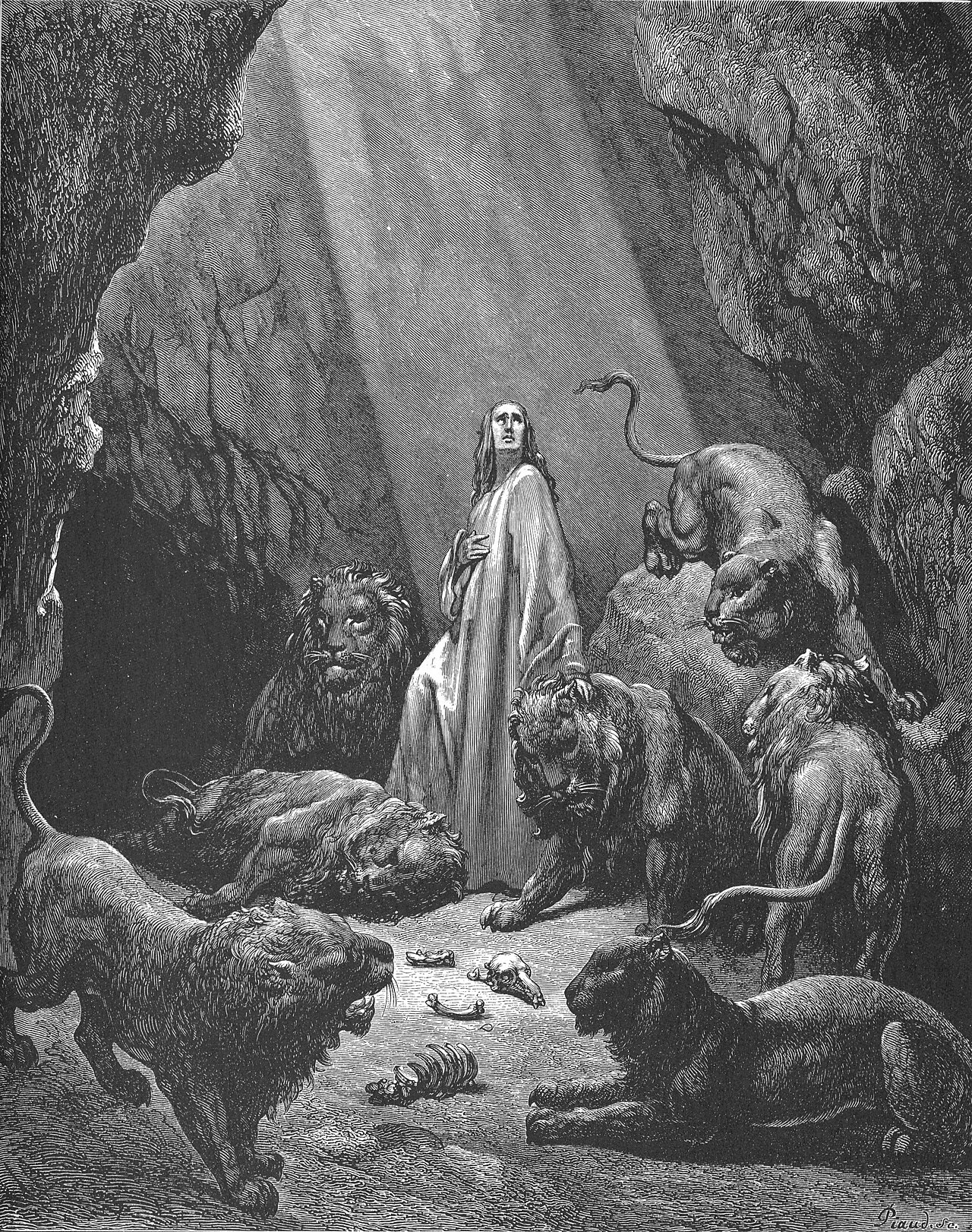
in Daniel 6At the command of the king, the men who had falsely accused Daniel were brought and thrown into the den of lions—they and their children and wives. And before they had reached the bottom of the den, the lions overpowered them and crushed all their bones.
BSB
The same verse in ASV and KJV ▾
ASV
And the king commanded, and they brought those men that had accused Daniel, and they cast them into the den of lions, them, their children, and their wives; and the lions had the mastery of them, and brake all their bones in pieces, before they came to the bottom of the den.
KJV
And the king commanded, and they brought those men which had accused Daniel, and they cast them into the den of lions, them, their children, and their wives; and the lions had the mastery of them, and brake all their bones in pieces or ever they came at the bottom of the den.
⋯
This verse in Daniel 6
Commentary
8 notes on this verseThen, "the king spoke and they brought the men who accused Daniel and they themselves and their sons and their wives were cast into the den of lions, and they did not reach the bottom of the den before the lions mastered them, and they ground all their bones." [Daniel 6:24] And so they who have trusted in a human king and in wealth, they themselves dug a trench, and they fell in it for their destruction.
This site's exposition
they cast them into the den of lions
The accusers are cast into the same den, with their children and their wives, and the lions have the mastery of them before they reach the bottom, a severity that has troubled readers of every age, and the bench does not soften it: eastern justice under the law of the Medes and Persians punished false accusers with the very penalty they sought for the accused, extended in this case to households under the same law's own custom rather than Daniel's request. Clarke notes the text records the sentence without praising or protesting it, a fact of ancient near eastern law reported rather than commended.
The record, by era
The Church Fathers2 voices
Daniel also was persecuted as Jesus was persecuted.… Daniel they cast into the pit of lions, and he was delivered and came up out of its midst uninjured; and Jesus they sent down into the pit of the abode of the dead, and he ascended, and death had not dominion over him. Concerning Daniel they expected that when he had fallen into the pit he would not come up again; and concerning Jesus they said, "Since he has fallen, he shall not rise again." From [harming] Daniel the mouths of the ravenous and destructive lions were closed; and from [harming] Jesus was closed the mouth of death, [though] ravenous and destructive of [living] forms. They sealed the pit of Daniel and guarded it with diligence; and they guarded the grave of Jesus with diligence, as they said, "Set guards to watch at the tomb." When Daniel came up, his accusers were ashamed; and when Jesus rose, all they who had crucified him were ashamed.
Since a simple punishment was not sufficient for those culprits, in order to balance the offense they had brought against a righteous man, after being condemned to the same punishment, they were thrown to the beasts together with their wives and children.
The Puritans and the Awakening1 voice
And the king commanded, and they brought those men which had accused Daniel,....
The Nineteenth Century2 voices
They brought those men - It was perfectly just that they should suffer that death to which they had endeavored to subject the innocent; but it was savage cruelty to destroy the women and children who had no part in the transgression.
A commentator
Jamieson, Fausset & Brown1802–1910
Commentary Critical and Explanatory on the Whole Bible (1871)
proposed
Pr 19:5). accused--literally, "devoured the bones and flesh." It was just that they who had torn Daniel's character, and sought the tearing of his person, should be themselves given to be torn in pieces (Pr 11:8). their children--Among the Persians, all the kindred were involved in the guilt of one culprit.
quarantine:debris (2026-07-29) — unbalanced-parens
1 more voice on this verse
The Nineteenth Century1 voice
A commentator
Albert Barnes1798–1870
Notes, Explanatory and Practical, on the Old and New Testaments (1832-1869)
proposed
And the king commanded, and they brought those men, which had accused Daniel ... - It would seem probable that the king had been aware of their wicked designs against Daniel, and had been satisfied that the whole was the result of a conspiracy, but he felt himself under a necessity of allowing the law to take its course on him whom he believed to be really innocent. That had been done. All that the law could be construed as requiring had been accomplished. It could not be pretended that the law required that any other punishment should be inflicted on Daniel, and the way was now clear to deal with the authors of the malicious plot as they deserved. No one can reasonably doubt the probability of what is here said in regard to the conspirators against Daniel. The king had arbitrary power. He was convinced of their guilt. His wrath had been with difficulty restrained when he understood the nature of the plot against Daniel. Nothing, therefore, was more natural than that he should subject the guilty to the same punishment which they had sought to bring upon the innocent; nothing more natural than that a proud despot, who saw that, by the force of a law which he could not control, he had been made a tool in subjecting the highest officer of the realm, and the best man in it, to peril of death, should, without any delay, wreak his vengeance on those who had thus made use of him to gratify their own malignant passions. Them, their children, and their wives - This was in accordance with Oriental notions of justice, and was often done. […]
The words behind it
28 Hebrew wordsEvery Hebrew word of this verse in the order it stands, with what it means and the door to its own study. The last column counts the times a word stands in the whole Bible: the rarer the word, the more the places it appears belong together.
| Hebrew | Sound | Meaning | Word study | In the Bible |
|---|---|---|---|---|
| וַאֲמַ֣ר | vaamar | and he said | H560 → | 71 times |
| מַלְכָּ֗א | malka' | king the | H4430 → | 180 times |
| וְהַיְתִ֞יו | vehaytiv | and they brought | H858 → | 16 times |
| גֻּבְרַיָּ֤א | guvraiya' | men the | H1400 → | 21 times |
| אִלֵּךְ֙ | ʾilekh | these | H479 → | 14 times |
| דִּֽי־ | di- | who | H1768 → | 345 times |
| אֲכַ֤לוּ | ʾakhalu | they had eaten | H399 → | 7 times |
| קַרְצ֙וֹהִי֙ | kartzohi | pieces his | H7170 → | |
| דִּ֣י | di | of | H1768 → | 345 times |
| דָֽנִיֵּ֔אל | daniyel | Daniel | H1841 → | 57 times |
| וּלְגֹ֤ב | ulego | and to [the] den of | H1358 → | 10 times |
| אַרְיָוָתָא֙ | ʾaryavata' | lions the | H744 → | 10 times |
| רְמ֔וֹ | remo | they threw | H7412 → | 12 times |
| אִנּ֖וּן | ʾinun | they | H581 → | 4 times |
| בְּנֵיה֣וֹן | beneihon | sons their | H1247 → | 19 times |
| וּנְשֵׁיה֑וֹן | unesheihon | and wives their | H5389 → | |
| וְלָֽא־ | vela'- | and not | H3809 → | 82 times |
| מְט֞וֹ | meto | they reached | H4291 → | 8 times |
| לְאַרְעִ֣ית | learit | to [the] bottom of | H773 → | |
| גֻּבָּ֗א | guba' | den the | H1358 → | 10 times |
| עַ֠ד | ʾad | until | H5705 → | 35 times |
| דִּֽי־ | di- | that | H1768 → | 345 times |
| שְׁלִ֤טֽוּ | shelitu | they assaulted | H7981 → | 7 times |
| בְהוֹן֙ | vehon | <in> them | ||
| אַרְיָ֣וָתָ֔א | ʾaryavata' | lions the | H744 → | 10 times |
| וְכָל־ | vekhol | and all | H3606 → | 82 times |
| גַּרְמֵיה֖וֹן | garmeihon | bones their | H1635 → | |
| הַדִּֽקוּ׃ | hadiku | they shattered | H1855 → | 10 times |
וַאֲמַ֣רand he said
vaamarH560 →71 times
מַלְכָּ֗אking the
malka'H4430 →180 times
וְהַיְתִ֞יוand they brought
vehaytivH858 →16 times
גֻּבְרַיָּ֤אmen the
guvraiya'H1400 →21 times
אִלֵּךְ֙these
ʾilekhH479 →14 times
דִּֽי־who
di-H1768 →345 times
אֲכַ֤לוּthey had eaten
ʾakhaluH399 →7 times
קַרְצ֙וֹהִי֙pieces his
kartzohiH7170 →
דִּ֣יof
diH1768 →345 times
דָֽנִיֵּ֔אלDaniel
daniyelH1841 →57 times
וּלְגֹ֤בand to [the] den of
ulegoH1358 →10 times
אַרְיָוָתָא֙lions the
ʾaryavata'H744 →10 times
רְמ֔וֹthey threw
remoH7412 →12 times
אִנּ֖וּןthey
ʾinunH581 →4 times
בְּנֵיה֣וֹןsons their
beneihonH1247 →19 times
וּנְשֵׁיה֑וֹןand wives their
unesheihonH5389 →
וְלָֽא־and not
vela'-H3809 →82 times
מְט֞וֹthey reached
metoH4291 →8 times
לְאַרְעִ֣יתto [the] bottom of
learitH773 →
גֻּבָּ֗אden the
guba'H1358 →10 times
עַ֠דuntil
ʾadH5705 →35 times
דִּֽי־that
di-H1768 →345 times
שְׁלִ֤טֽוּthey assaulted
shelituH7981 →7 times
בְהוֹן֙<in> them
vehon
אַרְיָ֣וָתָ֔אlions the
ʾaryavata'H744 →10 times
וְכָל־and all
vekholH3606 →82 times
גַּרְמֵיה֖וֹןbones their
garmeihonH1635 →
הַדִּֽקוּ׃they shattered
hadikuH1855 →10 times
A shaded row is a word that stands 400 times or fewer in the Bible.
The walk
8 stopsEach card is a verse this one points to, and under it the verses that one points to in turn. Where several paths arrive at the same place, that place is listed first: the text keeps returning to it.
Through
2 Kings 14:6Yet he did not put the sons of the murderers to death, but acted according to what is written in the Book of the Law of Moses, where the LORD commanded: “Fathers must not…
it leads to
- Deuteronomy 24:16
Fathers shall not be put to death for their children, nor children for their fathers; each is to die for his own sin.
- Ezekiel 18:20
The soul who sins is the one who will die. A son will not bear the iniquity of his father, and a father will not bear the iniquity of his son. The righteousness of…
- Ezekiel 18:4
Behold, every soul belongs to Me; both father and son are Mine. The soul who sins is the one who will die.
- Jeremiah 31:30
Instead, each will die for his own iniquity. If anyone eats the sour grapes, his own teeth will be set on edge.
- Deuteronomy 24:16
Through
Psalms 54:5He will reward my enemies with evil. In Your faithfulness, destroy them.
it leads to
- Psalms 143:12
And in Your loving devotion, cut off my enemies. Destroy all who afflict me, for I am Your servant.
- Psalms 89:49
Where, O Lord, is Your loving devotion of old, which You faithfully swore to David?
- Psalms 31:23
Love the LORD, all His saints. The LORD preserves the faithful, but fully repays the arrogant.
- Psalms 143:12
Through
Esther 7:10So they hanged Haman on the gallows he had prepared for Mordecai. Then the fury of the king subsided.
it leads to
- Psalms 7:16
His trouble recoils on himself, and his violence falls on his own head.
- Psalms 7:16
Where this verse is studied
On this page
About Daniel
Who and where
1 name in this verse with a page on the site.
This page draws on Adam Clarke, Commentary on the Bible; Albert Barnes, Notes on the Book of Daniel; Albert Barnes, Notes, Explanatory and Practical, on the Old and New Testaments (1832-1869); Aphrahat the Persian Sage, DEMONSTRATIONS 21:18; Ephrem the Syrian, COMMENTARY ON DANIEL 6:24; Hippolytus of Rome, Commentary on Daniel 3.30.1-6; Jamieson, Fausset & Brown, Commentary Critical and Explanatory on the Whole Bible and John Gill, Exposition of the Old Testament (1748-1763).