
Daniel 3:29
in Daniel 3Therefore I decree that the people of any nation or language who say anything offensive against the God of Shadrach, Meshach, and Abednego will be cut into pieces and their houses reduced to rubble. For there is no other god who can deliver in this way.”
BSB
The same verse in ASV and KJV ▾
ASV
Therefore I make a decree, that every people, nation, and language, which speak anything amiss against the God of Shadrach, Meshach, and Abed-nego, shall be cut in pieces, and their houses shall be made a dunghill; because there is no other god that is able to deliver after this sort.
KJV
Therefore I make a decree, That every people, nation, and language, which speak any thing amiss against the God of Shadrach, Meshach, and Abed–nego, shall be cut in pieces, and their houses shall be made a dunghill: because there is no other God that can deliver after this sort.
⋯
This verse in Daniel 3
Commentary
12 notes on this verseVerse 29. "'I have therefore determined upon this decree (the Vulgate says: "have appointed this decree"): that any people, tribe or tongue which utters blasphemy against the God of Shadrach, Meshach and Abednego shall utterly perish and his house shall be laid waste. For there is no other God who can save after such a fashion.'" Some authorities very wrongly apply this to the devil himself, asserting that in the consummation at the end of the world even the devil himself will receive a knowledge of God and will exhort all men to repent.
This site's exposition
who hath sent his angel
on Daniel 3:28-30
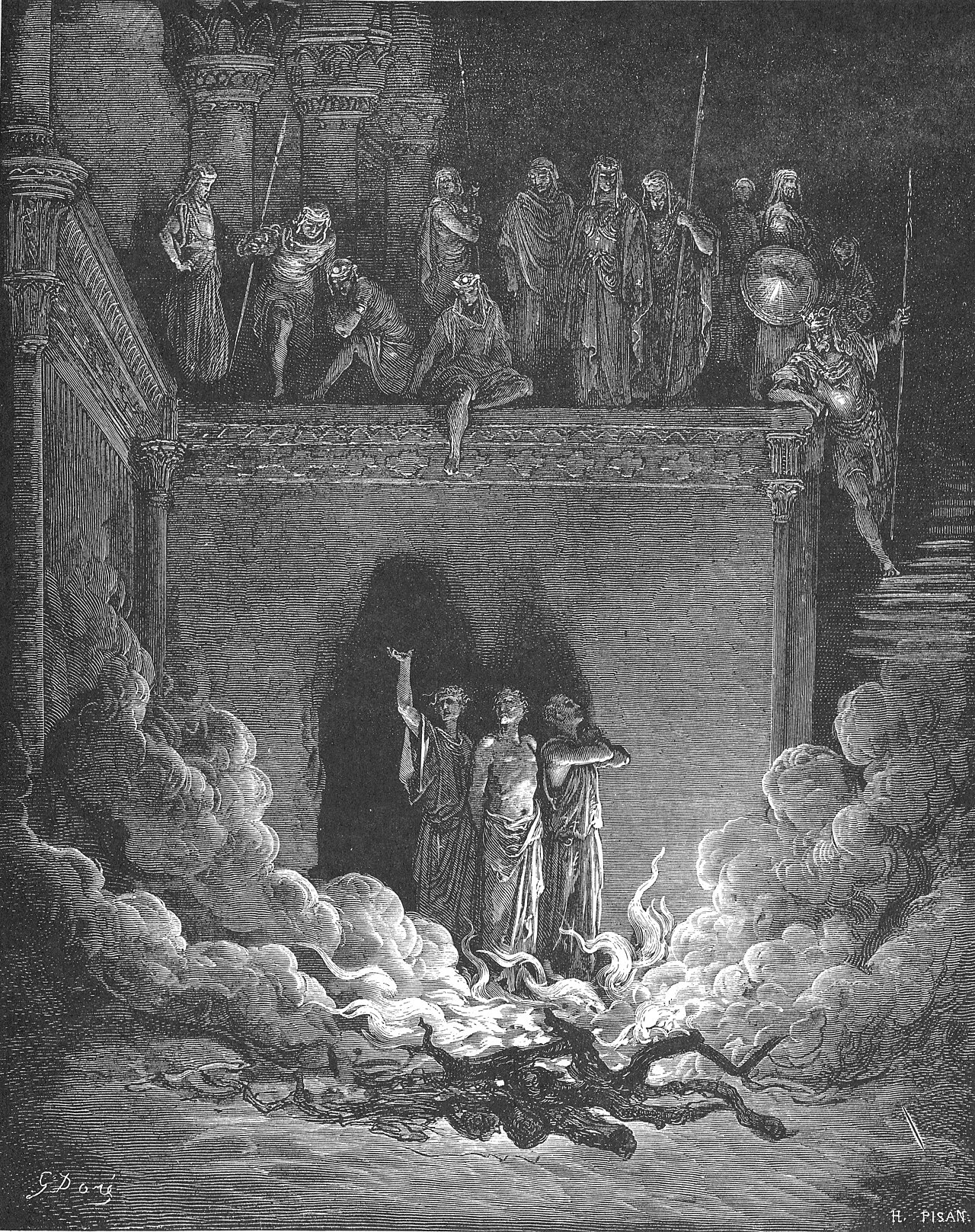
Nebuchadnezzar blesses the God who hath sent his angel, and delivered his servants that trusted in him, and the older writers hear in his angel the Angel of the LORD of the patriarchs' deliverances, the reading that joins this verse to the Son-of-God cry of verse 25; the king's own theology is not the measure of what he saw, as the commentators note. The decree that follows protects the God it cannot yet confess exclusively, and the men who changed the king's word and yielded their bodies are promoted in the province they refused to bow in. The taunt of verse 15 has its answer on the king's own lips: there is no other God that can deliver after this sort.
The record, by era
The Church Fathers5 voices
A commentator
John ChrysostomCommentary (church-history corpus) · Written in the 5th century.
proposed
There is none, there is no remedy better able to destroy sins than to continually recall them and to continually accuse oneself. In this way the publican could cancel his innumerable sins by saying, "God, have mercy on me, a sinner." And thus also the Pharisee remained unjustified because, taking no care to think of his own sins, he condemned everyone else, saying, "I am not like other people, greedy and avaricious, or even like this publican." Thus also Paul exhorted, "Let each one examine his own conduct, and then he will find reason to boast only in himself and not in others." Did you know that even in the Old Testament the righteous accused themselves? Listen to them speak as with one voice. David said, "My iniquities have gone over my head. They oppress me like a heavy burden." And Isaiah cried out, "Woe is me, wretched man, because I am a man of unclean lips!" The three young men, while they were in the furnace and offered their bodies to death for God, counted themselves among the greatest of sinners, saying, "We have sinned, we have done every kind of evil." And yet what was more brilliant, more pure than they? And even if they had committed some sins, the nature of the flames would have cancelled all of them. They did not look at their virtues, however, but thought of their sins. - "On the Obscurity of Prophecies 2.9"
Hananiah and his brothers worshiped not the image of the king of Babylon; and Jesus restrained the nations from the worship of dead images. Because of Hananiah and his brothers, the nations and languages glorified the God who had delivered them from the fire; and because of Jesus, the nations and all languages shall glorify God who delivered his Son, so that he saw no corruption. On the garments of Hananiah and his brothers the fire had no power; and on the bodies of the righteous, who have believed in Jesus, the fire shall have no power in the end.
If past events in the prophetic books serve as a figure of future ones, in the king named Nebuchadnezzar two periods were foreshadowed: that during the time of the apostles and the present one in which Christ is now living. For in the times of the apostles and martyrs that part was fulfilled that was foreshadowed when the king forced devout and upright men to adore an idol and when they refused had them thrown into a fire. Now, however, that part is fulfilled that was prefigured in the same king when he was converted to the true God and decreed for his realm that whoever blasphemed the God of Shadrach, Meshach and Abednego should suffer due penalties. Therefore, the first part of the king's reign signified the earlier periods of impious kings, when Christians suffered instead of the impious, but the latter part of that king's reign signified the period of later faithful kings under whom the impious suffered instead of the Christians.
And so in this way Nebuchadnezzar said, "'Blessed be the God of Shadrach, Meshach, and Abednego, who sent his angel and rescued his boys because they obeyed him and they opposed the word of the king and handed their bodies over to the furnace, that they might not serve any God except their God. And I have set out a decree: 'All people, tribes, and tongues who shall ever speak blasphemy against the God of Shadrach, Meshach, and Abednego shall be destroyed and their houses shall be plundered, because there is no other God who is able to rescue in this way.' And he prospered Shadrach, Meshach, and Abednego in the country of Babylon and strengthened them and promoted them to lead all the Jews who were in his kingdom." [Daniel 3:28-30] And so it is necessary to observe, beloved, how faith towards God pours out such great grace. For even as they handed themselves over to death, they glorified God himself, in this way again they also were not only glorified by God but also by the king and they taught the tribes and the barbarian nations to revere God. For this truly happens to befall us even now, for when one of the saints is called to martyrdom and magnificent things are done by God for him, immediately all who see wonder, and many believe through the signs and in this way they also become martyrs of God. To whom we also have believed, so let us also inspire ourselves to be worthy before God, being chaste in body, soul, and spirit, so that we ourselves may receive the incorruptible crown together with the blessed martyrs, and may hymn with them to God. For his glory is forever and ever. Amen.
"In spite of myself, then, I revere the God of the Hebrews, And I command all the people in my land to join in praising him. 'Come, then, holy children, come forth from the furnace, For I am convinced that your God is in truth …
5 more voices on this verse
The Puritans and the Awakening3 voices
We have no certainty concerning the date of this story, only that if this image, which Nebuchadnezzar dedicated, had any relation to that which he dreamed of, it is probable that it happened not long after that; some reckon it to be about the seventh year of Nebuchadnezzar, a year before Jehoiachin's captivity, in which Ezekiel was carried away.
), no, not this golden image which he had set up. For this reason there was no other god that obliged his worshippers to cleave to him only, and to suffer death rather than worship any other, as the God of Israel did, for they could not engage to bear them out in so doing, as he could.
quarantine:debris (2026-07-29) — leading-punctuation+unbalanced-parens
Therefore I make a decree,....
The Nineteenth Century2 voices
A commentator
Albert Barnes1798–1870
Notes, Explanatory and Practical, on the Old and New Testaments (1832-1869)
Therefore I make a decree - Margin, “A decree is made by me.” Chaldee, “And from me a decree is laid down,” or enacted. This Chaldee word (טעם ṭe‛êm) means, properly, “taste, flavor;” then “judgment,” the power of “discerning” - apparently as of one who can judge of “wine,” etc., by the taste; then the sentence, the decree which is consequent on an act of judging - always retaining the idea that the determination or decree is based on a conception of the true merits of the case.
Speak any thing amiss - Though by the decree the king does not oblige the people to worship the true God, yet he obliges them to treat him with reverence.
The words behind it
34 Hebrew wordsEvery Hebrew word of this verse in the order it stands, with what it means and the door to its own study. The last column counts the times a word stands in the whole Bible: the rarer the word, the more the places it appears belong together.
| Hebrew | Sound | Meaning | Word study | In the Bible |
|---|---|---|---|---|
| וּמִנִּי֮ | umini | and from me | ||
| שִׂ֣ים | sim | it is made | H7761 → | 26 times |
| טְעֵם֒ | teem | a decree | H2942 → | 28 times |
| דִּי֩ | di | that | H1768 → | 345 times |
| כָל־ | khol- | any | H3606 → | 82 times |
| עַ֨ם | ʾam | people | H5972 → | 15 times |
| אֻמָּ֜ה | ʾumah | nation | H524 → | 8 times |
| וְלִשָּׁ֗ן | velishan | and language | H3961 → | 7 times |
| דִּֽי־ | di- | which | H1768 → | 345 times |
| יֵאמַ֤ר | yemar | it will say | H560 → | 71 times |
| שָׁלוּ֙ | shelah | negligence | H7960 → | |
| עַ֣ל | ʾal | against | H5922 → | 104 times |
| אֱלָהֲה֗וֹן | ʾelahahon | God their | H426 → | 95 times |
| דִּֽי־ | di- | of | H1768 → | 345 times |
| שַׁדְרַ֤ךְ | shadrakh | Shadrach | H7715 → | 14 times |
| מֵישַׁךְ֙ | meishakh | Meshach | H4336 → | 14 times |
| וַעֲבֵ֣ד | vaaved | and Abed- | H5665 → | 28 times |
| נְג֔וֹא | nego' | -nego | H5665 → | 28 times |
| הַדָּמִ֣ין | hadamin | members | H1917 → | |
| יִתְעֲבֵ֔ד | yitaved | he will be made | H5648 → | 28 times |
| וּבַיְתֵ֖הּ | uvayteh | and house his | H1005 → | 44 times |
| נְוָלִ֣י | nevali | a refuse-heap | H5122 → | |
| יִשְׁתַּוֵּ֑ה | yishtaveh | it will be made | H7739 → | |
| כָּל־ | kol- | as to | ||
| קֳבֵ֗ל | kovel | because | H6903 → | 29 times |
| דִּ֣י | di | that | H1768 → | 345 times |
| לָ֤א | la' | not | H3809 → | 82 times |
| אִיתַי֙ | ʾitai | there | H383 → | 17 times |
| אֱלָ֣ה | ʾelah | [is] a god | H426 → | 95 times |
| אָחֳרָ֔ן | ʾochoran | another | H321 → | 5 times |
| דִּֽי־ | di- | who | H1768 → | 345 times |
| יִכֻּ֥ל | yikul | he is able | H3202 → | 11 times |
| לְהַצָּלָ֖ה | lehatzalah | to rescue | H5338 → | 3 times |
| כִּדְנָֽה׃ | kidnah | like this | H1836 → | 58 times |
וּמִנִּי֮and from me
umini
שִׂ֣יםit is made
simH7761 →26 times
טְעֵם֒a decree
teemH2942 →28 times
דִּי֩that
diH1768 →345 times
כָל־any
khol-H3606 →82 times
עַ֨םpeople
ʾamH5972 →15 times
אֻמָּ֜הnation
ʾumahH524 →8 times
וְלִשָּׁ֗ןand language
velishanH3961 →7 times
דִּֽי־which
di-H1768 →345 times
יֵאמַ֤רit will say
yemarH560 →71 times
שָׁלוּ֙negligence
shelahH7960 →
עַ֣לagainst
ʾalH5922 →104 times
אֱלָהֲה֗וֹןGod their
ʾelahahonH426 →95 times
דִּֽי־of
di-H1768 →345 times
שַׁדְרַ֤ךְShadrach
shadrakhH7715 →14 times
מֵישַׁךְ֙Meshach
meishakhH4336 →14 times
וַעֲבֵ֣דand Abed-
vaavedH5665 →28 times
נְג֔וֹא-nego
nego'H5665 →28 times
הַדָּמִ֣יןmembers
hadaminH1917 →
יִתְעֲבֵ֔דhe will be made
yitavedH5648 →28 times
וּבַיְתֵ֖הּand house his
uvaytehH1005 →44 times
נְוָלִ֣יa refuse-heap
nevaliH5122 →
יִשְׁתַּוֵּ֑הit will be made
yishtavehH7739 →
כָּל־as to
kol-
קֳבֵ֗לbecause
kovelH6903 →29 times
דִּ֣יthat
diH1768 →345 times
לָ֤אnot
la'H3809 →82 times
אִיתַי֙there
ʾitaiH383 →17 times
אֱלָ֣ה[is] a god
ʾelahH426 →95 times
אָחֳרָ֔ןanother
ʾochoranH321 →5 times
דִּֽי־who
di-H1768 →345 times
יִכֻּ֥לhe is able
yikulH3202 →11 times
לְהַצָּלָ֖הto rescue
lehatzalahH5338 →3 times
כִּדְנָֽה׃like this
kidnahH1836 →58 times
A shaded row is a word that stands 400 times or fewer in the Bible.
The walk
8 stopsEach card is a verse this one points to, and under it the verses that one points to in turn. Where several paths arrive at the same place, that place is listed first: the text keeps returning to it.
Through
Daniel 3:15Now, if you are ready, as soon as you hear the sound of the horn, flute, zither, lyre, harp, pipes, and all kinds of music, you must fall down and worship the statue I…
it leads to
- Acts 5:29
But Peter and the other apostles replied, “We must obey God rather than men.
- Daniel 3:17
If the God whom we serve exists, then He is able to deliver us from the blazing fiery furnace and from your hand, O king.
- 2 Chronicles 32:15–17
So now, do not let Hezekiah deceive you, and do not let him mislead you like this. Do not believe him, for no god of any nation or kingdom has been able to deliver…
- 2 Kings 18:35
Who among all the gods of these lands has delivered his land from my hand? How then can the LORD deliver Jerusalem from my hand?”
- Exodus 5:2
But Pharaoh replied, “Who is the LORD that I should obey His voice and let Israel go? I do not know the LORD, and I will not let Israel go.”
- Acts 5:29
Through
Daniel 2:5The king replied to the astrologers, “My word is final: If you do not tell me the dream and its interpretation, you will be cut into pieces and your houses will be reduced to…
it leads to
- Ezra 6:11
I also decree that if any man interferes with this directive, a beam is to be torn from his house and raised up, and he is to be impaled on it. And his own…
- 2 Kings 10:27
They also demolished the sacred pillar of Baal. Then they tore down the temple of Baal and made it into a latrine, which it is to this day.
- Ezra 6:11
Through
Psalms 76:10Even the wrath of man shall praise You; with the survivors of wrath You will clothe Yourself.
it leads to
- Romans 9:17
For the Scripture says to Pharaoh: “I raised you up for this very purpose, that I might display My power in you, and that My name might be proclaimed in all the earth.”
- Romans 9:17
Where this verse is studied
On this page
About Daniel
This page draws on 11 works. Open the list of works
This page draws on Adam Clarke, Commentary on the Bible; Albert Barnes, Notes, Explanatory and Practical, on the Old and New Testaments (1832-1869); Aphrahat the Persian Sage, DEMONSTRATIONS 21:19; Augustine of Hippo, LETTER 93; Carl Friedrich Keil, Biblical Commentary on the Book of Daniel; Hippolytus of Rome, Commentary on Daniel 2.38.1-5; Jerome, St. Jerome, Commentary on Daniel, CHAPTER THREE; John Chrysostom, Commentary (church-history corpus); John Gill, Exposition of the Old Testament (1748-1763); Matthew Henry, Commentary on the Whole Bible and Romanos the Melodist, KONTAKION ON THE THREE CHILDREN 30.