
Daniel 3:5
in Daniel 3As soon as you hear the sound of the horn, flute, zither, lyre, harp, pipes, and all kinds of music, you must fall down and worship the golden statue that King Nebuchadnezzar has set up.
BSB
The same verse in ASV and KJV ▾
ASV
that at what time ye hear the sound of the cornet, flute, harp, sackbut, psaltery, dulcimer, and all kinds of music, ye fall down and worship the golden image that Nebuchadnezzar the king hath set up;
KJV
That at what time ye hear the sound of the cornet, flute, harp, sackbut, psaltery, dulcimer, and all kinds of musick, ye fall down and worship the golden image that Nebuchadnezzar the king hath set up:
⋯
This verse in Daniel 3
Commentary
6 notes on this verseA commentator
Albert Barnes1798–1870
Notes, Explanatory and Practical, on the Old and New Testaments (1832-1869)
That at what time ye hear the sound of the cornet - It would not be practicable to determine with precision what kind of instruments of music are denoted by the words used in this verse. They were, doubtless, in many respects different from those which are in use now, though they may have belonged to the same general class, and may have been constructed on substantially the same principles. A full inquiry into the kinds of musical instruments in use among the Hebrews may be found in the various treatises on the subject in Ugolin’s “Thesau Ant.
This site's exposition
a golden statue sixty cubits high
on Daniel 3:1-7
The “golden statue sixty cubits high and six cubits wide” stands on “the plain of Dura,” gold from head to foot. Worship is ordered at the music on pain of “the blazing fiery furnace”. The people fell down, and the chapter turns on those who did not.
This site's exposition
horn, flute, zither, lyre, harp, pipes
Albert Barnes judges the exact instruments impossible to identify. Adam Clarke takes the horn as the common blowing horn with its deep and hollow sound. Matthew Henry sets the music beside the furnace of verse 6: the careless people were drawn by the one and driven by the other.
The record, by era
The Church Fathers1 voice
Verses 4,
The Puritans and the Awakening1 voice
That at what time ye hear the sound of the cornet,....
The Nineteenth Century1 voice
The sound of the Cornet - There is not less difficulty in ascertaining the precise meaning of these musical instruments than there is in the offices in Dan 3:2. קרנא karna, here translated cornet, is the common blowing horn, which makes a deep and hollow sound, as well as one shrill and piercing. Flute - משרוקיתא mashrokitha, from שרק sharak, to whistle, shriek. A wind instrument which made a strong and shrill noise, such as the hautbois or clarionet. Harp - קיתרס kithros, cytharus; κιθαρα. Some kind of stringed instrument. It seems to be formed from the Greek word. Sackbut - סבכא sabbecha. The Greek has it σαμβυκη, from which our word sackbut, from סבך sabach, to interweave; probably on account of the number of chords, for it seems to have been a species of harp. Psaltery - פסנתרין pesanterin; Greek, ψαλτηριον. A stringed instrument, struck with a plectrum; that called santeer in Egypt is probably the same. Dr. Russel says: “It is a large triangle, and has two bottoms two inches from each other, with about twenty catguts of different sizes.” It was the ancient psalterium, and most probably the same as David’s harp. Dulcimer - סומפניה sumponeyah; Greek, συμφωνεια. Probably a kind of tamboor, tambourine, or tomtom drum. It does not mean the same as the Greek symphonia, which signifies a concert or harmony of many instruments, for here one kind of instrument only is intended. All kinds of music - כל זני זמרא col zeney zemara, the whole stock, or band, of music; the preceding being the chief, the most common, and the most sonorous. My old MS. Bible has, Trumpe, and Pipe, and Harpe: Sambuke, Santrie, and Synfonye, and al kynde of musykes.
The words behind it
21 Hebrew wordsEvery Hebrew word of this verse in the order it stands, with what it means and the door to its own study. The last column counts the times a word stands in the whole Bible: the rarer the word, the more the places it appears belong together.
| Hebrew | Sound | Meaning | Word study | In the Bible |
|---|---|---|---|---|
| בְּעִדָּנָ֡א | beidana' | at time the | H5732 → | 13 times |
| דִּֽי־ | di- | which | H1768 → | 345 times |
| תִשְׁמְע֡וּן | tishmeun | you will hear | H8086 → | 9 times |
| קָ֣ל | kal | [the] sound of | H7032 → | 7 times |
| קַרְנָ֣א | karna' | horn the | H7162 → | 14 times |
| מַ֠שְׁרוֹקִיתָא | mashrokita' | flute the | H4953 → | 4 times |
| קַתְר֨וֹס | kitaros | zither | H7030 → | 4 times |
| סַבְּכָ֤א | sabekha' | trigon | H5443 → | 4 times |
| פְּסַנְתֵּרִין֙ | pesanterin | harp | H6460 → | 4 times |
| סוּמְפֹּ֣נְיָ֔ה | sumeponeyah | pipe | H5481 → | 4 times |
| וְכֹ֖ל | vekhol | and all | H3606 → | 82 times |
| זְנֵ֣י | zenei | <the> kinds of | H2178 → | 4 times |
| זְמָרָ֑א | zemara' | <the> music | H2170 → | 4 times |
| תִּפְּל֤וּן | tipelun | you will fall down | H5308 → | 11 times |
| וְתִסְגְּדוּן֙ | vetisgedun | so you may pay homage | H5457 → | 12 times |
| לְצֶ֣לֶם | letzelem | to [the] image of | H6755 → | 17 times |
| דַּהֲבָ֔א | dahava' | <the> gold | H1722 → | 23 times |
| דִּ֥י | di | which | H1768 → | 345 times |
| הֲקֵ֖ים | hakeim | he has set up | H6966 → | 35 times |
| נְבוּכַדְנֶצַּ֥ר | nevukhadnetzar | Nebuchadnezzar | H5020 → | 31 times |
| מַלְכָּֽא׃ | malka' | king the | H4430 → | 180 times |
בְּעִדָּנָ֡אat time the
beidana'H5732 →13 times
דִּֽי־which
di-H1768 →345 times
תִשְׁמְע֡וּןyou will hear
tishmeunH8086 →9 times
קָ֣ל[the] sound of
kalH7032 →7 times
קַרְנָ֣אhorn the
karna'H7162 →14 times
מַ֠שְׁרוֹקִיתָאflute the
mashrokita'H4953 →4 times
קַתְר֨וֹסzither
kitarosH7030 →4 times
סַבְּכָ֤אtrigon
sabekha'H5443 →4 times
פְּסַנְתֵּרִין֙harp
pesanterinH6460 →4 times
סוּמְפֹּ֣נְיָ֔הpipe
sumeponeyahH5481 →4 times
וְכֹ֖לand all
vekholH3606 →82 times
זְנֵ֣י<the> kinds of
zeneiH2178 →4 times
זְמָרָ֑א<the> music
zemara'H2170 →4 times
תִּפְּל֤וּןyou will fall down
tipelunH5308 →11 times
וְתִסְגְּדוּן֙so you may pay homage
vetisgedunH5457 →12 times
לְצֶ֣לֶםto [the] image of
letzelemH6755 →17 times
דַּהֲבָ֔א<the> gold
dahava'H1722 →23 times
דִּ֥יwhich
diH1768 →345 times
הֲקֵ֖יםhe has set up
hakeimH6966 →35 times
נְבוּכַדְנֶצַּ֥רNebuchadnezzar
nevukhadnetzarH5020 →31 times
מַלְכָּֽא׃king the
malka'H4430 →180 times
A shaded row is a word that stands 400 times or fewer in the Bible.
The walk
8 stopsEach card is a verse this one points to, and under it the verses that one points to in turn. Where several paths arrive at the same place, that place is listed first: the text keeps returning to it.
Through
Daniel 3:15Now, if you are ready, as soon as you hear the sound of the horn, flute, zither, lyre, harp, pipes, and all kinds of music, you must fall down and worship the statue I…
it leads to
- Acts 5:29
But Peter and the other apostles replied, “We must obey God rather than men.
- Exodus 5:2
But Pharaoh replied, “Who is the LORD that I should obey His voice and let Israel go? I do not know the LORD, and I will not let Israel go.”
- 2 Kings 18:35
Who among all the gods of these lands has delivered his land from my hand? How then can the LORD deliver Jerusalem from my hand?”
- 2 Chronicles 32:15–17
So now, do not let Hezekiah deceive you, and do not let him mislead you like this. Do not believe him, for no god of any nation or kingdom has been able to deliver…
- Daniel 3:17
If the God whom we serve exists, then He is able to deliver us from the blazing fiery furnace and from your hand, O king.
- Acts 5:29
Through
Daniel 3:10You, O king, have issued a decree that everyone who hears the sound of the horn, flute, zither, lyre, harp, pipes, and all kinds of music must fall down and worship the golden statue,
it leads to
- Daniel 6:12
So they approached the king and asked about his royal decree: “Did you not sign a decree that for thirty days any man who petitions any god or man except you, O king, will…
- Esther 3:12–14
On the thirteenth day of the first month, the royal scribes were summoned and the order was written exactly as Haman commanded the royal satraps, the governors of each province, and the officials of…
- Daniel 3:4–7
Then the herald loudly proclaimed, “O people of every nation and language, this is what you are commanded:
- Daniel 6:12
Where this verse is studied
On this page
About Daniel
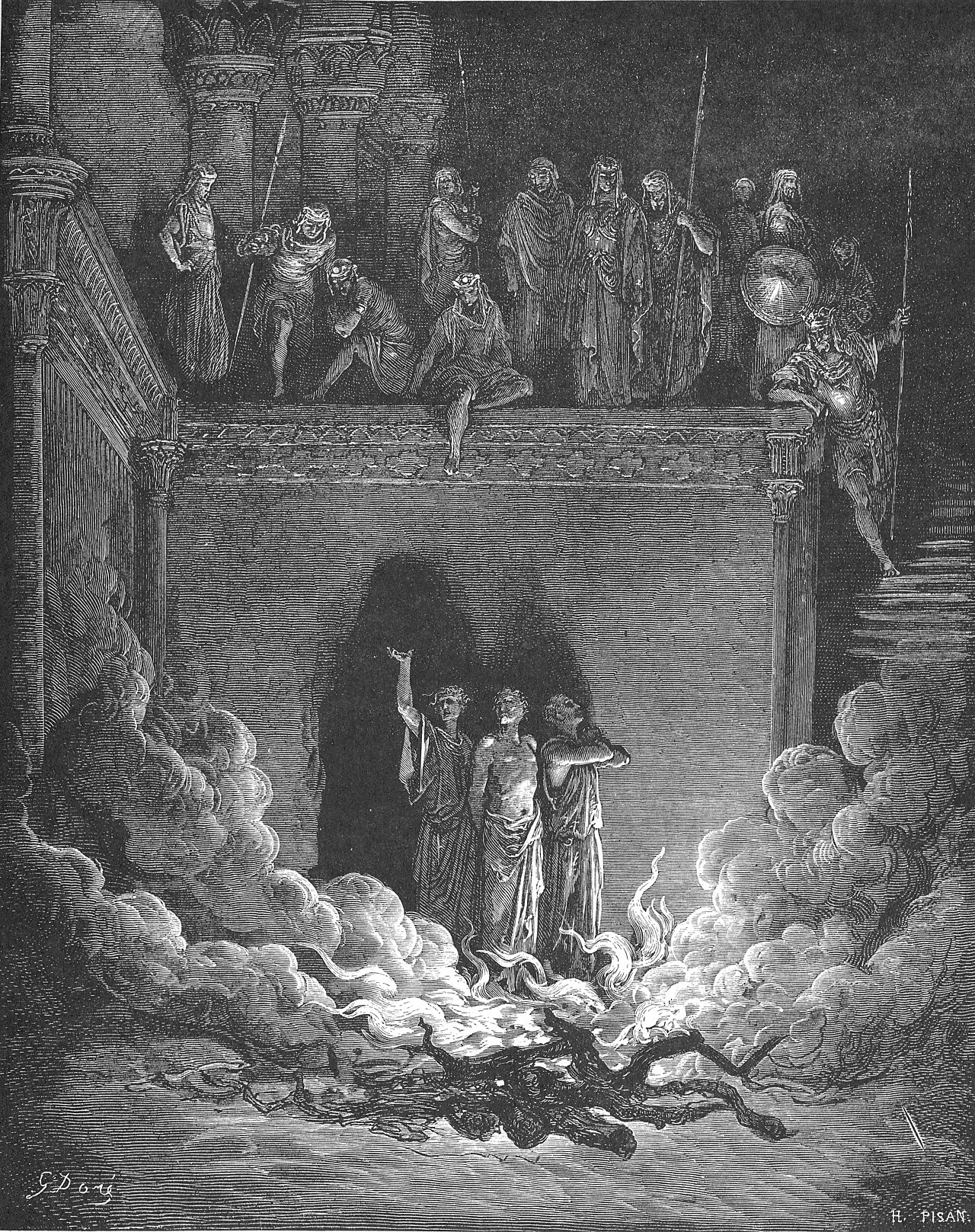
This page draws on Adam Clarke, Commentary on the Bible; Albert Barnes, Notes, Explanatory and Practical, on the Old and New Testaments (1832-1869); Carl Friedrich Keil, Biblical Commentary on the Book of Daniel; Jerome, St. Jerome, Commentary on Daniel, CHAPTER THREE; John Gill, Exposition of the Old Testament (1748-1763) and Matthew Henry, Commentary on the Whole Bible.