
Daniel 3:27
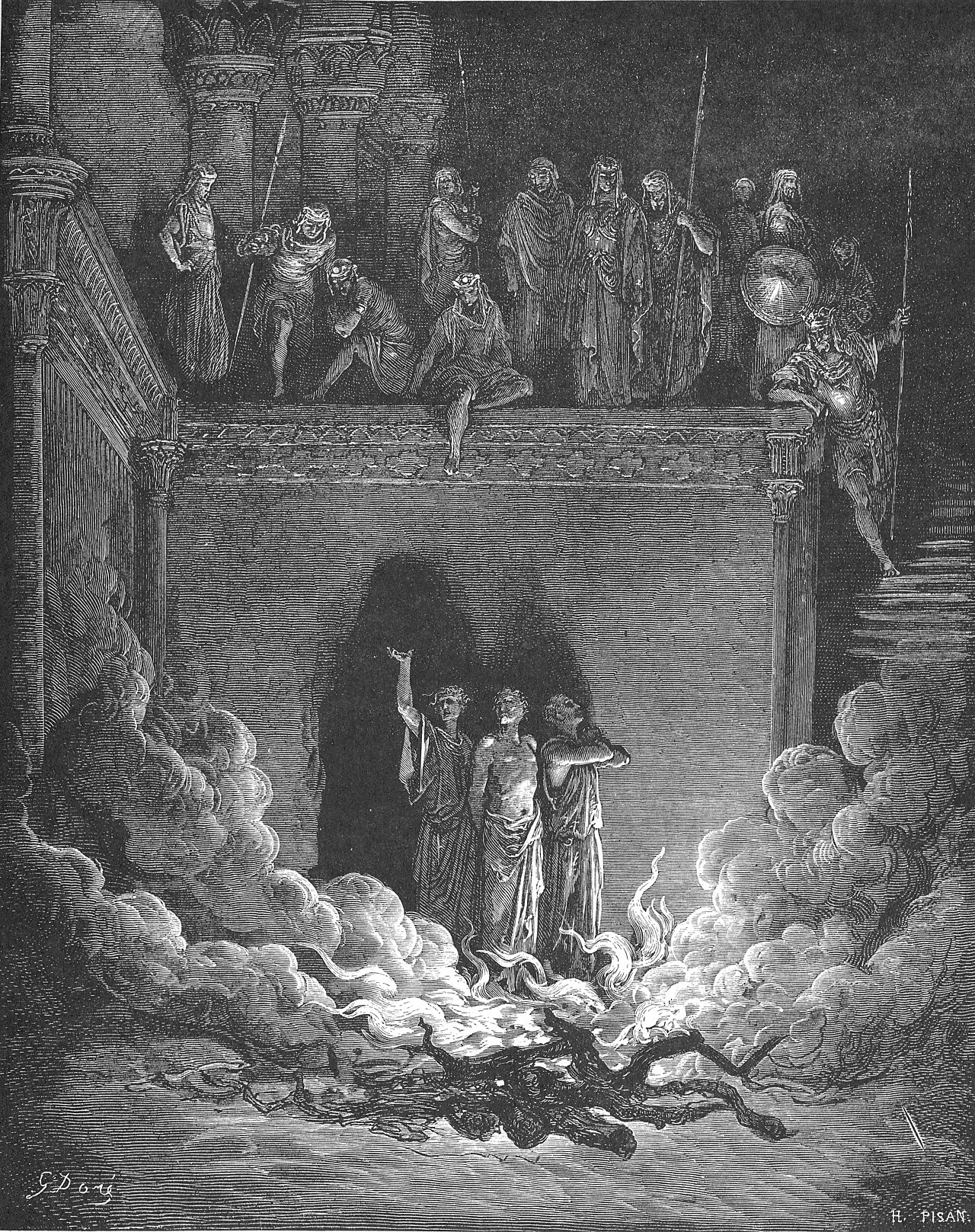
in Daniel 3and when the satraps, prefects, governors, and royal advisers had gathered around, they saw that the fire had no effect on the bodies of these men. Not a hair of their heads was singed, their robes were unaffected, and there was no smell of fire on them.
BSB
The same verse in ASV and KJV ▾
ASV
And the satraps, the deputies, and the governors, and the king’s counsellors, being gathered together, saw these men, that the fire had no power upon their bodies, nor was the hair of their head singed, neither were their hosen changed, nor had the smell of fire passed on them.
KJV
And the princes, governors, and captains, and the king’s counsellors, being gathered together, saw these men, upon whose bodies the fire had no power, nor was an hair of their head singed, neither were their coats changed, nor the smell of fire had passed on them.
⋯
This verse in Daniel 3
Commentary
12 notes on this verseA commentator
Albert Barnes1798–1870
Notes, Explanatory and Practical, on the Old and New Testaments (1832-1869)
And the princes, governors, and captains - Notes, Dan 3:3. And the king’s counselors - Notes, Dan 3:24. Being gathered together, saw these men - There could be no mistake about the reality of the miracle. They came out as they were cast in. There could have been no trick, no art, no legerdemain, by which they could have been preserved and restored. If the facts occurred as they are stated here, then there can be no doubt that this was a real miracle.
This site's exposition
Most High God, come out!
on Daniel 3:26-27
The king calls them “servants of the Most High God,” and only three come out. The officials gather and find “the fire had no effect on the bodies of these men,” with “no smell of fire on them”. Only their ropes burned, as verse 25 shows them walking free.
This site's exposition
no smell of fire on them
The officials summoned to the statue's dedication now stand as witnesses that the fire had no effect. Albert Barnes stresses that no trick was possible, for the men came out exactly as they had been thrown in. Jamieson, Fausset and Brown see Isaiah 43:2 fulfilled.
The record, by era
The Church Fathers5 voices
And you mimic the three boys and understand their faith! For they said to the king, "God is able to release us, but if he does not will, we are under the authority of God, we would rather gladly die than do what is prescribed by you." [Daniel 3:18] Whom then Nebuchadnezzar also seeing the pure and blameless boys coming out from the furnace was astounded and amazed. For neither was their hair singed nor their cloaks changed nor was the smell of fire in them.
For confession has power to quench even fire, power to tame even lions. But if thou disbelieve, consider what befel Ananias and his companions. What streams did they pour out? How many vessels of water could quench the flame that rose up forty-nine cubits high? Nay, but where the flame mounted up a little too high, faith was there poured out as a river, and there spake they the spell against all ills: Righteous art Thou, O Lord, in all the things that Thou hast done to us: for we have sinned, and transgressed Thy law. And their repentance quelled the flames. If thou believest not that repentance is able to quench the fire of hell, learn it from what happened in regard to Ananias.
"God shall wipe away all tears from their eyes, and there shall be no more death" and therefore no more corruption, it being chased away by incorruption, even as death is by immortality.… That the raiment and shoes of the children of Israel remained unworn and fresh for the space of forty years … that the fires of Babylon injured neither the cloaks nor the trousers of the three young men … that Jonah was swallowed by the monster of the deep, in whose belly whole ships were devoured and after three days was vomited out safe and sound—to what faith do these notable facts bear witness, if not to that which ought to inspire in us the belief that they are proofs … of our own future integrity and perfect resurrection?… They are written that we may believe both that the Lord is more powerful than all natural laws about the body, and that he shows himself the preserver of the flesh the more emphatically, in that he has preserved for the body even its very clothes and shoes.
Human weakness uses its acquaintance with things experienced to measure divine works that are beyond its experience and thinks it has made a keen observation when it says, "If there is flame, it is hot; if it is hot, it burns; if it burns, then it burned the bodies of the three men thrown into the fiery furnace by the wicked king." If then even those who might not understand the idea of divine works still believe that a miracle was wrought on these three men, why should we then not believe that he who prevented those bodies from being consumed by the fire also prevented his body from being consumed by fire or famine or disease or old age or any other of the forces by which corruption usually breaks down human bodies? But if anyone says that incorruption against the fire was not added to the flesh of the three men, but that the power of the destruction was taken away from the fire itself, why do we fear that he who took away the ability of the fire to destroy not make flesh that could not be destroyed?… The divine power is able to remove whatever qualities he wills from that visible and palpable nature of bodies, while some qualities remain unchanged; so he is able to add unwearying strength to mortal members, preserving the characteristic marks of their form, even when they have died because of the corruption of mortality, so that the mortal appearance is there but wasting disease is absent; motion is there, but fatigue is not; the ability to eat is there, but the necessity of hunger is not.
"And the satraps and captains and governors and princes of the king came together and they saw the men, that the fire did not have lordship of their body and the hair of their head was not burned and their cloaks were not worsened and the scent of fire was not in them." [Daniel 3:27]
4 more voices on this verse
The Puritans and the Awakening2 voices
That indeed a notable miracle has been done is manifest, and we cannot deny it, Acts iv. Let us now see what effect it had upon Nebuchadnezzar. He gives glory to the God of Israel as a God able and ready to protect his worshippers (
quarantine:debris (2026-07-29) — unbalanced-parens
And the princes, governors, and captains, and the king's counsellors, being gathered together,....
The Nineteenth Century2 voices
A commentator
Jamieson, Fausset & Brown1802–1910
Commentary Critical and Explanatory on the Whole Bible (1871)
proposed
nor . . . an hair-- (Lu 12:7; 21:18). fire had no power--fulfilling Isa 43:2; compare Heb 11:34. God alone is a "consuming fire" (Heb 12:29). nor . . . smell of fire--compare spiritually, 1Th 5:22.
quarantine:debris (2026-07-29) — starts-lowercase
Upon whose bodies the fire had no power - The heathens boasted that their priests could walk on burning coals unhurt; and Virgil mentions this of the priests of Apollo of Soracte: - Summe Deum, sancti custos Soractis Apollo! Quem primi colimus, cui pineus ardor acervo Pascitur; et medium, freti pietate, per ignem Cultores multa premimus vestigia pruna. Virg. Aen. 11:785. O Phoebus, guardian of Soracte’s woods And shady hills; a god above the gods; To whom our natives pay the rites divine, And burn whole crackling groves of hallowed pine; Walk through the fire in honor of thy name, Unhurt, unsinged, and sacred from the flame. Pitts. But Varro tells us that they anointed the soles of their feet with a species of unguent that preserved them from being burnt. Very lately a female showed many feats of this kind, putting red hot iron upon her arms, breasts, etc., and passing it over her hair without the slightest inconvenience; but in the case of the three Hebrews all was supernatural, and the king and his officers well knew it.
The words behind it
26 Hebrew wordsEvery Hebrew word of this verse in the order it stands, with what it means and the door to its own study. The last column counts the times a word stands in the whole Bible: the rarer the word, the more the places it appears belong together.
| Hebrew | Sound | Meaning | Word study | In the Bible |
|---|---|---|---|---|
| וּ֠מִֽתְכַּנְּשִׁין | umitkaneshin | and [were] gathered | H3673 → | 3 times |
| אֲחַשְׁדַּרְפְּנַיָּ֞א | ʾachashdarpenaiya' | satraps the | H324 → | 9 times |
| סִגְנַיָּ֣א | signaiya' | prefects the | H5460 → | 5 times |
| וּפַחֲוָתָא֮ | ufachavata' | and governors the | H6347 → | 10 times |
| וְהַדָּבְרֵ֣י | vehadaverei | and [the] counselors of | H1907 → | 4 times |
| מַלְכָּא֒ | malka' | king the | H4430 → | 180 times |
| חָזַ֣יִן | chazayin | [they were] seeing | H2370 → | 31 times |
| לְגֻבְרַיָּ֣א | leguvraiya' | <obj.> men the | H1400 → | 21 times |
| אִלֵּ֡ךְ | ʾilekh | these | H479 → | 14 times |
| דִּי֩ | di | that | H1768 → | 345 times |
| לָֽא־ | la'- | not | H3809 → | 82 times |
| שְׁלֵ֨ט | shelet | it had had power | H7981 → | 7 times |
| נוּרָ֜א | nura' | fire the | H5135 → | 17 times |
| בְּגֶשְׁמְה֗וֹן | begeshmehon | over body their | H1655 → | 5 times |
| וּשְׂעַ֤ר | usear | and [the] hair of | H8177 → | 3 times |
| רֵֽאשְׁהוֹן֙ | reshehon | head their | H7217 → | 14 times |
| לָ֣א | la' | not | H3809 → | 82 times |
| הִתְחָרַ֔ךְ | hitcharakh | it was singed | H2761 → | |
| וְסָרְבָּלֵיה֖וֹן | vesarebaleihon | and mantles their | H5622 → | |
| לָ֣א | la' | not | H3809 → | 82 times |
| שְׁנ֑וֹ | sheno | they were changed | H8133 → | 21 times |
| וְרֵ֣יחַ | vereiach | and [the] smell of | H7382 → | |
| נ֔וּר | nur | fire | H5135 → | 17 times |
| לָ֥א | la' | not | H3809 → | 82 times |
| עֲדָ֖ת | ʾadat | it had touched | H5709 → | 9 times |
| בְּהֽוֹן׃ | behon | on them |
וּ֠מִֽתְכַּנְּשִׁיןand [were] gathered
umitkaneshinH3673 →3 times
אֲחַשְׁדַּרְפְּנַיָּ֞אsatraps the
ʾachashdarpenaiya'H324 →9 times
סִגְנַיָּ֣אprefects the
signaiya'H5460 →5 times
וּפַחֲוָתָא֮and governors the
ufachavata'H6347 →10 times
וְהַדָּבְרֵ֣יand [the] counselors of
vehadavereiH1907 →4 times
מַלְכָּא֒king the
malka'H4430 →180 times
חָזַ֣יִן[they were] seeing
chazayinH2370 →31 times
לְגֻבְרַיָּ֣א<obj.> men the
leguvraiya'H1400 →21 times
אִלֵּ֡ךְthese
ʾilekhH479 →14 times
דִּי֩that
diH1768 →345 times
לָֽא־not
la'-H3809 →82 times
שְׁלֵ֨טit had had power
sheletH7981 →7 times
נוּרָ֜אfire the
nura'H5135 →17 times
בְּגֶשְׁמְה֗וֹןover body their
begeshmehonH1655 →5 times
וּשְׂעַ֤רand [the] hair of
usearH8177 →3 times
רֵֽאשְׁהוֹן֙head their
reshehonH7217 →14 times
לָ֣אnot
la'H3809 →82 times
הִתְחָרַ֔ךְit was singed
hitcharakhH2761 →
וְסָרְבָּלֵיה֖וֹןand mantles their
vesarebaleihonH5622 →
לָ֣אnot
la'H3809 →82 times
שְׁנ֑וֹthey were changed
shenoH8133 →21 times
וְרֵ֣יחַand [the] smell of
vereiachH7382 →
נ֔וּרfire
nurH5135 →17 times
לָ֥אnot
la'H3809 →82 times
עֲדָ֖תit had touched
ʾadatH5709 →9 times
בְּהֽוֹן׃on them
behon
A shaded row is a word that stands 400 times or fewer in the Bible.
The walk
8 stopsEach card is a verse this one points to, and under it the verses that one points to in turn. Where several paths arrive at the same place, that place is listed first: the text keeps returning to it.
Through
Isaiah 43:2When you pass through the waters, I will be with you; and when you go through the rivers, they will not overwhelm you. When you walk through the fire, you will not be scorched;…
it leads to
- Isaiah 41:10
Do not fear, for I am with you; do not be afraid, for I am your God. I will strengthen you; I will surely help you; I will uphold you with My right hand…
- Joshua 1:9
Have I not commanded you to be strong and courageous? Do not be afraid; do not be discouraged, for the LORD your God is with you wherever you go.”
- Psalms 66:12
You let men ride over our heads; we went through fire and water, but You brought us into abundance.
- Psalms 23:4
Even though I walk through the valley of the shadow of death, I will fear no evil, for You are with me; Your rod and Your staff, they comfort me.
- Daniel 3:25–27
“Look!” he exclaimed. “I see four men, unbound and unharmed, walking around in the fire—and the fourth looks like a son of the gods!”
- Isaiah 41:10
Through
Psalms 83:18May they know that You alone, whose name is the LORD, are Most High over all the earth.
it leads to
- Exodus 6:3
I appeared to Abraham, to Isaac, and to Jacob as God Almighty, but by My name the LORD I did not make Myself known to them.
- Ezekiel 38:23
I will magnify and sanctify Myself, and will reveal Myself in the sight of many nations. Then they will know that I am the LORD.
- Jeremiah 16:21
“Therefore behold, I will inform them, and this time I will make them know My power and My might; then they will know that My name is the LORD.
- Exodus 6:3
Where this verse is studied
On this page
About Daniel
This page draws on 11 works. Open the list of works
This page draws on Adam Clarke, Commentary on the Bible; Albert Barnes, Notes, Explanatory and Practical, on the Old and New Testaments (1832-1869); Augustine of Hippo, LETTER 205; Cyril of Jerusalem, ''Catechetical Lectures, Lecture 2''; Hippolytus of Rome, Commentary on Daniel 2.37.6-7; Hippolytus of Rome, Commentary on Daniel 2.34.4; Jamieson, Fausset & Brown, Commentary Critical and Explanatory on the Whole Bible; John Gill, Exposition of the Old Testament; John Gill, Exposition of the Old Testament (1748-1763); Matthew Henry, Commentary on the Whole Bible and Tertullian, ON THE RESURRECTION OF THE FLESH 58.