
Daniel 3:20
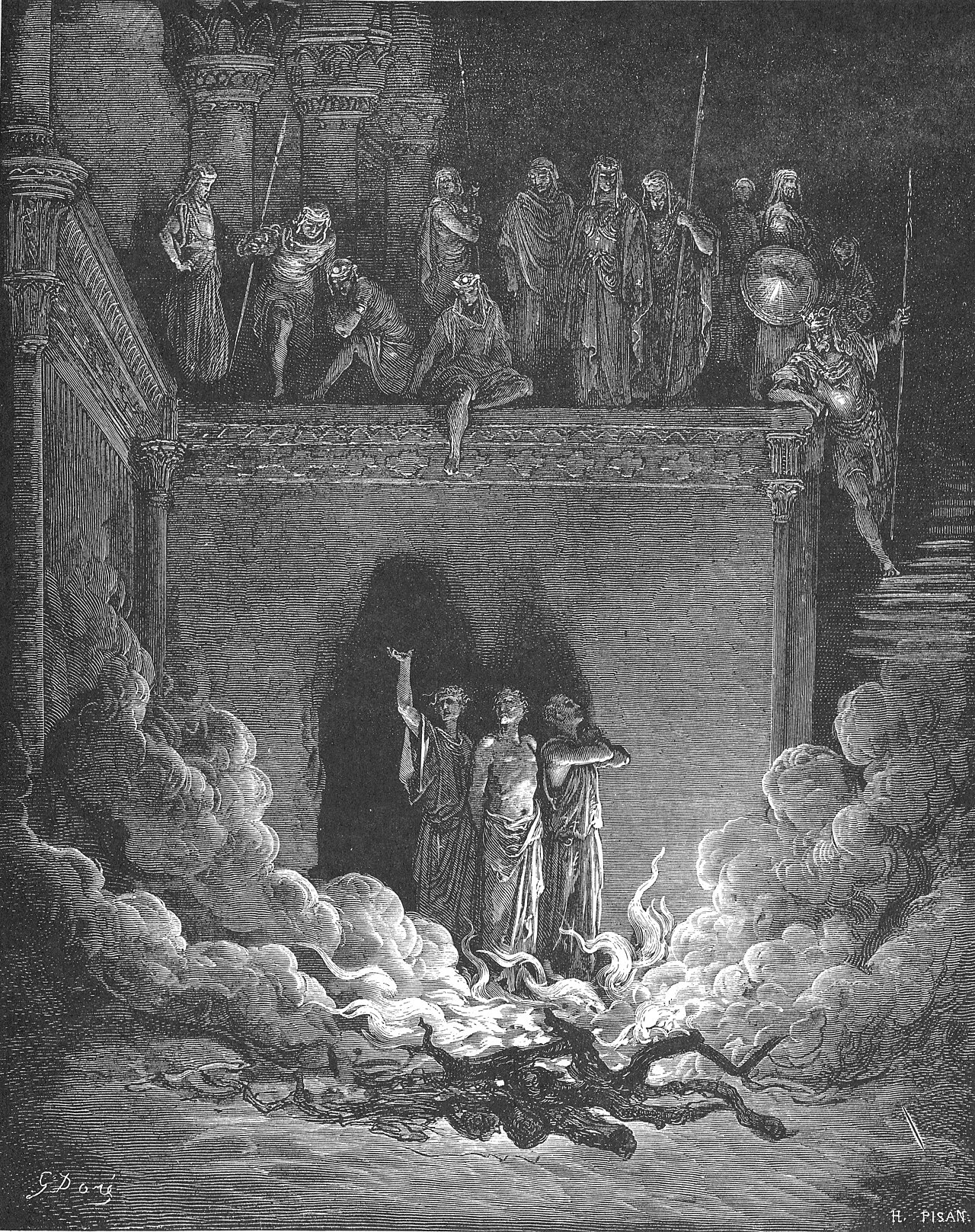
in Daniel 3and he commanded some mighty men of valor in his army to tie up Shadrach, Meshach, and Abednego and throw them into the blazing fiery furnace.
BSB
The same verse in ASV and KJV ▾
ASV
And he commanded certain mighty men that were in his army to bind Shadrach, Meshach, and Abed-nego, and to cast them into the burning fiery furnace.
KJV
And he commanded the most mighty men that were in his army to bind Shadrach, Meshach, and Abed–nego, and to cast them into the burning fiery furnace.
⋯
This verse in Daniel 3
Commentary
9 notes on this verseVerse 20. "And he gave orders that the furnace be fired to sevenfold intensity beyond its usual temperature, and he commanded the strongest men in his army to bind the legs of Shadrach, Meshach and Abednego and cast them into the furnace of flaming fire." Just as if the usual fire without multiplied intensity could not have consumed the youths' bodies! But a fury and rage which borders on madness can observe no bounds. Also he wished by the threat of intensified punishment to terrify those who seemed prepared for death.
This site's exposition
one seven times more
on Daniel 3:19-23
The king's face changes and the furnace is heated one seven times more than it was wont, fury doing physics no favors, since a hotter fire kills faster and the commentators note the order serves rage rather than punishment. The detail is court-precise: bound in their coats, their hosen, and their hats, the mightiest men of the army carrying them, and the flame slaying the executioners at the mouth, the chapter's proof before the miracle that this fire is real fire. The three fell down bound into the midst: the last the king's men see of them is men tied hand and foot in flame.
The record, by era
The Puritans and the Awakening5 voices
They were bound, that they might not struggle, or make any resistance, were bound in their clothes, for haste, or that they might be consumed the more slowly and gradually. But God's providence ordered it for the increase of the miracle, in that their clothes were not so much as singed.
To bind - What did he think these three men would have refused? Or that their God would defend them from his power, or that if he had, his mighty men could have prevailed? None of all this was the case; for God purposed to shew his power when the king did his worst, and in the thing wherein he dealt proudly, to be above him.
We are not careful - Hebrew. We care not: there is no need of any answer in this case for it is in vain for us to debate the matter; the king is resolved to have his will of us, and we are resolved on the contrary. But if not - It was therefore all one to them, which way God would honour himself; they were resolved to suffer rather than sin, and leave the cause to God.
And he commanded the most mighty men that were in his army,....
Their miraculous preservation in the fire by the power of God, and their invitation out of the fire by the favour of the king, who was by this miracle convinced of his error in casting them in,
2 more voices on this verse
The Nineteenth Century2 voices
The most mighty men - The generals, or chief officers of his army; not strong men, there was no need of such.
A commentator
Albert Barnes1798–1870
Notes, Explanatory and Practical, on the Old and New Testaments (1832-1869)
proposed
And he commanded the most mighty men that were in his army - Margin, “mighty of strength.” Chaldee, “And to mighty men, mighty men of strength who were in his army, he said.” He employed the strongest men that could be found for this purpose.
The words behind it
15 Hebrew wordsEvery Hebrew word of this verse in the order it stands, with what it means and the door to its own study. The last column counts the times a word stands in the whole Bible: the rarer the word, the more the places it appears belong together.
| Hebrew | Sound | Meaning | Word study | In the Bible |
|---|---|---|---|---|
| וּלְגֻבְרִ֤ין | uleguvrin | and to men | H1400 → | 21 times |
| גִּבָּֽרֵי־ | gibarei- | mighty men of | H1401 → | |
| חַ֙יִל֙ | chayil | power | H2429 → | 7 times |
| דִּ֣י | di | who | H1768 → | 345 times |
| בְחַיְלֵ֔הּ | vechayleh | [were] in army his | H2429 → | 7 times |
| אֲמַר֙ | ʾamar | he said | H560 → | 71 times |
| לְכַפָּתָ֔ה | lekhapatah | to bind | H3729 → | 4 times |
| לְשַׁדְרַ֥ךְ | leshadrakh | <obj.> Shadrach | H7715 → | 14 times |
| מֵישַׁ֖ךְ | meishakh | Meshach | H4336 → | 14 times |
| וַעֲבֵ֣ד | vaaved | and Abed- | H5665 → | 28 times |
| נְג֑וֹ | nego | -nego | H5665 → | 28 times |
| לְמִרְמֵ֕א | lemirme' | to throw | H7412 → | 12 times |
| לְאַתּ֥וּן | leatun | to [the] furnace of | H861 → | 10 times |
| נוּרָ֖א | nura' | fire the | H5135 → | 17 times |
| יָקִֽדְתָּֽא׃ | yakidta' | <the> burning | H3345 → | 8 times |
וּלְגֻבְרִ֤יןand to men
uleguvrinH1400 →21 times
גִּבָּֽרֵי־mighty men of
gibarei-H1401 →
חַ֙יִל֙power
chayilH2429 →7 times
דִּ֣יwho
diH1768 →345 times
בְחַיְלֵ֔הּ[were] in army his
vechaylehH2429 →7 times
אֲמַר֙he said
ʾamarH560 →71 times
לְכַפָּתָ֔הto bind
lekhapatahH3729 →4 times
לְשַׁדְרַ֥ךְ<obj.> Shadrach
leshadrakhH7715 →14 times
מֵישַׁ֖ךְMeshach
meishakhH4336 →14 times
וַעֲבֵ֣דand Abed-
vaavedH5665 →28 times
נְג֑וֹ-nego
negoH5665 →28 times
לְמִרְמֵ֕אto throw
lemirme'H7412 →12 times
לְאַתּ֥וּןto [the] furnace of
leatunH861 →10 times
נוּרָ֖אfire the
nura'H5135 →17 times
יָקִֽדְתָּֽא׃<the> burning
yakidta'H3345 →8 times
A shaded row is a word that stands 400 times or fewer in the Bible.
The walk
8 stopsEach card is a verse this one points to, and under it the verses that one points to in turn. Where several paths arrive at the same place, that place is listed first: the text keeps returning to it.
Through
Acts 16:25About midnight Paul and Silas were praying and singing hymns to God, and the other prisoners were listening to them.
it leads to
- 1 Thessalonians 5:16–18
Rejoice at all times.
- Psalms 119:62
At midnight I rise to give You thanks for Your righteous judgments.
- James 1:2
Consider it pure joy, my brothers, when you encounter trials of many kinds,
- 1 Peter 1:6–8
In this you greatly rejoice, though now for a little while you may have had to suffer grief in various trials
- Romans 5:3
Not only that, but we also rejoice in our sufferings, because we know that suffering produces perseverance;
- 1 Thessalonians 5:16–18
Through
Daniel 3:15Now, if you are ready, as soon as you hear the sound of the horn, flute, zither, lyre, harp, pipes, and all kinds of music, you must fall down and worship the statue I…
it leads to
- Acts 5:29
But Peter and the other apostles replied, “We must obey God rather than men.
- Exodus 5:2
But Pharaoh replied, “Who is the LORD that I should obey His voice and let Israel go? I do not know the LORD, and I will not let Israel go.”
- Acts 5:29
Through
Acts 16:23And after striking them with many blows, they threw them into prison and ordered the jailer to guard them securely.
it leads to
- Revelation 2:10
Do not fear what you are about to suffer. Look, the devil is about to throw some of you into prison to test you, and you will suffer tribulation for ten days. Be faithful…
- Revelation 2:10
Where this verse is studied
On this page
About Daniel
This page draws on Adam Clarke, Commentary on the Bible; Albert Barnes, Notes, Explanatory and Practical, on the Old and New Testaments (1832-1869); Carl Friedrich Keil, Biblical Commentary on the Book of Daniel; Jerome, St. Jerome, Commentary on Daniel, CHAPTER THREE; John Gill, Exposition of the Old Testament; John Gill, Exposition of the Old Testament (1748-1763); John Wesley, Explanatory Notes upon the Old Testament and Matthew Henry, Commentary on the Whole Bible.