
Daniel 3:14
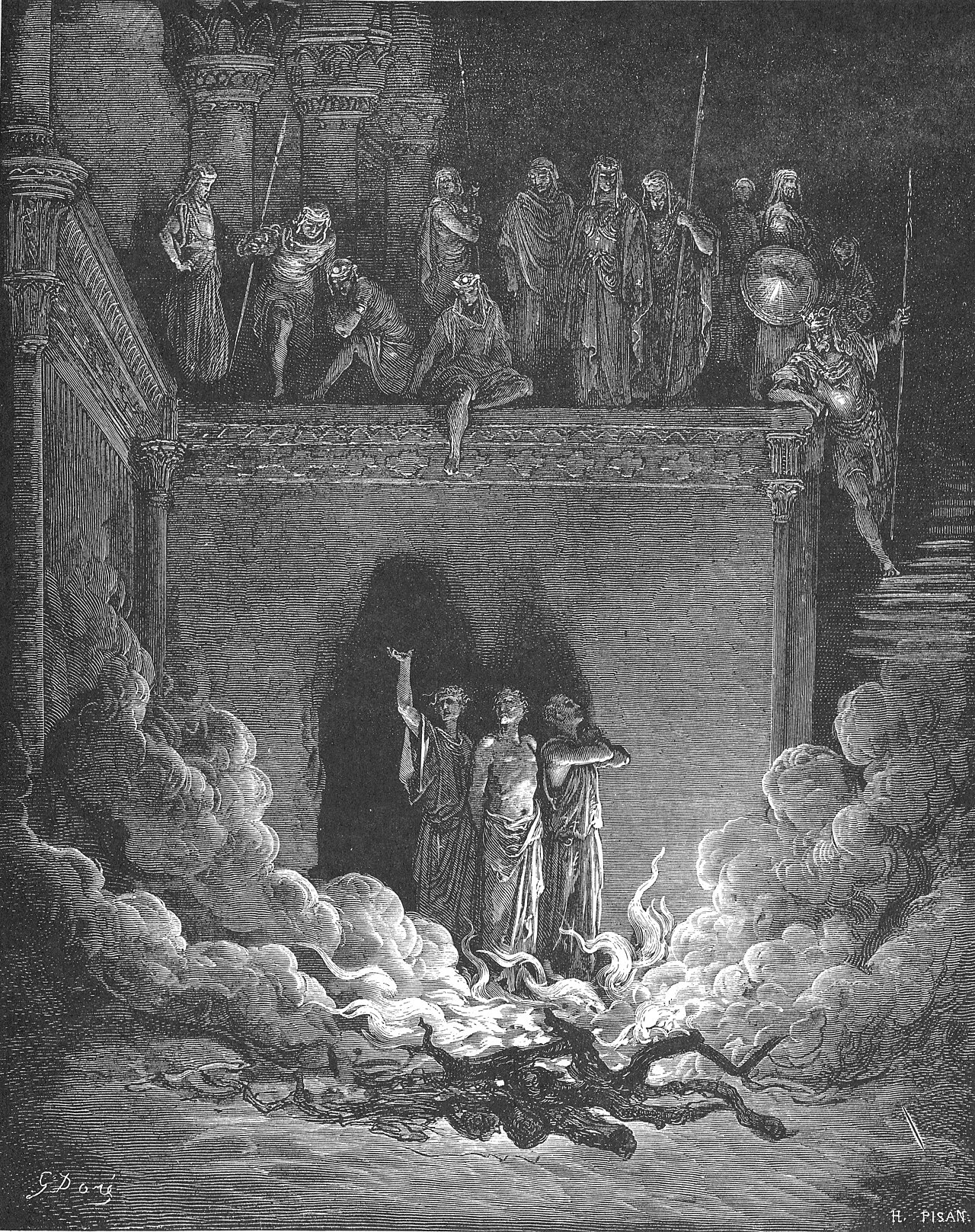
in Daniel 3and Nebuchadnezzar said to them, “Shadrach, Meshach, and Abednego, is it true that you do not serve my gods or worship the golden statue I have set up?
BSB
The same verse in ASV and KJV ▾
ASV
Nebuchadnezzar answered and said unto them, Is it of purpose, O Shadrach, Meshach, and Abed-nego, that ye serve not my god, nor worship the golden image which I have set up?
KJV
Nebuchadnezzar spake and said unto them, Is it true, O Shadrach, Meshach, and Abed–nego, do not ye serve my gods, nor worship the golden image which I have set up?
⋯
This verse in Daniel 3
Commentary
8 notes on this verseVerse 14. "Do ye not serve my gods, and do you not worship the golden statue which I have set up?..." Other authorities assert that it is the custom of Holy Scripture to speak of the one and same idol in the plural, just like the verse in Exodus concerning the calf: "These are thy gods, O Israel, who have brought thee out of the land of Egypt" (Exodus 32:4). Also in the Book of Kings, where Jeroboam is establishing the golden calf in Bethel, he is said to have fashioned idols (1 Kings 12:26-28).
This site's exposition
accused the Jews
on Daniel 3:8-15
Certain Chaldeans came near, and accused the Jews: the Aramaic idiom is ate the pieces of, malicious accusation as devouring, a philological note Keil and the bench carry. The charge is exact and the stakes are stated by the king himself, with the taunt that frames the whole chapter: who is that God that shall deliver you out of my hands? Nebuchadnezzar offers a second chance with the whole orchestra recited again, which the narrative's repetition makes faintly absurd, and the question he asks in scorn is the question the chapter exists to answer.
The record, by era
The Puritans and the Awakening2 voices
Nebuchadnezzar spake and said unto them, is it true,.... What I have heard of you, what you are charged with and accused of; surely it cannot be; so Aben Ezra and Saadiah interpret the word as we do, and all the Oriental versions: it is only used in this place: it is expressed by way of admiration, as Jacchiades observes; it being incredible to the king, what he could never believe, unless it appeared plain in his own eyes.
. " Is it of purpose? " so some read it. "Was it designedly and deliberately done, or was it only through inadvertency, that you have not served my gods?
quarantine:debris (2026-07-29) — leading-punctuation+odd-straight-quotes
The Nineteenth Century3 voices
A commentator
Jamieson, Fausset & Brown1802–1910
Commentary Critical and Explanatory on the Whole Bible (1871)
Is it true--rather, as the Margin [THEODOTION], "Is it purposely that?" &c. Compare the Hebrew, Nu 35:20, 22. Notwithstanding his "fury," his past favor for them disposes him to give them the opportunity of excusing themselves on the ground that their disobedience had not been intentional; so he gives them another trial to see whether they would still worship the image.
DEAR Friends who are not yet decided, if you would become followers of the Lord Jesus Christ it will be well for you to count the cost. It was our Lord's custom to bid men consider what His service might involve. His frequent declaration was, "He that takes not his cross, and follows after Me, is not worthy of Me." He knew and would have us know that it is no child's play to be a soldier of the Cross. If we count upon ease in this warfare, we shall be grievously disappointed. We must fight if we would reign.
DEAR Friends who are not yet decided, if you would become followers of the Lord Jesus Christ it will be well for you to count the cost. It was our Lord's custom to bid men consider what His service might involve. His frequent declaration was, "He that takes not his cross, and follows after Me, is not worthy of Me." He knew and would have us know that it is no child's play to be a soldier of the Cross. If we count upon ease in this warfare, we shall be grievously disappointed. We must fight if we would reign. One reason for this is that the world, like Nebuchadnezzar, expects us all to follow its fashions and to obey its rules. The god of this world is the devil and he claims implicit obedience. Sin in some form or other is the image which Satan sets up and requires us to serve. The tyranny of the world is fierce and cruel—and those who will not worship its image will find that the burning fiery furnace has not yet cooled. If you mean to be a Christian and, therefore, intend to cast off the bondage of this present evil world, your resolve must be taken to bear all consequences rather than worship the idol of the hour. The world's flute, harp, sackbut and psaltery must sound in vain for you! A nobler music must charm your ears and make you bid defiance to the world's threats. The true Believer's stand must be taken and he must determine that he will obey God rather than man. That which commends itself to your conscience as right and pure and true, you must follow without reserve—but that which is wrong and foul and false—you must quit with fixed resolve! You cannot be Christ's disciple unless you have come to this point and abide by it, for Jesus leads only in the ways of righteousness. He who is a loyal subject of King Jesus will not attempt to live in sin and live in Grace, too, for he will know that no one can serve two masters.
1 more voice on this verse
The Nineteenth Century1 voice
A commentator
Albert Barnes1798–1870
Notes, Explanatory and Practical, on the Old and New Testaments (1832-1869)
proposed
Nebuchadnezzar spake and said unto them, Is it true - Margin, “of purpose;” that is, have you done this intentionally? Wintle renders this, “Is it insultingly?” Jacchiades says that the word is used to denote admiration or wonder, as if the king could not believe that it was possible that they could disregard so plain a command, when disobedience was accompanied with such a threat. De Dieu renders it, “Is it a joke?” That is, can you possibly be serious or in earnest that you disobey so positive a command?
The words behind it
19 Hebrew wordsEvery Hebrew word of this verse in the order it stands, with what it means and the door to its own study. The last column counts the times a word stands in the whole Bible: the rarer the word, the more the places it appears belong together.
| Hebrew | Sound | Meaning | Word study | In the Bible |
|---|---|---|---|---|
| עָנֵ֤ה | ʾaneh | [was] replying | H6032 → | 30 times |
| נְבֻֽכַדְנֶצַּר֙ | nevukhadnetzar | Nebuchadnezzar | H5020 → | 31 times |
| וְאָמַ֣ר | veamar | and [was] saying | H560 → | 71 times |
| לְה֔וֹן | lehon | to them | ||
| הַצְדָּ֕א | hatzda' | ¿ purpose | H6656 → | |
| שַׁדְרַ֥ךְ | shadrakh | O Shadrach | H7715 → | 14 times |
| מֵישַׁ֖ךְ | meishakh | Meshach | H4336 → | 14 times |
| וַעֲבֵ֣ד | vaaved | and Abed- | H5665 → | 28 times |
| נְג֑וֹ | nego | -nego | H5665 → | 28 times |
| לֵֽאלָהַ֗י | lelahai | to gods my | H426 → | 95 times |
| לָ֤א | la' | not | H3809 → | 82 times |
| אִֽיתֵיכוֹן֙ | ʾiteikhon | are you | H383 → | 17 times |
| פָּֽלְחִ֔ין | palechin | [are] paying reverence | H6399 → | 10 times |
| וּלְצֶ֧לֶם | uletzelem | and to [the] image of | H6755 → | 17 times |
| דַּהֲבָ֛א | dahava' | <the> gold | H1722 → | 23 times |
| דִּ֥י | di | which | H1768 → | 345 times |
| הֲקֵ֖ימֶת | hakeimet | I have set up | H6966 → | 35 times |
| לָ֥א | la' | not | H3809 → | 82 times |
| סָֽגְדִֽין׃ | sagedin | [you are] paying homage | H5457 → | 12 times |
עָנֵ֤ה[was] replying
ʾanehH6032 →30 times
נְבֻֽכַדְנֶצַּר֙Nebuchadnezzar
nevukhadnetzarH5020 →31 times
וְאָמַ֣רand [was] saying
veamarH560 →71 times
לְה֔וֹןto them
lehon
הַצְדָּ֕א¿ purpose
hatzda'H6656 →
שַׁדְרַ֥ךְO Shadrach
shadrakhH7715 →14 times
מֵישַׁ֖ךְMeshach
meishakhH4336 →14 times
וַעֲבֵ֣דand Abed-
vaavedH5665 →28 times
נְג֑וֹ-nego
negoH5665 →28 times
לֵֽאלָהַ֗יto gods my
lelahaiH426 →95 times
לָ֤אnot
la'H3809 →82 times
אִֽיתֵיכוֹן֙are you
ʾiteikhonH383 →17 times
פָּֽלְחִ֔ין[are] paying reverence
palechinH6399 →10 times
וּלְצֶ֧לֶםand to [the] image of
uletzelemH6755 →17 times
דַּהֲבָ֛א<the> gold
dahava'H1722 →23 times
דִּ֥יwhich
diH1768 →345 times
הֲקֵ֖ימֶתI have set up
hakeimetH6966 →35 times
לָ֥אnot
la'H3809 →82 times
סָֽגְדִֽין׃[you are] paying homage
sagedinH5457 →12 times
A shaded row is a word that stands 400 times or fewer in the Bible.
The walk
8 stopsEach card is a verse this one points to, and under it the verses that one points to in turn. Where several paths arrive at the same place, that place is listed first: the text keeps returning to it.
Through
Jeremiah 50:2“Announce and declare to the nations; lift up a banner and proclaim it; hold nothing back when you say, ‘Babylon is captured; Bel is put to shame; Marduk is shattered, her images are disgraced,…
it leads to
- Isaiah 21:9
Look, here come the riders, horsemen in pairs.” And one answered, saying: “Fallen, fallen is Babylon! All the images of her gods lie shattered on the ground!”
Reached by 2 separate paths from here.
- Isaiah 46:1
Bel crouches; Nebo cowers. Their idols weigh down beasts and cattle. The images you carry are burdensome, a load to the weary animal.
- Isaiah 21:9
Through
Isaiah 46:1Bel crouches; Nebo cowers. Their idols weigh down beasts and cattle. The images you carry are burdensome, a load to the weary animal.
it leads to
- Jeremiah 51:44
I will punish Bel in Babylon. I will make him spew out what he swallowed. The nations will no longer stream to him; even the wall of Babylon will fall.
Reached by 2 separate paths from here.
- Jeremiah 51:44
Through
Daniel 3:1King Nebuchadnezzar made a golden statue sixty cubits high and six cubits wide, and he set it up on the plain of Dura in the province of Babylon.
it leads to
- Habakkuk 2:19
Woe to him who says to wood, ‘Awake!’ or to silent stone, ‘Arise!’ Can it give guidance? Behold, it is overlaid with gold and silver, yet there is no breath in it at all.”
- Jeremiah 16:20
Can man make gods for himself? Such are not gods!”
- Isaiah 46:6
They pour out their bags of gold and weigh out silver on scales; they hire a goldsmith to fashion it into a god, so they can bow down and worship.
- Hosea 8:4
They set up kings, but not by Me. They make princes, but without My approval. With their silver and gold they make themselves idols, to their own destruction.
- Acts 19:26
And you can see and hear that not only in Ephesus, but in nearly the whole province of Asia, Paul has persuaded a great number of people to turn away. He says that man-made…
- Habakkuk 2:19
Where this verse is studied
On this page
About Daniel
This page draws on Albert Barnes, Notes, Explanatory and Practical, on the Old and New Testaments (1832-1869); Carl Friedrich Keil, Biblical Commentary on the Book of Daniel; Charles Spurgeon, The Metropolitan Tabernacle Pulpit, Sermon No. 1930: “Is It True?” (lightly modernized text, CCEL edition); Jamieson, Fausset & Brown, Commentary Critical and Explanatory on the Whole Bible; Jerome, St. Jerome, Commentary on Daniel, CHAPTER THREE; John Gill, Exposition of the Old Testament; John Gill, Exposition of the Old Testament (1748-1763) and Matthew Henry, Commentary on the Whole Bible.