
2 Samuel 18:17
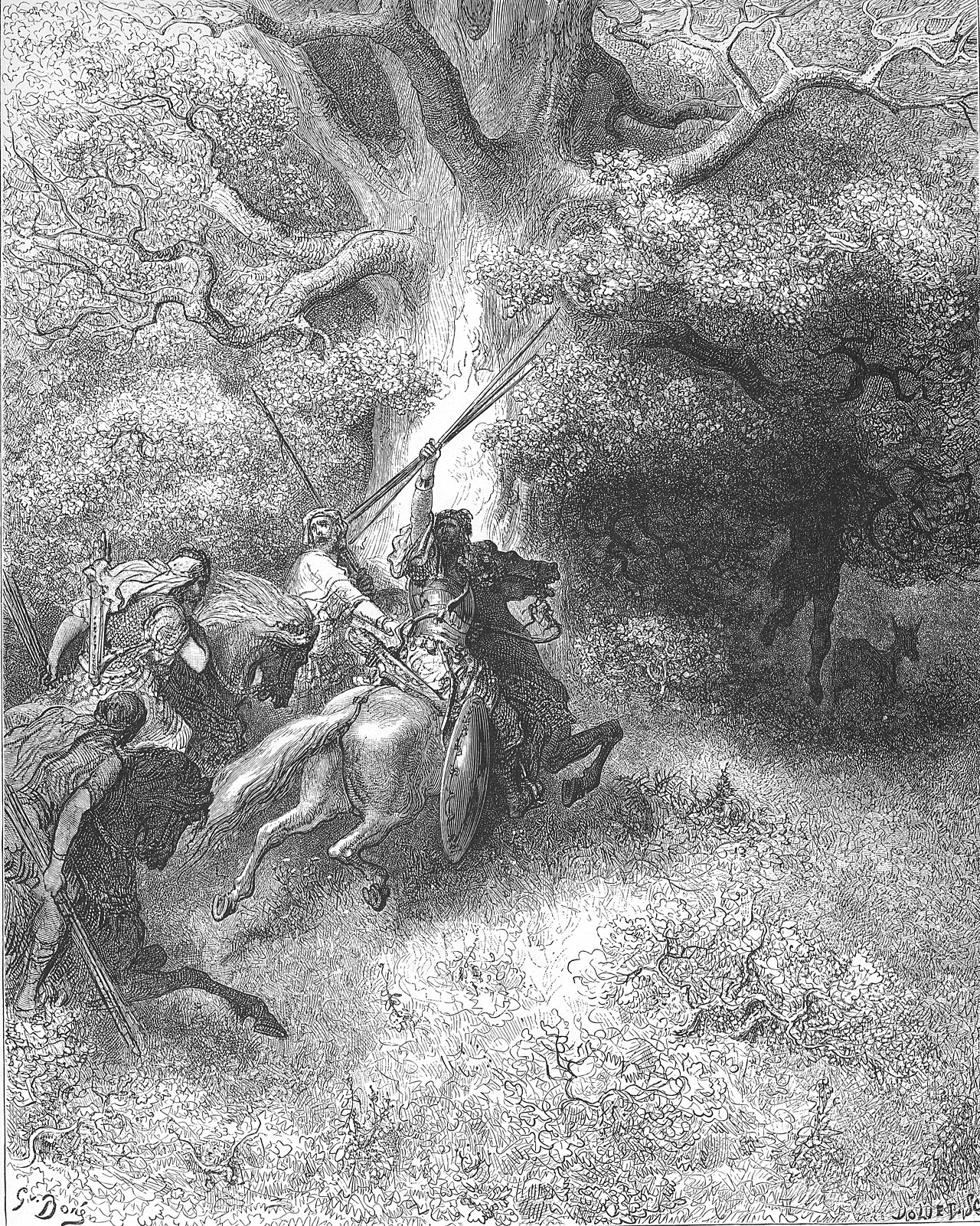
in 2 Samuel 18They took Absalom, cast him into a large pit in the forest, and piled a huge mound of stones over him. Meanwhile, all the Israelites fled, each to his home.
BSB
The same verse in ASV and KJV ▾
ASV
And they took Absalom, and cast him into the great pit in the forest, and raised over him a very great heap of stones: and all Israel fled every one to his tent.
KJV
And they took Absalom, and cast him into a great pit in the wood, and laid a very great heap of stones upon him: and all Israel fled every one to his tent.
⋯
This verse in 2 Samuel 18
Commentary
9 notes on this verseAnd laid a very great heap of stones - This was the method of burying heroes, and even traitors, the heap of stones being designed to perpetuate the memory of the event, whether good or bad. The ancient cairns or heaps of stones, in different parts of the world, are of this kind. The various tumuli or barrows in England are the same as the cairns in different parts of Ireland and Scotland. In the former, stones were not plenty; hence they heaped up great mounds of earth.
This site's exposition
Joab held back the people
on 2 Samuel 18:16-17
Joab sounds the trumpet and the pursuit stops; the head of the revolt is dead, and further slaughter serves nothing more. Absalom's body is thrown into a pit in the wood and covered with a great heap of stones, the burial the ancient world gave a rebel rather than a prince, while the rest of Israel scatters to their own tents. Clarke notes the heap of stones was the standing way to mark a memory for good or ill, the same rite by which a hero and a traitor were both remembered on the ground where they fell.
This site's exposition
a huge mound of stones
Jamieson, Fausset and Brown note the Eastern custom of throwing stones on the grave of an infamous man, so the heap grows with every passerby. Ambrose of Milan sets this pit beside the pillar Absalom raised for himself in the King's Valley at verse 18. The monument he built stood empty.
The record, by era
The Church Fathers2 voices
And what shall I say of Peter who at the sixth hour went up upon the house-top, and there learnt the mystery of the baptism of the Gentiles. But the homicide Absalom had reared for himself a pillar in the King's dale, and then, after his death, he was cast into a great pit. So then the saints ascend unto the Lord, the wicked descend to crime; the saints are on the mountains, the wicked in the valleys; For God is the God of the hills, not of the plains.
A commentator
Augustine of HippoTHE CORRECTION OF THE DONATISTS 8.32 · Written in the 5th century.
proposed
But they, as we have sometimes said before in other places, do not charge themselves with what they do to us; while, on the other hand, they charge us with what they do to themselves. For which of our party is there who would desire, I do not say that one of them should perish but should even lose any of his possessions? But if the house of David could not earn peace on any other terms except that Absalom his son should have been slain in the war which he was waging against his father, although he had most carefully given strict injunctions to his followers that they should use their utmost endeavors to preserve him alive and safe, that his paternal affection might be able to pardon him on his repentance, what remained for him except to weep for the son that he had lost and to console himself in his sorrow by reflecting on the acquisition of peace for his kingdom?
The Puritans and the Awakening2 voices
And they took Absalom, and cast him into a great pit in the wood,....
Now where is the beauty he had been so proud of and for which he had been so much admired? Where are his aspiring projects, and the castles he had built in the air?
The Nineteenth Century1 voice
A commentator
Jamieson, Fausset & Brown1802–1910
Commentary Critical and Explanatory on the Whole Bible (1871)
proposed
they took Absalom, and cast him into a great pit . . . and laid a very great heap of stones upon him--The people of the East indicate their detestation of the memory of an infamous person by throwing stones at the place where he is buried. The heap is increased by the gradual accumulation of stones which passers-by add to it.
quarantine:debris (2026-07-29) — starts-lowercase
1 more voice on this verse
The Nineteenth Century1 voice
A commentator
Albert Barnes1798–1870
Notes, Explanatory and Practical, on the Old and New Testaments (1832-1869)
proposed
A great heap of stones - See the marginal reference. This kind of monument is common to almost all early nations.
The words behind it
20 Hebrew wordsEvery Hebrew word of this verse in the order it stands, with what it means and the door to its own study. The last column counts the times a word stands in the whole Bible: the rarer the word, the more the places it appears belong together.
| Hebrew | Sound | Meaning | Word study | In the Bible |
|---|---|---|---|---|
| וַיִּקְח֣וּ | vaiyikchu | and they took | H3947 → | 966 times |
| אֶת־ | ʾet- | <obj.> | H853 → | 10935 times |
| אַבְשָׁל֗וֹם | ʾavshalom | Absalom | H53 → | 110 times |
| וַיַּשְׁלִ֨יכוּ | vaiyashlikhu | and they threw | H7993 → | 125 times |
| אֹת֤וֹ | ʾoto | <obj.> him | H853 → | 10935 times |
| בַיַּ֙עַר֙ | vaiyaar | in the forest | H3293 → | 59 times |
| אֶל־ | ʾel- | into | H413 → | 5510 times |
| הַפַּ֣חַת | hapachat | the pit | H6354 → | |
| הַגָּד֔וֹל | hagadol | <the> great | H1419 → | 526 times |
| וַיַּצִּ֧בוּ | vaiyatzivu | and they set up | H5324 → | 75 times |
| עָלָ֛יו | ʾalav | over him | H5921 → | 5755 times |
| גַּל־ | gal- | a heap of | H1530 → | |
| אֲבָנִ֖ים | ʾavanim | stones | H68 → | 273 times |
| גָּד֣וֹל | gadol | great | H1419 → | 526 times |
| מְאֹ֑ד | meod | very | H3966 → | 300 times |
| וְכָל־ | vekhol | and all | H3605 → | 5413 times |
| יִשְׂרָאֵ֔ל | yisrael | Israel | H3478 → | 2507 times |
| נָ֖סוּ | nasu | they fled | H5127 → | 159 times |
| אִ֥ישׁ | ʾish | each | H376 → | 1663 times |
| לְאֹהָלָֽיו׃ ס | leohelo | to tents his | H168 → | 345 times |
וַיִּקְח֣וּand they took
vaiyikchuH3947 →966 times
אֶת־<obj.>
ʾet-H853 →10935 times
אַבְשָׁל֗וֹםAbsalom
ʾavshalomH53 →110 times
וַיַּשְׁלִ֨יכוּand they threw
vaiyashlikhuH7993 →125 times
אֹת֤וֹ<obj.> him
ʾotoH853 →10935 times
בַיַּ֙עַר֙in the forest
vaiyaarH3293 →59 times
אֶל־into
ʾel-H413 →5510 times
הַפַּ֣חַתthe pit
hapachatH6354 →
הַגָּד֔וֹל<the> great
hagadolH1419 →526 times
וַיַּצִּ֧בוּand they set up
vaiyatzivuH5324 →75 times
עָלָ֛יוover him
ʾalavH5921 →5755 times
גַּל־a heap of
gal-H1530 →
אֲבָנִ֖יםstones
ʾavanimH68 →273 times
גָּד֣וֹלgreat
gadolH1419 →526 times
מְאֹ֑דvery
meodH3966 →300 times
וְכָל־and all
vekholH3605 →5413 times
יִשְׂרָאֵ֔לIsrael
yisraelH3478 →2507 times
נָ֖סוּthey fled
nasuH5127 →159 times
אִ֥ישׁeach
ʾishH376 →1663 times
לְאֹהָלָֽיו׃ סto tents his
leoheloH168 →345 times
A shaded row is a word that stands 400 times or fewer in the Bible.
The walk
8 stopsEach card is a verse this one points to, and under it the verses that one points to in turn. Where several paths arrive at the same place, that place is listed first: the text keeps returning to it.
Through
Joshua 10:27At sunset Joshua ordered that they be taken down from the trees and thrown into the cave in which they had hidden. Then large stones were placed against the mouth of the cave, and…
it leads to
- Joshua 8:29
He hung the king of Ai on a tree until evening, and at sunset Joshua commanded that they take down the body from the tree and throw it down at the entrance of the…
Reached by 2 separate paths from here.
- Joshua 7:26
And they heaped over Achan a large pile of rocks that remains to this day. So the LORD turned from His burning anger. Therefore that place is called the Valley of Achor to this…
Reached by 2 separate paths from here.
- Joshua 8:29
Through
Joshua 8:29He hung the king of Ai on a tree until evening, and at sunset Joshua commanded that they take down the body from the tree and throw it down at the entrance of the…
it leads to
- Deuteronomy 21:22–23
If a man has committed a sin worthy of death, and he is executed, and you hang his body on a tree,
Reached by 2 separate paths from here.
- Deuteronomy 21:22–23
Through
2 Samuel 20:1Now a worthless man named Sheba son of Bichri, a Benjamite, happened to be there, and he blew the ram’s horn and shouted: “We have no share in David, no inheritance in Jesse’s son.…
it leads to
- 1 Kings 12:16
When all Israel saw that the king had refused to listen to them, they answered the king: “What portion do we have in David, and what inheritance in the son of Jesse? To your…
- 1 Kings 12:16
Through
Joshua 7:26And they heaped over Achan a large pile of rocks that remains to this day. So the LORD turned from His burning anger. Therefore that place is called the Valley of Achor to this…
it leads to
- Hosea 2:15
There I will give back her vineyards and make the Valley of Achor into a gateway of hope. There she will respond as she did in the days of her youth, as in the…
- Isaiah 65:10
Sharon will become a pasture for flocks, and the Valley of Achor a resting place for herds, for My people who seek Me.
- Deuteronomy 13:17
Nothing devoted to destruction shall cling to your hands, so that the LORD will turn from His fierce anger, grant you mercy, show you compassion, and multiply you as He swore to your fathers,
- Hosea 2:15
Through
2 Samuel 19:8So the king got up and sat in the gate, and all the people were told: “Behold, the king is sitting in the gate.” So they all came before the king. Meanwhile, the Israelites…
it leads to
- 2 Samuel 18:24
Now David was sitting between the two gates when the watchman went up to the roof of the gateway by the wall, looked out, and saw a man running alone.
- 2 Samuel 18:24
Where this verse is studied
On this page
Studies1
About 2 Samuel
This page draws on Adam Clarke, Commentary on the Bible; Albert Barnes, Notes, Explanatory and Practical, on the Old and New Testaments (1832-1869); Ambrose of Milan, Letter 28.2; Augustine of Hippo, THE CORRECTION OF THE DONATISTS 8.32; Jamieson, Fausset & Brown, Commentary Critical and Explanatory on the Whole Bible; John Gill, Exposition of the Old Testament; John Gill, Exposition of the Old Testament (1748-1763) and Matthew Henry, Commentary on the Whole Bible.