
2 Samuel 14:9
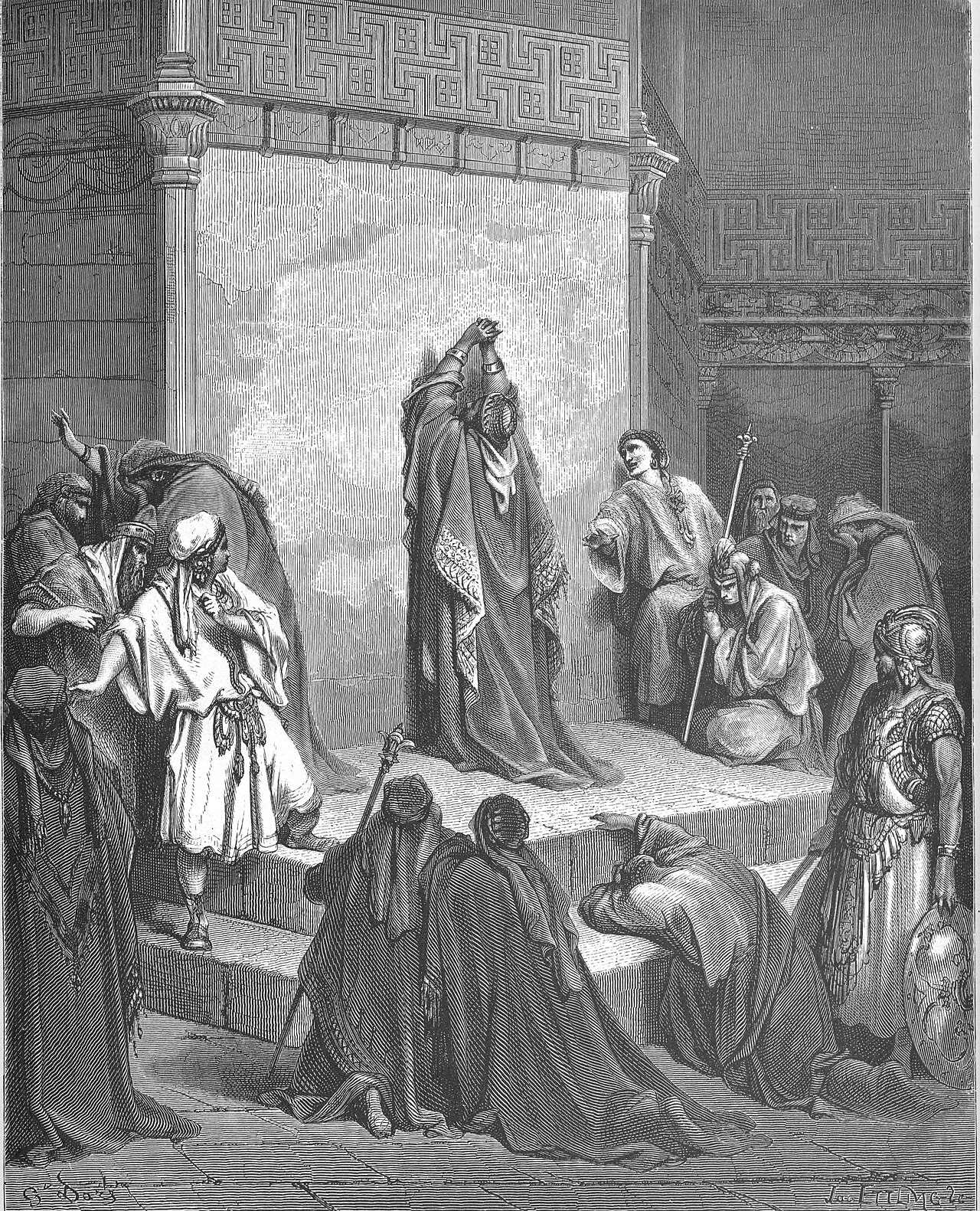
in 2 Samuel 14But the woman of Tekoa said to the king, “My lord the king, may any blame be on me and on my father’s house, and may the king and his throne be guiltless.”
BSB
The same verse in ASV and KJV ▾
ASV
And the woman of Tekoa said unto the king, My lord, O king, the iniquity be on me, and on my father’s house; and the king and his throne be guiltless.
KJV
And the woman of Tekoah said unto the king, My lord, O king, the iniquity be on me, and on my father’s house: and the king and his throne be guiltless.
⋯
This verse in 2 Samuel 14
Commentary
8 notes on this verseA commentator
Albert Barnes1798–1870
Notes, Explanatory and Practical, on the Old and New Testaments (1832-1869)
The iniquity be on me ... - Compare the principle in Gen 9:5-6; Num 35:30-34. The woman therefore says, if there is any such guilt in sparing my son, may it rest upon me and my house, not on David and his throne. Compare 2Sa 3:28. The cunning speech of the woman extracted a more direct promise of protection from the king 2Sa 14:1.
This site's exposition
I will give charge concerning thee
on 2 Samuel 14:8-11
The king's first answer is a bureaucrat's promise, I will give charge concerning thee, and the woman presses past it toward a binding oath. She invokes the Lord's name so that David swears, As the Lord liveth, there shall not one hair of thy son fall to the earth, a vow stronger than any decree he had yet offered. Clarke observes this was exactly what she was sent to extract, a public word the king could not later take back.
The record, by era
The Puritans and the Awakening3 voices
Yet her saying this would not acquit the king if he should pass sentence without taking due cognizance of the case. (3.) Being thus pressed, he made a further promise that she should not be injured nor insulted by her adversaries, but he would protect her from all molestation,
Be guiltless - If through thy forgetfulness or neglect of this my just cause, my adversaries prevail and destroy my son, my desire is, that God would not lay it to the king's charge, but rather to me and mine, so the king may be exempted thereby.
And the woman of Tekoah said unto the king, my lord and king,....
The Nineteenth Century2 voices
A commentator
Jamieson, Fausset & Brown1802–1910
Commentary Critical and Explanatory on the Whole Bible (1871)
proposed
This was exceeding the royal prerogative, and acting in the character of an absolute monarch. The woman's language refers to a common precaution taken by the Hebrew judges and magistrates, solemnly to transfer from themselves the responsibility of the blood they doomed to be shed, either to the accusers or the criminals (2Sa 1:16;
quarantine:debris (2026-07-29) — unbalanced-parens
A commentator
Jamieson, Fausset & Brown1802–1910
Commentary Critical and Explanatory on the Whole Bible (1871)
proposed
And Joab sent to Tekoah, and fetched thence a wise woman--The king was strongly attached to Absalom; and having now got over his sorrow for the violent death of Amnon, he was desirous of again enjoying the society of his favorite son, who had now been three long years absent.
1 more voice on this verse
The Nineteenth Century1 voice
The iniquity be on me - She intimates that, if the king should suppose that the not bringing the offender to the assigned punishment might reflect on the administration of justice in the land, she was willing that all blame should attach to her and her family, and the king and his throne be guiltless.
How the passage was read
What the Jewish commentators add
On the verses either side of this one
The king said, “Whoever says a word to you, bring him to me, and he shall never harm you again.”
This section is reception history: how the passage was read and kept in the Jewish tradition. Where a reading parts from an essential of the Christian faith, the section says so at that point.
Texts and citation data: Sefaria; each excerpt follows its version’s licence. 4 further sources are cited on this chapter that carry no English text this site may quote or only restate the verse.
The words behind it
15 Hebrew wordsEvery Hebrew word of this verse in the order it stands, with what it means and the door to its own study. The last column counts the times a word stands in the whole Bible: the rarer the word, the more the places it appears belong together.
| Hebrew | Sound | Meaning | Word study | In the Bible |
|---|---|---|---|---|
| וַתֹּ֜אמֶר | vatomer | and she said | H559 → | 5305 times |
| הָאִשָּׁ֤ה | haishah | the woman | H802 → | 781 times |
| הַתְּקוֹעִית֙ | hatekoit | <the> Tekoite | H8621 → | 7 times |
| אֶל־ | ʾel- | to | H413 → | 5510 times |
| הַמֶּ֔לֶךְ | hamelekh | the king | H4428 → | 2525 times |
| עָלַ֞י | ʾalai | [be] on me | H5921 → | 5755 times |
| אֲדֹנִ֥י | ʾadoni | O lord my | H113 → | 333 times |
| הַמֶּ֛לֶךְ | hamelekh | the king | H4428 → | 2525 times |
| הֶעָוֹ֖ן | heavon | the iniquity | H5771 → | 233 times |
| וְעַל־ | veal- | and on | H5921 → | 5755 times |
| בֵּ֣ית | beit | [the] house of | H1004 → | 2046 times |
| אָבִ֑י | ʾavi | father my | H1 → | 1212 times |
| וְהַמֶּ֥לֶךְ | vehamelekh | and the king | H4428 → | 2525 times |
| וְכִסְא֖וֹ | vekhiso | and throne his | H3678 → | 135 times |
| נָקִֽי׃ ס | naki | [be] innocent | H5355 → |
וַתֹּ֜אמֶרand she said
vatomerH559 →5305 times
הָאִשָּׁ֤הthe woman
haishahH802 →781 times
הַתְּקוֹעִית֙<the> Tekoite
hatekoitH8621 →7 times
אֶל־to
ʾel-H413 →5510 times
הַמֶּ֔לֶךְthe king
hamelekhH4428 →2525 times
עָלַ֞י[be] on me
ʾalaiH5921 →5755 times
אֲדֹנִ֥יO lord my
ʾadoniH113 →333 times
הַמֶּ֛לֶךְthe king
hamelekhH4428 →2525 times
הֶעָוֹ֖ןthe iniquity
heavonH5771 →233 times
וְעַל־and on
veal-H5921 →5755 times
בֵּ֣ית[the] house of
beitH1004 →2046 times
אָבִ֑יfather my
ʾaviH1 →1212 times
וְהַמֶּ֥לֶךְand the king
vehamelekhH4428 →2525 times
וְכִסְא֖וֹand throne his
vekhisoH3678 →135 times
נָקִֽי׃ ס[be] innocent
nakiH5355 →
A shaded row is a word that stands 400 times or fewer in the Bible.
The walk
8 stopsEach card is a verse this one points to, and under it the verses that one points to in turn. Where several paths arrive at the same place, that place is listed first: the text keeps returning to it.
Through
Matthew 27:25All the people answered, “His blood be on us and on our children!”
it leads to
- Joshua 2:19
If anyone goes out the door of your house into the street, his blood will be on his own head, and we will be innocent. But if a hand is laid on anyone with…
- Acts 5:28
“We gave you strict orders not to teach in this name,” he said. “Yet you have filled Jerusalem with your teaching and are determined to make us responsible for this man’s blood.”
- Acts 7:52
Which of the prophets did your fathers fail to persecute? They even killed those who foretold the coming of the Righteous One. And now you are His betrayers and murderers—
- 1 Thessalonians 2:15–16
who killed both the Lord Jesus and their own prophets, and drove us out as well. They are displeasing to God and hostile to all men,
- Deuteronomy 19:10
Thus innocent blood will not be shed in the land that the LORD your God is giving you as an inheritance, so that you will not be guilty of bloodshed.
- Joshua 2:19
Through
1 Samuel 25:24She fell at his feet and said, “My lord, may the blame be on me alone, but please let your servant speak to you; hear the words of your servant.
it leads to
- 1 Samuel 25:28
Please forgive your servant’s offense, for the LORD will surely make a lasting dynasty for my lord, because he fights the LORD’s battles. May no evil be found in you as long as you…
- Esther 8:3
And once again, Esther addressed the king. She fell at his feet weeping and begged him to revoke the evil scheme of Haman the Agagite, which he had devised against the Jews.
- 1 Samuel 25:28
Through
1 Kings 2:33Their blood will come back upon the heads of Joab and his descendants forever; but for David, his descendants, his house, and his throne, there shall be peace from the LORD forever.”
it leads to
- 1 Kings 2:32
The LORD will bring his bloodshed back upon his own head, for without the knowledge of my father David he struck down two men more righteous and better than he when he put to…
- 1 Kings 2:32
About 2 Samuel
Who and where
1 name in this verse with a page on the site.
This page draws on Adam Clarke, Commentary on the Bible; Albert Barnes, Notes, Explanatory and Practical, on the Old and New Testaments (1832-1869); Jamieson, Fausset & Brown, Commentary Critical and Explanatory on the Whole Bible; John Gill, Exposition of the Old Testament; John Gill, Exposition of the Old Testament (1748-1763); John Wesley, Explanatory Notes upon the Old Testament and Matthew Henry, Commentary on the Whole Bible.