
2 Samuel 1:7
in 2 Samuel 1When he turned around and saw me, he called out and I answered, ‘Here I am!’
BSB
The same verse in ASV and KJV ▾
ASV
And when he looked behind him, he saw me, and called unto me. And I answered, Here am I.
KJV
And when he looked behind him, he saw me, and called unto me. And I answered, Here am I.
⋯
This verse in 2 Samuel 1
Commentary
5 notes on this verseAnd when he looked behind him,.... To see how near the enemy was, and who were pursuing him: he saw me, and called unto me; by which it should rather seem that he belonged to the Philistines than to the Israelites, and as his being an Amalekite shows; for such an one would hardly be admitted among the latter, though it is most likely he was with neither, but happened to come that way just at that time: and I answered, here am I; ready to hear what thou hast to say, and do thy pleasure.
This site's exposition
How knowest thou that Saul
on 2 Samuel 1:5-7
David presses the man for his source, and the answer opens a second account of Saul's death standing beside the one already given in chapter 31, where Saul falls on his own sword after his armourbearer refuses to strike him. This Amalekite tells David instead that he happened by chance upon Gilboa and found Saul leaning on his spear with the chariots and horsemen closing in. Adam Clarke and most of the bench read the whole scene as the plunderer's invention, built to win favor with news he thinks David wants to hear, while Keil and Delitzsch weigh the same possibility without settling it outright. Both texts are left standing rather than forced into one story.
This site's exposition
he called out and I answered
John Gill reads Saul’s turn as a look back to see how near the Philistines had come. Gill doubts an Amalekite would stand in the camp of Israel, and he judges the man came from neither camp. He answered as a man ready to serve Saul.
The record, by era
The Puritans and the Awakening1 voice
), enquired what countryman he was, for, provided he was not a Philistine, he would gladly receive from his hand the coup de grace (as the French call it concerning those that are broken on the wheel)-- the merciful stroke, that might dispatch him out of his pain.
quarantine:debris (2026-07-29) — leading-punctuation+unbalanced-parens
The Nineteenth Century1 voice
A commentator
Jamieson, Fausset & Brown1802–1910
Commentary Critical and Explanatory on the Whole Bible (1871)
proposed
a man came out of the camp from Saul--As the narrative of Saul's death, given in the last chapter, is inspired, it must be considered the true account, and the Amalekite's story a fiction of his own, invented to ingratiate himself with David, the presumptive successor to the throne.
quarantine:debris (2026-07-29) — starts-lowercase
The words behind it
7 Hebrew wordsEvery Hebrew word of this verse in the order it stands, with what it means and the door to its own study. The last column counts the times a word stands in the whole Bible: the rarer the word, the more the places it appears belong together.
| Hebrew | Sound | Meaning | Word study | In the Bible |
|---|---|---|---|---|
| וַיִּ֥פֶן | vaiyifen | and he turned | H6437 → | 135 times |
| אַחֲרָ֖יו | ʾacharav | behind him | H310 → | 715 times |
| וַיִּרְאֵ֑נִי | vaiyireni | and he saw me | H7200 → | 1300 times |
| וַיִּקְרָ֣א | vaiyikra' | and he called | H7121 → | 733 times |
| אֵלָ֔י | ʾelai | to me | H413 → | 5510 times |
| וָאֹמַ֖ר | vaomar | and I said | H559 → | 5305 times |
| הִנֵּֽנִי׃ | hineni | here [am] I | H2005 → | 316 times |
וַיִּ֥פֶןand he turned
vaiyifenH6437 →135 times
אַחֲרָ֖יוbehind him
ʾacharavH310 →715 times
וַיִּרְאֵ֑נִיand he saw me
vaiyireniH7200 →1300 times
וַיִּקְרָ֣אand he called
vaiyikra'H7121 →733 times
אֵלָ֔יto me
ʾelaiH413 →5510 times
וָאֹמַ֖רand I said
vaomarH559 →5305 times
הִנֵּֽנִי׃here [am] I
hineniH2005 →316 times
A shaded row is a word that stands 400 times or fewer in the Bible.
The walk
8 stopsEach card is a verse this one points to, and under it the verses that one points to in turn. Where several paths arrive at the same place, that place is listed first: the text keeps returning to it.
Through
Isaiah 6:8Then I heard the voice of the Lord saying: “Whom shall I send? Who will go for Us?” And I said: “Here am I. Send me!”
it leads to
- Isaiah 65:1
“I revealed Myself to those who did not ask for Me; I was found by those who did not seek Me. To a nation that did not call My name, I said, ‘Here I…
Reached by 2 separate paths from here.
- Exodus 4:10–13
“Please, Lord,” Moses replied, “I have never been eloquent, neither in the past nor since You have spoken to Your servant, for I am slow of speech and tongue.”
- Acts 26:16–17
‘But get up and stand on your feet. For I have appeared to you to appoint you as a servant and as a witness of what you have seen from Me and what I…
- Ephesians 3:8
Though I am less than the least of all the saints, this grace was given me: to preach to the Gentiles the unsearchable riches of Christ,
- Acts 22:21
Then He said to me, ‘Go! I will send you far away to the Gentiles.’”
- Isaiah 65:1
Through
Isaiah 65:1“I revealed Myself to those who did not ask for Me; I was found by those who did not seek Me. To a nation that did not call My name, I said, ‘Here I…
it leads to
- Romans 10:20
And Isaiah boldly says: “I was found by those who did not seek Me; I revealed Myself to those who did not ask for Me.”
- Romans 9:24–26
including us, whom He has called not only from the Jews, but also from the Gentiles?
- 1 Peter 2:10
Once you were not a people, but now you are the people of God; once you had not received mercy, but now you have received mercy.
- Romans 10:20
Where this verse is studied
On this page
Studies1
About 2 Samuel
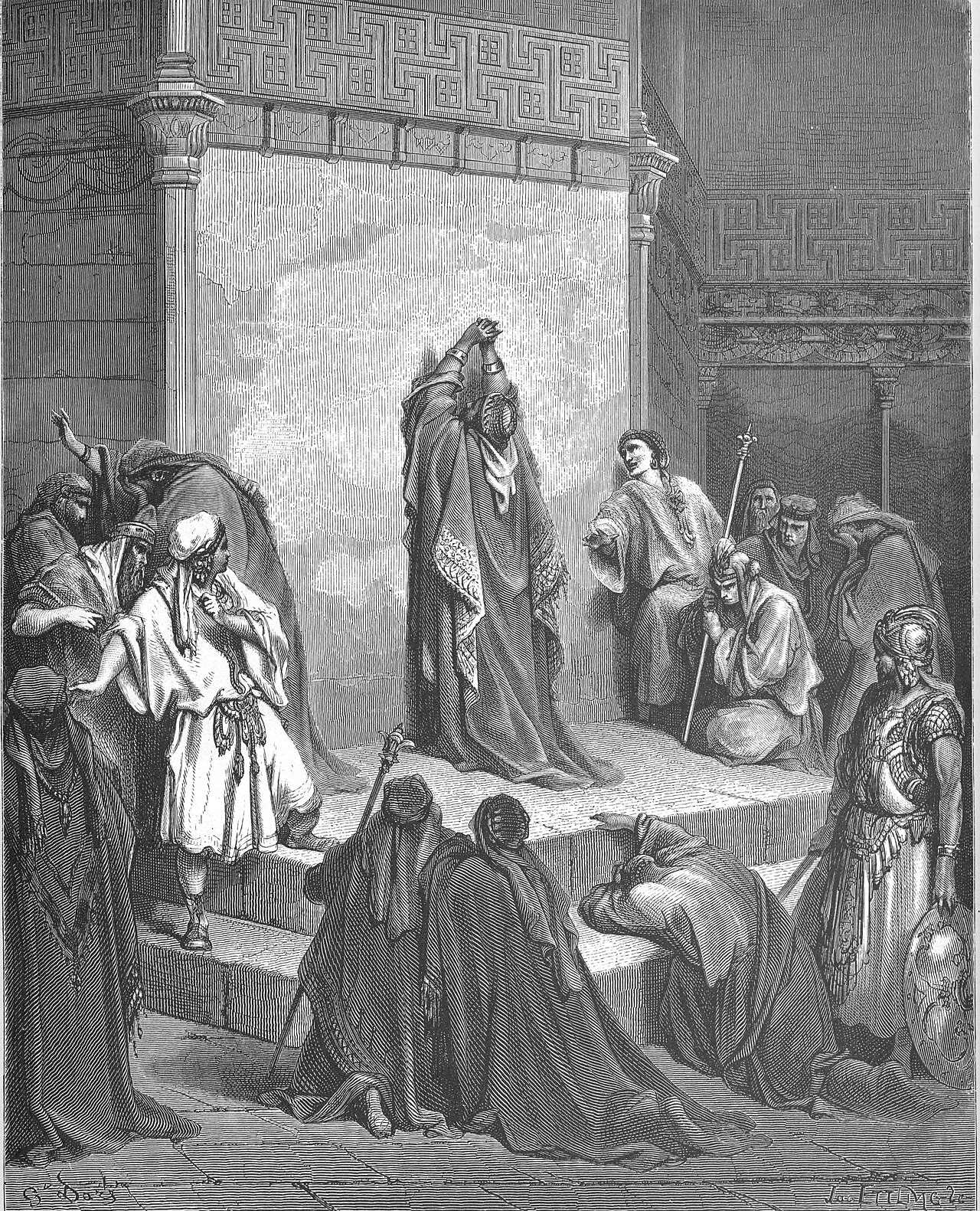
This page draws on Adam Clarke, Commentary on the Bible; Jamieson, Fausset & Brown, Commentary Critical and Explanatory on the Whole Bible; John Gill, Exposition of the Old Testament (1748-1763); Keil and Delitzsch, Biblical Commentary on the Books of Samuel and Matthew Henry, Commentary on the Whole Bible.