
2 Chronicles 20:25
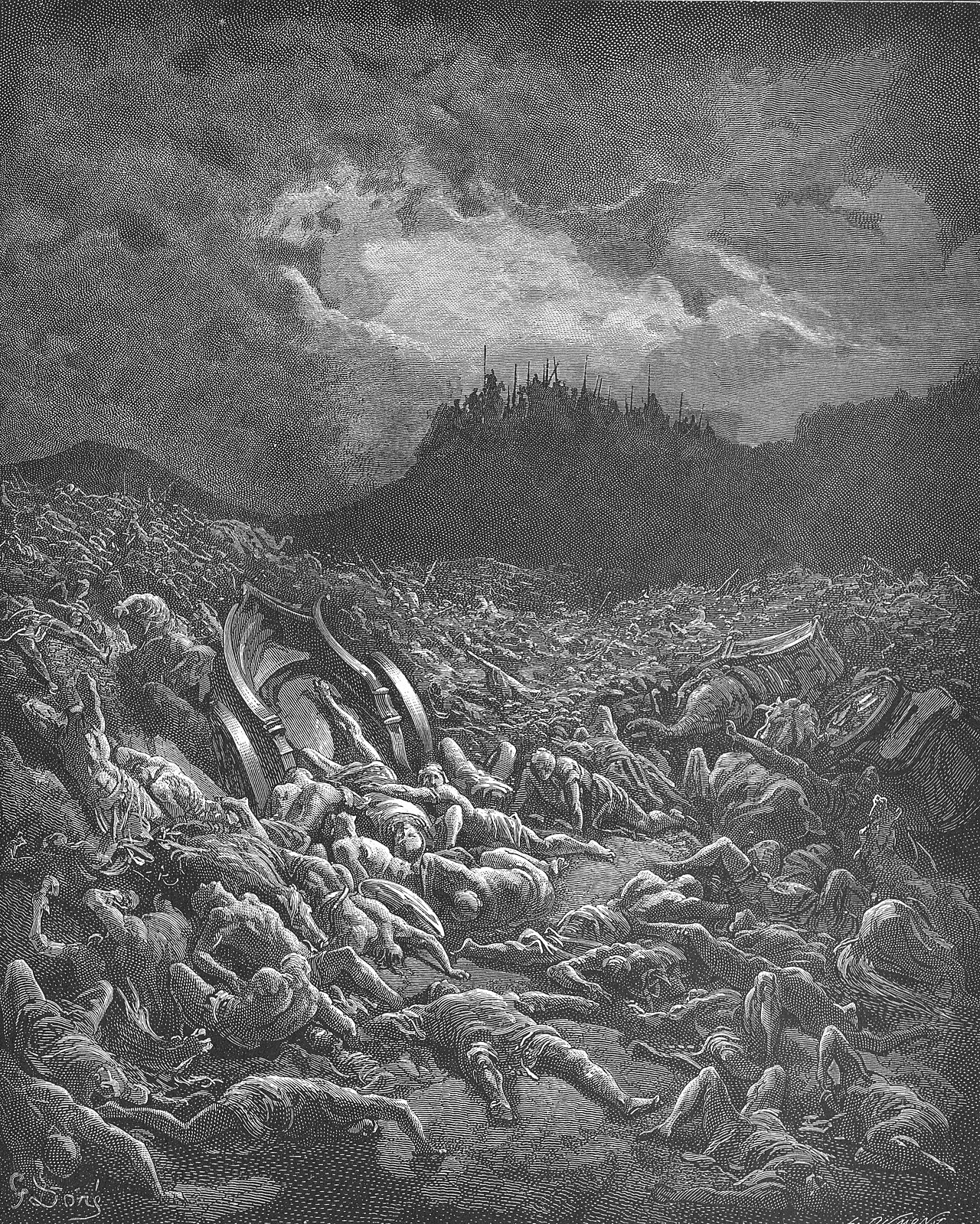
in 2 Chronicles 20Then Jehoshaphat and his people went to carry off the plunder, and they found on the bodies an abundance of goods and valuables—more than they could carry away. They were gathering the plunder for three days because there was so much.
BSB
The same verse in ASV and KJV ▾
ASV
And when Jehoshaphat and his people came to take the spoil of them, they found among them in abundance both riches and dead bodies, and precious jewels, which they stripped off for themselves, more than they could carry away: and they were three days in taking the spoil, it was so much.
KJV
And when Jehoshaphat and his people came to take away the spoil of them, they found among them in abundance both riches with the dead bodies, and precious jewels, which they stripped off for themselves, more than they could carry away: and they were three days in gathering of the spoil, it was so much.
⋯
This verse in 2 Chronicles 20
Commentary
5 notes on this verseBoth riches with the dead bodies - For פגרים peparim, dead bodies, בגדים begadim, garments, is the reading of eight MSS. in the collections of Kennicott and De Rossi, and in several ancient editions. None of the versions have dead bodies except the Chaldee. The words might be easily mistaken for each other, as the פ pe, if a little faint in the under dot might easily pass for a ב beth; and we know that the ר resh and ד daleth, are frequently interchanged and mistaken for each other, both in Hebrew and Syriac.
This site's exposition
toward the watch tower
on 2 Chronicles 20:24-25
From the watch tower Judah sees only dead bodies fallen to the earth, and none escaped: the battle was over before the army arrived, exactly as the oracle said. The spoil takes three days to gather and is more than they could carry away, the plunderers plundered and the treasure of three nations handed to the people who sang. The narrator counts the days because abundance is part of the testimony.
The record, by era
The Puritans and the Awakening2 voices
Now it appeared what was God's end in bringing this great army against Judah; it was to humble them and prove them, that he might do them good in their latter end. It seemed at first a disturbance to their reformation, but it proved a recompence of it. Never was victory celebrated with more solemn and enlarged thanksgivings.
And when Jehoshaphat and his people came to take the spoil of them,....
The Nineteenth Century1 voice
A commentator
Albert Barnes1798–1870
Notes, Explanatory and Practical, on the Old and New Testaments (1832-1869)
proposed
Riches with the dead bodies - Several manuscripts give another reading: “riches, and garments.”
The words behind it
26 Hebrew wordsEvery Hebrew word of this verse in the order it stands, with what it means and the door to its own study. The last column counts the times a word stands in the whole Bible: the rarer the word, the more the places it appears belong together.
| Hebrew | Sound | Meaning | Word study | In the Bible |
|---|---|---|---|---|
| וַיָּבֹ֨א | vaiyavo' | and he went | H935 → | 2568 times |
| יְהוֹשָׁפָ֣ט | yehoshafat | Jehoshaphat | H3092 → | 84 times |
| וְעַמּוֹ֮ | veamo | and people his | H5971 → | 1873 times |
| לָבֹ֣ז | lavoz | to plunder | H962 → | 43 times |
| אֶת־ | ʾet- | <obj.> | H853 → | 10935 times |
| שְׁלָלָם֒ | shelalam | booty their | H7998 → | 73 times |
| וַיִּמְצְאוּ֩ | vaiyimtzeu | and they found | H4672 → | 455 times |
| בָהֶ֨ם | vahem | among them | ||
| לָרֹ֜ב | laro | to abundance | H7230 → | 149 times |
| וּרְכ֤וּשׁ | urekhush | and property | H7399 → | 28 times |
| וּפְגָרִים֙ | ufegarim | and corpses | H6297 → | |
| וּכְלֵ֣י | ukhelei | and articles of | H3627 → | 325 times |
| חֲמֻד֔וֹת | chamudot | precious things | H2530 → | |
| וַיְנַצְּל֥וּ | vaynatzelu | and they plundered | H5337 → | 212 times |
| לָהֶ֖ם | lahem | for themselves | ||
| לְאֵ֣ין | leein | to there not | H369 → | 789 times |
| מַשָּׂ֑א | masa' | [was] carrying | H4853 → | 66 times |
| וַיִּֽהְי֞וּ | vaiyihyu | and they were | H1961 → | 3559 times |
| יָמִ֧ים | yamim | days | H3117 → | 2304 times |
| שְׁלוֹשָׁ֛ה | sheloshah | three | H7969 → | 432 times |
| בֹּזְזִ֥ים | bozezim | plundering | H962 → | 43 times |
| אֶת־ | ʾet- | <obj.> | H853 → | 10935 times |
| הַשָּׁלָ֖ל | hashalal | the booty | H7998 → | 73 times |
| כִּ֥י | ki | for | H3588 → | 4482 times |
| רַב־ | rav- | [was] much | H7227 → | 454 times |
| הֽוּא׃ | hu' | it | H1931 → | 1879 times |
וַיָּבֹ֨אand he went
vaiyavo'H935 →2568 times
יְהוֹשָׁפָ֣טJehoshaphat
yehoshafatH3092 →84 times
וְעַמּוֹ֮and people his
veamoH5971 →1873 times
לָבֹ֣זto plunder
lavozH962 →43 times
אֶת־<obj.>
ʾet-H853 →10935 times
שְׁלָלָם֒booty their
shelalamH7998 →73 times
וַיִּמְצְאוּ֩and they found
vaiyimtzeuH4672 →455 times
בָהֶ֨םamong them
vahem
לָרֹ֜בto abundance
laroH7230 →149 times
וּרְכ֤וּשׁand property
urekhushH7399 →28 times
וּפְגָרִים֙and corpses
ufegarimH6297 →
וּכְלֵ֣יand articles of
ukheleiH3627 →325 times
חֲמֻד֔וֹתprecious things
chamudotH2530 →
וַיְנַצְּל֥וּand they plundered
vaynatzeluH5337 →212 times
לָהֶ֖םfor themselves
lahem
לְאֵ֣יןto there not
leeinH369 →789 times
מַשָּׂ֑א[was] carrying
masa'H4853 →66 times
וַיִּֽהְי֞וּand they were
vaiyihyuH1961 →3559 times
יָמִ֧יםdays
yamimH3117 →2304 times
שְׁלוֹשָׁ֛הthree
sheloshahH7969 →432 times
בֹּזְזִ֥יםplundering
bozezimH962 →43 times
אֶת־<obj.>
ʾet-H853 →10935 times
הַשָּׁלָ֖לthe booty
hashalalH7998 →73 times
כִּ֥יfor
kiH3588 →4482 times
רַב־[was] much
rav-H7227 →454 times
הֽוּא׃it
hu'H1931 →1879 times
A shaded row is a word that stands 400 times or fewer in the Bible.
The walk
8 stopsEach card is a verse this one points to, and under it the verses that one points to in turn. Where several paths arrive at the same place, that place is listed first: the text keeps returning to it.
Through
Proverbs 3:15She is more precious than rubies; nothing you desire compares with her.
it leads to
- Proverbs 8:11
For wisdom is more precious than rubies, and nothing you desire compares with her.
- Psalms 73:25–26
Whom have I in heaven but You? And on earth I desire no one besides You.
- Romans 8:18
I consider that our present sufferings are not comparable to the glory that will be revealed in us.
- Job 28:18
Coral and quartz are unworthy of mention; the price of wisdom is beyond rubies.
- Proverbs 31:10
A wife of noble character, who can find? She is far more precious than rubies.
- Proverbs 8:11
Through
Psalms 68:12“Kings and their armies flee in haste; she who waits at home divides the plunder.
it leads to
- Joshua 10:16
Now the five kings had fled and hidden in the cave at Makkedah.
- Judges 5:19
Kings came and fought; then the kings of Canaan fought at Taanach by the waters of Megiddo, but they took no plunder of silver.
- Joshua 10:16
Through
Numbers 31:15“Have you spared all the women?” he asked them.
it leads to
- 1 Samuel 15:3
Now go and attack the Amalekites and devote to destruction all that belongs to them. Do not spare them, but put to death men and women, children and infants, oxen and sheep, camels and…
- 1 Samuel 15:3
About 2 Chronicles
This page draws on Adam Clarke, Commentary on the Bible; Albert Barnes, Notes, Explanatory and Practical, on the Old and New Testaments (1832-1869); John Gill, Exposition of the Old Testament; John Gill, Exposition of the Old Testament (1748-1763) and Matthew Henry, Commentary on the Whole Bible.