
2 Chronicles 20:24
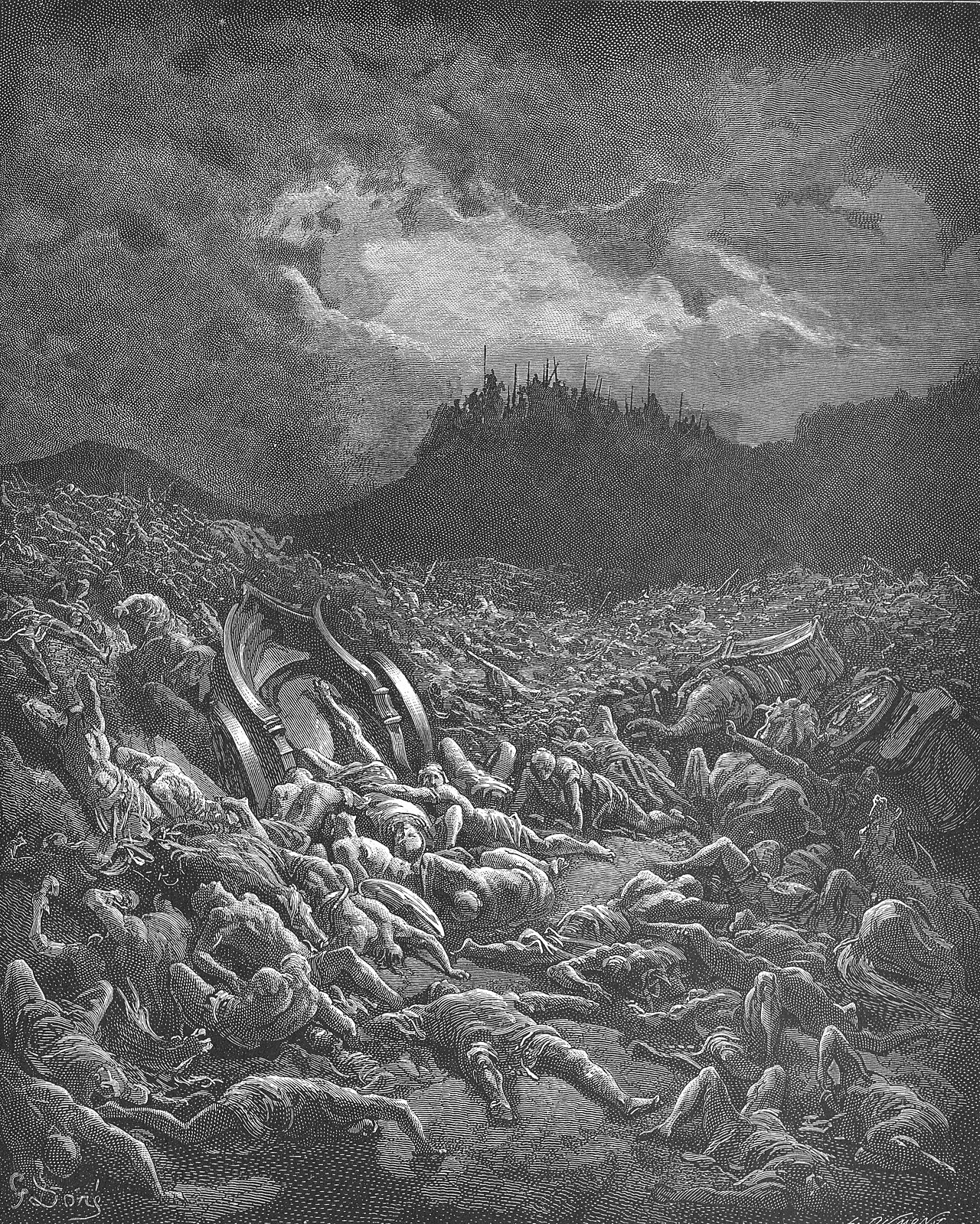
in 2 Chronicles 20When the men of Judah came to a place overlooking the wilderness, they looked for the vast army, but there were only corpses lying on the ground; no one had escaped.
BSB
The same verse in ASV and KJV ▾
ASV
And when Judah came to the watch-tower of the wilderness, they looked upon the multitude; and, behold, they were dead bodies fallen to the earth, and there were none that escaped.
KJV
And when Judah came toward the watch tower in the wilderness, they looked unto the multitude, and, behold, they were dead bodies fallen to the earth, and none escaped.
⋯
This verse in 2 Chronicles 20
Commentary
4 notes on this verseWhen Judah came towards the watch tower in the wilderness,.... Which might stand upon the hill or cliff of Ziz, for the sake of the direction of travellers, and the preservation of them from thieves and robbers: they looked unto the multitude; which they could take a view of from the top of the hill: and behold, they were dead bodies fallen to the earth, and none escaped; all to a man slain, there was not one to be seen standing on his feet.
This site's exposition
a place overlooking the wilderness
on 2 Chronicles 20:24-25
From “a place overlooking the wilderness” Judah sees “only corpses lying on the ground; no one had escaped”. The battle was over before the army arrived, as the oracle said. The plunder takes three days to gather and is “more than they could carry away”.
The record, by era
The Puritans and the Awakening1 voice
The plunder of the field was very great and very rich. They found precious jewels with the dead bodies, which yet could not save them from being loathsome carcases. The spoil was more than they could carry away at once, and they were three days in gathering it,
The Nineteenth Century1 voice
A commentator
Albert Barnes1798–1870
Notes, Explanatory and Practical, on the Old and New Testaments (1832-1869)
The march of Judah from Jerusalem would take five or six hours. By the time they reached the watch-towers in the wilderness of Jeruel all was over.
The words behind it
14 Hebrew wordsEvery Hebrew word of this verse in the order it stands, with what it means and the door to its own study. The last column counts the times a word stands in the whole Bible: the rarer the word, the more the places it appears belong together.
| Hebrew | Sound | Meaning | Word study | In the Bible |
|---|---|---|---|---|
| וִֽיהוּדָ֛ה | vihudah | and Judah | H3063 → | 819 times |
| בָּ֥א | ba' | it came | H935 → | 2568 times |
| עַל־ | ʾal- | to | H5921 → | 5755 times |
| הַמִּצְפֶּ֖ה | hamitzpeh | the watchtower | H4707 → | |
| לַמִּדְבָּ֑ר | lamidbar | of the wilderness | H4057 → | 270 times |
| וַיִּפְנוּ֙ | vaiyifnu | and they turned | H6437 → | 135 times |
| אֶל־ | ʾel- | to | H413 → | 5510 times |
| הֶ֣הָמ֔וֹן | hehamon | the multitude | H1995 → | 83 times |
| וְהִנָּ֧ם | vehinam | and there they | H2005 → | 316 times |
| פְּגָרִ֛ים | pegarim | [were] corpses | H6297 → | |
| נֹפְלִ֥ים | nofelim | lying | H5307 → | 435 times |
| אַ֖רְצָה | ʾartzah | [the] ground towards | H776 → | 2504 times |
| וְאֵ֥ין | veein | and there not | H369 → | 789 times |
| פְּלֵיטָֽה׃ | peleitah | [was] an escaped remnant | H6413 → | 28 times |
וִֽיהוּדָ֛הand Judah
vihudahH3063 →819 times
בָּ֥אit came
ba'H935 →2568 times
עַל־to
ʾal-H5921 →5755 times
הַמִּצְפֶּ֖הthe watchtower
hamitzpehH4707 →
לַמִּדְבָּ֑רof the wilderness
lamidbarH4057 →270 times
וַיִּפְנוּ֙and they turned
vaiyifnuH6437 →135 times
אֶל־to
ʾel-H413 →5510 times
הֶ֣הָמ֔וֹןthe multitude
hehamonH1995 →83 times
וְהִנָּ֧םand there they
vehinamH2005 →316 times
פְּגָרִ֛ים[were] corpses
pegarimH6297 →
נֹפְלִ֥יםlying
nofelimH5307 →435 times
אַ֖רְצָה[the] ground towards
ʾartzahH776 →2504 times
וְאֵ֥יןand there not
veeinH369 →789 times
פְּלֵיטָֽה׃[was] an escaped remnant
peleitahH6413 →28 times
A shaded row is a word that stands 400 times or fewer in the Bible.
The walk
8 stopsEach card is a verse this one points to, and under it the verses that one points to in turn. Where several paths arrive at the same place, that place is listed first: the text keeps returning to it.
Through
1 Chronicles 5:22and many others fell slain, because the battle belonged to God. And they occupied the land until the exile.
it leads to
- Joshua 23:10
One of you can put a thousand to flight, because the LORD your God fights for you, just as He promised.
- 2 Chronicles 32:8
With him is only the arm of flesh, but with us is the LORD our God to help us and to fight our battles.” So the people were strengthened by the words of Hezekiah…
- Romans 8:31
What then shall we say in response to these things? If God is for us, who can be against us?
- Joshua 23:10
Through
Isaiah 37:36Then the angel of the LORD went out and struck down 185,000 men in the camp of the Assyrians. When the people got up the next morning, there were all the dead bodies!
it leads to
- 2 Kings 19:35
And that very night the angel of the LORD went out and struck down 185,000 men in the camp of the Assyrians. When the people got up the next morning, there were all the…
- Isaiah 10:12
So when the Lord has completed all His work against Mount Zion and Jerusalem, He will say, “I will punish the king of Assyria for the fruit of his arrogant heart and the proud…
- 2 Kings 19:35
Through
Exodus 14:30That day the LORD saved Israel from the hand of the Egyptians, and Israel saw the Egyptians dead on the shore.
it leads to
- Psalms 106:8
Yet He saved them for the sake of His name, to make His power known.
- Psalms 106:10
He saved them from the hand that hated them; He redeemed them from the hand of the enemy.
- Psalms 106:8
Through
Ezra 9:14shall we again break Your commandments and intermarry with the peoples who commit these abominations? Would You not become so angry with us as to wipe us out, leaving no remnant or survivor?
it leads to
- Deuteronomy 9:8
At Horeb you provoked the LORD, and He was angry enough to destroy you.
- Deuteronomy 9:8
Where this verse is studied
On this page
About 2 Chronicles
Who and where
1 name in this verse with a page on the site.
This page draws on Albert Barnes, Notes, Explanatory and Practical, on the Old and New Testaments (1832-1869); John Gill, Exposition of the Old Testament (1748-1763); John Gill, Exposition of the Old Testament and Matthew Henry, Commentary on the Whole Bible.