
1 Samuel 24:19
in 1 Samuel 24When a man finds his enemy, does he let him go away unharmed? May the LORD reward you with good for what you have done for me this day.
BSB
The same verse in ASV and KJV ▾
ASV
For if a man find his enemy, will he let him go well away? wherefore Jehovah reward thee good for that which thou hast done unto me this day.
KJV
For if a man find his enemy, will he let him go well away? wherefore the Lord reward thee good for that thou hast done unto me this day.
⋯
This verse in 1 Samuel 24
Commentary
6 notes on this verseNot even this act of benevolence moved Saul, however. Again he gathered an army and again he set out in pursuit, until he was a second time apprehended by David in the cave where he more clearly revealed his own iniquity and made the virtue of David even more resplendent. Envy is the most savage form of hatred. Favors render those who are hostile to us for any other reason more tractable, but kind treatment shown to an envious and spiteful person only aggravates his dislike.
This site's exposition
thou hast dealt well with me
on 1 Samuel 24:18-20
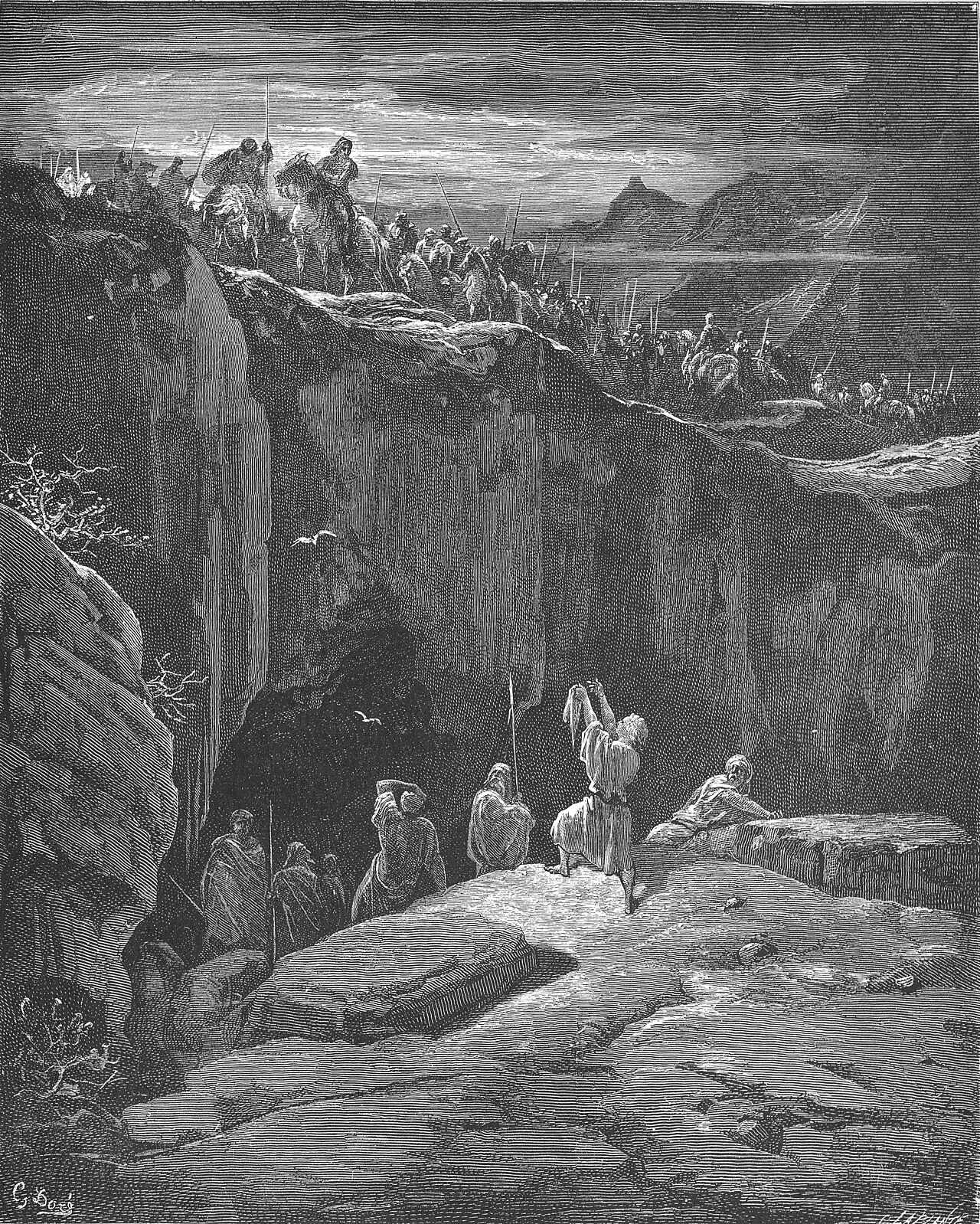
Saul states the plain fact of the day, when the Lord had delivered him into David's hand, David killed him not, and reasons from ordinary custom that no man lets his enemy go well away without cause. The confession climaxes at verse 20 with Saul saying outright what he had resisted for years, I know well that thou shalt surely be king, and that the kingdom of Israel shall be established in thine hand. Clarke notes the bitter edge under the admission: Saul knew this before, and pursued David to the death anyway.
This site's exposition
does he let him go away unharmed
Clarke renders the question as whether a man sends his enemy away on a good road. Henry commends Saul here for dropping a suspicion once it was proved false. Saul then leaves David's reward to the LORD.
The record, by era
The Puritans and the Awakening2 voices
David Spares Saul in the Cave. 1 And it came to pass, when Saul was returned from following the Philistines, that it was told him, saying, Behold, David is in the wilderness of Engedi.
quarantine:scripture (2026-07-29) — scripture-overlap:94%@v1-3
For if a man find his enemy, will he let him go well away?....
The Nineteenth Century1 voice
If a man find his enemy, will he let him go well away? - Or rather, Will he send him in a good way?
The words behind it
17 Hebrew wordsEvery Hebrew word of this verse in the order it stands, with what it means and the door to its own study. The last column counts the times a word stands in the whole Bible: the rarer the word, the more the places it appears belong together.
| Hebrew | Sound | Meaning | Word study | In the Bible |
|---|---|---|---|---|
| וְכִֽי־ | vekhi- | and if | H3588 → | 4482 times |
| יִמְצָ֥א | yimtza' | he will find | H4672 → | 455 times |
| אִישׁ֙ | ʾish | anyone | H376 → | 1663 times |
| אֶת־ | ʾet- | <obj.> | H853 → | 10935 times |
| אֹ֣יְב֔וֹ | ʾoyevo | enemy his | H341 → | 282 times |
| וְשִׁלְּח֖וֹ | veshilecho | and will he send away? him | H7971 → | 845 times |
| בְּדֶ֣רֶךְ | bederekh | on a journey | H1870 → | 707 times |
| טוֹבָ֑ה | tovah | good | H2896 → | 538 times |
| וַֽיהוָה֙ | vayahweh | and Yahweh | H3068 → | 6520 times |
| יְשַׁלֶּמְךָ֣ | yeshalemkha | may he reward you | H7999 → | |
| טוֹבָ֔ה | tovah | good | H2896 → | 538 times |
| תַּ֚חַת | tachat | in place of | H8478 → | 505 times |
| הַיּ֣וֹם | haiyom | the day | H3117 → | 2304 times |
| הַזֶּ֔ה | hazeh | <the> this | H2088 → | 1180 times |
| אֲשֶׁ֥ר | ʾasher | [that] which | H834 → | 5497 times |
| עָשִׂ֖יתָה | ʾasitah | you have done | H6213 → | 2628 times |
| לִֽי׃ | li | to <the> me |
וְכִֽי־and if
vekhi-H3588 →4482 times
יִמְצָ֥אhe will find
yimtza'H4672 →455 times
אִישׁ֙anyone
ʾishH376 →1663 times
אֶת־<obj.>
ʾet-H853 →10935 times
אֹ֣יְב֔וֹenemy his
ʾoyevoH341 →282 times
וְשִׁלְּח֖וֹand will he send away? him
veshilechoH7971 →845 times
בְּדֶ֣רֶךְon a journey
bederekhH1870 →707 times
טוֹבָ֑הgood
tovahH2896 →538 times
וַֽיהוָה֙and Yahweh
vayahwehH3068 →6520 times
יְשַׁלֶּמְךָ֣may he reward you
yeshalemkhaH7999 →
טוֹבָ֔הgood
tovahH2896 →538 times
תַּ֚חַתin place of
tachatH8478 →505 times
הַיּ֣וֹםthe day
haiyomH3117 →2304 times
הַזֶּ֔ה<the> this
hazehH2088 →1180 times
אֲשֶׁ֥ר[that] which
ʾasherH834 →5497 times
עָשִׂ֖יתָהyou have done
ʾasitahH6213 →2628 times
לִֽי׃to <the> me
li
A shaded row is a word that stands 400 times or fewer in the Bible.
The walk
8 stopsEach card is a verse this one points to, and under it the verses that one points to in turn. Where several paths arrive at the same place, that place is listed first: the text keeps returning to it.
Through
Psalms 18:20The LORD has rewarded me according to my righteousness; He has repaid me according to the cleanness of my hands.
it leads to
- Psalms 24:4
He who has clean hands and a pure heart, who does not lift up his soul to an idol or swear deceitfully.
- Psalms 58:11
Then men will say, “There is surely a reward for the righteous! There is surely a God who judges the earth!”
- 1 Corinthians 3:8
He who plants and he who waters are one in purpose, and each will be rewarded according to his own labor.
- Matthew 6:4
so that your giving may be in secret. And your Father, who sees what is done in secret, will reward you.
- Job 22:30
He will deliver even one who is not innocent, rescuing him through the cleanness of your hands.”
- Psalms 24:4
Through
Judges 17:2said to his mother, “The eleven hundred shekels of silver that were taken from you and about which I heard you utter a curse—I have the silver here with me; I took it.” Then…
it leads to
- Nehemiah 13:25
I rebuked them and called down curses on them. I beat some of these men and pulled out their hair. Then I made them take an oath before God and said, “You must not…
- Ruth 3:10
Then Boaz said, “May the LORD bless you, my daughter. You have shown more kindness now than before, because you have not run after the younger men, whether rich or poor.
- Nehemiah 13:25
Through
1 Samuel 23:21“May you be blessed by the LORD,” replied Saul, “for you have had compassion on me.
it leads to
- 1 Samuel 22:8
Is that why all of you have conspired against me? Not one of you told me that my own son had made a covenant with the son of Jesse. Not one of you has…
- 1 Samuel 22:8
About 1 Samuel
This page draws on Adam Clarke, Commentary on the Bible; Basil of Caesarea, CONCERNING ENVY; John Gill, Exposition of the Old Testament (1748-1763) and Matthew Henry, Commentary on the Whole Bible.