
1 Samuel 20:41
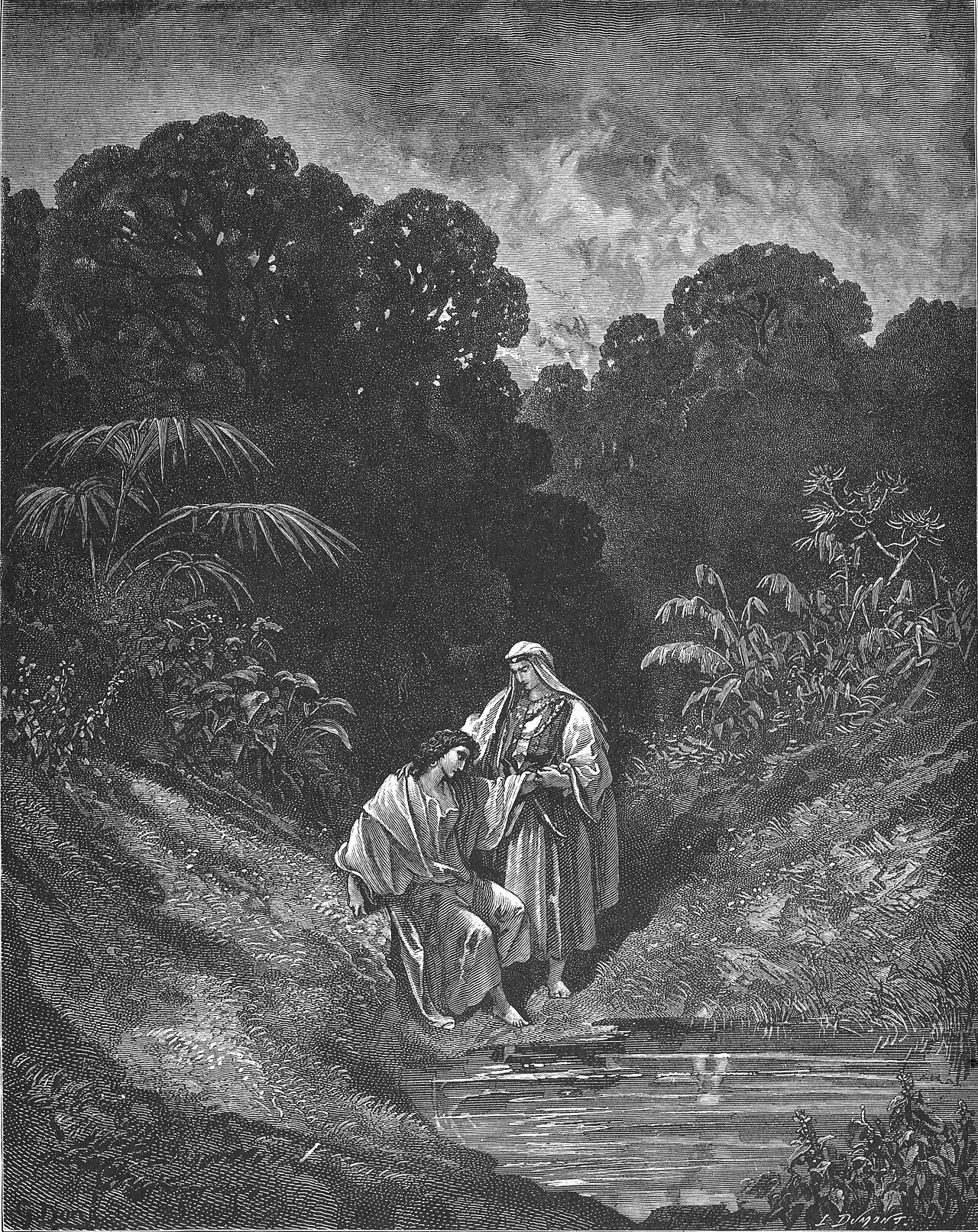
in 1 Samuel 20When the young man had gone, David got up from the south side of the stone, fell facedown, and bowed three times. Then he and Jonathan kissed each other and wept together—though David wept more.
BSB
The same verse in ASV and KJV ▾
ASV
And as soon as the lad was gone, David arose out of a place toward the South, and fell on his face to the ground, and bowed himself three times: and they kissed one another, and wept one with another, until David exceeded.
KJV
And as soon as the lad was gone, David arose out of a place toward the south, and fell on his face to the ground, and bowed himself three times: and they kissed one another, and wept one with another, until David exceeded.
⋯
This verse in 1 Samuel 20
Commentary
5 notes on this verseA commentator
Albert Barnes1798–1870
Notes, Explanatory and Practical, on the Old and New Testaments (1832-1869)
A place toward the south - An unintelligible description; one expects a repetition of the description of David’s hiding-place in 1Sa 20:19. The Septuagint in both places has “argab,” a word meaning a “heap of stones.” If this be the true reading, David’s hiding-place was either a natural cavernous rock which was called “Argab,” or some ruin of an ancient building, equally suited for a hiding-place.
The record, by era
The Puritans and the Awakening3 voices
The separation of two such faithful friends was equally grievous to them both, but David's case was the more deplorable; for, when Jonathan was returning to his family and friends, David was leaving all his comforts, even those of God's sanctuary, and therefore his grief exceeded Jonathan's, or perhaps it was because his temper was more tender and his passions were stronger.
6 If thy father at all miss me, then say, David earnestly asked leave of me that he might run to Bethlehem his city: for there is a yearly sacrifice there for all the family. 7 If he say thus, It is well; thy servant shall have peace: but if he be very wroth, then be sure that evil is determined by him.
quarantine:scripture (2026-07-29) — scripture-overlap:98%@v6-7
And as soon as the lad was gone,....
The Nineteenth Century1 voice
Until David exceeded - David’s distress must, in the nature of things, be the greatest. Besides his friend Jonathan, whom he was now about to lose for ever, he lost his wife, relatives, country; and, what was most afflictive, the altars of his God, and the ordinances of religion. Saul saw David’s growing popularity, and was convinced of his own maladministration. He did not humble himself before God, and therefore became a prey to envy, pride, jealousy, cruelty, and every other malevolent temper. From him David had every thing to fear, and therefore he thought it was safer to yield to the storm, than attempt to brave it; though he could have even raised a very powerful party in Israel, had he used the means which were so much in his power. But as he neither sought not affected the kingdom, he left it to the providence of God to bring him in by such means, at such a way, and in such a time, as was most suited to his godly wisdom. He that believeth shall not make haste: God’s way and time are ever the best; and he who, even in God’s way, runs before he is sent, runs at random; runs without light, and without Divine strength. Feeble, therefore, must be his own might, his own counsel, and his own wisdom: though he encompass himself with his own sparks yet this hath he at the Lord’s hand - he shalt lie down in sorrow.
The words behind it
23 Hebrew wordsEvery Hebrew word of this verse in the order it stands, with what it means and the door to its own study. The last column counts the times a word stands in the whole Bible: the rarer the word, the more the places it appears belong together.
| Hebrew | Sound | Meaning | Word study | In the Bible |
|---|---|---|---|---|
| הַנַּעַר֮ | hanaar | the lad | H5288 → | 239 times |
| בָּא֒ | ba' | he went | H935 → | 2568 times |
| וְדָוִ֗ד | vedavid | and David | H1732 → | 999 times |
| קָ֚ם | kam | he arose | H6965 → | 628 times |
| מֵאֵ֣צֶל | meetzel | from beside | H681 → | 61 times |
| הַנֶּ֔גֶב | hanegev | the south | H5045 → | 112 times |
| וַיִּפֹּ֨ל | vaiyipol | and he fell | H5307 → | 435 times |
| לְאַפָּ֥יו | leapav | to face his | H639 → | 276 times |
| אַ֛רְצָה | ʾartzah | [the] ground towards | H776 → | 2504 times |
| וַיִּשְׁתַּ֖חוּ | vaiyishtachu | and he bowed down | H7812 → | 172 times |
| שָׁלֹ֣שׁ | shalosh | three | H7969 → | 432 times |
| פְּעָמִ֑ים | peamim | times | H6471 → | 118 times |
| וַֽיִּשְּׁק֣וּ׀ | vaiyisheku | and they kissed | H5401 → | |
| אִ֣ישׁ | ʾish | each | H376 → | 1663 times |
| אֶת־ | ʾet- | <obj.> | H853 → | 10935 times |
| רֵעֵ֗הוּ | reehu | friend his | H7453 → | 188 times |
| וַיִּבְכּוּ֙ | vaiyivku | and they wept for | H1058 → | 114 times |
| אִ֣ישׁ | ʾish | each | H376 → | 1663 times |
| אֶת־ | ʾet- | <obj.> | H853 → | 10935 times |
| רֵעֵ֔הוּ | reehu | friend his | H7453 → | 188 times |
| עַד־ | ʾad- | until | H5704 → | 1261 times |
| דָּוִ֖ד | david | David | H1732 → | 999 times |
| הִגְדִּֽיל׃ | higdil | he did great things | H1431 → | 117 times |
הַנַּעַר֮the lad
hanaarH5288 →239 times
בָּא֒he went
ba'H935 →2568 times
וְדָוִ֗דand David
vedavidH1732 →999 times
קָ֚םhe arose
kamH6965 →628 times
מֵאֵ֣צֶלfrom beside
meetzelH681 →61 times
הַנֶּ֔גֶבthe south
hanegevH5045 →112 times
וַיִּפֹּ֨לand he fell
vaiyipolH5307 →435 times
לְאַפָּ֥יוto face his
leapavH639 →276 times
אַ֛רְצָה[the] ground towards
ʾartzahH776 →2504 times
וַיִּשְׁתַּ֖חוּand he bowed down
vaiyishtachuH7812 →172 times
שָׁלֹ֣שׁthree
shaloshH7969 →432 times
פְּעָמִ֑יםtimes
peamimH6471 →118 times
וַֽיִּשְּׁק֣וּ׀and they kissed
vaiyishekuH5401 →
אִ֣ישׁeach
ʾishH376 →1663 times
אֶת־<obj.>
ʾet-H853 →10935 times
רֵעֵ֗הוּfriend his
reehuH7453 →188 times
וַיִּבְכּוּ֙and they wept for
vaiyivkuH1058 →114 times
אִ֣ישׁeach
ʾishH376 →1663 times
אֶת־<obj.>
ʾet-H853 →10935 times
רֵעֵ֔הוּfriend his
reehuH7453 →188 times
עַד־until
ʾad-H5704 →1261 times
דָּוִ֖דDavid
davidH1732 →999 times
הִגְדִּֽיל׃he did great things
higdilH1431 →117 times
A shaded row is a word that stands 400 times or fewer in the Bible.
The walk
8 stopsEach card is a verse this one points to, and under it the verses that one points to in turn. Where several paths arrive at the same place, that place is listed first: the text keeps returning to it.
Through
Genesis 29:11Then Jacob kissed Rachel and wept aloud.
it leads to
- Romans 16:16
Greet one another with a holy kiss. All the churches of Christ send you greetings.
Reached by 2 separate paths from here.
- Genesis 33:4
Esau, however, ran to him and embraced him, threw his arms around his neck, and kissed him. And they both wept.
- Genesis 45:14–15
Then Joseph threw his arms around his brother Benjamin and wept, and Benjamin wept as they embraced.
- Genesis 43:30
Joseph hurried out because he was moved to tears for his brother, and he went to a private room to weep.
- Genesis 45:2
But he wept so loudly that the Egyptians heard him, and Pharaoh’s household soon heard of it.
- Romans 16:16
Through
1 Samuel 18:3Then Jonathan made a covenant with David because he loved him as himself.
it leads to
- 1 Samuel 20:8–17
Therefore deal faithfully with your servant, for you have brought me into a covenant with you before the LORD. If there is iniquity in me, then kill me yourself; why should you bring me…
- 1 Samuel 20:42
And Jonathan said to David, “Go in peace, for the two of us have sworn in the name of the LORD, saying, ‘May the LORD be a witness between you and me, and between…
- 1 Samuel 20:8–17
Through
2 Samuel 9:6And when Mephibosheth son of Jonathan, the son of Saul, came to David, he fell facedown in reverence. Then David said, “Mephibosheth!” “I am your servant,” he replied.
it leads to
- 2 Samuel 16:4
So the king said to Ziba, “All that belongs to Mephibosheth is now yours!” “I humbly bow before you,” said Ziba. “May I find favor in your eyes, my lord the king!”
- 2 Samuel 16:4
Where this verse is studied
On this page
About 1 Samuel
Who and where
2 names in this verse with a page on the site.
- PersonUnited MonarchyDavidSecond king of united Israel, shepherd-turned-monarch, ancestor of the Messiah, and traditional author of many Psalms.
- PersonEarly monarchyJonathanSon of King Saul who climbed a cliff to rout a garrison on the conviction that nothing restrains Jehovah; cut a covenant of steadf…
This page draws on Adam Clarke, Commentary on the Bible; Albert Barnes, Notes, Explanatory and Practical, on the Old and New Testaments (1832-1869); John Gill, Exposition of the Old Testament (1748-1763) and Matthew Henry, Commentary on the Whole Bible.