
1 Samuel 20:3
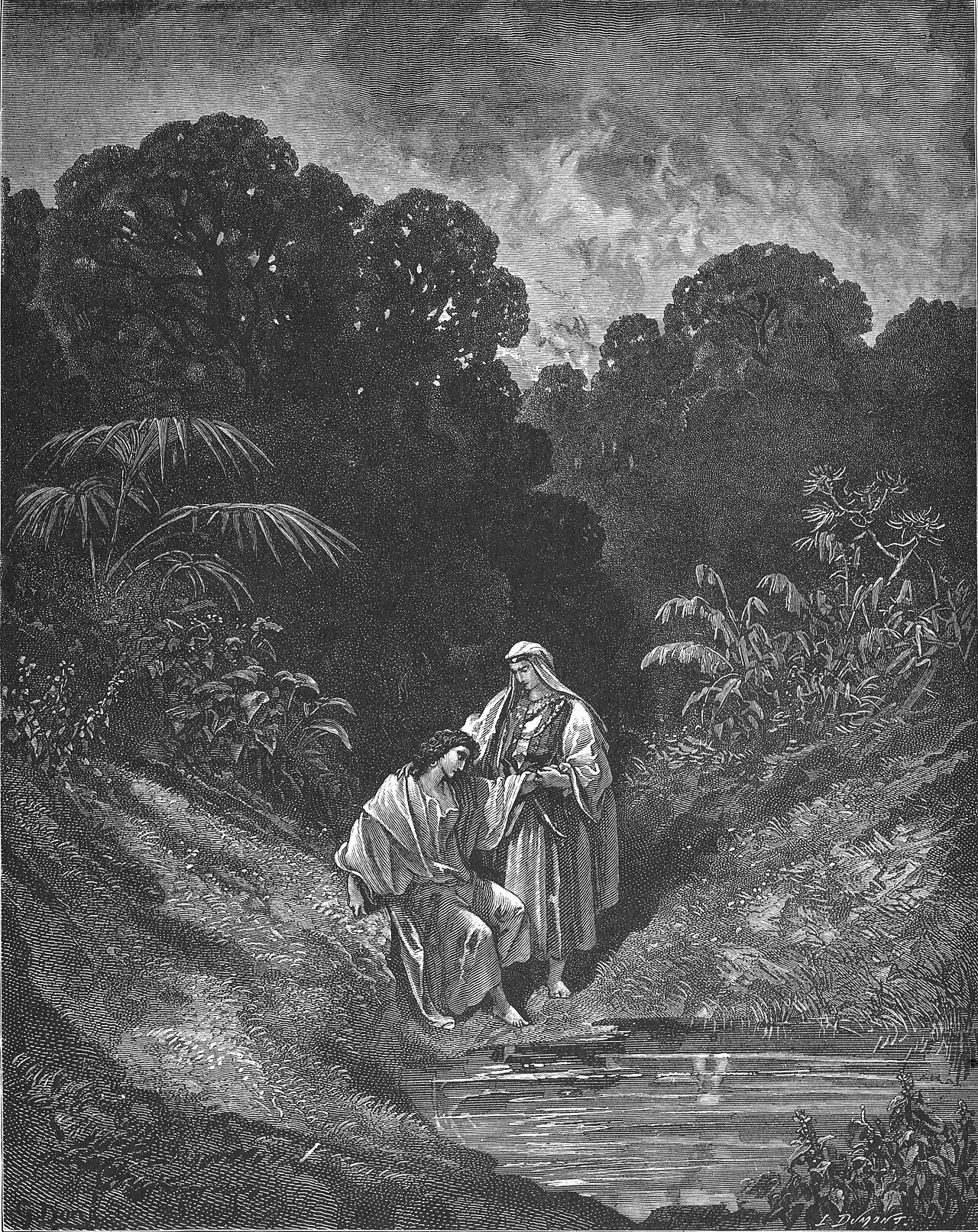
in 1 Samuel 20But David again vowed, “Your father knows very well that I have found favor in your eyes, and he has said, ‘Jonathan must not know of this, or he will be grieved.’ As surely as the LORD lives and as you yourself live, there is but a step between me and death.”
BSB
The same verse in ASV and KJV ▾
ASV
And David sware moreover, and said, Thy father knoweth well that I have found favor in thine eyes; and he saith, Let not Jonathan know this, lest he be grieved: but truly as Jehovah liveth, and as thy soul liveth, there is but a step between me and death.
KJV
And David sware moreover, and said, Thy father certainly knoweth that I have found grace in thine eyes; and he saith, Let not Jonathan know this, lest he be grieved: but truly as the Lord liveth, and as thy soul liveth, there is but a step between me and death.
⋯
This verse in 1 Samuel 20
Commentary
12 notes on this verseTHIS was David's description of his own condition. King Saul was seeking to destroy him. The bitter malice of that king would not be satisfied with anything short of the blood of his rival. Jonathan did not know this. He could not believe so badly of his father as that he could wish to kill the champion of Israel, the brave, true-hearted young David. And so he assured David that it could not be so—that he had not heard of any plots against him. But David, who knew better, said, "It is certainly so. Your father seeks my blood and there is but a step between me and death." Now, it was by knowing his danger that David escaped. Had he remained as ignorant of his own peril as his friend Jonathan had been, he would have walked into the lion's mouth and he would have fallen by the hand of Saul. But to be forewarned is to be forearmed—he was, therefore, able to save his life because he perceived his danger. It would have been a very unwise person who would have said, "Do not tell David about it. You see that he is very happy in Jonathan's company. Do not disturb him. It will only make him fret. Do not tell him about Saul's anger." But a true and wise friend would acquaint David of his danger, in order that he might seize the opportunity to escape. So also, tonight, somebody might say, "Many people now present are in great danger and do not dare to think about death. Do not mention the unpleasant subject to them." Well, Sirs, if my objective were to please you; if my desire were to seem as one who plays a merry tune upon a goodly instrument, I certainly would not speak to you of death and danger. But, then, it would be infamous to allow men and women to stand in infinite jeopardy and not to warn them! And it is kindness to speak to those who are carelessly at ease and tell them salutary truth.
This site's exposition
Then David fled from Naioth in Ramah
on 1 Samuel 20:1-3
David flees from Naioth in Ramah and goes straight to Jonathan rather than into hiding. His three questions ask for a specific charge, and Jonathan cannot believe that his father's oath at 19:6 is already broken. David vows that "there is but a step between me and death," and the covenant of 18:3 is about to be tested and renewed.
This site's exposition
there is but a step between me and death
By David's account, Saul now hides his plans from his son. Albert Barnes notes that David answers Jonathan's denial by repeating his claim under oath. Charles Spurgeon preached on this line that David escaped by knowing his danger, where ignorance of it would have walked him into Saul's hand.
The record, by era
The Medieval Church1 voice
Moreover, as the Lord lives, and as your soul lives, etc. He was separated from death by only a single step, that is, by the wall of the house in which he was staying, when (as the title of the fifty-eighth psalm also contains) Saul …
The Puritans and the Awakening4 voices
Jonathan promises to give him intelligence, and confirms his friendship, ver. 9-23. He finds his father implacable, ver. 24-34. He gives David notice of it, in the manner they had agreed on, ver.
quarantine:anchor (2026-07-29) — cites-ver-9/24-anchored-1-5
And David sware moreover, and said,....
Jonathan faithfully promises to get and give him intelligence how his father stood affected to him, and renews the covenant of friendship with him,
And, as for Saul's concealing it from Jonathan, it was easy to account for that; he knew the friendship between him and David, and therefore, though in other things he advised with him, yet not in that.
4 more voices on this verse
The Nineteenth Century4 voices
A commentator
Albert Barnes1798–1870
Notes, Explanatory and Practical, on the Old and New Testaments (1832-1869)
And David sware moreover - Rather, “yet again.” He met Jonathan’s denial by repeating his statement and confirming it with an oath.
A commentator
Jamieson, Fausset & Brown1802–1910
Commentary Critical and Explanatory on the Whole Bible (1871)
proposed
But he was evidently prompted to go thither by the most generous feelings--to inform his friend of what had recently occurred, and to obtain that friend's sanction to the course he was compelled to adopt. Jonathan could not be persuaded there was any real danger after the oath his father had taken; at all events, he felt assured his father would do nothing without telling him.
THIS was David's description of his own condition. King Saul was seeking to destroy him. The bitter malice of that king would not be satisfied with anything short of the blood of his rival. Jonathan did not know this. He could not believe so badly of his father as that he could wish to kill the champion of Israel, the brave, true-hearted young David. And so he assured David that it could not be so—that he had not heard of any plots against him. But David, who knew better, said, "It is certainly so.
There is but a step between me and death - My life is in the most imminent danger. Your father has, most assuredly, determined to destroy me. The same figure used here, there is but a step between me and death, may be found in Juvenal, who, satirizing those who risk their lives for the sake of gain in perilous voyages, speaks thus: - I nune et ventis animam committe, dolato Confisus ligno, digitis a morte remotus Quatuor aut septem, si sit latissima teda. Sat. xii., ver. 57. “Go now, and commit thy life to the winds, trusting to a hewn plank, four or seven fingers thick, if the beam out of which it has been cut have been large enough.”
The words behind it
28 Hebrew wordsEvery Hebrew word of this verse in the order it stands, with what it means and the door to its own study. The last column counts the times a word stands in the whole Bible: the rarer the word, the more the places it appears belong together.
| Hebrew | Sound | Meaning | Word study | In the Bible |
|---|---|---|---|---|
| וַיִּשָּׁבַ֨ע | vaiyishava' | and he swore an oath | H7650 → | 186 times |
| ע֜וֹד | od | again | H5750 → | 490 times |
| דָּוִ֗ד | david | David | H1732 → | 999 times |
| וַיֹּ֙אמֶר֙ | vaiyomer | and he said | H559 → | 5305 times |
| יָדֹ֨עַ | yadoa' | certainly <to know> | H3045 → | 945 times |
| יָדַ֜ע | yada' | he knows | H3045 → | 945 times |
| אָבִ֗יךָ | ʾavikha | father your | H1 → | 1212 times |
| כִּֽי־ | ki- | that | H3588 → | 4482 times |
| מָצָ֤אתִי | matzati | I have found | H4672 → | 455 times |
| חֵן֙ | chen | favor | H2580 → | 69 times |
| בְּעֵינֶ֔יךָ | beeineikha | in view your | H5869 → | 887 times |
| וַיֹּ֛אמֶר | vaiyomer | and he has said | H559 → | 5305 times |
| אַל־ | ʾal- | may not | H408 → | 724 times |
| יֵֽדַע־ | yeda'- | he know | H3045 → | 945 times |
| זֹ֥את | zot | this | H2063 → | 603 times |
| יְהוֹנָתָ֖ן | yehonatan | Jonathan | H3083 → | 81 times |
| פֶּן־ | pen- | lest | H6435 → | 133 times |
| יֵֽעָצֵ֑ב | yeatzev | he should be grieved | H6087 → | |
| וְאוּלָ֗ם | veulam | and but | H199 → | |
| חַי־ | chai- | [by] [the] life | H2416 → | 498 times |
| יְהוָה֙ | yahweh | of Yahweh | H3068 → | 6520 times |
| וְחֵ֣י | vechei | and [by] [the] life of | H2416 → | 498 times |
| נַפְשֶׁ֔ךָ | nafshekha | self your | H5315 → | 754 times |
| כִּ֣י | ki | for | H3588 → | 4482 times |
| כְפֶ֔שַׂע | khefesa' | about a step | H6587 → | |
| בֵּינִ֖י | beini | between me | H996 → | 407 times |
| וּבֵ֥ין | uvein | and between | H996 → | 407 times |
| הַמָּֽוֶת׃ | hamavet | <the> death | H4194 → | 156 times |
וַיִּשָּׁבַ֨עand he swore an oath
vaiyishava'H7650 →186 times
ע֜וֹדagain
odH5750 →490 times
דָּוִ֗דDavid
davidH1732 →999 times
וַיֹּ֙אמֶר֙and he said
vaiyomerH559 →5305 times
יָדֹ֨עַcertainly <to know>
yadoa'H3045 →945 times
יָדַ֜עhe knows
yada'H3045 →945 times
אָבִ֗יךָfather your
ʾavikhaH1 →1212 times
כִּֽי־that
ki-H3588 →4482 times
מָצָ֤אתִיI have found
matzatiH4672 →455 times
חֵן֙favor
chenH2580 →69 times
בְּעֵינֶ֔יךָin view your
beeineikhaH5869 →887 times
וַיֹּ֛אמֶרand he has said
vaiyomerH559 →5305 times
אַל־may not
ʾal-H408 →724 times
יֵֽדַע־he know
yeda'-H3045 →945 times
זֹ֥אתthis
zotH2063 →603 times
יְהוֹנָתָ֖ןJonathan
yehonatanH3083 →81 times
פֶּן־lest
pen-H6435 →133 times
יֵֽעָצֵ֑בhe should be grieved
yeatzevH6087 →
וְאוּלָ֗םand but
veulamH199 →
חַי־[by] [the] life
chai-H2416 →498 times
יְהוָה֙of Yahweh
yahwehH3068 →6520 times
וְחֵ֣יand [by] [the] life of
vecheiH2416 →498 times
נַפְשֶׁ֔ךָself your
nafshekhaH5315 →754 times
כִּ֣יfor
kiH3588 →4482 times
כְפֶ֔שַׂעabout a step
khefesa'H6587 →
בֵּינִ֖יbetween me
beiniH996 →407 times
וּבֵ֥יןand between
uveinH996 →407 times
הַמָּֽוֶת׃<the> death
hamavetH4194 →156 times
A shaded row is a word that stands 400 times or fewer in the Bible.
The walk
8 stopsEach card is a verse this one points to, and under it the verses that one points to in turn. Where several paths arrive at the same place, that place is listed first: the text keeps returning to it.
Through
Deuteronomy 6:13Fear the LORD your God, serve Him only, and take your oaths in His name.
it leads to
- Luke 4:8
But Jesus answered, “It is written: ‘Worship the Lord your God and serve Him only.’”
- Matthew 4:10
“Away from Me, Satan!” Jesus declared. “For it is written: ‘Worship the Lord your God and serve Him only.’”
- Deuteronomy 10:20
You are to fear the LORD your God and serve Him. Hold fast to Him and take your oaths in His name.
- Deuteronomy 13:4
You are to follow the LORD your God and fear Him. Keep His commandments and listen to His voice; serve Him and hold fast to Him.
- Leviticus 19:12
You must not swear falsely by My name and so profane the name of your God. I am the LORD.
- Luke 4:8
Through
1 Samuel 1:26“Please, my lord,” said Hannah, “as surely as you live, my lord, I am the woman who stood here beside you praying to the LORD.
it leads to
- 2 Kings 2:2
and Elijah said to Elisha, “Please stay here, for the LORD has sent me on to Bethel.” But Elisha replied, “As surely as the LORD lives and as you yourself live, I will not…
Reached by 2 separate paths from here.
- 2 Kings 2:2
Through
1 Samuel 25:26Now, my lord, as surely as the LORD lives and you yourself live, the LORD has held you back from coming to bloodshed and avenging yourself with your own hand. May your enemies and…
it leads to
- 2 Samuel 18:32
The king asked the Cushite, “Is the young man Absalom all right?” And the Cushite replied, “May what has become of the young man happen to the enemies of my lord the king and…
- Romans 12:19–20
Do not avenge yourselves, beloved, but leave room for God’s wrath. For it is written: “Vengeance is Mine; I will repay, says the Lord.”
- 2 Samuel 18:32
Where this verse is studied
On this page
About 1 Samuel
Who and where
2 names in this verse with a page on the site.
- PersonUnited MonarchyDavidSecond king of united Israel, shepherd-turned-monarch, ancestor of the Messiah, and traditional author of many Psalms.
- PersonEarly monarchyJonathanSon of King Saul who climbed a cliff to rout a garrison on the conviction that nothing restrains Jehovah; cut a covenant of steadf…
This page draws on Adam Clarke, Commentary on the Bible; Albert Barnes, Notes, Explanatory and Practical, on the Old and New Testaments (1832-1869); Bede, Commentary on Samuel; Charles Spurgeon, The Metropolitan Tabernacle Pulpit, Sermon No. 1870: “But a Step” (lightly modernized text, CCEL edition); Jamieson, Fausset & Brown, Commentary Critical and Explanatory on the Whole Bible; John Gill, Exposition of the Old Testament (1748-1763); John Wesley, Explanatory Notes upon the Old Testament and Matthew Henry, Commentary on the Whole Bible.