
1 Samuel 20:23
in 1 Samuel 20And as for the matter you and I have discussed, the LORD is a witness between you and me forever.”
BSB
The same verse in ASV and KJV ▾
ASV
And as touching the matter which thou and I have spoken of, behold, Jehovah is between thee and me for ever.
KJV
And as touching the matter which thou and I have spoken of, behold, the Lord be between thee and me for ever.
⋯
This verse in 1 Samuel 20
Commentary
5 notes on this verseAnd as touching the matter which thou and I have spoken of,.... The covenant they had made between them and their families: behold, the Lord be between me and thee for ever: as a witness of the covenant, and a revenger of those that should break it; so the Targum,"behold, the Word of the Lord be between me and thee a witness for ever.''
This site's exposition
I will shoot three arrows to the side of it
on 1 Samuel 20:20-23
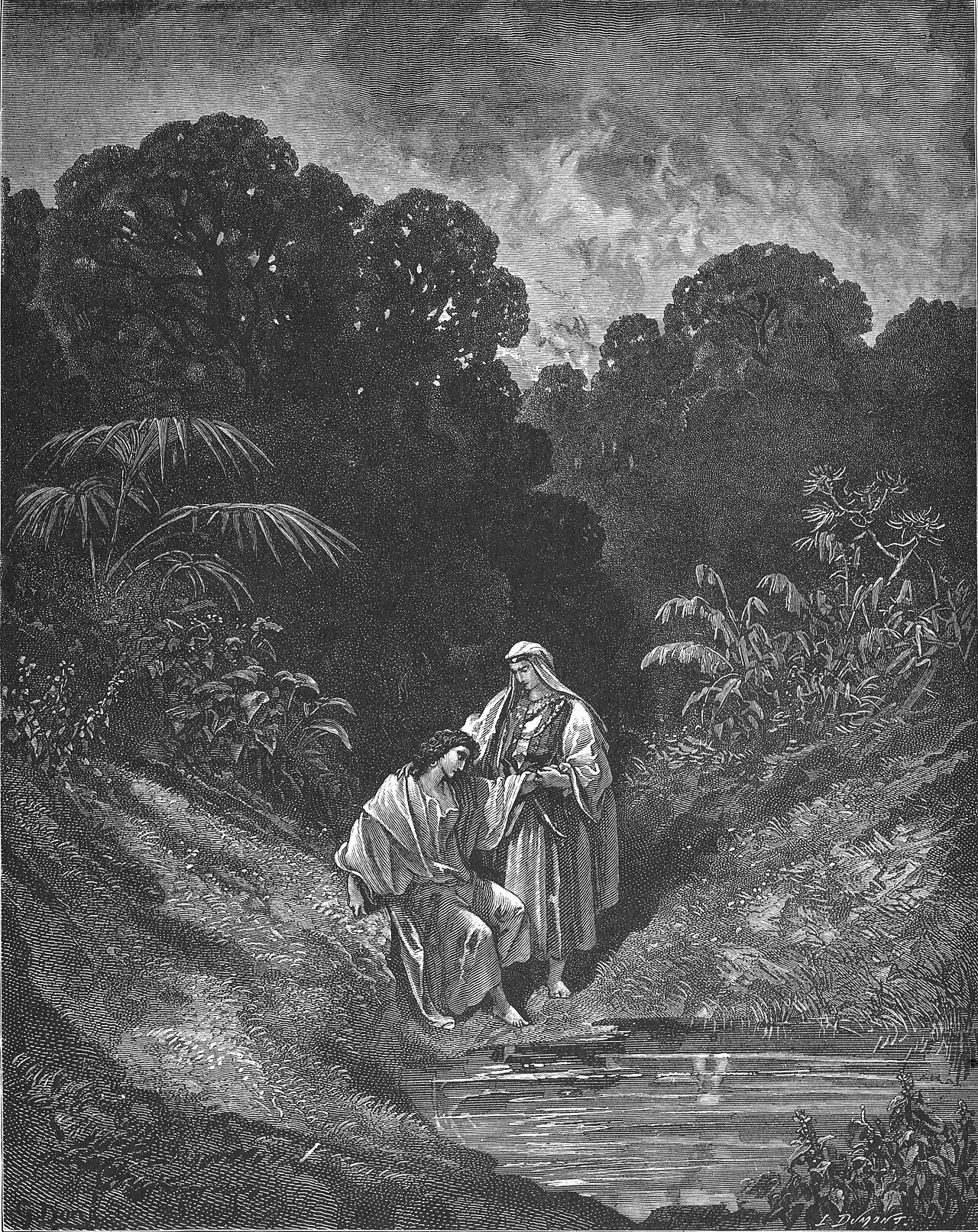
Three arrows and a boy sent to fetch them let Jonathan warn David without a face-to-face word, the number matching the three days David waits at the stone. Verse 23 seals the covenant of verses 12 to 17 with "the LORD is a witness between you and me forever" as its oath. The care Jonathan takes to hide a warning in archery shows how far Saul’s court has fallen.
This site's exposition
the LORD is a witness between you and me forever
John Gill reads the LORD here as witness to the covenant between the two houses and as the one who holds to account whoever breaks it. The Targum makes it the Word of the LORD standing between Jonathan and David as witness. Verse 42 swears it again over their descendants.
The record, by era
The Puritans and the Awakening1 voice
), that is, "God himself be judge between us and our families for ever, if on either side this league of friendship be violated." It was in remembrance of this covenant that David was kind to Mephibosheth, 2 Sam. ix.
quarantine:debris (2026-07-29) — leading-punctuation+unbalanced-parens
The Nineteenth Century1 voice
A commentator
Jamieson, Fausset & Brown1802–1910
Commentary Critical and Explanatory on the Whole Bible (1871)
proposed
as touching the matter which thou and I have spoken of--The plan being concerted, the friends separated for a time, and the amiable character of Jonathan again peers out in his parting allusion to their covenant of friendship.
quarantine:debris (2026-07-29) — starts-lowercase
The words behind it
11 Hebrew wordsEvery Hebrew word of this verse in the order it stands, with what it means and the door to its own study. The last column counts the times a word stands in the whole Bible: the rarer the word, the more the places it appears belong together.
| Hebrew | Sound | Meaning | Word study | In the Bible |
|---|---|---|---|---|
| וְהַ֨דָּבָ֔ר | vehadavar | and the matter | H1697 → | 1440 times |
| אֲשֶׁ֥ר | ʾasher | which | H834 → | 5497 times |
| דִּבַּ֖רְנוּ | dibarnu | we have spoken | H1696 → | 1141 times |
| אֲנִ֣י | ʾani | I | H589 → | 874 times |
| וָאָ֑תָּה | vaatah | and you | H859 → | 1094 times |
| הִנֵּ֧ה | hineh | here! | H2009 → | 843 times |
| יְהוָ֛ה | yahweh | Yahweh | H3068 → | 6520 times |
| בֵּינִ֥י | beini | [will be] between me | H996 → | 407 times |
| וּבֵינְךָ֖ | uveinekha | and between you | H996 → | 407 times |
| עַד־ | ʾad- | until | H5704 → | 1261 times |
| עוֹלָֽם׃ ס | olam | perpetuity | H5769 → | 438 times |
וְהַ֨דָּבָ֔רand the matter
vehadavarH1697 →1440 times
אֲשֶׁ֥רwhich
ʾasherH834 →5497 times
דִּבַּ֖רְנוּwe have spoken
dibarnuH1696 →1141 times
אֲנִ֣יI
ʾaniH589 →874 times
וָאָ֑תָּהand you
vaatahH859 →1094 times
הִנֵּ֧הhere!
hinehH2009 →843 times
יְהוָ֛הYahweh
yahwehH3068 →6520 times
בֵּינִ֥י[will be] between me
beiniH996 →407 times
וּבֵינְךָ֖and between you
uveinekhaH996 →407 times
עַד־until
ʾad-H5704 →1261 times
עוֹלָֽם׃ סperpetuity
olamH5769 →438 times
A shaded row is a word that stands 400 times or fewer in the Bible.
The walk
8 stopsEach card is a verse this one points to, and under it the verses that one points to in turn. Where several paths arrive at the same place, that place is listed first: the text keeps returning to it.
Through
Genesis 31:50If you mistreat my daughters or take other wives, although no one is with us, remember that God is a witness between you and me.”
it leads to
- Jeremiah 42:5
Then they said to Jeremiah, “May the LORD be a true and faithful witness against us if we do not act upon every word that the LORD your God sends you to tell us.
- Jeremiah 29:23
For they have committed an outrage in Israel by committing adultery with the wives of their neighbors and speaking lies in My name, which I did not command them to do. I am He…
- Micah 1:2
Hear, O peoples, all of you; listen, O earth, and everyone in it! May the Lord GOD bear witness against you, the Lord from His holy temple.
- Judges 11:10
And the elders of Gilead said to Jephthah, “The LORD is our witness if we do not do as you say.”
- Jeremiah 42:5
Through
1 Samuel 20:42And Jonathan said to David, “Go in peace, for the two of us have sworn in the name of the LORD, saying, ‘May the LORD be a witness between you and me, and between…
it leads to
- 1 Samuel 1:17
“Go in peace,” Eli replied, “and may the God of Israel grant the petition you have asked of Him.”
- 1 Samuel 23:18
So the two of them made a covenant before the LORD. And David remained in Horesh, while Jonathan went home.
- 1 Samuel 1:17
Through
Genesis 16:5Then Sarai said to Abram, “May the wrong done to me be upon you! I delivered my servant into your arms, and ever since she saw that she was pregnant, she has treated me…
it leads to
- Genesis 31:53
May the God of Abraham and the God of Nahor, the God of their father, judge between us.” So Jacob swore by the Fear of his father Isaac.
- Exodus 5:21
“May the LORD look upon you and judge you,” the foremen said, “for you have made us a stench before Pharaoh and his officials; you have placed in their hand a sword to kill…
- Genesis 31:53
Where this verse is studied
On this page
About 1 Samuel
This page draws on Adam Clarke, Commentary on the Bible; Jamieson, Fausset & Brown, Commentary Critical and Explanatory on the Whole Bible; John Gill, Exposition of the Old Testament (1748-1763); John Gill, Exposition of the Old Testament and Matthew Henry, Commentary on the Whole Bible.