
1 Samuel 20:11
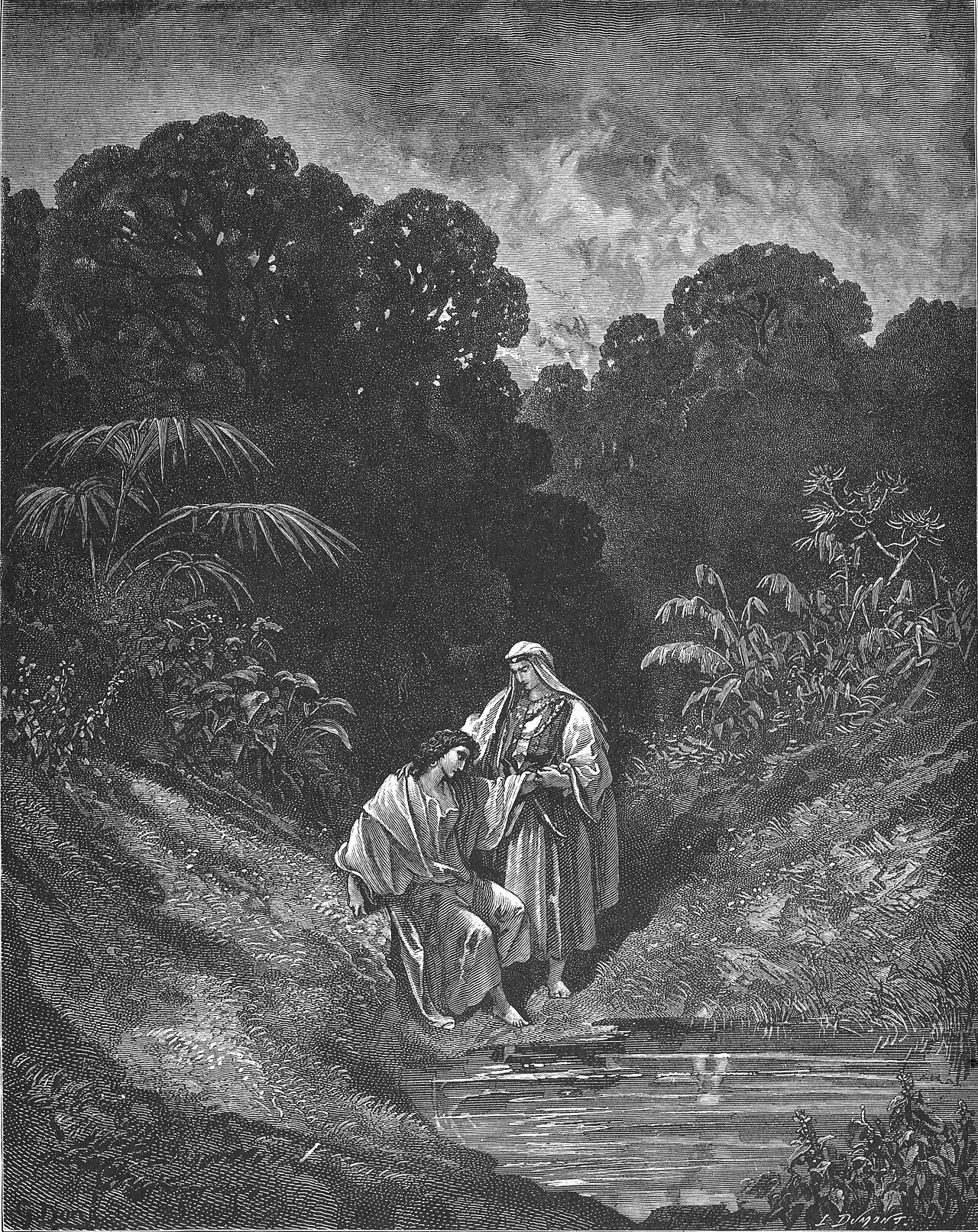
in 1 Samuel 20“Come,” he replied, “let us go out to the field.” So the two of them went out into the field,
BSB
The same verse in ASV and KJV ▾
ASV
And Jonathan said unto David, Come, and let us go out into the field. And they went out both of them into the field.
KJV
And Jonathan said unto David, Come, and let us go out into the field. And they went out both of them into the field.
⋯
This verse in 1 Samuel 20
Commentary
7 notes on this verseAnd Jonathan said unto David, come, and let us go out into the field,.... That they might more fully, and freely, and familiarly talk of this affair between them, without any danger of being overheard by the servants of Saul, as they were in his palace, where they now were: and they went out both of them into the field; which belonged to Gibeah.
This site's exposition
Who will tell me if your father answers you harshly
on 1 Samuel 20:10-11
David's practical question forces the two friends out of the palace and into a field belonging to Gibeah, where no servant of Saul can overhear them. The privacy the scene requires is itself evidence of how far things have fallen: a king's son and the king's own son in law can no longer plan safely inside the king's house. The move outdoors sets up both the covenant oath of verses 12 to 17 and the archery signal that follows it.
This site's exposition
let us go out to the field
Jonathan proposes the move, and both men go. The field where they talk is the ground where David hides and where the arrows fly in verses 35 to 40. John Gill adds that out there the two could speak freely and at length.
The record, by era
The Medieval Church1 voice
And Jonathan said to David, "Come, let us go out into the field," etc. A marvelous way of speaking, as if he began to speak to God, which yet he completed in speaking to a man; but this was due to the incomparably ardent affection …
The Puritans and the Awakening1 voice
), and talk it over more fully." He did not challenge him to the field to fight him for an affront, but to fix him in his friendship. He faithfully promised him that he would let him know how, upon trial, he found his father affected towards him, and would make the matter neither better nor worse than it was.
quarantine:debris (2026-07-29) — leading-punctuation+unbalanced-parens+odd-straight-quotes
The Nineteenth Century2 voices
A commentator
Jamieson, Fausset & Brown1802–1910
Commentary Critical and Explanatory on the Whole Bible (1871)
proposed
Jonathan said to David, Come, let us go into the field--The private dialogue, which is here detailed at full length, presents a most beautiful exhibition of these two amiable and noble-minded friends. Jonathan was led, in the circumstances, to be the chief speaker.
Come, and let us go out into the field - In answer to David’s question, he now shows him how he shall convey this intelligence to him.
How the passage was read
What the Jewish commentators add
On the verses either side of this one
Then said David to Jonathan, “Who will tell me, whether perhaps your father answers you with harsh words?”
This section is reception history: how the passage was read and kept in the Jewish tradition. Where a reading parts from an essential of the Christian faith, the section says so at that point.
Texts and citation data: Sefaria; each excerpt follows its version’s licence. 5 further sources are cited on this chapter that carry no English text this site may quote or only restate the verse.
The words behind it
10 Hebrew wordsEvery Hebrew word of this verse in the order it stands, with what it means and the door to its own study. The last column counts the times a word stands in the whole Bible: the rarer the word, the more the places it appears belong together.
| Hebrew | Sound | Meaning | Word study | In the Bible |
|---|---|---|---|---|
| וַיֹּ֤אמֶר | vaiyomer | and he said | H559 → | 5305 times |
| יְהֽוֹנָתָן֙ | yehonatan | Jonathan | H3083 → | 81 times |
| אֶל־ | ʾel- | to | H413 → | 5510 times |
| דָּוִ֔ד | david | David | H1732 → | 999 times |
| לְכָ֖ה | lekhah | come ! | H1980 → | 1546 times |
| וְנֵצֵ֣א | venetze' | so we may go out | H3318 → | 1067 times |
| הַשָּׂדֶ֑ה | hasadeh | the field | H7704 → | 334 times |
| וַיֵּצְא֥וּ | vaiyetzeu | and they went out | H3318 → | 1067 times |
| שְׁנֵיהֶ֖ם | sheneihem | [the] two of them | H8147 → | 768 times |
| הַשָּׂדֶֽה׃ ס | hasadeh | the field | H7704 → | 334 times |
וַיֹּ֤אמֶרand he said
vaiyomerH559 →5305 times
יְהֽוֹנָתָן֙Jonathan
yehonatanH3083 →81 times
אֶל־to
ʾel-H413 →5510 times
דָּוִ֔דDavid
davidH1732 →999 times
לְכָ֖הcome !
lekhahH1980 →1546 times
וְנֵצֵ֣אso we may go out
venetze'H3318 →1067 times
הַשָּׂדֶ֑הthe field
hasadehH7704 →334 times
וַיֵּצְא֥וּand they went out
vaiyetzeuH3318 →1067 times
שְׁנֵיהֶ֖ם[the] two of them
sheneihemH8147 →768 times
הַשָּׂדֶֽה׃ סthe field
hasadehH7704 →334 times
A shaded row is a word that stands 400 times or fewer in the Bible.
Where this verse is studied
On this page
About 1 Samuel
This page draws on Adam Clarke, Commentary on the Bible; Bede, Commentary on Samuel; Jamieson, Fausset & Brown, Commentary Critical and Explanatory on the Whole Bible; John Gill, Exposition of the Old Testament (1748-1763); John Gill, Exposition of the Old Testament and Matthew Henry, Commentary on the Whole Bible.