
1 Samuel 19:11
in 1 Samuel 19Then Saul sent messengers to David’s house to watch him and kill him in the morning. But David’s wife Michal warned him, “If you do not run for your life tonight, tomorrow you will be dead!”
BSB
The same verse in ASV and KJV ▾
ASV
And Saul sent messengers unto David’s house, to watch him, and to slay him in the morning: and Michal, David’s wife, told him, saying, If thou save not thy life to-night, to-morrow thou wilt be slain.
KJV
Saul also sent messengers unto David’s house, to watch him, and to slay him in the morning: and Michal David’s wife told him, saying, If thou save not thy life to night, to morrow thou shalt be slain.
⋯
This verse in 1 Samuel 19
Commentary
11 notes on this verseJosephus says the design was to seize him and to hurry him before a court of justice that was ordered to condemn him and put him to death as a traitor; but we are here told it was a shorter way they were to take with him: they were ordered to slay him.
This site's exposition
to watch him, and to slay him
on 1 Samuel 19:11-13
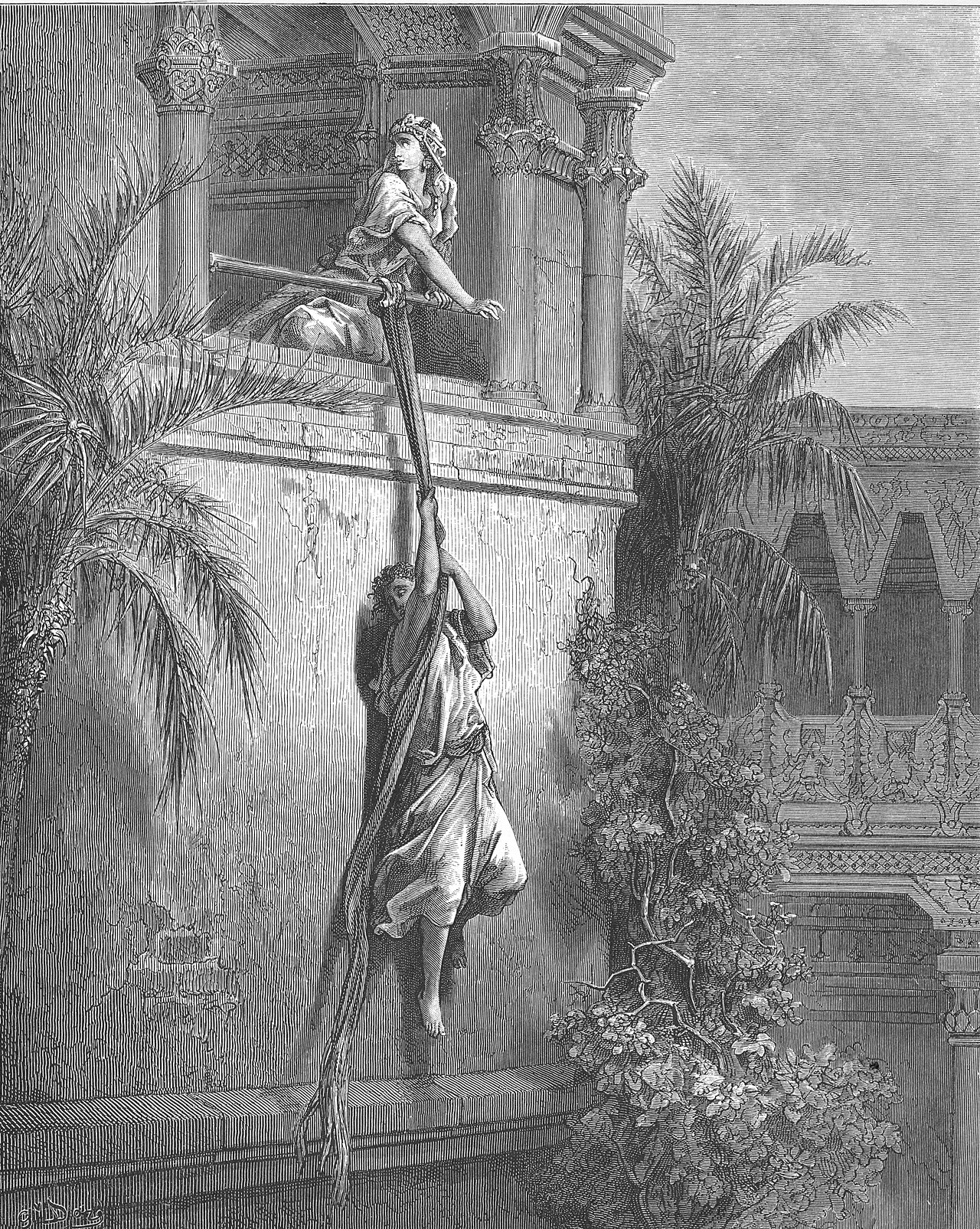
Saul now moves from his own hand to a cordon of messengers watching David's house through the night, meaning to take him the moment he steps outside in the morning. Michal, Saul's own daughter, warns her husband and lets him down through a window, a rescue the older commentators compare to Rahab lowering the spies at Jericho. In David's place she lays an image, the teraphim, on the bed with a pillow of goats' hair for its head. The text never says why a household image was under this roof at all, and the readings run from an ordinary object kept without David's knowledge to Michal's own private use, with Gill noting plainly that David would not have allowed it in his house had he known.
The record, by era
The Church Fathers2 voices
"Then Saul sent and watched his house to kill him." This too is fittingly associated with the Lord's passion, for house indicates the tomb where he rested in a three-day death. The Jews' leaders sent men to guard it, to destroy so to say the …
A commentator
Gregory of NyssaON THE INSCRIPTIONS OF THE PSALMS 2.16.264 · Written before 395.
proposed
The story relates how, when the vehement emotion of the demonic spirit had settled on Saul and the holy David quieted the disturbance of the passion by means of his psaltery, Saul found the spear that was standing by him, aimed it straight at David and hurled it against his benefactor. David, however, avoided the attack on himself by means of the divine alliance, and the assault of the spear fixed itself deeply in the wall. He fled the royal dwellings and was in his own house, in the hope that repentance would alter the king's anger.
The Medieval Church1 voice
Therefore Saul sent his messengers to David's house, etc. The chief priests and Pharisees sent their messengers to the Lord's tomb to guard it, hoping that by denying the truth of the resurrection, the memory of His name would be erased in the future. The …
The Puritans and the Awakening2 voices
Often is the devil out-shot with his own bow. How Michal came to know the danger her husband was in does not appear; perhaps she had notice sent her from court, or rather was herself aware of the soldiers about the house, when they were going to bed, though they kept so still and silent that they said, Who dost hear? which David takes notice of, Ps. lix.
David himself was better versed in the art of fighting than of flying, and had it been lawful it would have been easy for him to have cleared his house, by dint of sword, from those that haunted it; but Michal let him down through a window (
quarantine:debris (2026-07-29) — unbalanced-parens
4 more voices on this verse
The Puritans and the Awakening2 voices
"God," says Mr. Henry, "inclined the heart of Saul to hearken to the voice of Jonathan." 8. And David, &c. - So David continues his good service, tho' it was ill requited. They who are ill paid for doing good, yet must not be weary of well doing, remembering how bountiful a benefactor God is, even to the evil and unthankful.
And Saul sent messengers unto David's house,....
The Nineteenth Century2 voices
To slay him in the morning - When they might be able to distinguish between him and Michal his wife; for, had they attempted his life in the night season, there would have been some danger to Michal’s life. Besides, Saul wished to represent him as a traitor; and consequently an attack upon him was justifiable at any time, even in the fullest daylight.
A commentator
Albert Barnes1798–1870
Notes, Explanatory and Practical, on the Old and New Testaments (1832-1869)
proposed
Saul’s plan was to surround the house at night, and to have David killed as soon as he came abroad unsuspectingly in the morning.
The words behind it
23 Hebrew wordsEvery Hebrew word of this verse in the order it stands, with what it means and the door to its own study. The last column counts the times a word stands in the whole Bible: the rarer the word, the more the places it appears belong together.
| Hebrew | Sound | Meaning | Word study | In the Bible |
|---|---|---|---|---|
| וַיִּשְׁלַח֩ | vaiyishlach | and he sent | H7971 → | 845 times |
| שָׁא֨וּל | shaul | Saul | H7586 → | 402 times |
| מַלְאָכִ֜ים | malakhim | messengers | H4397 → | 213 times |
| אֶל־ | ʾel- | to | H413 → | 5510 times |
| בֵּ֤ית | beit | [the] house of | H1004 → | 2046 times |
| דָּוִד֙ | david | David | H1732 → | 999 times |
| לְשָׁמְר֔וֹ | leshamero | to watch for him | H8104 → | 468 times |
| וְלַהֲמִית֖וֹ | velahamito | and to kill him | H4191 → | 839 times |
| בַּבֹּ֑קֶר | baboker | in the morning | H1242 → | 214 times |
| וַתַּגֵּ֣ד | vataged | and she told | H5046 → | 370 times |
| לְדָוִ֗ד | ledavid | to David | H1732 → | 999 times |
| מִיכַ֤ל | mikhal | Michal | H4324 → | 18 times |
| אִשְׁתּוֹ֙ | ʾishto | wife his | H802 → | 781 times |
| לֵאמֹ֔ר | lemor | <to> saying | H559 → | 5305 times |
| אִם־ | ʾim- | if | H518 → | 1069 times |
| אֵ֨ינְךָ֜ | ʾeinekha | not you | H369 → | 789 times |
| מְמַלֵּ֤ט | memalet | [are] delivering | H4422 → | 95 times |
| אֶֽת־ | ʾet- | <obj.> | H853 → | 10935 times |
| נַפְשְׁךָ֙ | nafshekha | life your | H5315 → | 754 times |
| הַלַּ֔יְלָה | halaylah | this night | H3915 → | 233 times |
| מָחָ֖ר | machar | tomorrow | H4279 → | 52 times |
| אַתָּ֥ה | ʾatah | you | H859 → | 1094 times |
| מוּמָֽת׃ | mumat | [will be] put to death | H4191 → | 839 times |
וַיִּשְׁלַח֩and he sent
vaiyishlachH7971 →845 times
שָׁא֨וּלSaul
shaulH7586 →402 times
מַלְאָכִ֜יםmessengers
malakhimH4397 →213 times
אֶל־to
ʾel-H413 →5510 times
בֵּ֤ית[the] house of
beitH1004 →2046 times
דָּוִד֙David
davidH1732 →999 times
לְשָׁמְר֔וֹto watch for him
leshameroH8104 →468 times
וְלַהֲמִית֖וֹand to kill him
velahamitoH4191 →839 times
בַּבֹּ֑קֶרin the morning
babokerH1242 →214 times
וַתַּגֵּ֣דand she told
vatagedH5046 →370 times
לְדָוִ֗דto David
ledavidH1732 →999 times
מִיכַ֤לMichal
mikhalH4324 →18 times
אִשְׁתּוֹ֙wife his
ʾishtoH802 →781 times
לֵאמֹ֔ר<to> saying
lemorH559 →5305 times
אִם־if
ʾim-H518 →1069 times
אֵ֨ינְךָ֜not you
ʾeinekhaH369 →789 times
מְמַלֵּ֤ט[are] delivering
memaletH4422 →95 times
אֶֽת־<obj.>
ʾet-H853 →10935 times
נַפְשְׁךָ֙life your
nafshekhaH5315 →754 times
הַלַּ֔יְלָהthis night
halaylahH3915 →233 times
מָחָ֖רtomorrow
macharH4279 →52 times
אַתָּ֥הyou
ʾatahH859 →1094 times
מוּמָֽת׃[will be] put to death
mumatH4191 →839 times
A shaded row is a word that stands 400 times or fewer in the Bible.
The walk
5 stopsEach card is a verse this one points to, and under it the verses that one points to in turn. Where several paths arrive at the same place, that place is listed first: the text keeps returning to it.
Through
Judges 16:2When the Gazites heard that Samson was there, they surrounded that place and lay in wait for him all night at the city gate. They were quiet throughout the night, saying, “Let us wait…
it leads to
- Psalms 118:10–12
All the nations surrounded me, but in the name of the LORD I cut them off.
- 1 Samuel 23:26
Saul was proceeding along one side of the mountain, and David and his men along the other side. Even though David was hurrying to get away, Saul and his men were closing in on…
- Acts 9:24
but Saul learned of their plot. Day and night they watched the city gates in order to kill him.
- Judges 15:18
And being very thirsty, Samson cried out to the LORD, “You have accomplished this great deliverance through Your servant. Must I now die of thirst and fall into the hands of the uncircumcised?”
- Acts 23:15
Now then, you and the Sanhedrin petition the commander to bring him down to you on the pretext of examining his case more carefully. We are ready to kill him on the way.”
- Psalms 118:10–12
Where this verse is studied
On this page
About 1 Samuel
Who and where
1 name in this verse with a page on the site.
This page draws on 10 works. Open the list of works
This page draws on Adam Clarke, Commentary on the Bible; Albert Barnes, Notes on the Old Testament; Albert Barnes, Notes, Explanatory and Practical, on the Old and New Testaments (1832-1869); Bede, Commentary on Samuel; Cassiodorus, EXPOSITION OF THE PSALMS 58.1; Gregory of Nyssa, ON THE INSCRIPTIONS OF THE PSALMS 2.16.264; John Gill, Exposition of the Old Testament; John Gill, Exposition of the Old Testament (1748-1763); John Wesley, Explanatory Notes upon the Old Testament and Matthew Henry, Commentary on the Whole Bible.