
1 Kings 17:20
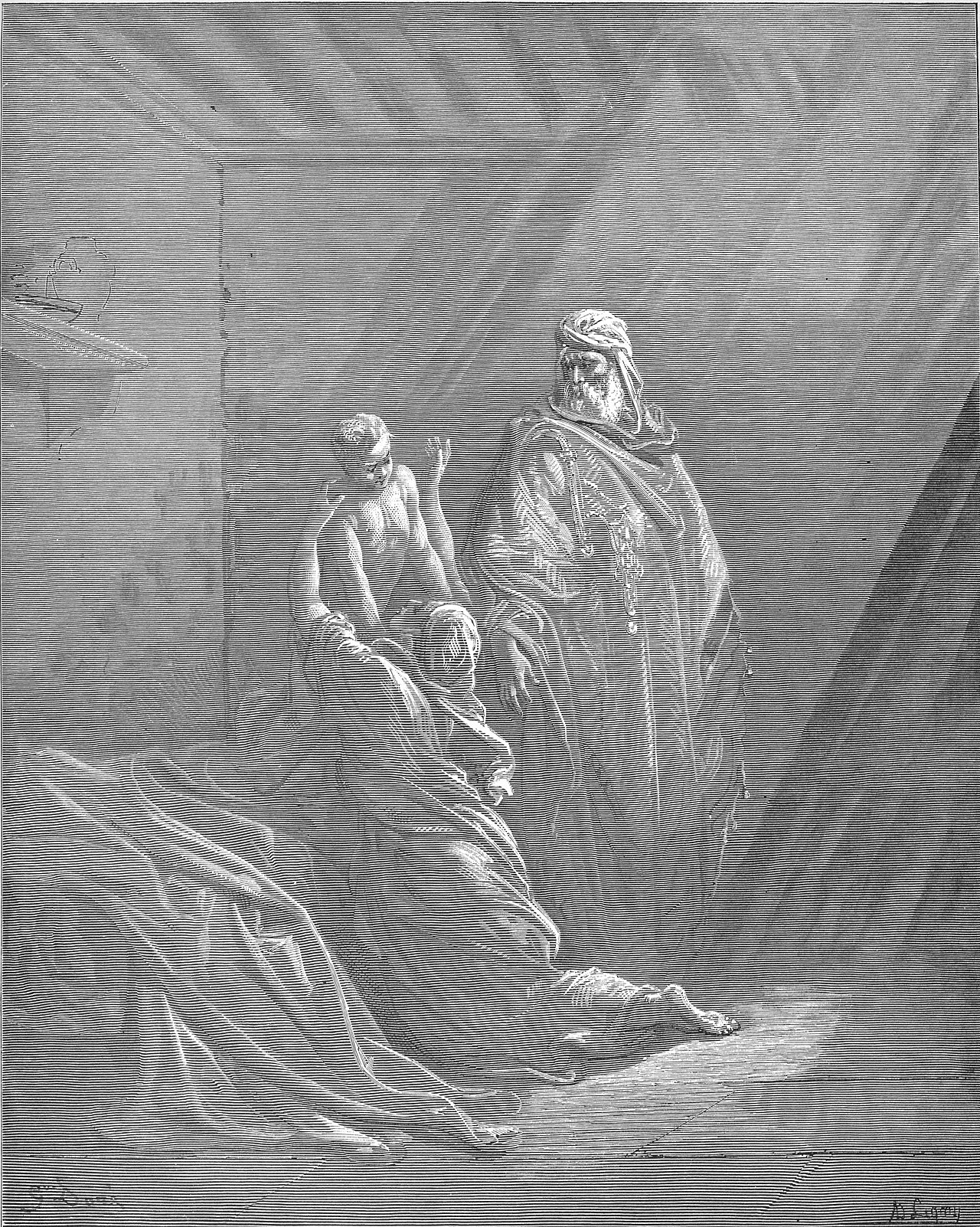
in 1 Kings 17Then he cried out to the LORD, “O LORD my God, have You also brought tragedy on this widow who has opened her home to me, by causing her son to die?”
BSB
The same verse in ASV and KJV ▾
ASV
And he cried unto Jehovah, and said, O Jehovah my God, hast thou also brought evil upon the widow with whom I sojourn, by slaying her son?
KJV
And he cried unto the Lord, and said, O Lord my God, hast thou also brought evil upon the widow with whom I sojourn, by slaying her son?
⋯
This verse in 1 Kings 17
Commentary
6 notes on this verseThou art the Lord, that canst revive the child: and my God; and therefore wilt not, deny me. She is a widow, add not affliction to the afflicted; deprive her not of the support and staff of her age: she hath given me kind entertainment: let her not fare the worse for her kindness to a prophet, whereby wicked men will take occasion to reproach both her, and religion.
This site's exposition
carried him up into a loft
on 1 Kings 17:19-21
Elijah takes the child from her arms, carries him to his own upper room, and lays him on his own bed before he prays. Barnes notes the stretching of himself upon the child three times differs from the method Elisha later uses over the Shunammite's son, and compares it instead to the touch by which Jesus later raises the dead. The prayer names the God he serves twice, O Lord my God, and asks plainly that this child's soul come into him again, a request Wesley calls bold, made by a man whose own experience of answered prayer had already earned him standing to make it.
This site's exposition
this widow who has opened her home
Elijah grounds his complaint on the kindness of the widow, who opened her home to him. John Wesley hears a plea that her kindness to a prophet should bring her no harm, since wicked men would then mock her and her faith. The prayer brings grief straight to God.
The record, by era
The Puritans and the Awakening3 voices
He pleads the greatness of the affliction to the poor mother: "It is evil upon the widow; thou art the widow's God, and dost not usually bring evil upon widows; it is affliction added to the afflicted." He pleads his own concern: "It is the widow with whom I sojourn; wilt thou, that art my God, bring evil upon one of the best of my benefactors?
quarantine:debris (2026-07-29) — odd-straight-quotes
And he cried unto the Lord,....
Thus his story begins with judgments and miracles, designed to awaken that stupid generation that had to deeply corrupted themselves. 1 And Elijah the Tishbite, who was of the inhabitants of Gilead, said unto Ahab, As the L ORD God of Israel liveth, before whom I stand, there shall not be dew nor rain these years, but according to my word.
The words behind it
17 Hebrew wordsEvery Hebrew word of this verse in the order it stands, with what it means and the door to its own study. The last column counts the times a word stands in the whole Bible: the rarer the word, the more the places it appears belong together.
| Hebrew | Sound | Meaning | Word study | In the Bible |
|---|---|---|---|---|
| וַיִּקְרָ֥א | vaiyikra' | and he called out | H7121 → | 733 times |
| אֶל־ | ʾel- | to | H413 → | 5510 times |
| יְהוָ֖ה | yahweh | Yahweh | H3068 → | 6520 times |
| וַיֹּאמַ֑ר | vaiyomar | and he said | H559 → | 5305 times |
| יְהוָ֣ה | yahweh | O Yahweh | H3068 → | 6520 times |
| אֱלֹהָ֔י | ʾelohai | God my | H430 → | 2601 times |
| הֲ֠גַם | hagam | ¿ also | H1571 → | 769 times |
| עַל־ | ʾal- | on | H5921 → | 5755 times |
| הָאַלְמָנָ֞ה | haalmanah | the widow | H490 → | 56 times |
| אֲשֶׁר־ | ʾasher- | whom | H834 → | 5497 times |
| אֲנִ֨י | ʾani | I | H589 → | 874 times |
| מִתְגּוֹרֵ֥ר | mitgorer | [am] staying as a sojourner | H1481 → | |
| עִמָּ֛הּ | ʾimah | with her | H5973 → | 1050 times |
| הֲרֵע֖וֹתָ | hareota | have you done harm | H7489 → | 107 times |
| לְהָמִ֥ית | lehamit | by putting to death | H4191 → | 839 times |
| אֶת־ | ʾet- | <obj.> | H853 → | 10935 times |
| בְּנָֽהּ׃ | benah | son her | H1121 → | 4930 times |
וַיִּקְרָ֥אand he called out
vaiyikra'H7121 →733 times
אֶל־to
ʾel-H413 →5510 times
יְהוָ֖הYahweh
yahwehH3068 →6520 times
וַיֹּאמַ֑רand he said
vaiyomarH559 →5305 times
יְהוָ֣הO Yahweh
yahwehH3068 →6520 times
אֱלֹהָ֔יGod my
ʾelohaiH430 →2601 times
הֲ֠גַם¿ also
hagamH1571 →769 times
עַל־on
ʾal-H5921 →5755 times
הָאַלְמָנָ֞הthe widow
haalmanahH490 →56 times
אֲשֶׁר־whom
ʾasher-H834 →5497 times
אֲנִ֨יI
ʾaniH589 →874 times
מִתְגּוֹרֵ֥ר[am] staying as a sojourner
mitgorerH1481 →
עִמָּ֛הּwith her
ʾimahH5973 →1050 times
הֲרֵע֖וֹתָhave you done harm
hareotaH7489 →107 times
לְהָמִ֥יתby putting to death
lehamitH4191 →839 times
אֶת־<obj.>
ʾet-H853 →10935 times
בְּנָֽהּ׃son her
benahH1121 →4930 times
A shaded row is a word that stands 400 times or fewer in the Bible.
The walk
8 stopsEach card is a verse this one points to, and under it the verses that one points to in turn. Where several paths arrive at the same place, that place is listed first: the text keeps returning to it.
Through
Matthew 21:22If you believe, you will receive whatever you ask for in prayer.”
it leads to
- Matthew 7:7
Ask, and it will be given to you; seek, and you will find; knock, and the door will be opened to you.
- 1 John 5:14–15
And this is the confidence that we have before Him: If we ask anything according to His will, He hears us.
- Mark 11:24
Therefore I tell you, whatever you ask for in prayer, believe that you have received it, and it will be yours.
- 1 John 3:22
and we will receive from Him whatever we ask, because we keep His commandments and do what is pleasing in His sight.
- John 14:13
And I will do whatever you ask in My name, so that the Father may be glorified in the Son.
- Matthew 7:7
Through
Exodus 17:4Then Moses cried out to the LORD, “What should I do with these people? A little more and they will stone me!”
it leads to
- 1 Samuel 30:6
And David was greatly distressed because the people spoke of stoning him, because the soul of every man grieved for his sons and daughters. But David found strength in the LORD his God.
- Numbers 14:10
But the whole congregation threatened to stone Joshua and Caleb. Then the glory of the LORD appeared to all the Israelites at the Tent of Meeting.
- Acts 14:19
Then some Jews arrived from Antioch and Iconium and won over the crowds. They stoned Paul and dragged him outside the city, presuming he was dead.
- 1 Samuel 30:6
Where this verse is studied
On this page
Studies1
About 1 Kings
This page draws on Albert Barnes, Notes, Explanatory and Practical, on the Old and New Testaments; John Gill, Exposition of the Old Testament (1748-1763); John Wesley, Explanatory Notes upon the Old Testament and Matthew Henry, Commentary on the Whole Bible.