
1 Samuel 26:25
in 1 Samuel 26Saul said to him, “May you be blessed, David my son. You will accomplish great things and will surely prevail.” So David went on his way, and Saul returned home.
BSB
The same verse in ASV and KJV ▾
ASV
Then Saul said to David, Blessed be thou, my son David: thou shalt both do mightily, and shalt surely prevail. So David went his way, and Saul returned to his place.
KJV
Then Saul said to David, Blessed be thou, my son David: thou shalt both do great things, and also shalt still prevail. So David went on his way, and Saul returned to his place.
⋯
This verse in 1 Samuel 26
Commentary
6 notes on this verseThou shalt both do great things, and also shalt still prevail. - The Hebrew is גם עשה תעשה וגם יכל תוכל gam asoh thaaseh, vegam yachol tuchal; “Also in doing thou shalt do, and being able thou shalt be able; which the Targum translates, also in reigning thou shalt reign, and in prospering thou shalt prosper; which in all probability is the meaning. There is a vast deal of dignity in this speech of David, arising from a consciousness of his own innocence.
This site's exposition
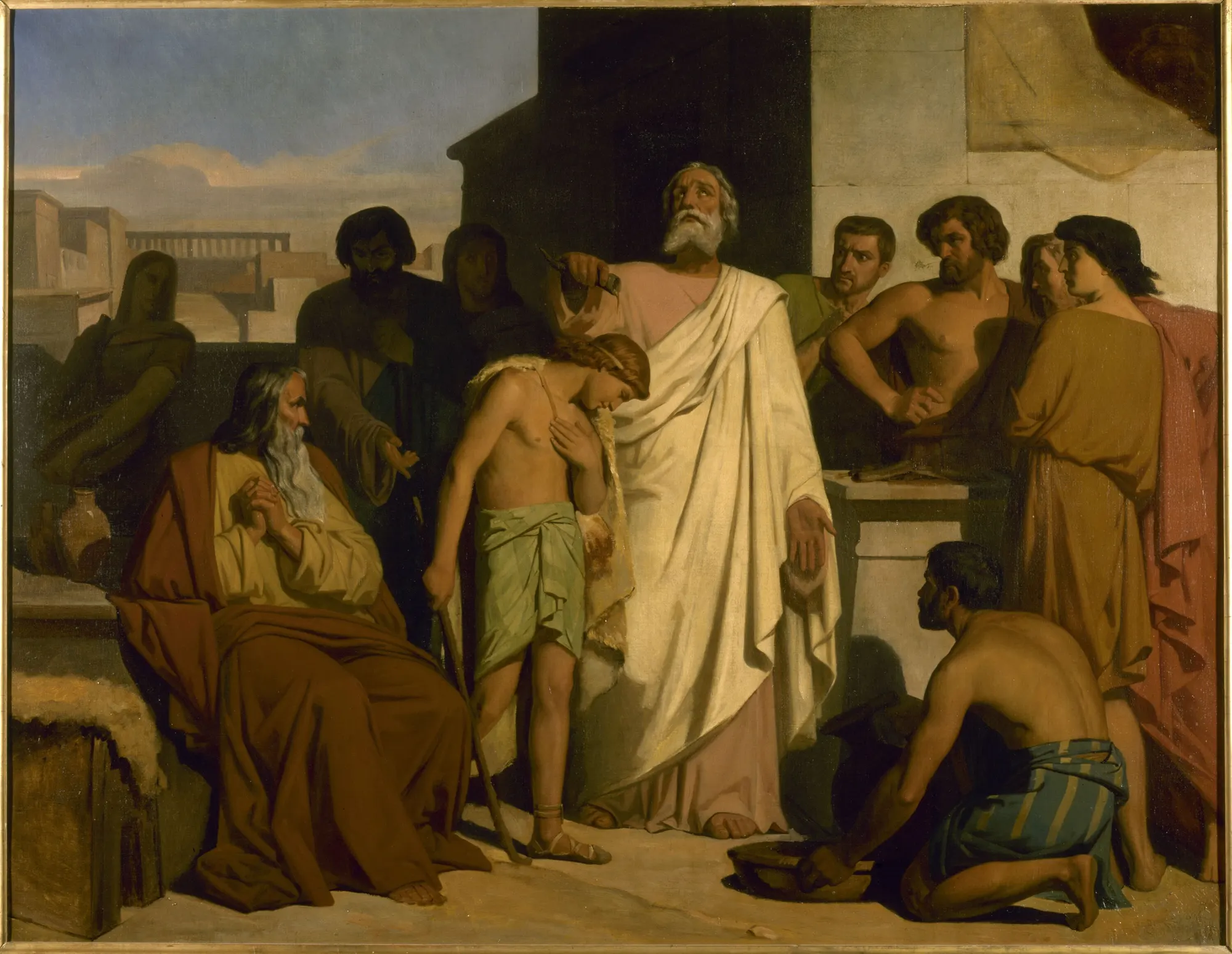
May you be blessed, David my son
Saul's last blessing on David foretells great things, and each man returns to his own place. Barnes reads the chapter as a second telling of En-gedi, and Keil and Delitzsch read its differences as two separate sparings. This is the last time Saul and David meet alive.
The record, by era
The Puritans and the Awakening3 voices
Saul gets information of David's movements and acts offensively. The Ziphites came to him and told him where David now was, in the same place where he was when they formerly betrayed him, ch. xxiii. Perhaps (though it is not mentioned) Saul had given them intimation, under-hand, that he continued his design against David, and would be glad of their assistance.
He foretels his victories, and his elevation at last: Thou shalt do great things. Note, Those who make conscience of doing that which is truly good may come, by the divine assistance, to do that which is truly great. He adds, " Thou shalt also still prevail, more and more," he means against himself, but is loth to speak that out.
Then Saul said to David, blessed be thou, my son David,....
The Nineteenth Century1 voice
A commentator
Jamieson, Fausset & Brown1802–1910
Commentary Critical and Explanatory on the Whole Bible (1871)
So David went on his way--Notwithstanding this sudden relenting of Saul, David placed no confidence in his professions or promises, but wisely kept at a distance and awaited the course of Providence.
The words behind it
20 Hebrew wordsEvery Hebrew word of this verse in the order it stands, with what it means and the door to its own study. The last column counts the times a word stands in the whole Bible: the rarer the word, the more the places it appears belong together.
| Hebrew | Sound | Meaning | Word study | In the Bible |
|---|---|---|---|---|
| וַיֹּ֨אמֶר | vaiyomer | and he said | H559 → | 5305 times |
| שָׁא֜וּל | shaul | Saul | H7586 → | 402 times |
| אֶל־ | ʾel- | to | H413 → | 5510 times |
| דָּוִ֗ד | david | David | H1732 → | 999 times |
| בָּר֤וּךְ | barukh | [be] blessed | H1288 → | 330 times |
| אַתָּה֙ | ʾatah | you | H859 → | 1094 times |
| בְּנִ֣י | beni | O son my | H1121 → | 4930 times |
| דָוִ֔ד | david | David | H1732 → | 999 times |
| גַּ֚ם | gam | both | H1571 → | 769 times |
| עָשֹׂ֣ה | ʾasoh | certainly <to do> | H6213 → | 2628 times |
| תַעֲשֶׂ֔ה | taaseh | you will do | H6213 → | 2628 times |
| וְגַ֖ם | vegam | <and> as well as | H1571 → | 769 times |
| יָכֹ֣ל | yakhol | certainly <to prevail> | H3201 → | 194 times |
| תּוּכָ֑ל | tukhal | you will prevail | H3201 → | 194 times |
| וַיֵּ֤לֶךְ | vaiyelekh | and he went | H1980 → | 1546 times |
| דָּוִד֙ | david | David | H1732 → | 999 times |
| לְדַרְכּ֔וֹ | ledarko | to way his | H1870 → | 707 times |
| וְשָׁא֖וּל | veshaul | and Saul | H7586 → | 402 times |
| שָׁ֥ב | shav | he returned | H7725 → | 1056 times |
| לִמְקוֹמֽוֹ׃ פ | limkomo | to place his | H4725 → | 401 times |
וַיֹּ֨אמֶרand he said
vaiyomerH559 →5305 times
שָׁא֜וּלSaul
shaulH7586 →402 times
אֶל־to
ʾel-H413 →5510 times
דָּוִ֗דDavid
davidH1732 →999 times
בָּר֤וּךְ[be] blessed
barukhH1288 →330 times
אַתָּה֙you
ʾatahH859 →1094 times
בְּנִ֣יO son my
beniH1121 →4930 times
דָוִ֔דDavid
davidH1732 →999 times
גַּ֚םboth
gamH1571 →769 times
עָשֹׂ֣הcertainly <to do>
ʾasohH6213 →2628 times
תַעֲשֶׂ֔הyou will do
taasehH6213 →2628 times
וְגַ֖ם<and> as well as
vegamH1571 →769 times
יָכֹ֣לcertainly <to prevail>
yakholH3201 →194 times
תּוּכָ֑לyou will prevail
tukhalH3201 →194 times
וַיֵּ֤לֶךְand he went
vaiyelekhH1980 →1546 times
דָּוִד֙David
davidH1732 →999 times
לְדַרְכּ֔וֹto way his
ledarkoH1870 →707 times
וְשָׁא֖וּלand Saul
veshaulH7586 →402 times
שָׁ֥בhe returned
shavH7725 →1056 times
לִמְקוֹמֽוֹ׃ פto place his
limkomoH4725 →401 times
A shaded row is a word that stands 400 times or fewer in the Bible.
The walk
8 stopsEach card is a verse this one points to, and under it the verses that one points to in turn. Where several paths arrive at the same place, that place is listed first: the text keeps returning to it.
Through
Isaiah 54:17No weapon formed against you shall prosper, and you will refute every tongue that accuses you. This is the heritage of the servants of the LORD, and their vindication is from Me,” declares the…
it leads to
- Romans 8:28–39
And we know that God works all things together for the good of those who love Him, who are called according to His purpose.
- Isaiah 54:15
If anyone attacks you, it is not from Me; whoever assails you will fall before you.
- John 10:28–30
I give them eternal life, and they will never perish. No one can snatch them out of My hand.
- Isaiah 50:8
The One who vindicates Me is near. Who will dare to contend with Me? Let us confront each other! Who has a case against Me? Let him approach Me!
- Romans 8:1
Therefore, there is now no condemnation for those who are in Christ Jesus.
- Romans 8:28–39
Through
Romans 8:37No, in all these things we are more than conquerors through Him who loved us.
it leads to
- 1 Corinthians 15:57
But thanks be to God, who gives us the victory through our Lord Jesus Christ!
- 1 John 4:4
You, little children, are from God and have overcome them, because greater is He who is in you than he who is in the world.
- 1 John 5:4–5
because everyone born of God overcomes the world. And this is the victory that has overcome the world: our faith.
- 1 Corinthians 15:57
Where this verse is studied
On this page
Studies1
About 1 Samuel
Who and where
2 names in this verse with a page on the site.
- PersonUnited MonarchyDavidSecond king of united Israel, shepherd-turned-monarch, ancestor of the Messiah, and traditional author of many Psalms.
- PersonUnited monarchySaulIsrael's first king, head and shoulders above the people; began in humility, ended in rejection — sparing what God devoted, consul…
This page draws on Adam Clarke, Commentary on the Bible; Albert Barnes, Notes on the Old Testament; Jamieson, Fausset & Brown, Commentary Critical and Explanatory on the Whole Bible; John Gill, Exposition of the Old Testament (1748-1763); Keil and Delitzsch, Biblical Commentary on the Books of Samuel and Matthew Henry, Commentary on the Whole Bible.