
Psalm 88
18 verses · Individual lament
O LORD, the God of my salvation, day and night I cry out before You.
Introduction
Heman the Ezrahite, the Psalm That Ends in Darkness, Book 3: The crisis of the throne, Poetry, Psalms Overview.
Heman the Ezrahite, one of the chief musicians of the temple and a man known for his wisdom, stands behind this psalm. It is the prayer of someone who has been afflicted for as long as he can remember, and whose friends have stopped coming. Unlike almost every other lament in the book, it never turns to relief or thanks before it ends. Listen for how he keeps praying anyway, to the God he feels has left him. Read it as proof that the darkest prayer still has a place in the worship of God's people.
Context
- Who
- A congregation that had people in it who were not getting better
- What
- A lament of long affliction that ends in darkness, with no turn to relief.
- Where
- A sickbed in the dark, with the house emptied of visitors
- When
- About 1000 BC on the traditional reading of its heading for Heman, and no event is named.
- Why
- To give the suffering a place to pray honestly when no answer has come.
Historical context
Heman, named at the top of this psalm, was one of the three men set over the music of the sanctuary alongside Asaph and Jeduthun, and he is listed among the wise men of the age, so the man who led Israel's praise wrote the darkest song in its book. No date and no event is given, and the psalm describes a condition that has run since the speaker's youth. Its place is a house emptied of company, since a long illness, especially one that made a man ritually unclean, cleared a household of visitors, so the social death arrived before the other kind. Israelites were buried in rock-cut family tombs, and once the flesh was gone the bones were gathered with the ancestors, so to be cut off from that was to be cut off from the family itself, and that is the fear the psalm keeps circling. The questions about whether the dead can praise God are questions inside a complaint, since in this same section of the book another singer says that God will receive him to glory, and the collection keeps both.
Significance
This is the only psalm that ends with no turn upward, its last word darkness and no closing line of trust. Israel put it in the hymnbook anyway and kept it there, so first hearers learned that a believer in the dark is given a place in the service without being required to finish on an upswing.
This chapter in Jewish lifeWhat this chapter is in Jewish life and reading.
How it is read
This is the psalm that ends in the dark, and the classical reading gives the darkness a subject. Rashi takes the heading's word for the afflicted one of the nation, sick with love and afflicted with the pains of the exile (Rashi on Psalms 88:1:1). He then says outright at verse 4 that the speaker "says this concerning the people of Israel" (Rashi on Psalms 88:4:1). The lowest pit of verse 7 is the exile itself (Rashi on Psalms 88:7:1). The dead who are free in verse 6 are read as free of the world (Rashi on Psalms 88:6:1). The question of verse 11, whether God works wonders for the dead, Rashi turns toward the wicked, who are called dead even while they live (Rashi on Psalms 88:11:1). Verse 12 he reads as the argument a dying people makes. If they die at the hands of their enemies they will not be able to recite God's praise in the grave (Rashi on Psalms 88:12:1). On the heading he also records how the psalm was performed. Heman the Ezrahite was one of the musicians, and the sons of Korah appointed this psalm for him to recite on the duchan, the platform where the Levites sang (Rashi on Psalms 88:1:2). Ibn Ezra and Radak stand in the corpus here by reference alone. Rashi is quoted here from the Judaica Press complete Tanach with Rashi, translated by A. J. Rosenberg, under CC-BY.
What the rabbis say
The corpus records thirty-eight places where the Midrash and the Talmud draw on this psalm, cited here by reference. Verse 6, on being free among the dead, is the verse the rabbis use most, and they read it of the freedom from the commandments that death brings. It stands in the Babylonian Talmud at Shabbat 30a:4 and 151b:8 and at Niddah 61b:5. The Jerusalem Talmud carries it at Gittin 3:3:1, Ketubot 12:3:2 and Kilayim 9:3:2, and it stands in Bereshit Rabbah 25:2 and Midrash Tehillim 88:3. Verse 1 is drawn into Bava Batra 15a:10, where the authorship of the psalms is discussed. Verse 12 is read at Eruvin 19a:17 and Avot DeRabbi Natan 12:5, and verse 16 at Sanhedrin 110b:13. Midrash Tehillim treats the psalm at 88:1, 88:2 and 88:4.
Sources: Rashi, Rashi on Psalms 88:1 to 88:19, the Judaica Press complete Tanach with Rashi, translated by A. J. Rosenberg, CC-BY, 1040 to 1105; Babylonian Talmud, Shabbat 30a:4 and 151b:8, Niddah 61b:5, Bava Batra 15a:10 and Eruvin 19a:17, cited by reference; Jerusalem Talmud, Gittin 3:3:1, Ketubot 12:3:2 and Kilayim 9:3:2, cited by reference; Midrash Tehillim, 88:1 to 88:4, cited by reference; The Sefaria corpus, scripts/data/sources/sefaria/psalms/88.json, fetched 2026-09-19, 2026.
Psalms 88:1-2
God of my salvation: The psalm opens by calling God the God of my salvation, and the next words are a cry day and night. The verb in verse 1 is tsa'aq, to shriek. Verse 2 asks that the prayer come before God and that His ear bend down to the cry.
Psalms 88:1
“O Lord God of my salvation. This is a hopeful title by which to address the Lord, and it has about it the only ray of comfortable light which shines throughout the Psalm. The writer has salvation, he is sure of that, and God is the sole author of it. While a man can see God as his Saviour, it is not altogether midnight with him. While the living God can be spoken of as the life of our salvation, our hope will not quite expire.”
Charles Spurgeon · The Treasury of David, Vol. 4 (1874)Particular Baptist
May my prayer come before You: Albert Barnes heard a man who feels something blocking the way, as if God kept his prayer out. Adam Clarke read it the same way, a weak prayer asking for a clear passage to the throne. Augustine took incline Your ear as God's compassionate listening.
Psalms 88:2
“Let my prayer come before thee,.... Not before men, as hypocrites desire, but before the Lord; let it not be shut out, but be admitted; and let it come with acceptance, as it does when it ascends before God, out of the hands of the angel before the throne, perfumed with the much incense of his mediation, Rev 8:3, incline thine ear unto my cry; hearken to it, receive it, and give an answer to it; Christ's prayers were attended with strong crying, and were always received and heard, Heb 5:7.”
1 more voice on this verse
Psalms 88:2
"Let my prayer come in before thee." "Into thy hands, Father, I commend my spirit." "Let my prayer come in before thee. Incline thine ear to my petition." Where are the anthropomorphites, who suppose that God has bodily members? "Incline thine ear, O God." It is the voice of the Son to the Father, speaking in our person. "Incline thine ear." It is a mark of great weakness, if, when He wishes to hear, He needs to incline His ear, so as to hear more closely.
Jerome · written before 420 · Homily 65, on Psalm 87 (Alternate Series)patristic
Psalms 88:3-7
full of troubles: Verse 3 puts him at the edge of Sheol, and verse 6 has God laying him in the lowest Pit. Forsaken among the dead in verse 5 renders chophshi, the Hebrew word for a slave released from service. The wrath and the waves of verse 7 are God's own.
Psalms 88:3
"For my soul is filled with evils." I bear the sins of many, therefore I grieve for all. "My soul is filled with evils." I bear evils, that I may lay them down upon the cross. "And my life hath drawn near to hell." Beautifully he said "hath drawn near": for He was not held fast by hell, but for our sake He drew near into hell. Finally, in another psalm it is said in the person of the Lord, "For thou wilt not leave my soul in hell, nor wilt thou give thy holy one to see corruption."
Jerome · written before 420 · Homily 65, on Psalm 87 (Alternate Series)patristic
1 more voice on this verse
Psalms 88:3
“For my soul is full of troubles. I am satiated and nauseated with them. Like a vessel full to the brim with vinegar, my heart is filled up with adversity till it can hold no more. He had his house full and his hands full of sorrow; but, worse than that, he had his heart full of it. Trouble in the soul is the soul of trouble. A little soul trouble is pitiful; what must it be to be sated with it? And how much worse still to have your prayers return empty when your soul remains full of grief.”
Charles Spurgeon · The Treasury of David, Vol. 4 (1874)Particular Baptist
descending to the Pit: Albert Barnes took the Pit as the grave, another name for the Sheol of verse 3. The same word can mean a cistern or a dungeon. Barnes and Charles Spurgeon both read counted as the verdict of those around him, who already spoke of him as dead.
Psalms 88:4
"I am counted among them that go down into the pit." This my murderers supposed: that I, going down like the rest of men into the prison of the underworld, was to be held back in the lower pit; not knowing that I had gone down for this reason, that I might rather draw out with me those who were held fast in that very place. "I am become as a man without help, free among the dead."
Jerome · written before 420 · Homily 65, on Psalm 87 (Alternate Series)patristic
1 more voice on this verse
Psalms 88:4
“I am counted with them that go down into the pit. My weakness is so great that both by myself and others I am considered as good as dead. If those about me have not ordered my coffin they have at least conversed about my sepulchre, discussed my estate, and reckoned their share of it. Many a man has been buried before he was dead, and the only mourning over him has been because he refused to fulfil the greedy expectations of his hypocritical relatives by going down to the pit at once.”
Charles Spurgeon · The Treasury of David, Vol. 4 (1874)Particular Baptist
like the slain who lie in the grave: Adam Clarke took forsaken among the dead as stripped, and pictured a battlefield where spoilers strip the dead and the dying alike. Charles Spurgeon heard the same field in whom You remember no more. The fallen lie where no one comes back for them.
Psalms 88:5
“Free among the dead. Unbound from all that links a man with life, familiar with death's door, a freeman of the city of the sepulchre, I seem no more one of earth's drudges, but begin to anticipate the rest of the tomb. It is a sad case when our only hope lies in the direction of death, our only liberty of spirit amid the congenial horrors of corruption. Like the slain that lie in the grave, whom you remember no more.”
Charles Spurgeon · The Treasury of David, Vol. 4 (1874)Particular Baptist
in the darkest of the depths: Albert Barnes gave lowest Pit literally as the pit beneath. He read the verse as a man so near the grave that he speaks as if laid there. Spurgeon saw a dungeon, the place of the dead and the abyss, and said the mind can sink lower than the body.
Psalms 88:6
"They have laid me in the lower pit." I went down to the depths of hell, that I might free all from the bonds of hell. "In the dark places, and in the shadow of death." He did not say "in death," but "in the shadow of death." Death was not inflicted on me by the Jews, but the shadow of death: because for the salvation of men I went down of my own will. Therefore I went down as light into the lower regions, that I might free the souls from the darkness of hell.
Jerome · written before 420 · Homily 65, on Psalm 87 (Alternate Series)patristic
2 more voices on this verse
Psalms 88:6
“Thou hast laid me in the lowest pit,.... The Targum interprets it of "captivity which was like unto the lowest pit;'' and so Jarchi and Kimchi.”
Psalms 88:6
“Thou hast laid me in the lowest pit, in darkness, in the deeps. What a collection of forcible metaphors, each one expressive of the utmost grief. Heman compared his forlorn condition to an imprisonment in a subterranean dungeon, to confinement in the realms of the dead, and to a plunge into the abyss. None of the similes are strained. The mind can descend far lower than the body, for it there are bottomless pits.”
Charles Spurgeon · The Treasury of David, Vol. 4 (1874)Particular Baptist
Your wrath weighs heavily upon me: Albert Barnes gave waves literally as breakers. He noted the psalmist read his suffering in body and mind as God's displeasure. Matthew Henry said the same load would have lain lightly had he seen God's favor in it.
Psalms 88:7
“Thy wrath lieth hard upon me. Dreadful plight this, the worst in which a man can be found. Wrath is heavy in itself; God's wrath is crushing beyond conception, and when that presses hard the soul is oppressed indeed. The wrath of God is the very hell of hell, and when it weighs upon the conscience a man feels a torment such as only that of damned spirits can exceed. Joy or peace, or even numbness of indifference, there can be none to one who is loaded with this most tremendous of burdens.”
Charles Spurgeon · The Treasury of David, Vol. 4 (1874)Particular Baptist
1 more voice on this verse
Psalms 88:7
"Thy fury is confirmed upon me." For this reason all thy fury came upon me, that it might depart from others. "And all thy waves thou hast brought in upon me." Upon me the whole tempest thundered down, that calm might come to the world.
Jerome · written before 420 · Homily 65, on Psalm 87 (Alternate Series)patristic
Psalms 88:8-9
I am confined and cannot escape: Verse 8 puts the loss of his friends in God's hands, and it says he was made repulsive to them. He is shut in and cannot escape. His eyes are dim with grief in verse 9, and he still calls daily and spreads out his hands.
Psalms 88:8
“Thou hast put away mine acquaintance far from me. If ever we need friends it is in the dreary hour of despondency and the weary time of bodily sickness; therefore does the sufferer complain because divine providence had removed his friends. Perhaps his disease was infectious or defiling, so that he was legally separated from his fellow men, perhaps their fears kept them away from his plague stricken house, or else his good name had become so injured that they naturally avoided him. Lost friends require but small excuse for turning their backs on the afflicted.”
Charles Spurgeon · The Treasury of David, Vol. 4 (1874)Particular Baptist
1 more voice on this verse
Psalms 88:8
"I was delivered up, and came not forth." What is this that he said, "I was delivered up, and came not forth"? The Jews delivered me up, and yet on account of my clemency I did not forsake them, but I dwelt among them with affection. I was delivered up to Pilate by them, and I came not forth from them, saying on the cross, "Father, spare them, they know not what they do." Let us say it also otherwise. "I was delivered up, and came not forth."
Jerome · written before 420 · Homily 65, on Psalm 87 (Alternate Series)patristic
I spread out my hands to You: Albert Barnes gave grow dim literally as pine away, eyes worn out with weeping. Spreading out the hands was the posture of prayer, and John Gill noted he kept to it with no answer given. Charles Spurgeon said the tears wet his prayers without cooling them.
Psalms 88:9
“Mine eye mourneth by reason of affliction. He wept his eyes out. He exhausted the lachrymal glands, he wore away the sight itself. Tears in showers are a blessing, and work our good; but in floods they become destructive and injurious. Lord, I have called daily upon thee. His tears wetted his prayers, but did not damp then fervour. He prayed still, though no answer came to dry his eyes. Nothing can make a true believer cease praying; it is a part of his nature, and pray he must. I have stretched out my hands unto thee.”
Charles Spurgeon · The Treasury of David, Vol. 4 (1874)Particular Baptist
Psalms 88:10-12
wonders for the dead?: Four questions run here, and each expects the answer no. Abaddon in verse 11 names the place of the dead, from the Hebrew word for perishing. The questions set God's own praise at stake, and Psalm 6:5 asks the same, who can praise You from Sheol.
Psalms 88:10
“Wilt thou shew wonders to the dead? Wherefore then suffer me to die? While I live thou canst in me display the glories of thy grace, but when I have passed into the unknown land, how canst thou illustrate in me thy love? If I perish thou wilt lose a worshipper who both reverenced, and in his own experience illustrated, the wonders of thy character and acts. This is good pleading, and therefore he repeats it. Shall the dead arise and praise thee?”
Charles Spurgeon · The Treasury of David, Vol. 4 (1874)Particular Baptist
1 more voice on this verse
Psalms 88:10
"Wilt thou show wonders to the dead?" Not to those who, living, are dead, but to me who live in thee. "Or shall physicians raise them up?" and the rest. Not the spices of physicians, but thou, Father, raisest me up; nor they, but I will confess among the peoples.
Jerome · written before 420 · Homily 65, on Psalm 87 (Alternate Series)patristic
Your faithfulness in Abaddon?: Augustine noted how often the Psalms pair loving devotion with faithfulness, and he read Abaddon as repeating the grave of the first line. Charles Spurgeon drew out the argument. If God let His servant die before the promise came true, no one could tell of His faithfulness.
Psalms 88:11
“Shall thy lovingkindness be declared in the grave? Thy tender goodness—who shall testify concerning it in that cold abode where the worm and corruption hold their riot? The living may indite "meditations among the Tombs", but the dead know nothing, and therefore can declare nothing. Or thy faithfulness in destruction? If the Lord suffered his servant to die before the divine promise was fulfilled, it would be quite impossible for his faithfulness to be proclaimed.”
Charles Spurgeon · The Treasury of David, Vol. 4 (1874)Particular Baptist
the land of oblivion?: Matthew Henry read the land of oblivion both ways: the dead remember nothing, and no one remembers them. That second sense answers verse 5, whom You remember no more. Albert Barnes set the darkness beside the gloomy land Job describes in Job 10:21-22.
Psalms 88:12
“Shall thy wonders be known in the dark? If not here permitted to prove their goodness of Jehovah, how could the singer do so in the land of darkness and death shade? Could his tongue, when turned into a clod, alarm the dull cold ear of death? Is not a living dog better than a dead lion, and a living believer of more value to the cause of God on earth than all the departed put together? And thy righteousness in the land of forgetfulness? What shall be told concerning thee in the regions of oblivion?”
Charles Spurgeon · The Treasury of David, Vol. 4 (1874)Particular Baptist
1 more voice on this verse
Psalms 88:12
"Shall thy wonders be known in the dark, and thy justice in the land of forgetfulness? And I have cried to thee, O Lord, and in the morning my prayer shall come before thee." That is, because thou wilt glorify me by a morning resurrection.
Jerome · written before 420 · Homily 65, on Psalm 87 (Alternate Series)patristic
Psalms 88:13-14
in the morning my prayer: After the questions the psalm turns back to address, and the prayer is there in the morning. Verse 14 asks why twice: why God rejects him, and why God hides His face. Neither question is answered in this psalm.
Psalms 88:13
“But unto thee have I cried, O Lord; I have continued to pray for help to thee, O Jehovah, the living God, even though thou hast so long delayed to answer. A true born child of God may be known by his continuing to cry; a hypocrite is great at a spurt, but the genuine believer holds on till he wins his suit. And in the morning shall my prayer prevent thee. He meant to plead on yet, and to increase his earnestness.”
Charles Spurgeon · The Treasury of David, Vol. 4 (1874)Particular Baptist
1 more voice on this verse
Psalms 88:13
"My prayer shall present itself before thee, and be betimes with thee, and shall not stay for the encouragement of the beginning of mercy, but reach towards it with faith and expectation even before the day dawns." God often prevents our prayers and expectations with his mercies; let us prevent his mercies with our prayers and expectations.
Matthew Henry · Commentary on the Whole Bible (1707-1721)puritan
do You reject me?: Augustine set this cry beside the opening of Psalm 22. Matthew Henry heard the wonder of an old servant rejected by the Master he had resolved never to leave. Charles Spurgeon held that believers may put such questions to the Lord, and ought to.
Psalms 88:14
“Lord, why castest thou oft my soul? Hast thou not aforetime chosen me, wilt thou now reject me? Shall thine elect ones become thy reprobates? Dost thou, like changeable men, give a writing of divorcement to those whom thy love has espoused? Can thy beloveds become thy cast offs? Why hidest thou thy face from me? Wilt thou not so much as look upon me? Canst thou not afford me a solitary smile? Why this severity to one who has in brighter days basked in the light of thy favour?”
Charles Spurgeon · The Treasury of David, Vol. 4 (1874)Particular Baptist
1 more voice on this verse
Psalms 88:14
"Why, O Lord, dost thou repel my prayer," that this cup should not pass from me?
Jerome · written before 420 · Homily 65, on Psalm 87 (Alternate Series)patristic
Psalms 88:15-18
From my youth I was afflicted: The affliction has run from his youth, and verses 16 and 17 keep the wrath and the terrors coming over him like water. Verse 18 removes the beloved and the friend. The last word of the psalm in the Hebrew is machshak, darkness, and the psalm stops there.
Psalms 88:15
“I am afflicted and ready to die from my youth up. His affliction had now lasted so long that he could hardly remember when it commenced; it seemed to him as if he had been at death's door ever since he was a child.”
Charles Spurgeon · The Treasury of David, Vol. 4 (1874)Particular Baptist
Your terrors have destroyed me: Albert Barnes read Your terrors have destroyed me as a man so near death that he may be spoken of as dead. Charles Spurgeon asked how a saint could feel such wrath. He answered that a father corrects his child, since the Judge's penalty fell on Jesus.
Psalms 88:16
“Thy fierce wrath goeth over me. What an expression, "fierce wrath", and it is a man of God who feels it! Do we seek an explanation? It seemed so to him, but "tidings are not what they seem." No punitive anger ever falls upon the saved one, for Jesus shields him from it all; but a father's anger may fall upon his dearest child, none the less but all the more, because he loves it. Since Jesus bore my guilt as my substitute, my Judge cannot punish me, but my Father can and will correct me.”
Charles Spurgeon · The Treasury of David, Vol. 4 (1874)Particular Baptist
1 more voice on this verse
Psalms 88:16
“What is hell, that eternal excision, by which damned sinners are for ever cut off from God and all happiness, but God's terrors fastening and preying upon their guilty consciences? [2.] They had almost taken away the use of his reason: When I suffer thy terrors I am distracted.”
Matthew Henry · Commentary on the Whole Bible (1707-1721)puritan
they engulf me like water: They are the terrors of verse 16, as John Gill read it. Albert Barnes saw troubles banded together and arriving all at once, so he could not meet them one at a time. The water picks up the waves of verse 7.
Psalms 88:17
"They have surrounded me like water all the day." The Jews in the waves of persecutions. "They surrounded me together." The Pharisees with the priests. Pilate with the princes and the peoples.
Jerome · written before 420 · Homily 65, on Psalm 87 (Alternate Series)patristic
2 more voices on this verse
Psalms 88:17
“They came round about me daily like water,.... That is, the terrors of the Lord, the sorrows of death and hell, Psa 18:4, this was the Messiah's case, when it was with him as is expressed Psa 69:1, they compassed me about together; as waters coming from many places, from all quarters, meet together, and together surround a person or place in such circumstances was Christ, when the bulls of Bashan beset him around, and the assembly of the wicked enclosed him, and innumerable evils encompassed him about, Psa 22:12.”
Psalms 88:17
“They came round about me daily like water. My troubles, and thy chastisement poured in upon me, penetrating everywhere, and drowning all. Such is the permeating and pervading power of spiritual distress, there is no shutting it out; it soaks into the soul like the dew into Gideon's fleece; it sucks the spirit down as the quicksand swallows the ship; it overwhelms it as the deluge submerged the green earth. They compassed me about together. Griefs hemmed him in. He was like the deer in the hunt, when the dogs are all around and at his throat. Poor soul!”
Charles Spurgeon · The Treasury of David, Vol. 4 (1874)Particular Baptist
darkness is my closest companion: Albert Barnes noted that the Greek and Latin versions render the last line my acquaintance from my misery. Adam Clarke gave the Hebrew as darkness is my companion, the reading behind the words here. Matthew Henry supposed some friends were dead and others far off.
Psalms 88:18
"Thou hast put far from me friend and neighbor, and my acquaintances because of misery." Because of the confusion of the passion, even the apostles themselves were put far from him.
Jerome · written before 420 · Homily 65, on Psalm 87 (Alternate Series)patristic
1 more voice on this verse
Psalms 88:18
“Lover and friend: hast thou put far from me. Even when they are near me bodily, they are so unable to swim with me in such deep waters, that they stand like men far away on the shore while I am buffeted with the billows; but, alas, they shun me, the dearest lover of all is afraid of such a distracted one, and those who took counsel with me avoid me now! The Lord Jesus knew the meaning of this in all its wormwood and gall when in his passion.”
Charles Spurgeon · The Treasury of David, Vol. 4 (1874)Particular Baptist
How this psalm is built
The form: A psalm whose very title is the hardest part of it, and whose obscurity begins before the exposition does, as Jerome classes it.
The patterns in this chapter
| Device | What it does | Where to see it |
|---|---|---|
| The prayer kept up through the whole psalm | Verse 1 cries out day and night, verse 9 calls daily and spreads out the hands, verse 13 cries in the morning. The psalm never stops praying and never reports an answer. It is addressed to God from its first word to its last and contains no sentence about anyone else. | Psalm 88:1, Psalm 88:9, Psalm 88:13 |
| The five questions about the dead | Verses 10 to 12 ask whether God works wonders for the dead, whether departed spirits rise to praise Him, whether His loving devotion can be proclaimed in the grave, whether His faithfulness can be told in Abaddon, and whether His wonders are known in the darkness. None of the five is answered, and a Selah follows the first pair. | Psalm 88:10, Psalm 88:11, Psalm 88:12 |
| The names for the place of the dead | The psalm uses Sheol at verse 3, the Pit at verses 4 and 6, the grave at verses 5 and 11, Abaddon at verse 11, the darkest of the depths at verse 6 and the land of oblivion at verse 12. Seven names for one place stand in a psalm of eighteen verses. | Psalm 88:3, Psalm 88:6, Psalm 88:11, Psalm 88:12 |
| The friends taken at the start of a verse and at the end of the psalm | Verse 8 says that God has removed the speaker's friends and made him repulsive to them. Verse 18 closes the psalm by saying that God has removed his beloved and his friend, and that darkness is his closest companion. The same loss opens the second movement and closes the whole. | Psalm 88:8, Psalm 88:18 |
The psalm closes the second Korah collection, Psalms 84 to 88, and the collection's arc is worth seeing whole. Psalm 84 longs for the courts, Psalm 85 hears peace spoken, Psalm 86 asks for an undivided heart, Psalm 87 writes the nations into the register, and Psalm 88 ends in darkness. The Psalter puts its darkest psalm at the end of a run of its brightest.
9 more paragraphs on the patterns
Psalm 89 follows it immediately and asks the same question on a national scale, how long, with the throne of David fallen. The two psalms together close the third book of the Psalter on unresolved grief, and the doxology at Psalm 89:52 is the book's formal close rather than an answer.
Inside the psalm the pattern is a prayer that keeps its own discipline while nothing improves. The speaker cries day and night at verse 1, daily at verse 9, and in the morning at verse 13. The hours are kept. The psalm records a man who goes on praying after the reasons for praying have run out, and that is the pattern it leaves.
The New Testament's use
No verse of Psalm 88 is quoted in the New Testament. The fathers read it of the passion, and Augustine works verse 3 that way at length, asking whether the soul of Christ may be spoken of as filled with evils and answering that it may be, of the evils of humanity though not of human sin. Jerome reads verse 14 on the Lord's own lips, setting it beside the prayer that the cup should pass. Those are readings of the church rather than citations of the New Testament, and the psalm is nowhere quoted in it.
The debated point
The psalm's title is the oldest difficulty. Jerome says plainly that the title is most difficult and that the obscure questions press before any exposition begins, and he sets out the terms one by one. The heading names both the sons of Korah and Heman the Ezrahite, which is two attributions in one line, and it carries musical terms whose sense is uncertain.
The larger dispute is what the psalm is for. One position holds that it stands in the canon as the record of a real condition, so that a believer in unrelieved darkness has a psalm to pray that does not require him to feel better by the last verse. The other holds that the psalm is completed by its neighbours and by the Psalter as a whole, so that its darkness is framed rather than final. Both positions are held by teachers the site cites, and the psalm itself supplies no turn for either of them to point at.
Where to go deeper
The place of the dead the psalm names seven ways is set out at Gehenna and the question the psalm asks at the question of suffering. The night the fathers read here is set out at Gethsemane. Psalm 88 is one of the psalms a reader meets at praying the hard psalms.
Keep studying
Studies4
Sources for this chapter
The summary
Jamieson, Fausset & Brown, Commentary Critical and Explanatory; John Calvin, Commentaries; John Wesley, Notes on the Old Testament and Matthew Henry, Complete Commentary.
The form and classifications
Augustine of Hippo, Exposition on Psalm 88, 430, on Psalm 88:3; Charles Spurgeon, The Treasury of David, Vol. 4, 1874, on Psalm 88:15 and Jerome, Homily on Psalm 87, 420.
The exposition
Adam Clarke, Commentary on the Bible; Albert Barnes, Notes on the Book of Psalms; Augustine of Hippo, Exposition on Psalm 88; Charles Spurgeon, The Treasury of David; Franz Delitzsch, Biblical Commentary on the Psalms; Jamieson, Fausset and Brown, Commentary Critical and Explanatory on the Whole Bible; John Calvin, Commentary on the Book of Psalms; John Gill, Exposition of the Old Testament and Matthew Henry, Commentary on the Whole Bible.
The painting
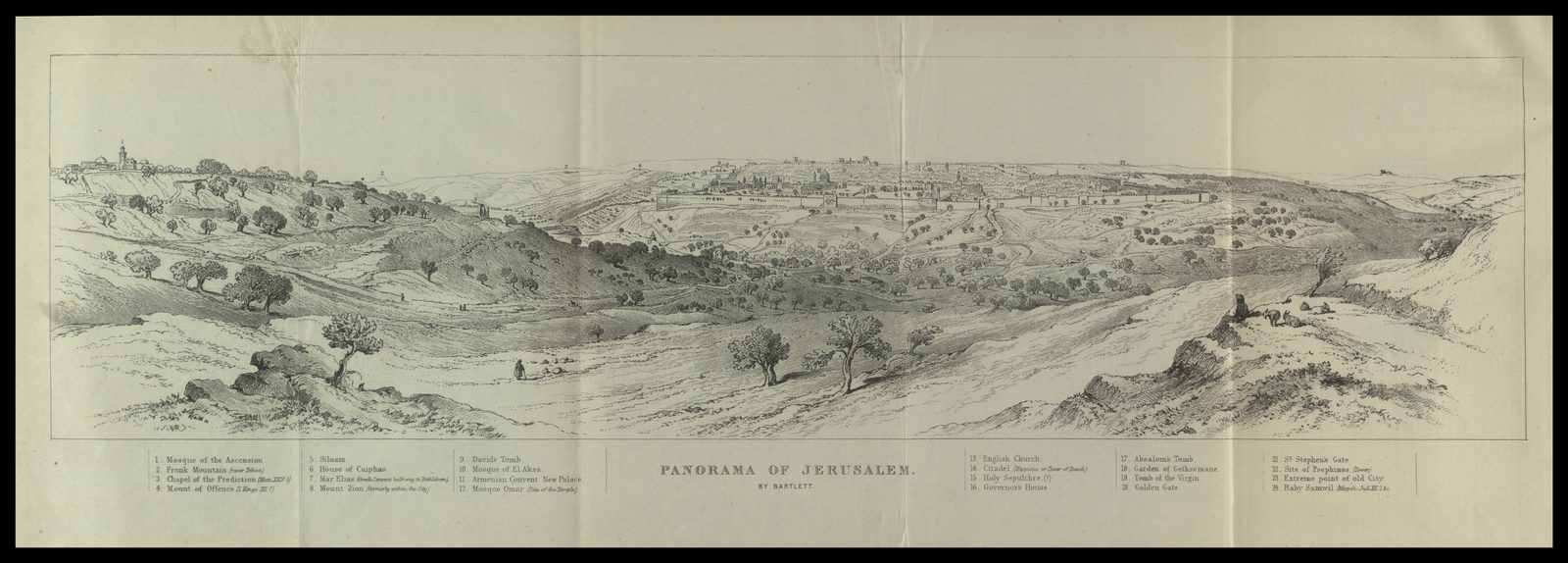
Panorama of Jerusalem. William Henry Bartlett, not stated on the file page. Wikimedia Commons. Public domain.