
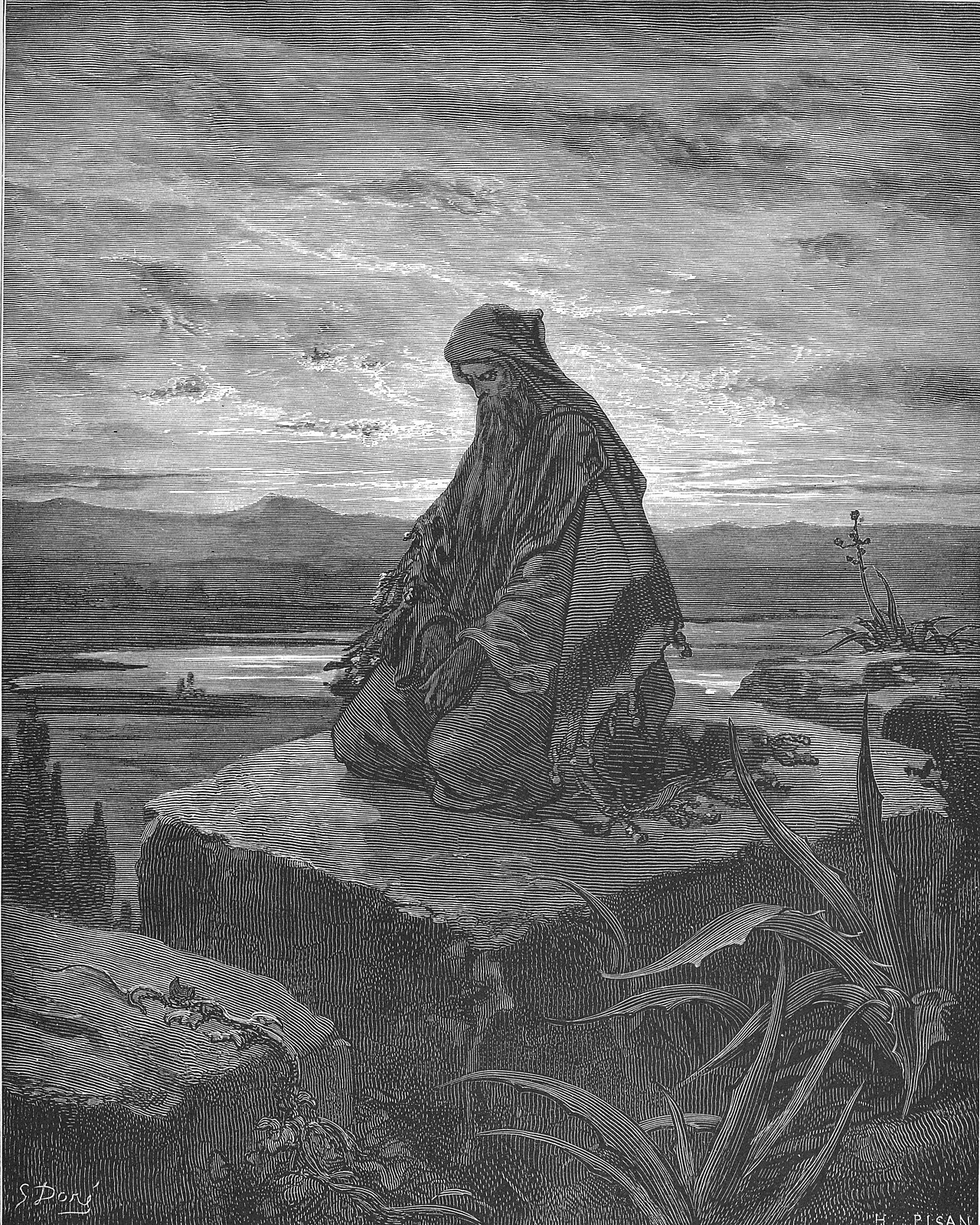
Isaiahchapter 57
21 verses · Isaiah · 8th century BC · The Prophets
But the wicked are like the storm-tossed sea, for it cannot be still, and its waves churn up mire and muck.
Introduction
Isaiah, The Prophets, Isaiah Overview.
Isaiah wrote this for people who kept the temple calendar and slipped away to the local shrines as well. His hearers knew every rite he names, because they were practised in the valleys around Jerusalem. The chapter moves from a charge in a court to a picture of an unfaithful wife and ends with a promise. It is poetry with a hard edge. Listen for the question the LORD keeps asking about whom they feared. Listen also for the two places He says He dwells, and for the closing line that the book says twice.
Context
- Who
- People who kept the temple calendar and the local cults at the same time
- What
- A charge against Judah's worship at the shrines, set between the death of the righteous and a promise of healing to the humble.
- Where
- The wooded valleys, ravines and hilltop shrines around Jerusalem and the towns of Judah.
- When
- Spoken about 700 to 690 BC on the site's reading, when these shrines were in use in Judah.
- Why
- To expose worship divided between the LORD and other gods, and to show where the LORD chooses to live.
Historical context
The practices listed are documented Canaanite and Judean folk religion, and the detail is uncomfortably specific. Inflaming yourselves among the oaks and under every green tree, sacred groves at the local shrine. Slaying the children in the valleys under the clefts of the rocks, child sacrifice, practiced in the ravines outside Jerusalem, and known archaeologically at Carthage, where a Phoenician burial ground of infant urns has been excavated.
Show the rest of the historical context, 4 more paragraphs
The smooth stones of the stream given as a portion is another real rite. Water-worn stones were set up as standing markers and received drink offerings and grain offerings. Isaiah's pun is that their portion, their inheritance, is a handful of pebbles from a creek bed.
The bed on a high mountain is the shrine bed used in fertility rites, and the memorial set up behind the doors and the doorposts is a household marker put in the place where the Law had said to write God's commandments. The image is of a wife who has replaced her husband's letters with a lover's token at her own front door.
The diplomacy image is the sharpest line in the chapter: you sent your messengers far off, and debased yourself even to Sheol. Judah's habit of sending envoys to buy the protection of larger powers is described as a nation whose ambassadors go down to the grave to negotiate.
Against all of it, a two-address God: I dwell in the high and holy place, and also with him who has a contrite and humble spirit. Those are the only two addresses given.
Significance
The chapter opens with something easy to miss. The righteous perishes and no one takes it to heart; merciful men are taken away, no one considering that the righteous is taken away from the evil to come. In a rotting society, a good man's early death was mercy.
Show the rest of the significance, 1 more paragraph
And the healing offered afterwards is offered to the ones who wore themselves out on the road: peace, peace to him who is far off and to him who is near, says the LORD, and I will heal him. Followed by the hard sentence the chapter ends on, there is no peace, says my God, for the wicked.
This chapter in Jewish lifeWhat this chapter is in Jewish life and reading.
What is done
The site's own table in src/lib/hebraic/readings.ts, probed for this lane, printed no weekly portion and no Haftarah from this chapter, and no festival reading for the book. That table carries the Haftarah of each of the fifty-four weekly portions and the books read whole at the feasts, and it carries nothing for the special Sabbaths or the fast days. This card therefore names no public reading of the chapter and leaves that question to a source that holds those readings.
The corpus joins the chapter to the weeks of the Torah portions through the works arranged by portion. Under the sixteenth verse it carries Bereshit Rabbati, Parashat Vayeshev 24. Under the twentieth verse it carries Bereshit Rabbati, Parashat Bereshit 12 and Bereshit Rabbati, Parashat Bereshit 14.
How it is read
Rashi is the one commentator on this chapter whose English the corpus carries, quoted here from The Judaica Press complete Tanach with Rashi, translated by A. J. Rosenberg, which Sefaria reports as CC-BY, and every quotation of it is held to fifty words or fewer because the translation is modern.
He names the righteous man of the first verse, "such as Josiah", and reads his death as mercy. "Let this righteous man come to his forefathers in peace, and let him not see the evil" (Rashi on Isaiah 57:1:1 and 57:2:1).
The middle of the chapter is a charge of idolatry, and Rashi keeps the prophet's figure of adultery. The couch set on the high mountains is "The couch of your adultery to idolatry". The door and doorpost of the eighth verse picture a wife whose thoughts are at the door (Rashi on Isaiah 57:7:1 and 57:8:1). The collections of the thirteenth verse are the idols gathered, which the wind will carry off (Rashi on Isaiah 57:13:1).
The fourteenth verse turns to repentance, and Rashi hears the prophet speak for God: "clear away the evil inclination from your ways". The God who dwells on high dwells also with the crushed and humble, "upon whom I lower My Presence" (Rashi on Isaiah 57:14:1 and 57:15:1). He reads the close as one argument. The anger that is not forever and the peace spoken to the far and the near belong to the repentant. The last line, no peace for the wicked, is their reverse (Rashi on Isaiah 57:16:1, 57:19:1 and 57:21:1).
What the rabbis say
The corpus carries forty rabbinic locators on this chapter and the text of none, so each is cited and linked here rather than quoted. On the first verse it holds Bava Kamma 60a:18, Ein Yaakov (Glick Edition), Bava Kama 6:2, Ein Yaakov (Glick Edition), Sanhedrin 11:139 and Ein Yaakov, Bava Kamma 6:3. On the second verse it holds Avot DeRabbi Natan, Recension B 25:10, Bereshit Rabbah 25:2, Devarim Rabbah 11:10 and Ein Yaakov (Glick Edition), Ketubot 12:4. On the fifth verse it holds Ein Yaakov, Niddah 2:3, Niddah 13a:18 and Tractate Kallah 4:2. On the sixth verse it holds Jerusalem Talmud Avodah Zarah 3:5:6.
On the seventh verse it holds Ein Yaakov (Glick Edition), Megillah 2:2. On the eighth verse it holds Eikhah Rabbah, Petichta 22, Ein Yaakov (Glick Edition), Shabbat 16:5 and Ein Yaakov, Shabbat 16:6. On the tenth verse it holds Midrash Lekach Tov, Leviticus 15:11:1. On the twelfth verse it holds Pesikta Rabbati 30:1. On the thirteenth verse it holds Aggadat Bereshit 58:3, Bava Batra 91b:3 and Bereshit Rabbah 84:1. On the fourteenth verse it holds Bamidbar Rabbah 15:16, Ein Yaakov (Glick Edition), Sukkah 5:6 and Ein Yaakov, Moed Katan 1:1.
On the fifteenth verse it holds Aggadat Bereshit 19:1, Aggadat Bereshit 56:1 and Eikhah Rabbah 1:23. On the sixteenth verse it holds Avodah Zarah 5a:10, Bereshit Rabbah 24:4 and Bereshit Rabbati, Parashat Vayeshev 24. On the seventeenth verse it holds Vayikra Rabbah 16:9. On the nineteenth verse it holds Bamidbar Rabbah 11:7, Bamidbar Rabbah 8:4 and Bava Kamma 60a:3. On the twentieth verse it holds Bereshit Rabbah 55:2, Bereshit Rabbati, Parashat Bereshit 12 and Bereshit Rabbati, Parashat Bereshit 14. On the twenty-first verse it holds Midrash Lekach Tov, Leviticus 19:2:3, Midrash Lekach Tov, Numbers 6:26:1 and Sifrei Aggadah on Esther, Midrash Abba Guryon 3:7. What each of them teaches is a saying of the rabbis, and is reported as theirs wherever this site quotes one. The quotations wait on a fetch that carries the text.
Sources: Rashi, Rashi on Isaiah 57:1:1 to 57:21:1, The Judaica Press complete Tanach with Rashi, translated by A. J. Rosenberg, reported CC-BY; The Sefaria corpus, scripts/data/sources/sefaria/isaiah/57.json, the 40 Talmud and Midrash locators of this chapter; The site's own files, src/lib/hebraic/readings.ts, printing no portion and no Haftarah for this chapter and no festival reading for this book.
The heads below are this chapter's scenes. The numbered points under each are its verses.
The Righteous Perish While Idols Wait Under Every Green Tree
Isaiah 57:1-2
The righteous perish, and no one takes it to heart: “The righteous perish, and no one takes it to heart”, and the verse gives the reason: “the righteous are guided from the presence of evil”. The early death of a good man is a rescue before the judgment comes. Verse 2 speaks of the grave as rest.
Isaiah 57:1
“The providence of God removing good men apace out of this world. The righteous, as to this world, perish; they are gone and their place knows them no more. Piety exempts none from the arrests of death, nay, in persecuting times, the most righteous are most exposed to the violences of bloody men.”
Matthew Henry · Commentary on the Whole Bible (1707-1721)puritan
1 more voice on this verseWhat preachers and commentators have said about this verse, in their own words.
Isaiah 57:1
“The righteous perisheth - This refers, as I suppose, to the time of Manasseh (see the Introduction, Section 3). Grotius supposes, that it refers to king Josiah; Vitringa, that it refers to martyrs in general. But it seems probable to me that the prophet designs to describe the state of stupidity which prevailed in his own time, and to urge as one proof of it, that the pious part of the nation was taken away by violent death, and that the nation was not affected by it.”
Those who walk uprightly enter into peace: Clarke hears the peace of those who walk uprightly as going to the fathers in peace, the promise made at Genesis 15:15. Jamieson, Fausset & Brown read lying down as the sleep in the grave, awaiting the resurrection (1 Thess 4:14). Barnes sets the rest they find beside Job 3:17.
Isaiah 57:2
“He shalt enter into peace “He shall go in peace” - יבוא שלום yabo shalom; the expression is elliptical, such as the prophet frequently uses. The same sense is expressed at large and in full terms, Gen 15:15: ואתה תבא אל אבותיך בשלום veattah libbo al abotheycha beshalom, “and thou shalt go to thy fathers in peace.” They shall rest in their beds, each one walking in his uprightness “He shall rest in his bed; even the perfect man” - This obscure sentence is reduced to a perfectly good sense, and easy construction by an ingenious remark of Dr. Durell.”
Adam Clarke · Commentary on the Bible (1810-1826)evangelical
1 more voice on this verse
Isaiah 57:2
“Second, he promises them rest: let peace come, let him rest in his bed, that is, he will be secure in his own home, or in the repose of his own heart: you shall know that your tabernacle is in peace (Job 5:24).”
Thomas Aquinas · written before 1274 · Commentary on Isaiahpatristic
Isaiah 57:3-5
you sons of a sorceress: The address turns sharply: “come here, you sons of a sorceress, you offspring of adulterers and prostitutes!” The names describe covenant unfaithfulness, Israel cast as a wife. The charge “who slaughter your children in the valleys” names child sacrifice, and Gill places it in the valley of Hinnom.
Whom are you mocking?: Barnes notes that the Hebrew verb for mocking first means to live delicately, and here to deride. Matthew Henry and Jamieson, Fausset & Brown read the mocking as aimed at the righteous prophets of verse 1 (2 Chr 36:16). Wesley reads offspring of deceit as liars to God and men.
Isaiah 57:4
“Against whom do ye sport yourselves? - The word here rendered ‘sport’ (ענג ‛ānag) means properly “to live delicately and tenderly”; then “to rejoice, to take pleasure or delight.” Here, however, it is evidently used in the sense of to sport oneself over anyone, that is, to deride; and the idea is, probably, that they made a sport or mockery of God, and of the institutions of religion. The prophet asks, with deep indignation and emotion, against whom they did this. Were they aware of the majesty and glory of that Being whom they thus derided?”
who burn with lust among the oaks: Barnes gives the Hebrew verb as to burn with lust, the language of adultery used of idols among the oaks. Jamieson, Fausset & Brown name the valleys as Hinnom, where drums were beaten to drown the cries of the children. Cyril calls the slaughter of children a long-established custom.
Isaiah 57:5
“Inflaming yourselves - Burning, that is, with lust. The whole language here is derived from adulterous intercourse. The sense is, that they were greatly addicted to idolatry, and that they used every means to increase and extend the practice of it. The Vulgate, however, renders this, ‘Who console yourselves.’ The Septuagint renders it, ‘Invoking (παρακαλοῦντες parakalountes) idols.’ But the proper meaning of the Hebrew word חמם châmam is, “to become warm; to be inflamed, or to burn as with lust.” With idols - Margin, ‘Among the oaks.’ Hebrew, באלים bā'ēlı̂ym.”
1 more voice on this verse
Isaiah 57:5
“This shows them to be those who detest God, having a sick hatred for him and ready to eat blood. There was nothing new in this; it was a long established custom. For you are the ones who have from long ago called on idols under a leafy tree.… Your guilt is that you first think to kill your firstborn and then offer libations to impure demons and soulless idols; so slaying will also be your portion and your lot.… Should I not be angry with these people? Is there not a good cause for my anger?”
Cyril of Alexandria · written before 444 · Commentary on Isaiah 5:3.57:5-7patristic
Isaiah 57:6-10
Your portion is among the smooth stones of the valley: “Your portion is among the smooth stones of the valley” names stones taken as gods, chosen over the LORD, the portion of Psalm 16:5. Verses 7 and 8 carry the adultery figure into an open affair: “On a high and lofty hill you have made your bed”.
Isaiah 57:6
“Among the smooth stones of the stream is thy portion,.... Or thy god; but the portion of Jacob is not like them, stocks and stones, Jer 10:16. Whenever they could pick up smooth stones, and such as were fit for their purpose, whether in the stream of a brook, or in a valley, as the word also signifies, they polished and formed them into an image, and made gods of them; and these were their portion and inheritance, and which they left to their children.”
2 more voices on this verse
Isaiah 57:6
“Among the smooth stones of the stream “Among the smooth stones of the valley” - The Jews were extremely addicted to the practice of many superstitious and idolatrous rites, which the prophet here inveighs against with great vehemence. Of the worship of rude stones consecrated, there are many testimonials of the ancients. They were called βαιτυλοι and βαιτυλια· probably from the stone which Jacob erected at Beth-el, pouring oil upon the top of it. This practice was very common in different ages and places.”
Adam Clarke · Commentary on the Bible (1810-1826)evangelical
Isaiah 57:6
“The smooth stones, shaped as idols, are the gods chosen by thee as thy portion (Ps 16:5). meat offering--not a bloody sacrifice, but one of meal and flour mingled with oil. "Meat" in Old English meant food, not flesh, as it means now (Le 14:10).”
Jamieson, Fausset & Brown · Commentary Critical and Explanatory on the Whole Bible (1871)reformed
On a high and lofty hill: Wesley reads the bed as the altar, set in the high places used by Israel and the nations alike. Thomas Aquinas ties the hill to 2 Kings 17:10, where Israel set up sacred pillars on every high hill. Barnes reads it as idolatry in full public view.
Isaiah 57:7
“Upon a lofty and high mountain - The design of this verse and the following, is, to show the extent, the prevalence, the publicity, and the grossness of their idolatry. The language is that which would appropriately express adulterous intercourse, and is designed to show the abhorrence in which God held their conduct. The language is easy to be understood, and it would not be proper to go into an extended explanation of the phrases used. It is common in the Scriptures to compare idolatry among the people of God, with unfaithfulness to the marriage vow.”
1 more voice on this verse
Isaiah 57:7
“Mountain - In high places, which were much used for religious worship, both by Israelites and by Heathens. Thy bed - Thine altar, in which thou didst commit spiritual whoredom with idols.”
John Wesley · Explanatory Notes upon the Old Testament (1765)evangelical
Behind the door and doorpost: Clarke sets the memorial behind the doorpost against Deuteronomy 6:9, where the law was to be written on the doorposts. Barnes likens them to the household gods of Rome. Jamieson, Fausset & Brown read the pact as a covenant with idols that breaks the covenant of Exodus 19:5.
Isaiah 57:8
“Behind the doors also and the posts hast thou set up thy remembrance,.... The memorial of thine idols, as the Targum.”
You went to Molech with oil: The Hebrew behind Molech is the word for king, and Jamieson, Fausset & Brown weigh both readings, an idol or a foreign king of Assyria. Clarke reads the oil as the gift a visitor carried to a great man. Matthew Henry reads the descent to Sheol as self-abasement.
Isaiah 57:9
“And so the prophet passes from their idolatry to another sin, even their confidence in Heathen princes. Increase - Didst send great quantities. Far off - Into Assyria, which was far from Judea.”
John Wesley · Explanatory Notes upon the Old Testament (1765)evangelical
1 more voice on this verse
Isaiah 57:9
“How did those shame themselves to the highest degree, and sink themselves to the lowest, that forsook the fountain of life for broken cisterns and the rock of ages for broken reeds! Note, Sinners disparage and debase themselves; the service of sin is an ignominious slavery; and those who thus debase themselves to hell will justly have their portion there.”
Matthew Henry · Commentary on the Whole Bible (1707-1721)puritan
You are wearied by your many journeys: Barnes reads the many ways that wearied them as a search for foreign aid, and gives the Hebrew for no hope as it is vain. Jamieson, Fausset & Brown read the renewal of strength as vigour enough to make new idols. Henry calls success in sin a bar to conversion.
Isaiah 57:10
“Yet saidst thou not, There is no hope “Thou hast said, There is hope” - In one of the MSS. at Koningsberg, collated by Lilienthal, the words לא אמרת lo amarta, are left in the text unpointed, as suspected; and in the margin the corrector has written ותאמרי vattomari.”
Adam Clarke · Commentary on the Bible (1810-1826)evangelical
Isaiah 57:11-13
Whom have you dreaded and feared: “Whom have you dreaded and feared, so that you lied and failed to remember Me” names the root, a fear of others. Verse 13 sets the idols against a promise: “he who seeks refuge in Me will inherit the land and possess My holy mountain”.
Isaiah 57:11
“It would be better openly to renounce God, than to "flatter Him" with lies of false professions (Ps 78:36) [LUDOVICUS DE DIEU]. However, Isa 51:12, 13 favors English Version of the whole verse; God's "silent" long-suffering, which was intended to lead them to repentance, caused them "not to fear Him" (Ro 2:4, 5).”
Jamieson, Fausset & Brown · Commentary Critical and Explanatory on the Whole Bible (1871)reformed
I will expose your righteousness and your works: Barnes hears the line as irony, the LORD about to expose what their idols and allies can really do. Clarke notes that the Syriac and Greek versions read the righteousness of God in place of theirs. Jerome ties it to verse 11, where God had long been silent.
Isaiah 57:12
“Thy righteousness “My righteousness” - For צדקתך tsidkathech, Thy righteousness, the Syriac, Septuagint, MSS. Alex. and Pachom., and 1. D. II., and Marchal. and οἱ Γ, and the Arabics read צדקי tsidki, My righteousness.”
Adam Clarke · Commentary on the Bible (1810-1826)evangelical
let your companies of idols deliver you!: Barnes gives the Hebrew for companies as a gathered throng, either the collected idols or the foreign allies Judah summoned. Jamieson, Fausset & Brown read the land to possess and the holy mountain as Judea and Zion. Matthew Henry reads the wind as the breath of God's wrath.
Isaiah 57:13
“But in vain is salvation hoped for from them: The wind shall carry them all away, the wind of God's wrath, that breath of his mouth which shall slay the wicked; they have made themselves as chaff, and therefore the wind will of course hurry them away. Vanity they are, and vanity shall take them away, to vanity they shall be reduced, and vanity shall be their recompence.”
Matthew Henry · Commentary on the Whole Bible (1707-1721)puritan
1 more voice on this verse
Isaiah 57:13
“When thou criest - That is, when you are in trouble, and feel your need of help. Let thy companies deliver thee - The word used here (קבוּץ qibûts) means, properly, “a gathering; a throng; a collection.” Here it refers either to the throngs of the idols which they had collected. and on which they relied; or to the collection of foreigners which they had summoned to their assistance.”
I Dwell with the Contrite: No Peace to the Wicked
“Build it up, build it up, prepare the way” answers the promise of verse 13 with the highway of 40:3. The command is to “take every obstacle out of the way of My people”. Gill takes the obstacle as the idolatry just listed in verses 3 to 13.
Isaiah 57:14
“And shall say “Then will I say” - ואמר vaomer, to be pointed as the first person future. They are the words of God, as it is plain from the conclusion of the verse; my people, עמי ammi.”
Adam Clarke · Commentary on the Bible (1810-1826)evangelical
Isaiah 57:15-16
For thus says the One who is high and lifted up: The One “who inhabits eternity, whose name is Holy” says, “I dwell in a high and holy place, and with the oppressed”. Height and nearness stand in one sentence, and the nearness restores, “to restore the spirit of the lowly and revive the heart of the contrite”.
Isaiah 57:15
“For thus saith - The design of this verse is, to furnish the assurance that the promise made to the people of God would certainly be accomplished. It was not to be presumed that he was so high and lofty, that he did not condescend to notice the affairs of people; but though he, in fact, dwelt in eternity, yet he also had his abode in the human heart. Many of the ancient pagans supposed that God was so lofty that be did not condescend to notice human affairs.”
1 more voice on this verse
Isaiah 57:15
“The pride and self-righteousness of the Jews were the stumbling block in the way of their acknowledging Christ. The contrition of Israel in the last days shall be attended with God's interposition in their behalf.”
Jamieson, Fausset & Brown · Commentary Critical and Explanatory on the Whole Bible (1871)reformed
For I will not accuse you forever: Barnes sets the verse beside Psalm 103:9 and hears it addressed to the exiles. Jamieson, Fausset & Brown read the limit as chastening measured to what the spirit can bear, while God is angry with the wicked (Ps 7:11). Jerome quotes a Greek reading in which God made every breath.
Isaiah 57:16
“Here is, [1.] A gracious promise. It is not promised that he will never be angry with his people, for their sins are displeasing to him, or that he will never contend with them, for they must expect the rod; but he will not contend for ever, nor be always wroth.”
Matthew Henry · Commentary on the Whole Bible (1707-1721)puritan
Isaiah 57:17-18
I was enraged by his sinful greed: The LORD names greed as the sin behind the estrangement, “I was enraged by his sinful greed”. Verse 18 turns to grace: “I have seen his ways, but I will heal him”. The healing reaches past the sinner, for the LORD will “restore comfort to him and his mourners”.
Isaiah 57:17
“For the iniquity of his covetousness - The guilt of his avarice; that is, of the Jewish people. The word rendered here ‘covetousness’ (בצע betsa‛) means “plunder, rapine, prey”; then unjust gains, or lucre from bribes 1Sa 7:3; Isa 33:15; or by any other means. Here the sense is, that one of the prevailing sins of the Jewish people which drew upon them the divine vengeance, was avarice, or the love of gain. Probably this was especially manifest in the readiness with which those who dispensed justice received bribes (compare Isa 2:7).”
1 more voice on this verse
Isaiah 57:17
“The just rebukes which that people were brought under for their sin: For the iniquity of his covetousness I was wroth, and smote him. Covetousness was a sin that abounded very much among that people. 13 , From the least to the greatest of them, every one is given to covetousness.”
Matthew Henry · Commentary on the Whole Bible (1707-1721)puritan
I have seen his ways: Barnes reads the ways God has seen as the ways of sin, and Jamieson, Fausset & Brown take them as ways of repentance. Jerome records a reading that makes the Savior the one God will heal, with the apostles as the mourners. Clarke refers it to the return from captivity.
Isaiah 57:18
“I have seen his ways - That is, either his ways of sin, or of repentance most probably it means the former; and the idea is, that God had seen how prone his people were to sin, and that he would now interpose and correct their proneness to sin against him, and remove from them the judgments which had been brought upon them in consequence of their crimes. And will heal him - That is, I will pardon and restore him.”
1 more voice on this verse
Isaiah 57:18
“When this sinner here went on frowardly in the way of his heart, one would think it should have followed, "I have seen his ways and will destroy him, will abandon him, will never have any thing more to do with him." But such are the riches of divine mercy and grace, and so do they rejoice against judgment, that it follows, I have seen his ways and will heal him.”
Matthew Henry · Commentary on the Whole Bible (1707-1721)puritan
Isaiah 57:19-21
bringing praise to their lips: The LORD brings “praise to their lips” and names it: “Peace, peace to those far and near”. Ephesians 2:17 takes up the same peace to those far off and those near. The wicked are set against the offer, and verse 21 denies them the peace verse 2 gave the righteous.
Isaiah 57:19
“Peace - That peace which is not wrought by mens hands, but only by God's lips or word. The doubling of the word signifies the certainty and abundance this peace. Far off - To the Gentiles who are far from God, as well as to the Jews, who are called a people near unto God, Psalm 1xlviii, 14.”
John Wesley · Explanatory Notes upon the Old Testament (1765)evangelical
2 more voices on this verse
Isaiah 57:19
“I create the fruit of the lips - The Chaldee and Syriac render this, ‘The words of the lips.’ The ‘fruit’ of the lips is that which the lips produce, that is, words; and the reference here is doubtless to offerings of praise and thanksgiving. See Heb 13:15; where the phrase, ‘fruit of the lips’ (καρπὸς χειλέων karpos cheileōn), is explained to mean praise. Compare Hos 14:2, where the expression, ‘we will render the calves of the lips,’ means that they would offer praise.”
Isaiah 57:19
“This peace is itself of God's creating. He, and he only, can work it; it is the fruit of the lips, of his lips--he commands it, of the minister's lips--he speaks it by them, ch. xl. It is the fruit of preaching lips and praying lips; it is the fruit of Christ's lips, whose lips drop as a honeycomb; for to him this is applied, Eph. ii.”
Matthew Henry · Commentary on the Whole Bible (1707-1721)puritan
the wicked are like the storm-tossed sea: Barnes reads this sea as the state of all the wicked, prosperous or poor, in cities or in deserts. Matthew Henry likens the wicked to Cain in the land of shaking, carrying their unrest wherever they go. Jerome sees the waves churn even in calm.
Isaiah 57:20
“That scripture did also tear and rend my soul in the midst of these distractions, The wicked are like the troubled sea, when it cannot rest, whose waters cast up mire and dirt. There is no peace, saith my God, to the wicked.”
John Bunyan · Grace Abounding to the Chief of Sinners (1666)English Puritan
1 more voice on this verse
Isaiah 57:20
“They are under a frightful apprehension of guilt and wrath, that they cannot enjoy themselves; when they seem settled they are in disquietude, when they seem merry they are in heaviness; like Cain, who always dwelt in the land of shaking.”
Matthew Henry · Commentary on the Whole Bible (1707-1721)puritan
Barnes and Clarke note that chapter 48 ends with the same sentence on the wicked. Clarke records many manuscripts that put the divine name YHWH in place of God here. Augustine quotes a text with joy in place of peace.
Isaiah 57:21
“There is no peace, saith my God, to the wicked. They have no share in the peace made by the blood of Christ; they have no true, solid, inward peace of conscience; nor will they have any part in the happiness and prosperity of the church and people of God in the latter day, which will but add to their uneasiness; and will have no lot and portion in the eternal peace which saints enjoy in the world to come; and of this there is the strongest assurance, since God, the covenant God of his people, has said it.”
2 more voices on this verse
Isaiah 57:21
“There is no peace, saith my God - For אלהי Elohai, twenty-two MSS. (five ancient) of Kennicott’s, thirty of De Rossi’s, and one ancient of my own, read יהוה Yehovah; the Vulgate, Septuagint, Alex., and Arabic, and three MSS. have both. This verse has reference to the nineteenth. The perseveringly wicked and impenitent are excluded from all share in that peace above mentioned, that reconcilement and pardon which is promised to the penitent only. The forty-eighth chapter ends with the same declaration, to express the exclusion of the unbelievers and impenitent from the benefit of the foregoing promises. - L.”
Adam Clarke · Commentary on the Bible (1810-1826)evangelical
Isaiah 57:21
“And he deduces a proposition: there is no peace to the wicked, namely, that they may be saved, above (Isa 48:22) has the same.”
Thomas Aquinas · written before 1274 · Commentary on Isaiahpatristic
Keep studying
Sources for this chapter
The summary
Jamieson, Fausset & Brown, Commentary Critical and Explanatory; John Calvin, Commentaries; John Wesley, Notes on the Old Testament and Matthew Henry, Complete Commentary.
The exposition
Adam Clarke, Commentary on the Bible; Albert Barnes; Augustine of Hippo, EXPLANATIONS OF THE PSALMS 97:16; Cyril of Alexandria, COMMENTARY ON ISAIAH 5:3.57:5-7; Franz Delitzsch, Biblical Commentary on the Prophecies of Isaiah; Jamieson, Fausset & Brown, Commentary Critical and Explanatory on the Whole Bible; Jerome, Commentary on Isaiah; John Gill, Exposition of the Old Testament; John Wesley, Explanatory Notes upon the Old Testament; Matthew Henry, Commentary on the Whole Bible and Thomas Aquinas, Commentary on Isaiah.