
1 Kingschapter 3
28 verses · BSB1 Kings book hub →
Speaks with:1 Kings 9×3Proverbs 16×2Proverbs 3×2James 1×21 Kings 3×21 Kings 11×1
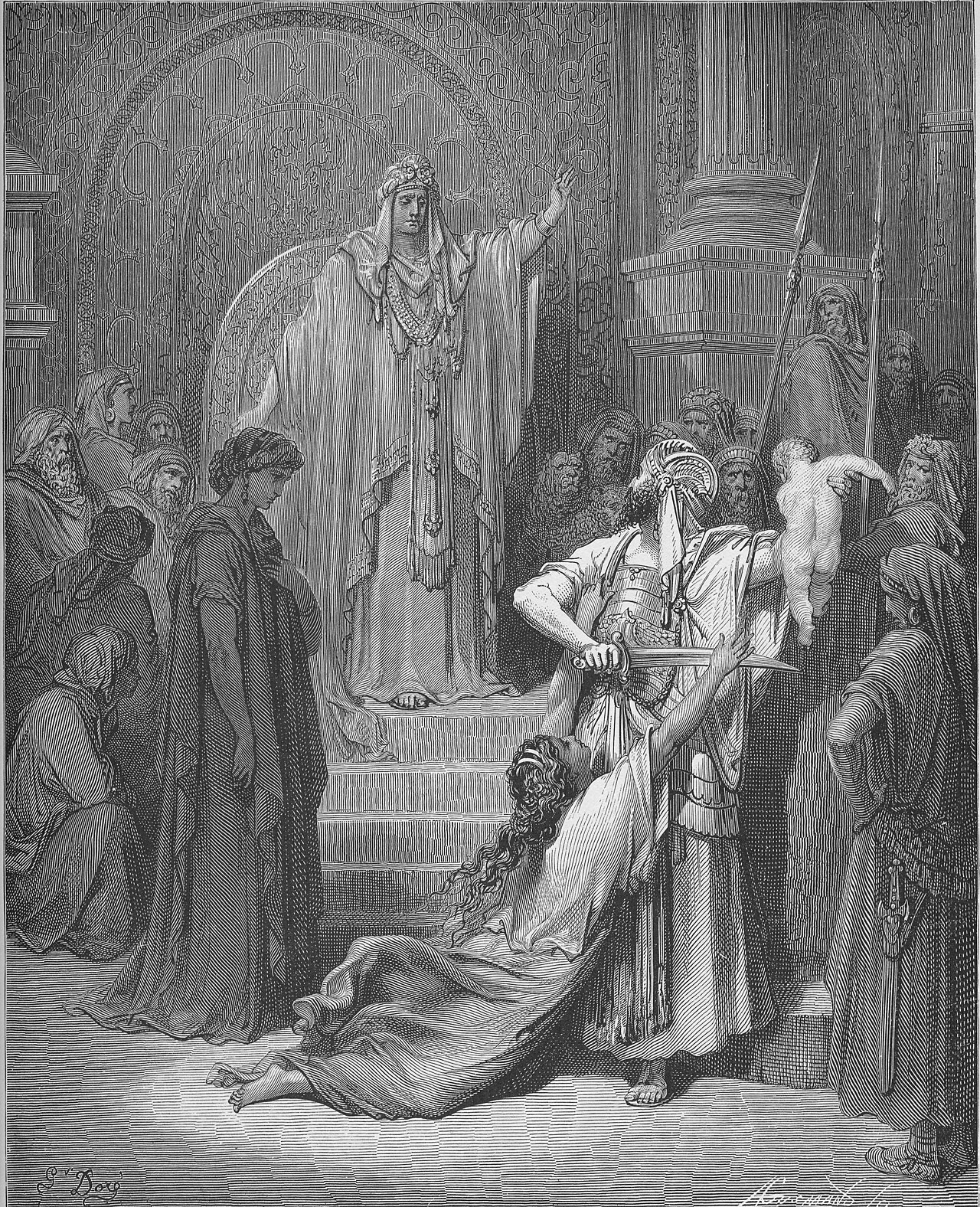
The Judgment of Solomon — Gustave Doré, Doré's English Bible (1866), public domain
A.High places and a Pharaoh's daughter — a mixed beginningvv. 1–4
1Later, Solomon formed an alliance with Pharaoh king of Egypt by marrying his daughter. Solomon brought her to the City of David until he had finished building his palace and the house of the LORD, as well as the wall around Jerusalem.
4Now the king went to Gibeon to sacrifice there, for it was the great high place. Solomon offered a thousand burnt offerings on the altar there.
B.Ask what I shall give thee: an understanding heartvv. 5–15
6Solomon replied, “You have shown much loving devotion to Your servant, my father David, because he walked before You in faithfulness, righteousness, and uprightness of heart. And You have maintained this loving devotion by giving him a son to sit on his throne this very day.
13Moreover, I will give you what you did not request—both riches and honor—so that during all your days no man in any kingdom will be your equal.
C.Divide the living child — the wisdom of God in himvv. 16–28
22“No,” said the other woman, “the living one is my son and the dead one is your son.” But the first woman insisted, “No, the dead one is yours and the living one is mine.” So they argued before the king.
26Then the woman whose son was alive spoke to the king because she yearned with compassion for her son. “Please, my lord,” she said, “give her the living baby. Do not kill him!” But the other woman said, “He will be neither mine nor yours. Cut him in two!”
The exposition on this chapter draws on Adam Clarke, Commentary on the Bible; Alfred Edersheim, Bible History: Old Testament; F. W. Farrar, The First Book of Kings (Expositor's Bible); John Gill, Exposition of the Old Testament; John Wesley, Explanatory Notes upon the Old Testament; Keil, The Books of the Kings and Matthew Henry, Commentary on the Whole Bible.
Words in this chapter
Counted by lemma: every form of one word counts as one use. The article, the object marker, the negatives and the common prepositions are left out.
- a sonH1121×16 uses
בֵ֛ןven · בֶּן־ben- · בְּנִ֣יbeni · בְּנָ֥הּbenah · בְּנִ֖יbeni · בְנִ֖יveni · בְּנִ֤יbeni · וּבְנֵ֣ךְuvenekh · בְּנֵ֥ךְbenekh · וּבְנִ֣יuveni · בְּנִ֥יbeni · וּבְנִ֥יuveni · בְּנָ֨הּbenah · בְּנָהּ֒benah
- DavidH1732×5 uses
דָּוִ֔דdavid · דָּוִ֣דdavid · דָוִ֣דdavid · דָּוִ֣ידdavid
- a heartH3820×2 uses
לֵ֤בlev · לֵ֚בlev
- there notH369×1 use
אֵֽין־ʾein-
- [is] mother hisH517×1 use
אִמּֽוֹ׃ʾimo
- and he saidH559×15 uses
וַיֹּ֣אמֶרvaiyomer · וַיֹּ֨אמֶרvaiyomer · וַתֹּ֜אמֶרvatomer · וַתֹּאמֶר֩vatomer · אֹמֶ֙רֶת֙ʾomeret · אֹמֶ֔רֶתʾomeret · וַיֹּ֥אמֶרvaiyomer · וַתֹּ֣אמֶרvatomer · וַתֹּ֣אמֶר׀vatomer · אֹמֶ֗רֶתʾomeret · וַיֹּ֗אמֶרvaiyomer
- [the] king ofH4428×13 uses
מֶ֣לֶךְmelekh · הַמֶּ֤לֶךְhamelekh · בַּמְּלָכִ֖יםbamelakhim · הַמֶּ֑לֶךְhamelekh · הַמֶּֽלֶךְ׃hamelekh · הַמֶּ֔לֶךְhamelekh · הַמֶּ֖לֶךְhamelekh · הַמֶּ֗לֶךְhamelekh · הַמֶּ֜לֶךְhamelekh
- and he diedH4191×11 uses
וַיָּ֛מָתvaiyamot · הַמֵּ֖תhamet · מֵ֑תmet · הַמֵּ֔תhamet · הַמֵּ֑תhamet · וְהָמֵ֖תvehamet · תְּמִיתֻ֑הוּtemituhu · תְמִיתֻ֑הוּtemituhu
- askH7592×8 uses
שְׁאַ֖לsheal · שָׁאַ֣לshaal · שָׁאַ֜לְתָּshaalta · שָׁאַ֨לְתָּshaalta · שָׁאַ֤לְתָּshaalta · שָׁאַ֖לְתָּshaalta · וְשָׁאַ֧לְתָּveshaalta · שָׁאַ֙לְתָּ֙shaalta
- will I giveH5414×8 uses
אֶתֶּן־ʾeten- · וַתִּתֶּן־vatiten- · וְנָתַתָּ֨venatata · נָתַ֣תִּיnatati · וּתְנ֤וּutenu · תְּנוּ־tenu-
- the living oneH2416×8 uses
הַחַי֙hachai · הֶחָ֑יhechai · הַחַ֖יhachai · הֶחָֽי׃ פhechai · הַחַ֜יhachai · הַחַ֔יhachai
- SolomonH8010×7 uses
שְׁלֹמֹ֔הshelomoh · שְׁלֹמֹה֙shelomoh · שְׁלֹמֹ֖הshelomoh · שְׁלֹמֹ֗הshelomoh
- house hisH1004×7 uses
בֵּיתוֹ֙beito · בֵּ֣יתbeit · בַ֙יִת֙vayit · בְּבַ֣יִתbevayit · בַּבָּֽיִת׃babayit · בַּבַּ֔יִתbabayit
- womenH802×7 uses
נָשִׁ֥יםnashim · הָאִשָּׁ֤הhaishah · וְהָאִשָּׁ֣הvehaishah · הָאִשָּׁ֣הhaishah · הָאִשָּׁ֥הhaishah · הָאִשָּׁ֨הhaishah · הָאִשָּׁה֩haishah
- the daysH3117×6 uses
הַיָּמִ֥יםhaiyamim · כַּיּ֥וֹםkaiyom · יָמִ֣יםyamim · יָמֶֽיךָ׃yameikha · יָמֶֽיךָ׃ סyameikha · בַּיּ֤וֹםbaiyom
- and I gave birthH3205×6 uses
וָאֵלֵ֥דvaeled · לְלִדְתִּ֔יlelidti · וַתֵּ֖לֶדvateled · יָלָֽדְתִּי׃yaladeti · הַיָּל֣וּדhaiyalud
- and he brought herH935×5 uses
וַיְבִיאֶ֙הָ֙vayvieha · וָבֹֽא׃vavo' · וַיָּב֨וֹאvaiyavo' · תָּבֹ֗אנָהtavonah · וַיָּבִ֥אוּvaiyaviu
- YahwehH3068×5 uses
יְהוָ֔הyahweh · יְהֹוָ֛הyahweh · יְהוָ֣הyahweh
- the peopleH5971×5 uses
הָעָ֔םhaam · עַמְּךָ֖ʾamekha · עַם־ʾam- · עַמְּךָ֔ʾamekha · עַמְּךָ֥ʾamekha
- to walkH1980×5 uses
לָלֶ֕כֶתlalekhet · וַיֵּ֨לֶךְvaiyelekh · הָלַ֨ךְhalakh · תֵּלֵ֣ךְtelekh · הָלַ֖ךְhalakh
- you have doneH6213×5 uses
עָשִׂ֜יתָʾasita · עָשִׂ֖יתִיʾasiti · וַיַּ֣עַשׂvaiyaas · וַיַּ֥עַשׂvaiyaas · לַעֲשׂ֥וֹתlaasot
- servant yourH5650×5 uses
עַבְדְּךָ֙ʾavdekha · עַבְדְּךָ֔ʾavdekha · וְעַ֨בְדְּךָ֔veavdekha · לְעַבְדְּךָ֜leavdekha · עֲבָדָֽיו׃ פʾavadav
- here!H2009×5 uses
הִנֵּ֥הhineh · הִנֵּ֣ה׀hineh · וְהִנֵּ֣הvehineh · וְהִנֵּה־vehineh- · וְהִנֵּ֛הvehineh
- father hisH1×4 uses
אָבִ֑יוʾaviv · אָבִי֮ʾavi · אָבִ֑יʾavi · אָבִ֑יךָʾavikha