
Genesis 7:11
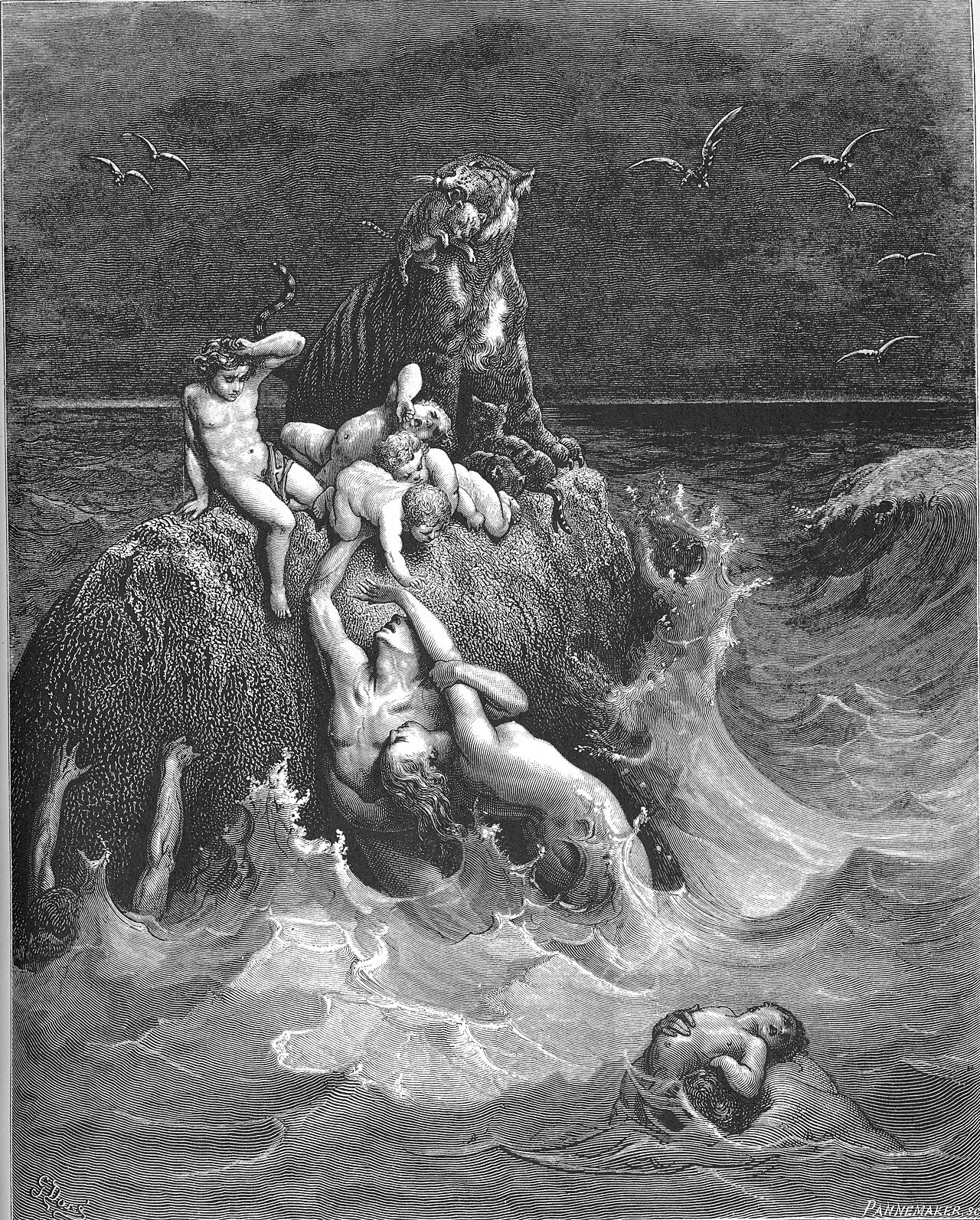
in Genesis 7In the six hundredth year of Noah’s life, on the seventeenth day of the second month, all the fountains of the great deep burst forth, and the floodgates of the heavens were opened.
BSB
The same verse in ASV and KJV ▾
ASV
In the six hundredth year of Noah’s life, in the second month, on the seventeenth day of the month, on the same day were all the fountains of the great deep broken up, and the windows of heaven were opened.
KJV
In the six hundredth year of Noah’s life, in the second month, the seventeenth day of the month, the same day were all the fountains of the great deep broken up, and the windows of heaven were opened.
⋯
This verse in Genesis 7
Commentary
10 notes on this verseIn the six hundredth year, etc. - This must have been in the beginning of the six hundredth year of his life; for he was a year in the ark, Gen 8:13; and lived three hundred and fifty years after the flood, and died nine hundred and fifty years old, Gen 9:29; so it is evident that, when the flood commenced, he had just entered on his six hundredth year.
This site's exposition
all the fountains of the great deep
on Genesis 7:11-12
The water comes from below before it comes from above. Both sources open on the same day, so the waters God separated on the second day of Genesis 1 come back together. The date is given to the day, and Genesis 8:14 dates the going out the same way.
The record, by era
The Church Fathers2 voices
It is now time to examine the evidence that proves convincingly that the biblical years, so far from being only one-tenth as long as ours, were precisely as long as the present solar years. This is true of the years used in giving those extremely long life spans. It is said, for example, that the flood occurred in the six hundredth year of Noah's life. But notice the full text: "The waters of the flood overflowed the earth in the six hundredth year of the life of Noah, in the second month, in the twenty-seventh day of the month." Now those words are inexplicable if a year was so short that it took ten of them to make one of ours. That would mean that a year had only thirty-six days. For so short a year (if it was actually called a year in ancient usage) either had no months at all, or if it had twelve months, then each month could have had but three days. How, then, [can we] explain the words of the text, "in the six hundredth year … in the second month, in the twenty-seventh day of the month," unless the months then were the same as they are now? There is no other way of explaining how the flood could be said to have had a beginning on the twenty-seventh day of the second month.
And then what? "All the fountains of the great deep were broken up, and the flood gates of heaven were opened. And the rain fell upon the earth forty days and forty nights."
The Medieval Church1 voice
In the six hundredth year of Noah's life, in the second month, on the seventeenth day of the month, all the fountains of the great deep were broken up, and the windows of heaven were opened, and rain fell upon the earth for forty days …
The Puritans and the Awakening2 voices
The rain, which ordinarily descends in drops, then came down in streams. That God binds up the waters in his thick clouds, and the cloud is not rent under them; but now the bond was loosed, the cloud was rent, and such rains descended as were never known before or since.
It was in the 600th year of Noah's life, which, by computation, appears to be 1656 years from the creation. The years of the old world are reckoned, not by the reigns of the giants, but the lives of the patriarchs; saints are of more account with God than princes. The righteous shall be had in everlasting remembrance.
3 more voices on this verse
The Puritans and the Awakening2 voices
The rain, which ordinarily descends in drops, then came down in streams. That God binds up the waters in his thick clouds, and the cloud is not rent under them; but now the bond was loosed, the cloud was rent, and such rains descended as were never known before or since.
In the six hundredth year of Noah's life,....
The Nineteenth Century1 voice
A commentator
Albert Barnes1798–1870
Notes, Explanatory and Practical, on the Old and New Testaments (1832-1869)
- XXV. The Flood The date is here given, at which the flood commenced and the entrance into the ark was completed. “In seven days.” On the seventh day from the command. “In the second month.” The primeval year commenced about the autumnal equinox; we may say, on the nearest new moon.
How the passage was read
What the Jewish commentators add
On the verses either side of this one
ויהי הגשם, as G’d had predicted so it came to pass; it kept raining non-stop for 40 days.
This section is reception history: how the passage was read and kept in the Jewish tradition. Where a reading parts from an essential of the Christian faith, the section says so at that point.
Texts and citation data: Sefaria; each excerpt follows its version’s licence. 6 further sources are cited on this chapter that carry no English text this site may quote or only restate the verse.
The words behind it
22 Hebrew wordsEvery Hebrew word of this verse in the order it stands, with what it means and the door to its own study. The last column counts the times a word stands in the whole Bible: the rarer the word, the more the places it appears belong together.
| Hebrew | Sound | Meaning | Word study | In the Bible |
|---|---|---|---|---|
| בִּשְׁנַ֨ת | bishnat | in year | H8141 → | 877 times |
| שֵׁשׁ־ | shesh- | six | H8337 → | 216 times |
| מֵא֤וֹת | meot | hundred<s> | H3967 → | 581 times |
| שָׁנָה֙ | shanah | year | H8141 → | 877 times |
| לְחַיֵּי־ | lechaiyei- | of [the] life of | H2416 → | 498 times |
| נֹ֔חַ | noach | Noah | H5146 → | 46 times |
| בַּחֹ֙דֶשׁ֙ | bachodesh | in the month | H2320 → | 284 times |
| הַשֵּׁנִ֔י | hasheni | <the> second | H8145 → | 156 times |
| בְּשִׁבְעָֽה־ | beshivah- | on [the] seven- | H7651 → | 394 times |
| עָשָׂ֥ר | ʾasar | teen | H6240 → | 338 times |
| י֖וֹם | yom | day | H3117 → | 2304 times |
| לַחֹ֑דֶשׁ | lachodesh | of the month | H2320 → | 284 times |
| בַּיּ֣וֹם | baiyom | on the day | H3117 → | 2304 times |
| הַזֶּ֗ה | hazeh | <the> this | H2088 → | 1180 times |
| נִבְקְעוּ֙ | nivkeu | they were split open | H1234 → | |
| כָּֽל־ | kal- | all | H3605 → | 5413 times |
| מַעְיְנֹת֙ | ma'yenot | [the] springs of | H4599 → | |
| תְּה֣וֹם | tehom | [the] deep | H8415 → | 36 times |
| רַבָּ֔ה | rabah | great | H7227 → | 454 times |
| וַאֲרֻבֹּ֥ת | vaarubot | and [the] floodgates of | H699 → | |
| הַשָּׁמַ֖יִם | hashamayim | the heavens | H8064 → | 421 times |
| נִפְתָּֽחוּ׃ | niftachu | they were opened | H6605 → | 144 times |
בִּשְׁנַ֨תin year
bishnatH8141 →877 times
שֵׁשׁ־six
shesh-H8337 →216 times
מֵא֤וֹתhundred<s>
meotH3967 →581 times
שָׁנָה֙year
shanahH8141 →877 times
לְחַיֵּי־of [the] life of
lechaiyei-H2416 →498 times
נֹ֔חַNoah
noachH5146 →46 times
בַּחֹ֙דֶשׁ֙in the month
bachodeshH2320 →284 times
הַשֵּׁנִ֔י<the> second
hasheniH8145 →156 times
בְּשִׁבְעָֽה־on [the] seven-
beshivah-H7651 →394 times
עָשָׂ֥רteen
ʾasarH6240 →338 times
י֖וֹםday
yomH3117 →2304 times
לַחֹ֑דֶשׁof the month
lachodeshH2320 →284 times
בַּיּ֣וֹםon the day
baiyomH3117 →2304 times
הַזֶּ֗ה<the> this
hazehH2088 →1180 times
נִבְקְעוּ֙they were split open
nivkeuH1234 →
כָּֽל־all
kal-H3605 →5413 times
מַעְיְנֹת֙[the] springs of
ma'yenotH4599 →
תְּה֣וֹם[the] deep
tehomH8415 →36 times
רַבָּ֔הgreat
rabahH7227 →454 times
וַאֲרֻבֹּ֥תand [the] floodgates of
vaarubotH699 →
הַשָּׁמַ֖יִםthe heavens
hashamayimH8064 →421 times
נִפְתָּֽחוּ׃they were opened
niftachuH6605 →144 times
A shaded row is a word that stands 400 times or fewer in the Bible.
The walk
8 stopsEach card is a verse this one points to, and under it the verses that one points to in turn. Where several paths arrive at the same place, that place is listed first: the text keeps returning to it.
Through
Malachi 3:10Bring the full tithe into the storehouse, so that there may be food in My house. Test Me in this,” says the LORD of Hosts. “See if I will not open the windows of…
it leads to
- 2 Corinthians 9:6–8
Remember this: Whoever sows sparingly will also reap sparingly, and whoever sows generously will also reap generously.
- Matthew 6:33
But seek first the kingdom of God and His righteousness, and all these things will be added unto you.
- Proverbs 3:9–10
Honor the LORD with your wealth and with the firstfruits of all your harvest;
- Psalms 37:3
Trust in the LORD and do good; dwell in the land and cultivate faithfulness.
- Deuteronomy 28:12
The LORD will open the heavens, His abundant storehouse, to send rain on your land in season and to bless all the work of your hands. You will lend to many nations, but borrow…
- 2 Corinthians 9:6–8
Through
Genesis 8:2The springs of the deep and the floodgates of the heavens were closed, and the rain from the sky was restrained.
it leads to
- Matthew 8:26–27
“You of little faith,” Jesus replied, “why are you so afraid?” Then He got up and rebuked the winds and the sea, and it was perfectly calm.
- Proverbs 8:28
when He established the clouds above, when the fountains of the deep gushed forth,
- Matthew 8:9
For I myself am a man under authority, with soldiers under me. I tell one to go, and he goes; and another to come, and he comes. I tell my servant to do something,…
- Matthew 8:26–27
Where this verse is studied
On this page
About Genesis
This page draws on 9 works. Open the list of works
This page draws on Adam Clarke, Commentary on the Bible; Albert Barnes, Notes, Explanatory and Practical, on the Old and New Testaments (1832-1869); Augustine of Hippo, City of God 15.14; Bede, Commentary on Genesis (Hexaemeron); Jamieson, Fausset & Brown, Commentary Critical and Explanatory on the Whole Bible; John Gill, Exposition of the Old Testament (1748-1763); John Wesley, Explanatory Notes upon the Old Testament; Matthew Henry, Commentary on the Whole Bible and Salvian the Presbyter, GOVERNANCE OF GOD 1.7.