
Ruth 2:10
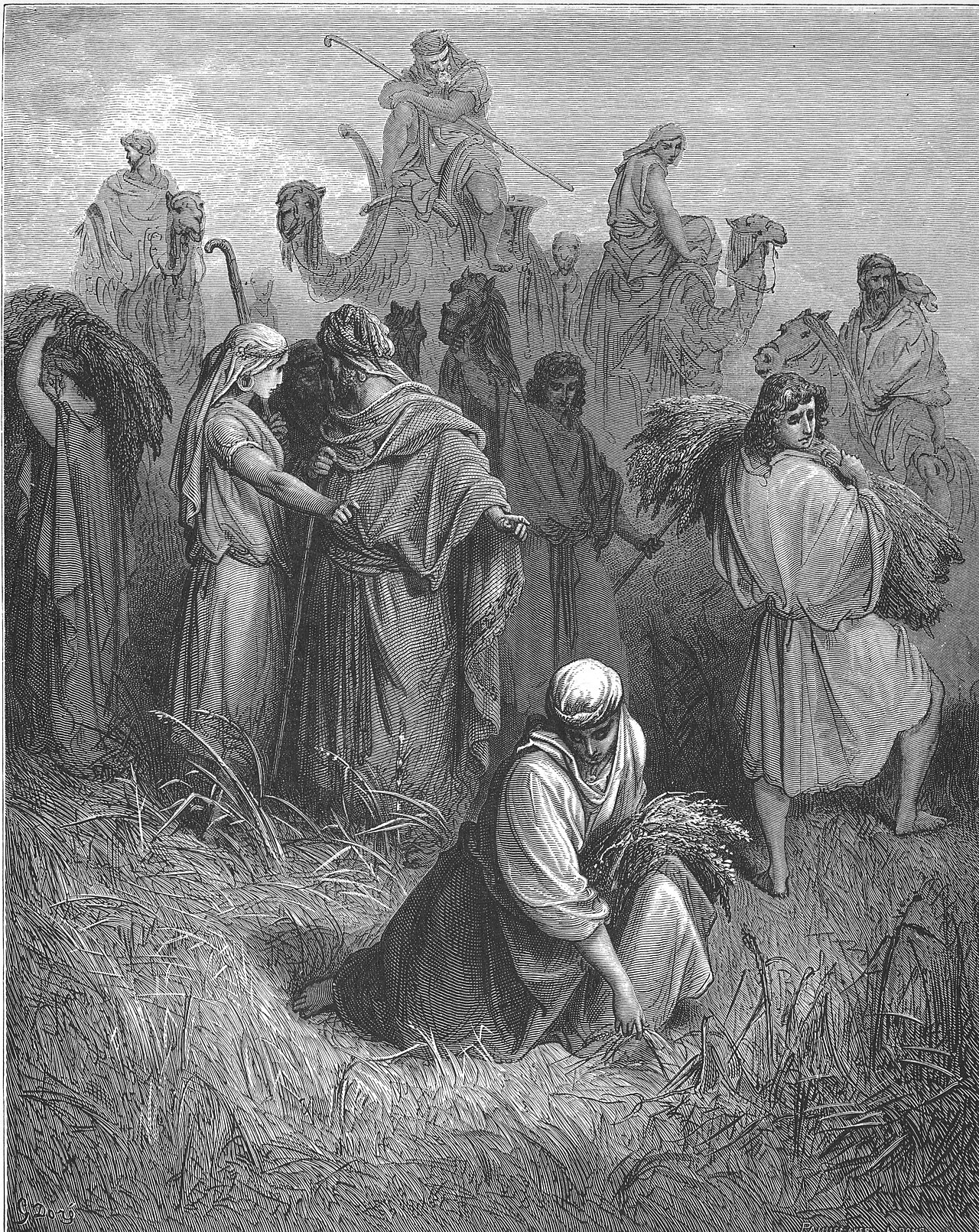
in Ruth 2At this, she fell on her face, bowing low to the ground, and said to him, “Why have I found such favor in your eyes that you should take notice of me, even though I am a foreigner?”
BSB
The same verse in ASV and KJV ▾
ASV
Then she fell on her face, and bowed herself to the ground, and said unto him, Why have I found favor in thy sight, that thou shouldest take knowledge of me, seeing I am a foreigner?
KJV
Then she fell on her face, and bowed herself to the ground, and said unto him, Why have I found grace in thine eyes, that thou shouldest take knowledge of me, seeing I am a stranger?
⋯
This verse in Ruth 2
Commentary
6 notes on this verseThen she fell on her face - Prostrated herself, as was the custom in the East when inferiors approached those of superior rank. The Targum adds to the conversation between Ruth and Boaz: “How, says she, have I obtained grace in thy sight, that thou shouldest acknowledge me who am a stranger and one of the daughters of Moab, of whom it is said, The unclean shall not enter into the congregation of the Lord?
This site's exposition
At this, she fell on her face
on Ruth 2:10-11
She asks why she has found favor "even though I am a foreigner", using the stronger of the two Hebrew terms for an outsider, one without the standing the law gave a resident alien. Boaz answers with chapter 1 in one sentence, "how you left your father and mother and the land of your birth". Keil and Delitzsch and Matthew Henry both hear Genesis 12:1 behind that clause.
The record, by era
The Puritans and the Awakening3 voices
): She fell on her face, and bowed herself to the ground. Note, Good breeding is a great ornament to religion; and we must render honour to whom honour is due. (2.) She humbly owned herself unworthy of his favours: " I am a stranger (
quarantine:debris (2026-07-29) — leading-punctuation+odd-straight-quotes
Fell - This was the humblest posture of reverence, either civil when performed to men, or religious, when to God. Take knowledge - That is, shew any respect and kindness to me.
Then she fell on her face, and bowed herself to the ground,....
The Nineteenth Century1 voice
A commentator
Albert Barnes1798–1870
Notes, Explanatory and Practical, on the Old and New Testaments (1832-1869)
proposed
She fell on her face - With Oriental reverence (compare Gen 33:3, and the marginal reference).
How the passage was read
What the Jewish commentators add
On the verses either side of this one
It has been fully related to me. An action where the agent is not specified.
This section is reception history: how the passage was read and kept in the Jewish tradition. Where a reading parts from an essential of the Christian faith, the section says so at that point.
Texts and citation data: Sefaria; each excerpt follows its version’s licence. 2 further sources are cited on this chapter that carry no English text this site may quote or only restate the verse.
The words behind it
14 Hebrew wordsEvery Hebrew word of this verse in the order it stands, with what it means and the door to its own study. The last column counts the times a word stands in the whole Bible: the rarer the word, the more the places it appears belong together.
| Hebrew | Sound | Meaning | Word study | In the Bible |
|---|---|---|---|---|
| וַתִּפֹּל֙ | vatipol | and she fell | H5307 → | |
| עַל־ | ʾal- | on | H5921 → | 5755 times |
| פָּנֶ֔יהָ | paneiha | face her | H6440 → | |
| וַתִּשְׁתַּ֖חוּ | vatishtachu | and she bowed down | H7812 → | |
| אָ֑רְצָה | ʾaretzah | [the] ground towards | H776 → | 2504 times |
| וַתֹּ֣אמֶר | vatomer | and she said | H559 → | 5305 times |
| אֵלָ֗יו | ʾelav | to him | H413 → | 5510 times |
| מַדּוּעַ֩ | madua' | why? | H4069 → | |
| מָצָ֨אתִי | matzati | have I found | H4672 → | 455 times |
| חֵ֤ן | chen | favor | H2580 → | 69 times |
| בְּעֵינֶ֙יךָ֙ | beeineikha | in view your | H5869 → | 887 times |
| לְהַכִּירֵ֔נִי | lehakireni | to pay regard to me | H5234 → | 49 times |
| וְאָּנֹכִ֖י | veanokhi | and I | H595 → | 359 times |
| נָכְרִיָּֽה׃ | nakheriyah | [am] a foreigner | H5237 → |
וַתִּפֹּל֙and she fell
vatipolH5307 →
עַל־on
ʾal-H5921 →5755 times
פָּנֶ֔יהָface her
paneihaH6440 →
וַתִּשְׁתַּ֖חוּand she bowed down
vatishtachuH7812 →
אָ֑רְצָה[the] ground towards
ʾaretzahH776 →2504 times
וַתֹּ֣אמֶרand she said
vatomerH559 →5305 times
אֵלָ֗יוto him
ʾelavH413 →5510 times
מַדּוּעַ֩why?
madua'H4069 →
מָצָ֨אתִיhave I found
matzatiH4672 →455 times
חֵ֤ןfavor
chenH2580 →69 times
בְּעֵינֶ֙יךָ֙in view your
beeineikhaH5869 →887 times
לְהַכִּירֵ֔נִיto pay regard to me
lehakireniH5234 →49 times
וְאָּנֹכִ֖יand I
veanokhiH595 →359 times
נָכְרִיָּֽה׃[am] a foreigner
nakheriyahH5237 →
A shaded row is a word that stands 400 times or fewer in the Bible.
The walk
8 stopsEach card is a verse this one points to, and under it the verses that one points to in turn. Where several paths arrive at the same place, that place is listed first: the text keeps returning to it.
Through
Luke 1:48For He has looked with favor on the humble state of His servant. From now on all generations will call me blessed.
it leads to
- Psalms 138:6
Though the LORD is on high, He attends to the lowly; but the proud He knows from afar.
- 1 Corinthians 1:26–28
Brothers, consider the time of your calling: Not many of you were wise by human standards; not many were powerful; not many were of noble birth.
- Malachi 3:12
“Then all the nations will call you blessed, for you will be a land of delight,” says the LORD of Hosts.
- Psalms 136:23
He remembered us in our low estate His loving devotion endures forever.
- Luke 11:27
As Jesus was saying these things, a woman in the crowd raised her voice and said, “Blessed is the womb that bore You, and blessed are the breasts that nursed You!”
- Psalms 138:6
Through
Ruth 2:13“My lord,” she said, “may I continue to find favor in your eyes, for you have comforted and spoken kindly to your maidservant, though I am not like one of your servant girls.”
it leads to
- 1 Samuel 1:18
“May your maidservant find favor with you,” said Hannah. Then she went on her way, and she began eating again, and her face was no longer downcast.
- Genesis 33:8
“What do you mean by sending this whole company to meet me?” asked Esau. “To find favor in your sight, my lord,” Jacob answered.
- 1 Samuel 1:18
Through
Luke 1:43And why am I so honored, that the mother of my Lord should come to me?
it leads to
- John 20:28
Thomas replied, “My Lord and my God!”
- John 20:28
Where this verse is studied
On this page
About Ruth
This page draws on Adam Clarke, Commentary on the Bible; Albert Barnes, Notes, Explanatory and Practical, on the Old and New Testaments (1832-1869); John Gill, Exposition of the Old Testament (1748-1763); John Wesley, Explanatory Notes upon the Old Testament; Keil and Delitzsch, Biblical Commentary on the Old Testament: Joshua, Judges, Ruth and Matthew Henry, Commentary on the Whole Bible.