
Psalms 23:4
in Psalms 23Even though I walk through the valley of the shadow of death, I will fear no evil, for You are with me; Your rod and Your staff, they comfort me.
BSB
The same verse in ASV and KJV ▾
ASV
Yea, though I walk through the valley of the shadow of death, I will fear no evil; for thou art with me; Thy rod and thy staff, they comfort me.
KJV
Yea, though I walk through the valley of the shadow of death, I will fear no evil: for thou art with me; thy rod and thy staff they comfort me.
⋯
This verse in Psalms 23
Commentary
19 notes on this verseTo walk in the midst of the shadow of death is not the same as to sit in the shadow of death; one who sits in the shadow of death is firmly fixed in that shadow and strengthened in evil. On account of this, he is in darkness and lacks mercy so that the light may rise for him. He who does not sit, but who passes or walks through the midst of the shadow of death, not standing and hurrying across, does not walk alone because the Lord goes through with him.
This site's exposition
the valley of the shadow of death
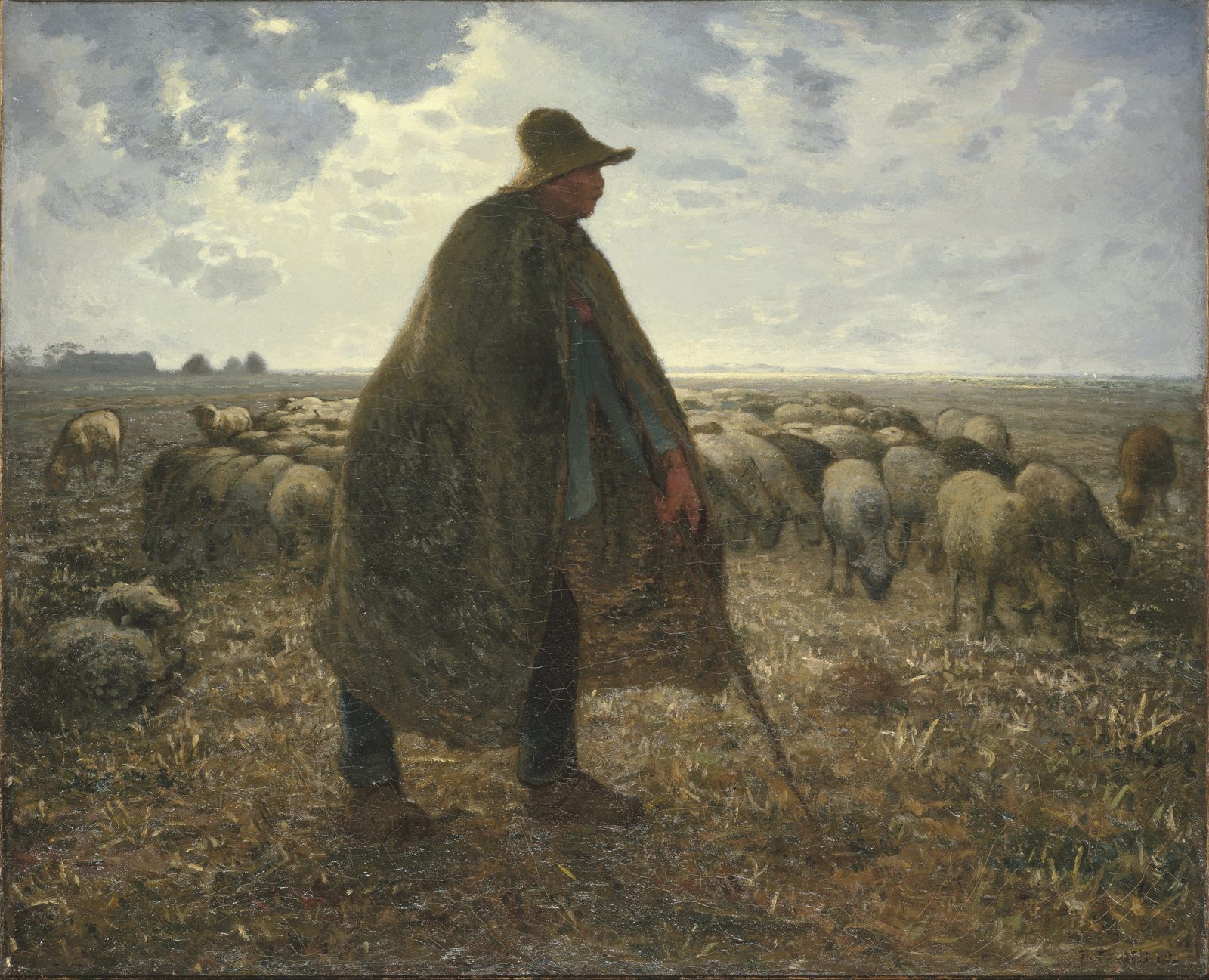
The Hebrew tsalmaveth is read as the shadow of death and as deep darkness. The valley is walked through, and You are with me. The rod beats off a wild animal and the staff hooks a straying sheep back.
The record, by era
The Church Fathers5 voices
"Yea, though I walk in the midst of the shadow of death" [Psalm 23:4]. Yea, though I walk in the midst of this life, which is the shadow of death. "I will fear no evil, for You are with me." I will fear no evil, for You dwell in my heart by faith: and You are now with me, that after the shadow of death I too may be with You. "Your rod and Your staff, they have comforted me." Your discipline, like a rod for a flock of sheep, and like a staff for children of some size, and growing out of the natural into spiritual life, they have not been grievous to me; rather have they comforted me: because You are mindful of me.
As long as you remain in this present life, you are walking in the midst of vices, of worldly pressures, which are the shadow of death. Let Christ shine in your heart, who lights the lamp of our minds with the love of God and neighbor; and you will not fear any evils, since he is with you.
Scripture is a witness that "rod" speaks of punishments and scourges. If you have sinned and you see the rod of God threatening you, know that the mercy of God will not be far from you.
"Your rod and your staff comforted me": with one he supports my weakness, with the other he guides toward the right way. You would not be wrong, however, to apply this to the saving cross: by its seal and remembrance we are rid of the …
The shadow of death … is the devil, who lays traps for us in secret so that, once we have been misled by the mists, we might fall headlong into eternal death. But this situation is not feared by the true believer, even if, while …
12 more voices on this verse
The Church Fathers2 voices
The rod refers to the justice and strength of the Lord Savior, as he says in another psalm: "A rod of fairness is the rod of your kingdom." The staff evokes the notion of support for human beings. With the staff, the foot itself is …
One who cultivates pure prayer will hear noises, crashings, voices and tormenting screams that come from the demons; yet he will not suffer collapse or surrender his thoughts if he says to God, "I shall fear no evil, for you are with me."
The Medieval Church1 voice
"For." Here he sets forth the benefits against evils. And first in general; second, in particular, at "your rod." And he speaks after the likeness of a man going through dangerous places, for whom security is necessary. And he sets forth these benefits here: "for …
The Puritans and the Awakening3 voices
God's ordinances are the green pastures in which food is provided for all believers; the word of life is the nourishment of the new man. It is milk for babes, pasture for sheep, never barren, never eaten bare, never parched, but always a green pasture for faith to feed in.
The gospel is called the rod of Christ's strength ( Ps. cx. 2 ), and there is enough in that to comfort the saints when they come to die, and underneath them are the everlasting arms. From the good gifts of God's bounty to him now he infers the constancy and perpetuity of his mercy,
Yea, though I walk through the valley of the shadow of death,....
The Nineteenth Century6 voices
"Yea, though I walk through the valley of the shadow of death, I will fear no evil: for thou art with me; thy rod and thy staff they comfort me." This unspeakably delightful verse has been sung on many a dying bed, and has helped to make the dark valley bright times out of mind. Every word in it has a wealth of meaning. "Yea, though I walk," as if the believer did not quicken his pace when he came to die, but still calmly walked with God.
Do you know I had laid this text by? I meant that this choice promise should be kept in store and stock till I came near the Jordan and I hoped that then, in my last hours, I might be privileged to enjoy its sweetness and sing with joyful lips— "Yea, though I walk through death's dark vale, Yet will I fear no ill; For You are with me, and Your rod And staff me comfort still." The other day I found that I needed to eat this heavenly loaf at once and I did so.
"Yea, though I walk through the valley of the shadow of death, I will fear no evil: for thou art with me; thy rod and thy staff they comfort me." This unspeakably delightful verse has been sung on many a dying bed, and has helped to make the dark valley bright times out of mind. Every word in it has a wealth of meaning. "Yea, though I walk," as if the believer did not quicken his pace when he came to die, but still calmly walked with God. To walk indicates the steady advance of a soul which knows its road, knows its end, resolves to follow the path, feels quite safe, and is therefore perfectly calm and composed. The dying saint is not in a flurry, he does not run as though he were alarmed, nor stand still as though he would go no further, he is not confounded nor ashamed, and therefore keeps to his old pace. Observe that it is not walking in the valley, but through the valley. We go through the dark tunnel of death and emerge into the light of immortality. We do not die, we do but sleep to wake in glory. Death is not the house but the porch, not the goal but the passage to it. The dying article is called a valley. The storm breaks on the mountain, but the valley is the place of quietude, and thus full often the last days of the Christian are the most peaceful of his whole career; the mountain is bleak and bare, but the valley is rich with golden sheaves, and many a saint has reaped more joy and knowledge when he came to die than he ever knew while he lived. And, then, it is not "the valley of death, " but "the valley of the shadow of death, " for death in its substance has been removed, and only the shadow of it remains. Some one has said that when there is a shadow there must be light somewhere, and so there is.
Do you know I had laid this text by? I meant that this choice promise should be kept in store and stock till I came near the Jordan and I hoped that then, in my last hours, I might be privileged to enjoy its sweetness and sing with joyful lips— "Yea, though I walk through death's dark vale, Yet will I fear no ill; For You are with me, and Your rod And staff me comfort still." The other day I found that I needed to eat this heavenly loaf at once and I did so. Fathers tell their children, "You cannot have your cake and eat it, too," but this rule does not hold good of the consolations of God. You can enjoy a promise and still have it. Yes, and all the more because your faith has fed upon its fatness. I got honey out of this verse some days ago when a tempest howled around me, but its sweetness is still there. I shall enjoy it, I doubt not, as I come near death's gate, but I have had it already sealed to my own soul with richness and fullness of comfort by the blessed Spirit of our God. Would to God that every Believer who is burdened might find it as precious to his heart as I have found it to mine. This verse is, no doubt, very applicable to the experience of when he comes to die but, for certain, that is not its only intent. It has an inexpressibly delightful application to the dying, but it is for the living, too! And at this time if, through any peculiar trials, your heart is cast down within you and you are walking through the death-shade, I pray you to repeat the words of the text and may the Lord help you to feel that they are true—"Yea, though I walk through the valley of the shadow of death, I will fear no evil, for You are with me; Your rod and Your staff, they comfort me." The words are not in the future tense and, therefore, are not reserved for a distant moment. Do not postpone to the future that which you so greatly need in the present.
Yea, though I walk through the valley of the shadow of death - The reference is still to the shepherd. Though I, as one of the flock, should walk through the most dismal valley, in the dead of the night, exposed to pitfalls, precipices, devouring beasts, etc., I should fear no evil under the guidance and protection of such a Shepherd. He knows all the passes, dangerous defiles, hidden pits, and abrupt precipices in the way; and he will guide me around, about, and through them. See the phrase shadow of death explained on Mat 4:16 (note). “Thof I ward well and imang tha, that nouther has knowyng of God, ne luf or in myddis of this lyf, that es schadow of ded; for it es blak for myrkenes of syn; and it ledes til dede and il men, imang qwam gude men wones: - I sal nout drede il, pryve nor apert; for thu ert with me in my hert, qwar I fele thu so, that eftir the schadow of dede, I be with the in thi vera lyf.” - Old Psalter. For thou art with me - He who has his God for a companion need fear no danger; for he can neither mistake his way, nor be injured. Thy rod and thy staff - שבטך shibtecha, thy scepter, rod, ensign of a tribe, staff of office; for so שבט shebet signifies in Scripture. And thy staff, ומשענתך umishantecha, thy prop or support. The former may signify the shepherd’s crook; the latter, some sort of rest or support, similar to our camp stool, which the shepherds might carry with them as an occasional seat, when the earth was too wet to be sat on with safety. With the rod or crook the shepherd could defend his sheep, and with it lay hold of their horns or legs to pull them out of thickets, boys, pits, or waters. We are not to suppose that by the rod correction is meant: there is no idea of this kind either in the text, or in the original word; nor has it this meaning in any part of Scripture. […]
A commentator
Albert Barnes1798–1870
Notes, Explanatory and Practical, on the Old and New Testaments (1832-1869)
proposed
Yea, though I walk through the valley of the shadow of death - The meaning of this in the connection in which it occurs is this: “God will lead and guide me in the path of righteousness, even though that path lies through the darkest and most gloomy vale - through deep and dismal shades - in regions where there is no light, as if death had cast his dark and baleful shadow there. It is still a right path; it is a path of safety; and it will conduct me to bright regions beyond. In that dark and gloomy valley, though I could not guide myself, I will not be alarmed; I will not be afraid of wandering or of being lost; I will not fear any enemies there - for my Shepherd is there to guide me still.” On the word here rendered “shadow of death” - צלמות tsalmâveth - see Job 3:5, note; and Isa 9:2, note. The word occurs besides only in the following places, in all of which it is rendered “shadow of death:” Job 10:21-22; Job 12:22; Job 16:16; Job 24:17 (twice); Job 28:3; Job 34:22; Job 38:17; Psa 44:19; Psa 107:10, Psa 107:14; Jer 2:6; Jer 13:16; Amo 5:8. The idea is that of death casting his gloomy shadow over that valley - the valley of the dead. Hence, the word is applicable to any path of gloom or sadness; any scene of trouble or sorrow; any dark and dangerous way. Thus understood, it is applicable not merely to death itself - though it embraces that - but to any or all the dark, the dangerous, and the gloomy paths which we tread in life: to ways of sadness, solitude, and sorrow. All along those paths God will be a safe and certain guide. I will fear no evil - Dark, cheerless, dismal as it seems, I will dread nothing. The true friend of God has nothing to fear in that dark valley. His great Shepherd will accompany him there, and can lead him safely through, however dark it may appear. […]
How the passage was read
What the Jewish commentators add
On the verses either side of this one
He restores my soul My spirit, which has been weakened by troubles and haste, He will restore to its previous status.
1 more on this passage, in their own words ▾
You anointed my head with oil I have already been anointed king by Your orders.
This section is reception history: how the passage was read and kept in the Jewish tradition. Where a reading parts from an essential of the Christian faith, the section says so at that point.
Texts and citation data: Sefaria; each excerpt follows its version’s licence. 4 further sources are cited on this chapter that carry no English text this site may quote or only restate the verse.
The words behind it
15 Hebrew wordsEvery Hebrew word of this verse in the order it stands, with what it means and the door to its own study. The last column counts the times a word stands in the whole Bible: the rarer the word, the more the places it appears belong together.
| Hebrew | Sound | Meaning | Word study | In the Bible |
|---|---|---|---|---|
| גַּ֤ם | gam | also | H1571 → | 769 times |
| כִּֽי־ | ki- | for | H3588 → | 4482 times |
| אֵלֵ֨ךְ | ʾelekh | I will go | H1980 → | 1546 times |
| בְּגֵ֪יא | begei' | in a valley of | H1516 → | |
| צַלְמָ֡וֶת | tzalmavet | deep darkness | H6757 → | 18 times |
| לֹא־ | lo'- | not | H3808 → | 5168 times |
| אִ֘ירָ֤א | ʾira' | I will fear | H3372 → | 315 times |
| רָ֗ע | ra' | harm | H7451 → | 662 times |
| כִּי־ | ki- | for | H3588 → | 4482 times |
| אַתָּ֥ה | ʾatah | you | H859 → | 1094 times |
| עִמָּדִ֑י | ʾimadi | [are] with me | H5978 → | 42 times |
| שִׁבְטְךָ֥ | shivtekha | rod your | H7626 → | 190 times |
| וּ֝מִשְׁעַנְתֶּ֗ךָ | umishantekha | and staff your | H4938 → | |
| הֵ֣מָּה | hemah | they | H1992 → | 553 times |
| יְנַֽחֲמֻֽנִי׃ | yenachamuni | they comfort me | H5162 → | 108 times |
גַּ֤םalso
gamH1571 →769 times
כִּֽי־for
ki-H3588 →4482 times
אֵלֵ֨ךְI will go
ʾelekhH1980 →1546 times
בְּגֵ֪יאin a valley of
begei'H1516 →
צַלְמָ֡וֶתdeep darkness
tzalmavetH6757 →18 times
לֹא־not
lo'-H3808 →5168 times
אִ֘ירָ֤אI will fear
ʾira'H3372 →315 times
רָ֗עharm
ra'H7451 →662 times
כִּי־for
ki-H3588 →4482 times
אַתָּ֥הyou
ʾatahH859 →1094 times
עִמָּדִ֑י[are] with me
ʾimadiH5978 →42 times
שִׁבְטְךָ֥rod your
shivtekhaH7626 →190 times
וּ֝מִשְׁעַנְתֶּ֗ךָand staff your
umishantekhaH4938 →
הֵ֣מָּהthey
hemahH1992 →553 times
יְנַֽחֲמֻֽנִי׃they comfort me
yenachamuniH5162 →108 times
A shaded row is a word that stands 400 times or fewer in the Bible.
The walk
8 stopsEach card is a verse this one points to, and under it the verses that one points to in turn. Where several paths arrive at the same place, that place is listed first: the text keeps returning to it.
Through
Isaiah 41:10Do not fear, for I am with you; do not be afraid, for I am your God. I will strengthen you; I will surely help you; I will uphold you with My right hand…
it leads to
- Romans 8:31
What then shall we say in response to these things? If God is for us, who can be against us?
Reached by 3 separate paths from here.
- Joshua 1:9
Have I not commanded you to be strong and courageous? Do not be afraid; do not be discouraged, for the LORD your God is with you wherever you go.”
- Isaiah 43:1–2
Now this is what the LORD says— He who created you, O Jacob, and He who formed you, O Israel: “Do not fear, for I have redeemed you; I have called you by your…
- Deuteronomy 31:6–8
Be strong and courageous; do not be afraid or terrified of them, for it is the LORD your God who goes with you; He will never leave you nor forsake you.”
- Philippians 4:13
I can do all things through Christ who gives me strength.
- Romans 8:31
Through
Psalms 118:6The LORD is on my side; I will not be afraid. What can man do to me?
it leads to
- Hebrews 13:6
So we say with confidence: “The Lord is my helper; I will not be afraid. What can man do to me?”
- Psalms 56:4
In God, whose word I praise— in God I trust. I will not be afraid. What can man do to me?
- Hebrews 13:6
Through
Psalms 138:7If I walk in the midst of trouble, You preserve me from the anger of my foes; You extend Your hand, and Your right hand saves me.
it leads to
- Isaiah 41:10
Do not fear, for I am with you; do not be afraid, for I am your God. I will strengthen you; I will surely help you; I will uphold you with My right hand…
- Isaiah 41:10
Where this verse is studied
On this page
About Psalms
This page draws on 15 works. Open the list of works
This page draws on Adam Clarke, Commentary on the Bible; Albert Barnes, Notes, Explanatory and Practical, on the Old and New Testaments (1832-1869); Augustine of Hippo, Exposition on Psalm 23; Augustine of Hippo, SERMON 366:5; Cassiodorus, EXPLANATION OF THE PSALMS 23:4; Charles Spurgeon, The Treasury of David; Charles Spurgeon, The Treasury of David, Vol. 1; Charles Spurgeon, The Metropolitan Tabernacle Pulpit, Sermon No. 1595: “The Valley Of The Shadow Of Death” (lightly modernized text, CCEL edition); Evagrius Ponticus, CHAPTERS ON PRAYER 97; Franz Delitzsch, Biblical Commentary on the Psalms; John Gill, Exposition of the Old Testament (1748-1763); Matthew Henry, Commentary on the Whole Bible; Origen of Alexandria, SELECTIONS FROM THE PSALMS 23:4; Theodoret of Cyrus, COMMENTARY ON THE PSALMS 23:3 and Thomas Aquinas, Exposition on the Psalms of David.