
Psalms 107:29
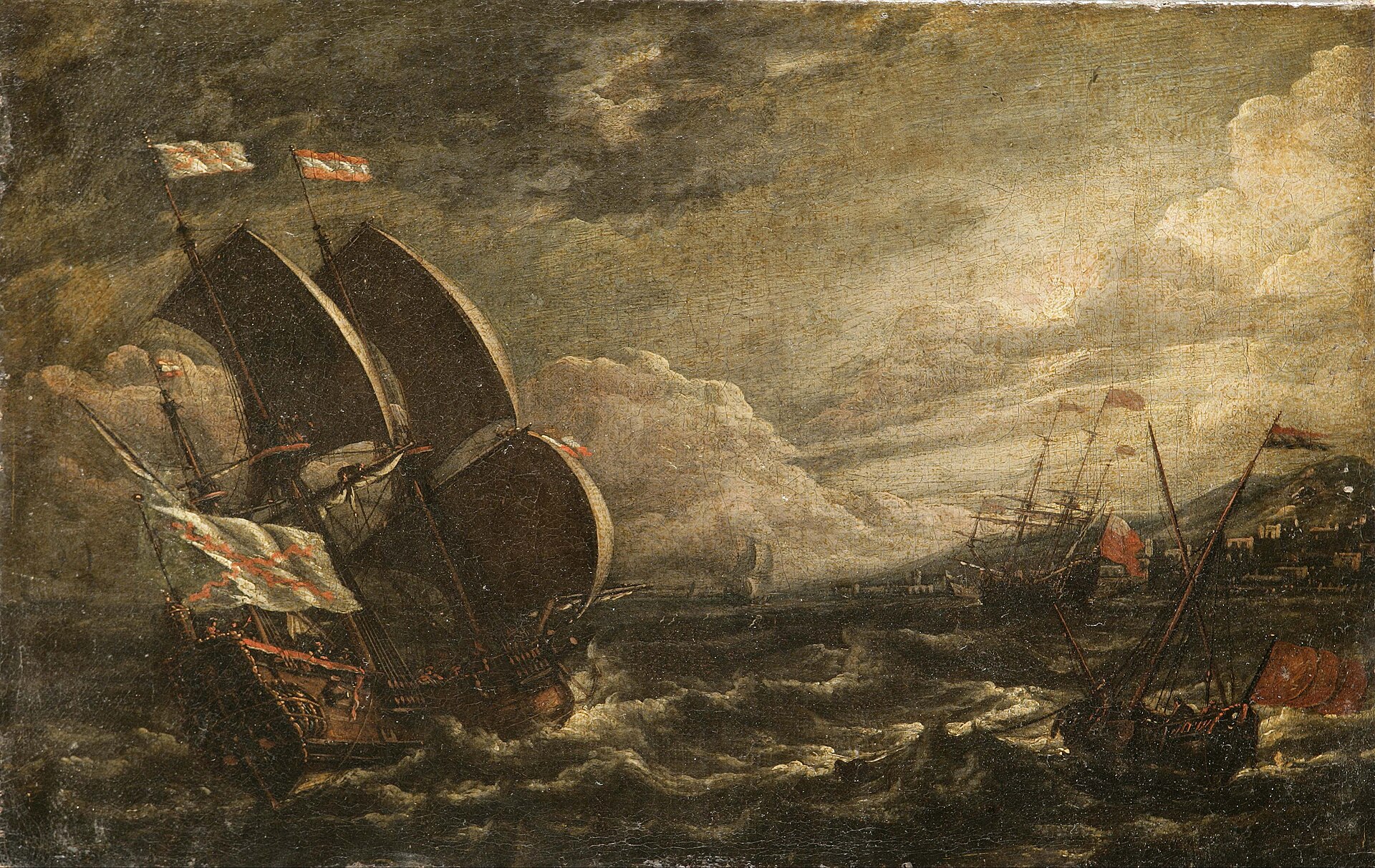
in Psalms 107He calmed the storm to a whisper, and the waves of the sea were hushed.
BSB
The same verse in ASV and KJV ▾
ASV
He maketh the storm a calm, So that the waves thereof are still.
KJV
He maketh the storm a calm, so that the waves thereof are still.
⋯
This verse in Psalms 107
Commentary
11 notes on this verseThis site's exposition
They reeled and staggered like drunkards
on Psalms 107:27-32
Their skill was useless, and they reeled and staggered like drunkards. The storm He calmed to a whisper, the waves were hushed, and He brought them to the harbor they wanted. Verse 32 moves the thanks into the people's assembly and the council of the elders.
The record, by era
The Church Fathers2 voices
A commentator
Desert FathersThe Desert Fathers, Sayings of the Early Christian Monks · Written before 500.
proposed
[Syncletica] also said, 'We have no security in this world. The Apostle said, "Let him that thinks he stands, take heed lest he fall" (1 Cor. 10:12). We are sailing on uncharted seas, as the psalmist David said, "Our life is like a sea." Yet …
"And they cried out unto the Lord when they were troubled, and He delivered them from their distresses" (ver. 28). "And He commanded the storm, and it stood unto clear air" (ver. 29), "and the waves of it were still." Hear on this point the voice of a steersman, one that was in peril, was brought low, was freed. "I would not," he saith, "have you ignorant, brethren, of our distress, which befell us in Asia, that "we were pressed above strength, and above measure" (I see all his "wisdom swallowed up"), "so that we were weary," he saith, "even of life." ...
The Puritans and the Awakening3 voices
He maketh the storm a calm,.... As Christ did by a word speaking, Mar 4:39. So that the waves thereof are still; and roar and toss no more, but subside; and the sea becomes smooth and quiet, its raging ceases: the angry sea, as Horace (p) calls it, becomes calm and peaceable; see Psa 89:9. (p) "Nec horret iratum mare", Horat. Epod. Ode 2. v. 6. "Nec maris ira manet", Ovid. Metamorph. l. 12. Fab. 7.
These are put for all similar perils, in which those that cry unto God have ever found him a very present help. He specifies the varieties and vicissitudes of events concerning nations and families, in all which God's hand is to be eyed by his own people, with joyful acknowledgments of his goodness,
The winds fall, and only by their soft and gentle murmurs serve to lull the waves asleep again, so that the surface of the sea becomes smooth and smiling. By this Christ proved himself to be more than a man that even the winds and the seas obeyed him. (2.) The seamen are made easy: They are glad because they are quiet, quiet from the noise, quiet from the fear of evil.
5 more voices on this verse
The Nineteenth Century5 voices
A commentator
Jamieson, Fausset & Brown1802–1910
Commentary Critical and Explanatory on the Whole Bible (1871)
proposed
Here are set forth the perils of seafaring, futility of man's, and efficiency of God's, help. go . . . sea--alluding to the elevation of the land at the coast.
He maketh the storm a calm. He reveals his power in the sudden and marvellous transformations which occur at his bidding. He commanded the storm and now he ordains a calm: God is in all natural phenomena, and we do well to recognise his working. So that the waves thereof are still. They bow in silence at his feet. Where huge billows leaped aloft there is scarce a ripple to be seen. When God makes peace it is peace indeed, the peace of God which passeth all understanding. He can in an instant change the condition of a man's mind, so that it shall seem an absolute miracle to him that he has passed so suddenly from hurricane to calm. O that the Lord would thus work in the reader, should his heart be storm beaten with outward troubles or inward fears. Lord, say the word and peace will come at once.
He maketh the storm a calm. He reveals his power in the sudden and marvellous transformations which occur at his bidding. He commanded the storm and now he ordains a calm: God is in all natural phenomena, and we do well to recognise his working. So that the waves thereof are still. They bow in silence at his feet. Where huge billows leaped aloft there is scarce a ripple to be seen. When God makes peace it is peace indeed, the peace of God which passeth all understanding.
He maketh the storm a calm - He causes the storm to stand dumb, and hushes the waves. See the original, where sense and sound emphatically meet: - גליהם ויחשו לדממה סארה יקם galleyhem vaiyecheshu lidemamah searah yakem He shall cause the whirlwind to stand dumb, and he shall hush their billows.
A commentator
Albert Barnes1798–1870
Notes, Explanatory and Practical, on the Old and New Testaments (1832-1869)
proposed
He maketh the storm a calm - God does this, and God only can do it. The fact, therefore, that Jesus did it Mat 8:26, proves that he was divine. There can be no more striking proof of divine power than the ability to calm the raging waves of the ocean by a word. This is literally, “He places the tempest to silence.” So that the waves thereof are still - Are lulled. The ocean ceases to be agitated, and the surface becomes smooth. Nothing is more still than the ocean in a calm. Not a breath of air seems to stir; not a ripple agitates the surface of the sea; the sails of the vessel hang loose, and even the vessel seems to be perfectly at rest: “As idle as a painted ship upon a painted ocean.” So God can calm down the tempest of the soul. He can make the mind which was heaving and tossed, like the ocean, with anguish on account of guilt, and which trembled in view of the coming judgment, as calm as the ocean is when in its state of perfect repose. God can do “this,” and none “but” God can do it; and as Jesus thus stills the agitation of the guilty soul, as he did the waves of the sea, “this” proves also that he is divine.
The words behind it
5 Hebrew wordsEvery Hebrew word of this verse in the order it stands, with what it means and the door to its own study. The last column counts the times a word stands in the whole Bible: the rarer the word, the more the places it appears belong together.
| Hebrew | Sound | Meaning | Word study | In the Bible |
|---|---|---|---|---|
| יָקֵ֣ם | yakem | he raised | H6965 → | 628 times |
| סְ֭עָרָה | searah | [the] storm | H5591 → | 24 times |
| לִדְמָמָ֑ה | lidmamah | into a calm | H1827 → | |
| וַ֝יֶּחֱשׁ֗וּ | vaiyecheshu | and they were still | H2814 → | 16 times |
| גַּלֵּיהֶֽם׃ | galeihem | waves their | H1530 → | 34 times |
יָקֵ֣םhe raised
yakemH6965 →628 times
סְ֭עָרָה[the] storm
searahH5591 →24 times
לִדְמָמָ֑הinto a calm
lidmamahH1827 →
וַ֝יֶּחֱשׁ֗וּand they were still
vaiyecheshuH2814 →16 times
גַּלֵּיהֶֽם׃waves their
galeihemH1530 →34 times
A shaded row is a word that stands 400 times or fewer in the Bible.
The walk
8 stopsEach card is a verse this one points to, and under it the verses that one points to in turn. Where several paths arrive at the same place, that place is listed first: the text keeps returning to it.
Through
Psalms 89:9You rule the raging sea; when its waves mount up, You still them.
it leads to
- Psalms 65:7
You stilled the roaring of the seas, the pounding of their waves, and the tumult of the nations.
Reached by 2 separate paths from here.
- Psalms 107:25–29
For He spoke and raised a tempest that lifted the waves of the sea.
- Mark 4:41
Overwhelmed with fear, they asked one another, “Who is this, that even the wind and the sea obey Him?”
- Matthew 8:24–27
Suddenly a violent storm came up on the sea, so that the boat was engulfed by the waves; but Jesus was sleeping.
- Mark 4:39
Then Jesus got up and rebuked the wind and the sea. “Silence!” He commanded. “Be still!” And the wind died down, and it was perfectly calm.
- Psalms 65:7
Through
Matthew 8:26“You of little faith,” Jesus replied, “why are you so afraid?” Then He got up and rebuked the winds and the sea, and it was perfectly calm.
it leads to
- Psalms 89:9
You rule the raging sea; when its waves mount up, You still them.
Reached by 2 separate paths from here.
- Isaiah 41:10–14
Do not fear, for I am with you; do not be afraid, for I am your God. I will strengthen you; I will surely help you; I will uphold you with My right hand…
- Psalms 107:28–30
Then they cried out to the LORD in their trouble, and He brought them out of their distress.
- Psalms 89:9
Where this verse is studied
On this page
About Psalms
This page draws on 10 works. Open the list of works
This page draws on Adam Clarke, Commentary on the Bible; Albert Barnes, Notes on the Book of Psalms; Albert Barnes, Notes, Explanatory and Practical, on the Old and New Testaments (1832-1869); Augustine of Hippo, Exposition on Psalm 107; Charles Spurgeon, The Treasury of David; Charles Spurgeon, The Treasury of David, Vol. 5; Desert Fathers, The Desert Fathers, Sayings of the Early Christian Monks; Jamieson, Fausset & Brown, Commentary Critical and Explanatory on the Whole Bible; John Gill, Exposition of the Old Testament (1748-1763) and Matthew Henry, Commentary on the Whole Bible.