
Nehemiah 12:22
in Nehemiah 12In the days of Eliashib, Joiada, Johanan, and Jaddua, during the reign of Darius the Persian, the heads of the families of the Levites and priests were recorded.
BSB
The same verse in ASV and KJV ▾
ASV
As for the Levites, in the days of Eliashib, Joiada, and Johanan, and Jaddua, there were recorded the heads of fathers’ houses; also the priests, in the reign of Darius the Persian.
KJV
The Levites in the days of Eliashib, Joiada, and Johanan, and Jaddua, were recorded chief of the fathers: also the priests, to the reign of Darius the Persian.
⋯
This verse in Nehemiah 12
Commentary
6 notes on this verseJaddua - This was probably the high priest who went in his pontifical robes, accompanied by his brethren, to meet Alexander the Great, when he was advancing towards Jerusalem, with the purpose to destroy it, after having conquered Tyre and Gaza. Alexander was so struck with the appearance of the priest, that he forbore all hostilities against Jerusalem, prostrated himself before Jaddua, worshipped the Lord at the temple, and granted many privileges to the Jews. See Josephus, Ant. lib. xi., c. 3, and Prideaux’s Connections, lib. 7, p. 6
This site's exposition
to the reign of Darius the Persian
on Nehemiah 12:22-23
The record closes with a dating notice: the priests and Levites stand recorded down to the reign of Darius the Persian, a king later than Nehemiah's own governorship, showing the register kept itself current well past the events this chapter narrates. The book of the chronicles named here is a separate official register of the priesthood, since the biblical book of Chronicles preserves no matching list. That the roll runs to the days of Johanan the son of Eliashib shows a public archive maintained by the temple across at least two more generations.
The record, by era
The Puritans and the Awakening3 voices
Perhaps then the forementioned families of the priests began to degenerate, and the third generation of them came short of the first two; but the work of God shall never fail for want of instruments. Then a generation of Levites was raised up, who were recorded chief of the fathers (
quarantine:debris (2026-07-29) — unbalanced-parens
7 ) and in praying ( ch. ix. 4, 5 ) were all Levites, not priests, regard being had to their personal qualifications more than to their order. These Levites were some of them singers (
quarantine:debris (2026-07-29) — leading-citation-number
The Levites, in the days of Eliashib,....
The Nineteenth Century1 voice
A commentator
Albert Barnes1798–1870
Notes, Explanatory and Practical, on the Old and New Testaments (1832-1869)
proposed
These verses interrupt the account of the church officers in the time of Joiakim, resumed in Neh 12:24. They appear to be an addition to the original text, made about the time of Alexander the Great, when the Books of Chronicles, Ezra, and Nehemiah would seem to have first taken their existing shape. The same writer who introduced these verses, probably also added Neh 12:11 to the original text. Darius the Persian - Probably Darius Codomannus (336-331 B.C.), the antagonist of Alexander the Great. See the introduction of the Book of Nehemiah. This passage shows that the practice of keeping a record of public events in state archives was continued after the return from the captivity, at least to the time of Johanan, the son, i. e., “the grandson,” of Eliasbib.
How the passage was read
What the Jewish commentators add
On the verses either side of this one
even until the days of Johanan All those who were the heads of the fathers’ houses of the Levites until the days of Johanan the High Priest were enumerated in the chronicles.
This section is reception history: how the passage was read and kept in the Jewish tradition. Where a reading parts from an essential of the Christian faith, the section says so at that point.
Texts and citation data: Sefaria; each excerpt follows its version’s licence. 2 further sources are cited on this chapter that carry no English text this site may quote or only restate the verse.
The words behind it
14 Hebrew wordsEvery Hebrew word of this verse in the order it stands, with what it means and the door to its own study. The last column counts the times a word stands in the whole Bible: the rarer the word, the more the places it appears belong together.
| Hebrew | Sound | Meaning | Word study | In the Bible |
|---|---|---|---|---|
| הַלְוִיִּם֩ | halviyim | the Levites | H3881 → | 291 times |
| בִּימֵ֨י | bimei | in [the] days of | H3117 → | 2304 times |
| אֶלְיָשִׁ֜יב | ʾelyashiv | Eliashib | H475 → | 17 times |
| יוֹיָדָ֤ע | yoyada' | Joiada | H3111 → | 5 times |
| וְיוֹחָנָן֙ | veyochanan | and Johanan | H3110 → | |
| וְיַדּ֔וּעַ | veyadua' | and Jaddua | H3037 → | 3 times |
| כְּתוּבִ֖ים | ketuvim | [were] recorded | H3789 → | 224 times |
| רָאשֵׁ֣י | rashei | leaders of | H7218 → | 599 times |
| אָב֑וֹת | ʾavot | fathers | H1 → | 1212 times |
| וְהַכֹּ֣הֲנִ֔ים | vehakohanim | and the priests | H3548 → | 750 times |
| עַל־ | ʾal- | on | H5921 → | 5755 times |
| מַלְכ֖וּת | malkhut | [the] reign of | H4438 → | |
| דָּרְיָ֥וֶשׁ | dareyavesh | Darius | H1867 → | |
| הַפָּֽרְסִֽי׃ פ | haparesi | the Persian | H6542 → |
הַלְוִיִּם֩the Levites
halviyimH3881 →291 times
בִּימֵ֨יin [the] days of
bimeiH3117 →2304 times
אֶלְיָשִׁ֜יבEliashib
ʾelyashivH475 →17 times
יוֹיָדָ֤עJoiada
yoyada'H3111 →5 times
וְיוֹחָנָן֙and Johanan
veyochananH3110 →
וְיַדּ֔וּעַand Jaddua
veyadua'H3037 →3 times
כְּתוּבִ֖ים[were] recorded
ketuvimH3789 →224 times
רָאשֵׁ֣יleaders of
rasheiH7218 →599 times
אָב֑וֹתfathers
ʾavotH1 →1212 times
וְהַכֹּ֣הֲנִ֔יםand the priests
vehakohanimH3548 →750 times
עַל־on
ʾal-H5921 →5755 times
מַלְכ֖וּת[the] reign of
malkhutH4438 →
דָּרְיָ֥וֶשׁDarius
dareyaveshH1867 →
הַפָּֽרְסִֽי׃ פthe Persian
haparesiH6542 →
A shaded row is a word that stands 400 times or fewer in the Bible.
What the record shows
1 entry- Darius II Nothus — attested in contemporary inscriptionundisputed
Own royal inscriptions; period documents
Biblical figure (King of Persia, 425/424-405/404 BC) identified in extra-biblical epigraphy.
Counterpoint: Nehemiah 12:22 says only "Darius the Persian," and commentators are split on who that is. Derek Kidner and others read Darius II (423-404 BC); scholars who follow Josephus in placing the high priest Jaddua in Alexander's generation argue for Darius III (336-330 BC), which would make the verse a later addition to Nehemiah's list.
About Nehemiah
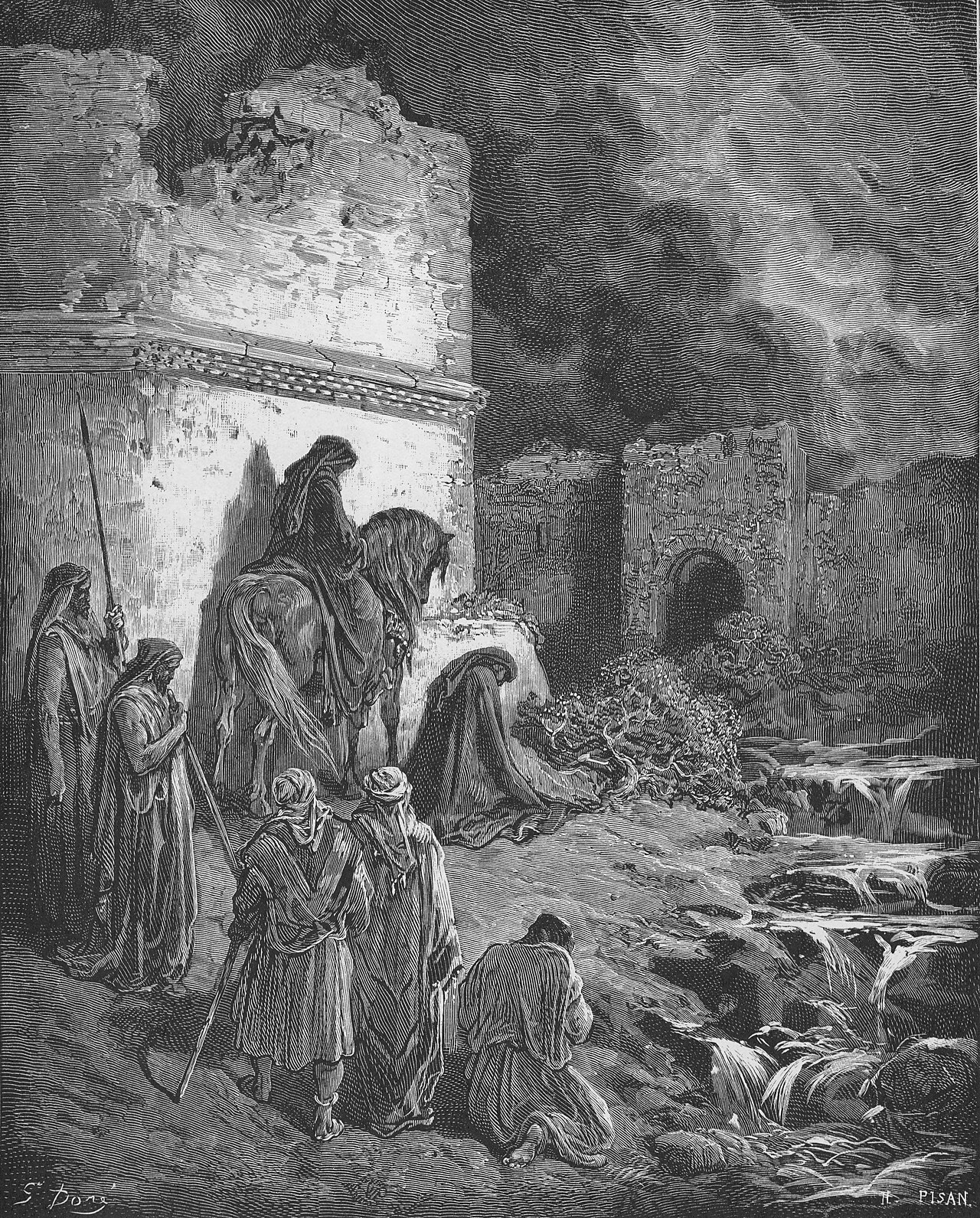
This page draws on Adam Clarke, Commentary on the Bible; Albert Barnes, Notes, Explanatory and Practical, on the Old and New Testaments (1832-1869); John Gill, Exposition of the Old Testament; John Gill, Exposition of the Old Testament (1748-1763) and Matthew Henry, Commentary on the Whole Bible.