
Lamentations 3:38
in Lamentations 3Do not both adversity and good come from the mouth of the Most High?
BSB
The same verse in ASV and KJV ▾
ASV
Out of the mouth of the Most High cometh there not evil and good?
KJV
Out of the mouth of the most High proceedeth not evil and good?
⋯
This verse in Lamentations 3
Commentary
2 notes on this verse"Is it not from the mouth of the Most High that good and evil come?" Namely from good results prosperity, from bad results adversity. For, in such an idea is excluded the error of those persons who claim everything happens from chance, like Cicero, the …
This site's exposition
Who is he that saith, and it cometh to pass
on Lamentations 3:37-39
Who is he that saith, and it cometh to pass, when the Lord commandeth it not? presses the chapter's theology of sovereignty into a single question, nothing happening apart from what the Lord has commanded. Out of the mouth of the most High proceedeth not evil and good states the same claim from the other direction, calamity and blessing both traced to the one source, which the bench reads as covenant language, the curses and blessings of the Law rather than a claim that God authors moral evil. Wherefore doth a living man complain, a man for the punishment of his sins closes the unit with the chapter's own answer to complaint, judgment read as consequence for sin rather than as an arbitrary blow.
The words behind it
6 Hebrew wordsEvery Hebrew word of this verse in the order it stands, with what it means and the door to its own study. The last column counts the times a word stands in the whole Bible: the rarer the word, the more the places it appears belong together.
| Hebrew | Sound | Meaning | Word study | In the Bible |
|---|---|---|---|---|
| מִפִּ֤י | mipi | from [the] mouth of | H6310 → | 498 times |
| עֶלְיוֹן֙ | ʾelyon | [the] Most High | H5945 → | |
| לֹ֣א | lo' | not | H3808 → | 5168 times |
| תֵצֵ֔א | tetze' | does it goes forth? | H3318 → | 1067 times |
| הָרָע֖וֹת | haraot | the troubles | H7451 → | 662 times |
| וְהַטּֽוֹב׃ | vehatov | and the good | H2896 → | 538 times |
מִפִּ֤יfrom [the] mouth of
mipiH6310 →498 times
עֶלְיוֹן֙[the] Most High
ʾelyonH5945 →
לֹ֣אnot
lo'H3808 →5168 times
תֵצֵ֔אdoes it goes forth?
tetze'H3318 →1067 times
הָרָע֖וֹתthe troubles
haraotH7451 →662 times
וְהַטּֽוֹב׃and the good
vehatovH2896 →538 times
A shaded row is a word that stands 400 times or fewer in the Bible.
The walk
8 stopsEach card is a verse this one points to, and under it the verses that one points to in turn. Where several paths arrive at the same place, that place is listed first: the text keeps returning to it.
Through
Job 2:10“You speak as a foolish woman speaks,” he told her. “Should we accept from God only good and not adversity?” In all this, Job did not sin in what he said.
it leads to
- James 1:12
Blessed is the man who perseveres under trial, because when he has stood the test, he will receive the crown of life that God has promised to those who love Him.
- Lamentations 3:38–41
Do not both adversity and good come from the mouth of the Most High?
- Job 1:21–22
saying: “Naked I came from my mother’s womb, and naked I will return. The LORD gave, and the LORD has taken away. Blessed be the name of the LORD.”
- James 1:12
Through
Isaiah 45:7I form the light and create the darkness; I bring prosperity and create calamity. I, the LORD, do all these things.
it leads to
- Ecclesiastes 7:13–14
Consider the work of God: Who can straighten what He has bent?
- Amos 3:6
If a ram’s horn sounds in a city, do the people not tremble? If calamity comes to a city, has not the LORD caused it?
- Psalms 75:7
but it is God who judges; He brings down one and exalts another.
- Job 2:10
“You speak as a foolish woman speaks,” he told her. “Should we accept from God only good and not adversity?” In all this, Job did not sin in what he said.
- Isaiah 31:2
Yet He too is wise and brings disaster; He does not call back His words. He will rise up against the house of the wicked and against the allies of evildoers.
- Ecclesiastes 7:13–14
Where this verse is studied
2 studies on this verse
On Lamentations 3:38
Great Is Thy Faithfulness: Lamentations 3:22–24 · MannaFest
Open the study →
On Lamentations 3:38
The Weeping Prophet — the Confessions of Jeremiah
Open the study →
Also on Lamentations 3: 4 studies that walk through this chapter ▾
About Lamentations
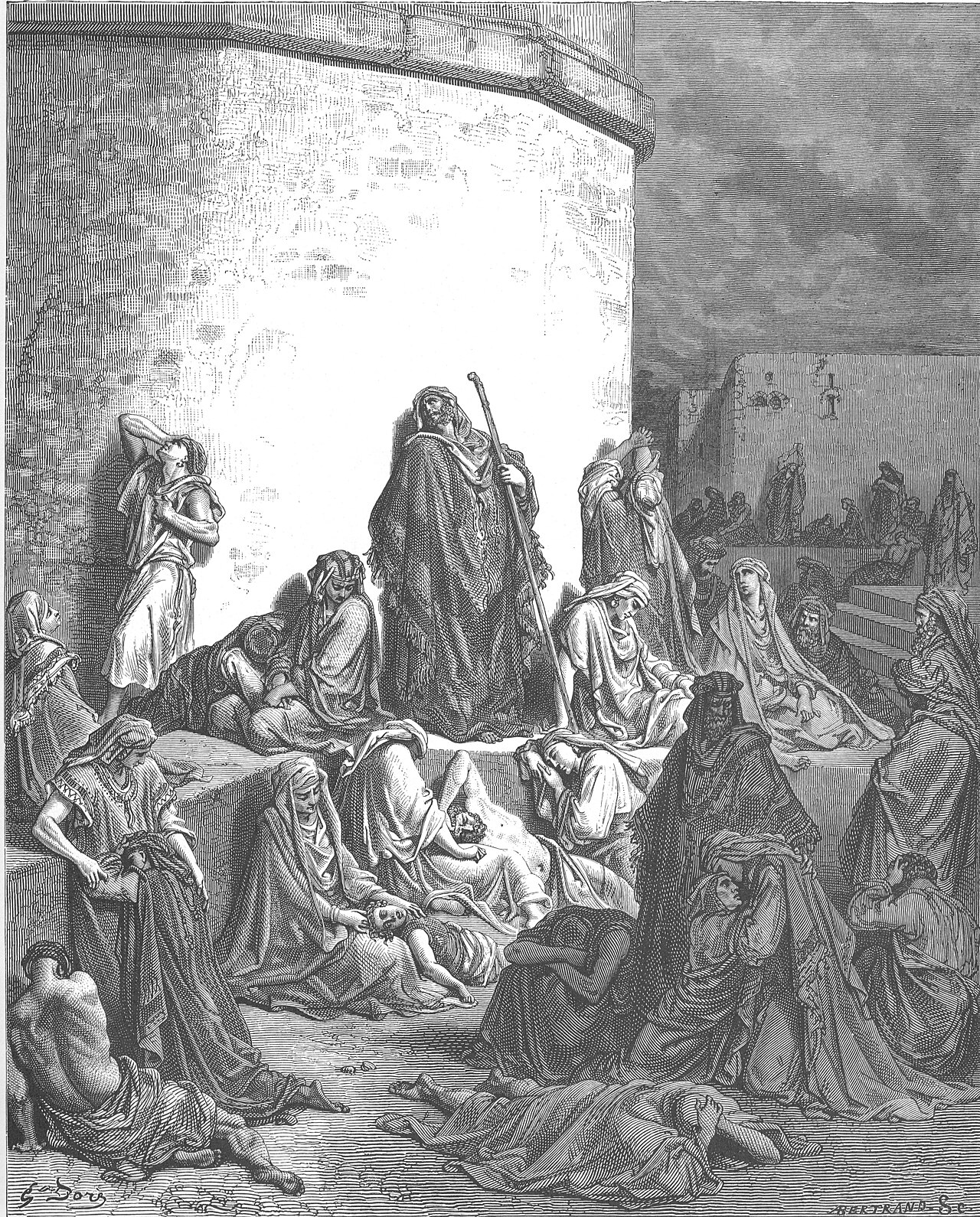
This page draws on Carl Friedrich Keil, Lamentations; John Wesley, Explanatory Notes upon the Old Testament and Thomas Aquinas, Commentary on Lamentations.