
Lamentations 1:3
in Lamentations 1Judah has gone into exile under affliction and harsh slavery; she dwells among the nations but finds no place to rest. All her pursuers have overtaken her in the midst of her distress.
BSB
The same verse in ASV and KJV ▾
ASV
Judah is gone into captivity because of affliction, and because of great servitude; She dwelleth among the nations, she findeth no rest: All her persecutors overtook her within the straits.
KJV
Judah is gone into captivity because of affliction, and because of great servitude: she dwelleth among the heathen, she findeth no rest: all her persecutors overtook her between the straits.
⋯
This verse in Lamentations 1
Commentary
3 notes on this verseA commentator
Albert Barnes1798–1870
Notes, Explanatory and Practical, on the Old and New Testaments (1832-1869)
Because of ... - i. e. the people, not of Jerusalem only, but of the whole land, “is gone into exile to escape from the affliction and laborious servitude,” to which they are subject in their own land. Persecutors ... between the straits - Rather, “pursuers ... in the midst of her straits.” The Jews flee like deer to escape from the invading Chaldaeans, but are driven by them into places from where there is no escape.
This site's exposition
How doth the city sit solitary
on Lamentations 1:1-3
The book opens as an alphabet acrostic, one verse to each of the twenty-two Hebrew letters, a form disciplined enough to hold grief without letting it spill past its banks. The city that once sat as a queen among the nations now sits solitary, called a widow though her husband the Lord has not divorced her, and the exile named plainly, Judah is gone into captivity because of affliction and great servitude. The bench reads the language of state and status, princess, tributary, as deliberate: the poem names exactly what has been lost before it names why.
The record, by era
The Nineteenth Century1 voice
A commentator
Jamieson, Fausset & Brown1802–1910
Commentary Critical and Explanatory on the Whole Bible (1871)
(Jer 52:27). because of great servitude--that is, in a state "of great servitude," endured from the Chaldeans. "Because" is made by VATABLUS indicative of the cause of her captivity; namely, her having "afflicted" and unjustly brought into "servitude" the manumitted bond-servants (Jer 34:8-22).
The words behind it
16 Hebrew wordsEvery Hebrew word of this verse in the order it stands, with what it means and the door to its own study. The last column counts the times a word stands in the whole Bible: the rarer the word, the more the places it appears belong together.
| Hebrew | Sound | Meaning | Word study | In the Bible |
|---|---|---|---|---|
| גָּֽלְתָ֨ה | galtah | she has gone into exile | H1540 → | 186 times |
| יְהוּדָ֤ה | yehudah | Judah | H3063 → | 819 times |
| מֵעֹ֙נִי֙ | meoni | from affliction | H6040 → | 36 times |
| וּמֵרֹ֣ב | umero | and from an abundance of | H7230 → | 149 times |
| עֲבֹדָ֔ה | ʾavodah | servitude | H5656 → | |
| הִ֚יא | hi' | her | H1931 → | 1879 times |
| יָשְׁבָ֣ה | yashevah | she dwells | H3427 → | 1079 times |
| בַגּוֹיִ֔ם | vagoyim | among the nations | H1471 → | 561 times |
| לֹ֥א | lo' | not | H3808 → | 5168 times |
| מָצְאָ֖ה | matzeah | she has found | H4672 → | 455 times |
| מָנ֑וֹחַ | manoach | a resting place | H4494 → | |
| כָּל־ | kol- | all | H3605 → | 5413 times |
| רֹדְפֶ֥יהָ | rodefeiha | pursuers her | H7291 → | 143 times |
| הִשִּׂיג֖וּהָ | hisiguha | they have overtaken her | H5381 → | |
| בֵּ֥ין | bein | between | H996 → | |
| הַמְּצָרִֽים׃ ס | hametzarim | the narrow places | H4712 → |
גָּֽלְתָ֨הshe has gone into exile
galtahH1540 →186 times
יְהוּדָ֤הJudah
yehudahH3063 →819 times
מֵעֹ֙נִי֙from affliction
meoniH6040 →36 times
וּמֵרֹ֣בand from an abundance of
umeroH7230 →149 times
עֲבֹדָ֔הservitude
ʾavodahH5656 →
הִ֚יאher
hi'H1931 →1879 times
יָשְׁבָ֣הshe dwells
yashevahH3427 →1079 times
בַגּוֹיִ֔םamong the nations
vagoyimH1471 →561 times
לֹ֥אnot
lo'H3808 →5168 times
מָצְאָ֖הshe has found
matzeahH4672 →455 times
מָנ֑וֹחַa resting place
manoachH4494 →
כָּל־all
kol-H3605 →5413 times
רֹדְפֶ֥יהָpursuers her
rodefeihaH7291 →143 times
הִשִּׂיג֖וּהָthey have overtaken her
hisiguhaH5381 →
בֵּ֥יןbetween
beinH996 →
הַמְּצָרִֽים׃ סthe narrow places
hametzarimH4712 →
A shaded row is a word that stands 400 times or fewer in the Bible.
The walk
8 stopsEach card is a verse this one points to, and under it the verses that one points to in turn. Where several paths arrive at the same place, that place is listed first: the text keeps returning to it.
Through
Lamentations 2:9Her gates have sunk into the ground; He has destroyed and shattered their bars. Her king and her princes are exiled among the nations, the law is no more, and even her prophets find…
it leads to
- Ezekiel 7:26
Disaster upon disaster will come, and rumor after rumor. Then they will seek a vision from a prophet, but instruction from the priests will perish, as will counsel from the elders.
- Hosea 3:4
For the Israelites must live many days without king or prince, without sacrifice or sacred pillar, and without ephod or idol.
- Psalms 74:9
There are no signs for us to see. There is no longer any prophet. And none of us knows how long this will last.
- Nehemiah 1:3
And they told me, “The remnant who survived the exile are there in the province, in great trouble and disgrace. The wall of Jerusalem is broken down, and its gates are burned with fire.”
- Micah 3:6–7
Therefore night will come over you without visions, and darkness without divination. The sun will set on these prophets, and the daylight will turn black over them.
- Ezekiel 7:26
Through
Jeremiah 39:9Then Nebuzaradan captain of the guard carried away to Babylon the remnant of the people who had remained in the city, along with the deserters who had defected to him.
it leads to
- Jeremiah 40:1
This is the word that came to Jeremiah from the LORD after Nebuzaradan captain of the guard had released him at Ramah, having found him bound in chains among all the captives of Jerusalem…
- Genesis 37:36
Meanwhile, the Midianites sold Joseph in Egypt to Potiphar, an officer of Pharaoh and captain of the guard.
- 2 Kings 25:20
Nebuzaradan captain of the guard took them and brought them to the king of Babylon at Riblah.
- Jeremiah 40:1
Where this verse is studied
2 studies on this verse

About Lamentations
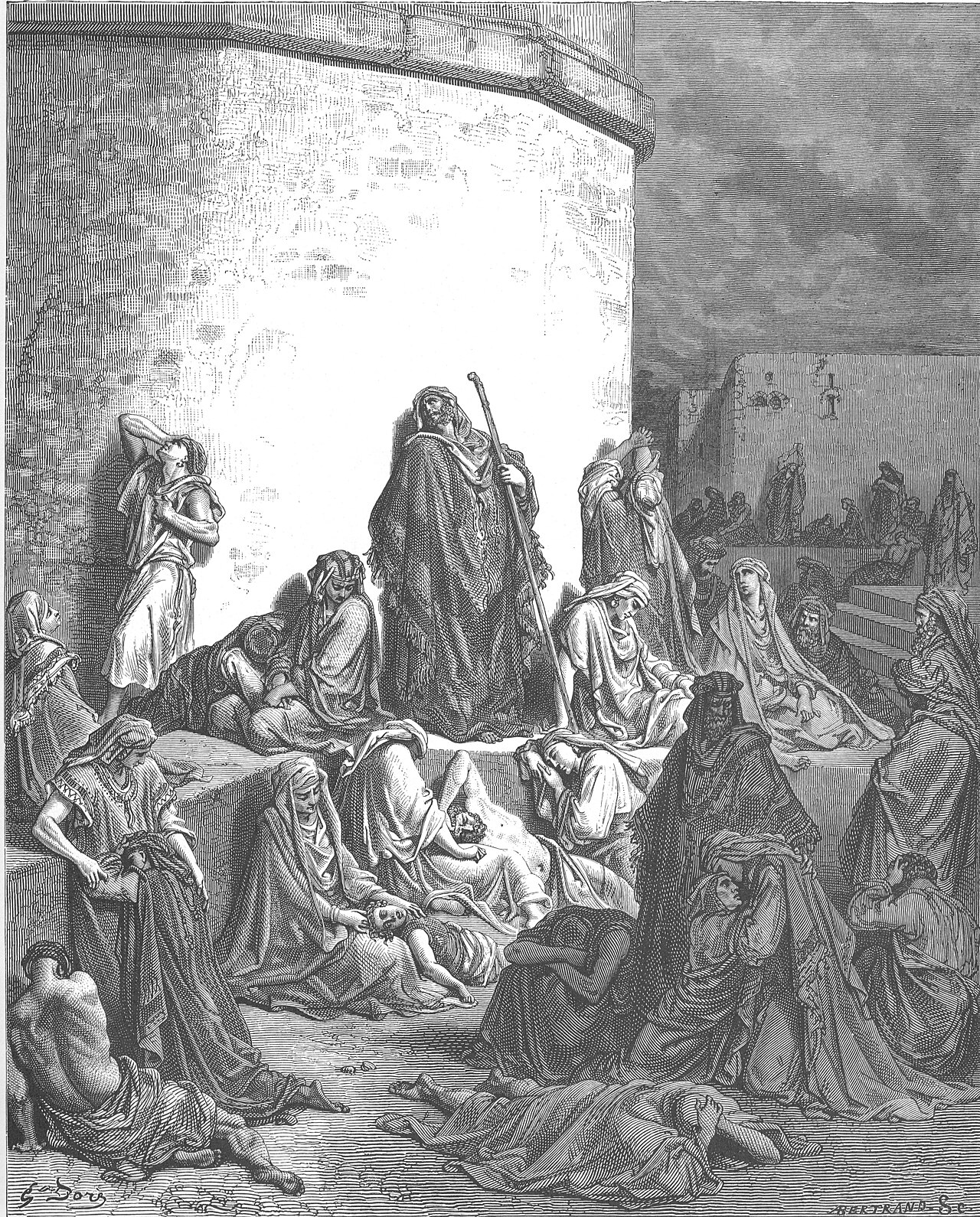
Who and where
1 name in this verse with a page on the site.
This page draws on Albert Barnes, Notes, Explanatory and Practical, on the Old and New Testaments (1832-1869); Carl Friedrich Keil, Lamentations; Jamieson, Fausset & Brown, Commentary Critical and Explanatory on the Whole Bible and Matthew Henry, Commentary on the Whole Bible.