
Joshua 3:15
in Joshua 3Now the Jordan overflows its banks throughout the harvest season. But as soon as the priests carrying the ark reached the Jordan and their feet touched the water’s edge,
BSB
The same verse in ASV and KJV ▾
ASV
and when they that bare the ark were come unto the Jordan, and the feet of the priests that bare the ark were dipped in the brink of the water (for the Jordan overfloweth all its banks all the time of harvest),
KJV
And as they that bare the ark were come unto Jordan, and the feet of the priests that bare the ark were dipped in the brim of the water, (for Jordan overfloweth all his banks all the time of harvest,)
⋯
This verse in Joshua 3
Commentary
3 notes on this verseA commentator
Albert Barnes1798–1870
Notes, Explanatory and Practical, on the Old and New Testaments (1832-1869)
Jordan overfloweth all his banks - Rather “is full up to all his banks,” i. e. “brim-full.” This remark strikingly illustrates the suddenness and completeness, not less than the greatness, of the marvel. The Jordan River flows at the bottom of a deep valley, which descends to the water’s edge on either side in two, occasionally in three, terraces. Within the lowest of these the stream, ordinarily less than 100 feet wide in this lower part of its course, is confined.
This site's exposition
when the people removed from their tents
on Joshua 3:14-16
Harvest is the detail that makes the timing hard rather than convenient, because Jordan overfloweth all his banks then; John Wesley reads it as the barley harvest, since chapter 5 has them keeping the passover on the fourteenth day of the first month a few days later. The water stops at a named place, the city Adam beside Zaretan, roughly sixteen miles upstream, so the account fixes a location it had no need to supply. Readers differ over the mechanism. Some point to the recorded blockings of the Jordan by bank collapses at that same reach, in 1267 and again in July 1927, and read a fall of earth timed to the moment the priests stepped in; others read a direct holding of the water, and the text gives the place and the hour and no mechanism at all.
The record, by era
The Puritans and the Awakening1 voice
All the time of harvest - This is meant not of wheat-harvest, but of the barley-harvest, as is manifest from their keeping the passover at their first entrance, chap. v, 10, which was kept on the fourteenth day of the first month, when they were to bring a sheaf of their first-fruits, which were of barley.
The words behind it
20 Hebrew wordsEvery Hebrew word of this verse in the order it stands, with what it means and the door to its own study. The last column counts the times a word stands in the whole Bible: the rarer the word, the more the places it appears belong together.
| Hebrew | Sound | Meaning | Word study | In the Bible |
|---|---|---|---|---|
| וּכְב֞וֹא | ukhevo' | and just as came | H935 → | 2568 times |
| נֹשְׂאֵ֤י | noseei | [the] bearers of | H5375 → | 656 times |
| הָֽאָרוֹן֙ | haaron | the ark | H727 → | 202 times |
| עַד־ | ʾad- | to | H5704 → | 1261 times |
| הַיַּרְדֵּ֔ן | haiyarden | the Jordan | H3383 → | 182 times |
| וְרַגְלֵ֤י | veraglei | and [the] feet of | H7272 → | 247 times |
| הַכֹּֽהֲנִים֙ | hakohanim | the priests | H3548 → | 750 times |
| נֹשְׂאֵ֣י | noseei | [the] bearers of | H5375 → | 656 times |
| הָֽאָר֔וֹן | haaron | the ark | H727 → | 202 times |
| נִטְבְּל֖וּ | nitbelu | they were dipped | H2881 → | |
| בִּקְצֵ֣ה | biktzeh | in [the] edge of | H7097 → | 97 times |
| הַמָּ֑יִם | hamayim | the waters | H4325 → | 581 times |
| וְהַיַּרְדֵּ֗ן | vehaiyarden | and the Jordan | H3383 → | 182 times |
| מָלֵא֙ | male' | it is full | H4390 → | 249 times |
| עַל־ | ʾal- | over | H5921 → | 5755 times |
| כָּל־ | kol- | all | H3605 → | 5413 times |
| גְּדוֹתָ֔יו | gedotav | banks its | H1415 → | |
| כֹּ֖ל | kol | all | H3605 → | 5413 times |
| יְמֵ֥י | yemei | [the] days of | H3117 → | 2304 times |
| קָצִֽיר׃ | katzir | harvest | H7105 → |
וּכְב֞וֹאand just as came
ukhevo'H935 →2568 times
נֹשְׂאֵ֤י[the] bearers of
noseeiH5375 →656 times
הָֽאָרוֹן֙the ark
haaronH727 →202 times
עַד־to
ʾad-H5704 →1261 times
הַיַּרְדֵּ֔ןthe Jordan
haiyardenH3383 →182 times
וְרַגְלֵ֤יand [the] feet of
veragleiH7272 →247 times
הַכֹּֽהֲנִים֙the priests
hakohanimH3548 →750 times
נֹשְׂאֵ֣י[the] bearers of
noseeiH5375 →656 times
הָֽאָר֔וֹןthe ark
haaronH727 →202 times
נִטְבְּל֖וּthey were dipped
nitbeluH2881 →
בִּקְצֵ֣הin [the] edge of
biktzehH7097 →97 times
הַמָּ֑יִםthe waters
hamayimH4325 →581 times
וְהַיַּרְדֵּ֗ןand the Jordan
vehaiyardenH3383 →182 times
מָלֵא֙it is full
male'H4390 →249 times
עַל־over
ʾal-H5921 →5755 times
כָּל־all
kol-H3605 →5413 times
גְּדוֹתָ֔יוbanks its
gedotavH1415 →
כֹּ֖לall
kolH3605 →5413 times
יְמֵ֥י[the] days of
yemeiH3117 →2304 times
קָצִֽיר׃harvest
katzirH7105 →
A shaded row is a word that stands 400 times or fewer in the Bible.
The walk
8 stopsEach card is a verse this one points to, and under it the verses that one points to in turn. Where several paths arrive at the same place, that place is listed first: the text keeps returning to it.
Through
Jeremiah 12:5“If you have raced with men on foot and they have worn you out, how can you compete with horses? If you stumble in a peaceful land, how will you do in the thickets…
it leads to
- 1 Peter 4:12
Beloved, do not be surprised at the fiery trial that has come upon you, as though something strange were happening to you.
- Proverbs 24:10
If you faint in the day of distress, how small is your strength!
- Hebrews 12:3–4
Consider Him who endured such hostility from sinners, so that you will not grow weary and lose heart.
- Jeremiah 50:44
Behold, one will come up like a lion from the thickets of the Jordan to the watered pasture. For in an instant I will chase Babylon from her land. Who is the chosen one…
- Psalms 42:7
Deep calls to deep in the roar of Your waterfalls; all Your breakers and waves have rolled over me.
- 1 Peter 4:12
Through
Jeremiah 49:19Behold, one will come up like a lion from the thickets of the Jordan to the watered pasture. For in an instant I will chase Edom from her land. Who is the chosen one…
it leads to
- Jeremiah 12:5
“If you have raced with men on foot and they have worn you out, how can you compete with horses? If you stumble in a peaceful land, how will you do in the thickets…
Reached by 2 separate paths from here.
- Jeremiah 12:5
Through
Joshua 3:13When the feet of the priests who carry the ark of the LORD—the Lord of all the earth—touch down in the waters of the Jordan, its flowing waters will be cut off and will…
it leads to
- Exodus 15:8
At the blast of Your nostrils the waters piled up; like a wall the currents stood firm; the depths congealed in the heart of the sea.
- Psalms 78:13
He split the sea and brought them through; He set the waters upright like a wall.
- Exodus 15:8
About Joshua
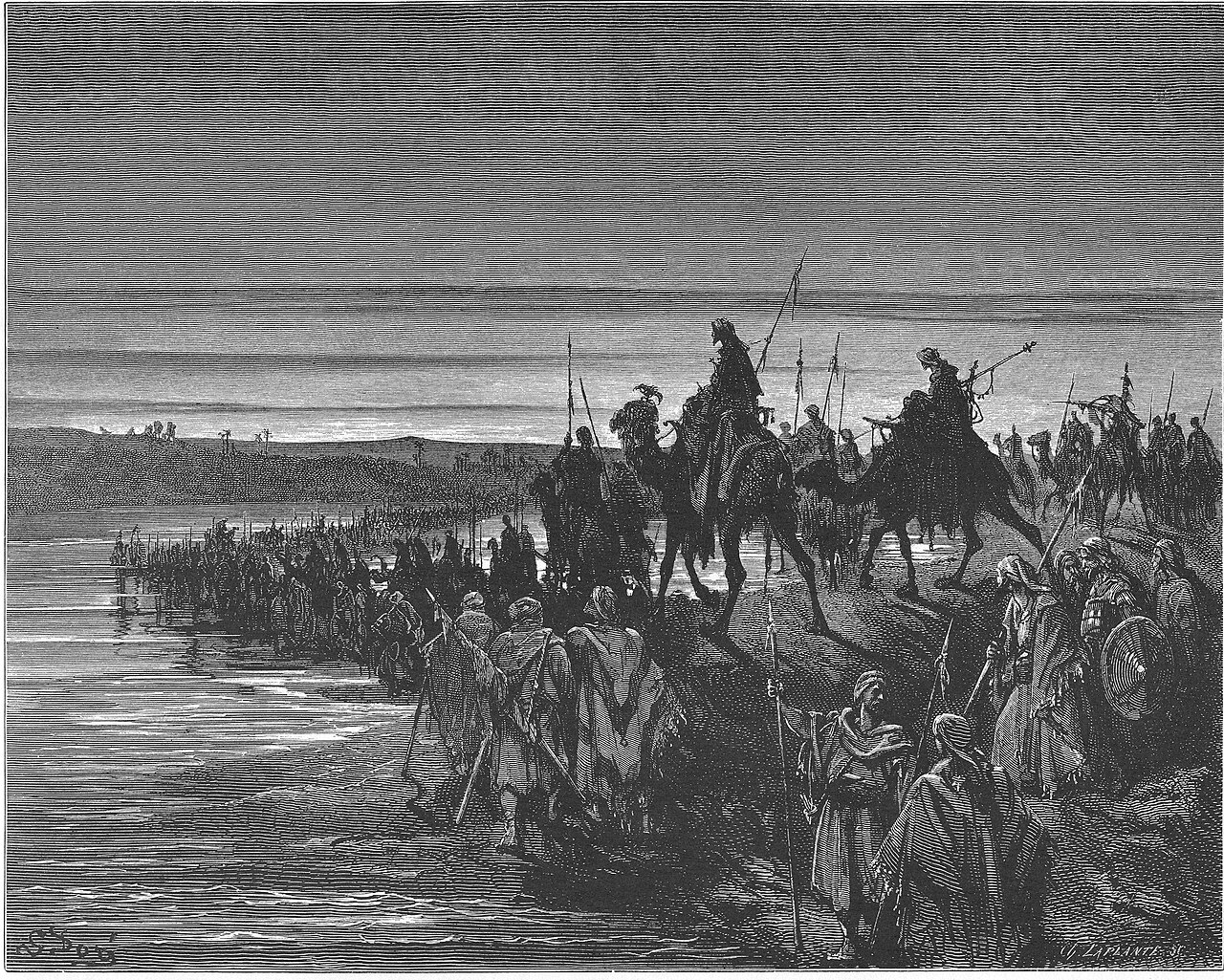
This page draws on Albert Barnes, Notes, Explanatory and Practical, on the Old and New Testaments (1832-1869); Albert Barnes, Notes on the Old Testament; Jamieson, Fausset & Brown, Commentary Critical and Explanatory on the Whole Bible and John Wesley, Explanatory Notes upon the Old Testament.