
Jonah 1:6
in Jonah 1The captain approached him and said, “How can you sleep? Get up and call upon your God. Perhaps this God will consider us, so that we may not perish.”
BSB
The same verse in ASV and KJV ▾
ASV
So the shipmaster came to him, and said unto him, What meanest thou, O sleeper? arise, call upon thy God, if so be that God will think upon us, that we perish not.
KJV
So the shipmaster came to him, and said unto him, What meanest thou, O sleeper? arise, call upon thy God, if so be that God will think upon us, that we perish not.
⋯
This verse in Jonah 1
Commentary
7 notes on this verseThis site's exposition
But the Lord sent out a great wind into the sea
on Jonah 1:4-6
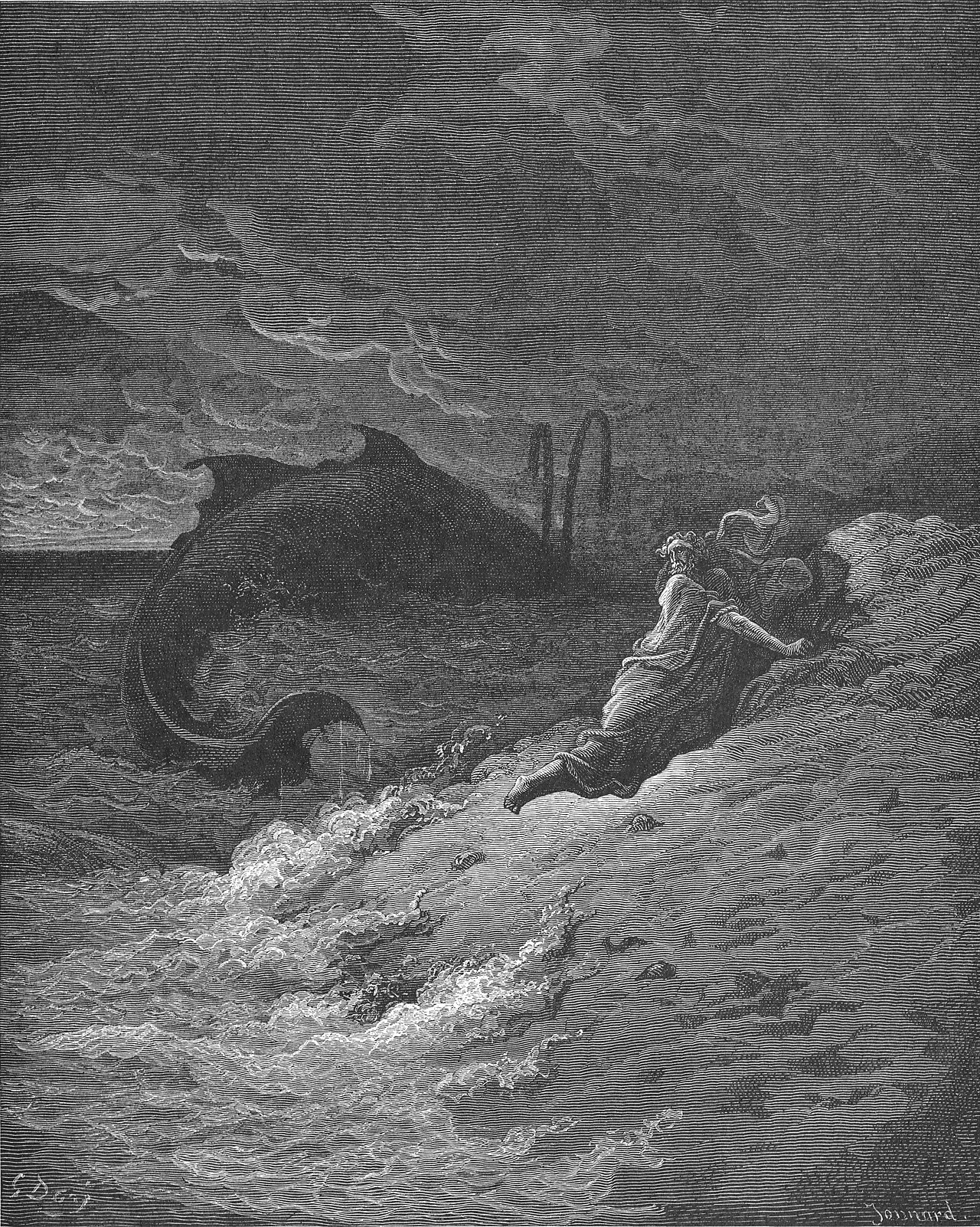
But the Lord sent out a great wind into the sea turns the fugitive's own passage into the instrument of his arrest, the ship ready to break apart while the pagan sailors each cry to his own god and pitch the cargo overboard to lighten her. Jonah alone is undisturbed, gone down into the sides of the ship and fast asleep, a stillness the commentators read as exhaustion, or as a conscience already resigned to what is coming. The shipmaster's rebuke, what meanest thou, O sleeper, puts a pagan captain in the place of calling a prophet of the Lord back to prayer, which Henry and Wesley both name as one of the book's standing ironies, Gentiles behaving better than the man sent to preach to Gentiles.
The record, by era
The Church Fathers1 voice
"So the shipmaster came to him, and said unto him, What meanest you, O sleeper? arise, call upon thy God, if so be that God will think upon us, that we perish not." LXX: "and the helmsman come to him and he said to him, what are you doing sleeping? Get up, and call upon your God. If he can find a way to save us then we may not die. It is natural that each one has more confidence in someone else when they feel themselves to be in such danger.
The Puritans and the Awakening2 voices
4 ), " no doubt one of us is a murderer, or guilty of sacrilege, or perjury, or the like, who is thus pursued by the vengeance of the sea, and it is for his sake that we all suffer." Even the light of nature teaches that in extraordinary judgments the wrath of God is revealed from heaven against some extraordinary sins and sinners.
quarantine:debris (2026-07-29) — leading-citation-number+unbalanced-parens
So the shipmaster came to him,....
The Nineteenth Century2 voices
A commentator
Jamieson, Fausset & Brown1802–1910
Commentary Critical and Explanatory on the Whole Bible (1871)
proposed
call upon thy God--The ancient heathen in dangers called on foreign gods, besides their national ones (compare Ps 107:28). MAURER translates the preceding clause, "What is the reason that thou sleepest?" think upon us--for good (compare Ge 8:1;
quarantine:debris (2026-07-29) — starts-lowercase+unbalanced-parens
The shipmaster - Either the captain or the pilot. Arise, call upon thy God - He supposed that Jonah had his god, as well as they had theirs; and that, as the danger was imminent, every man should use the influence he had, as they were all equally involved in it.
1 more voice on this verse
The Nineteenth Century1 voice
A commentator
Albert Barnes1798–1870
Notes, Explanatory and Practical, on the Old and New Testaments (1832-1869)
proposed
What meanest thou? - or rather, “what aileth thee?” (literally “what is to thee?”) The shipmaster speaks of it (as it was) as a sort of disease, that he should be thus asleep in the common peril. “The shipmaster,” charged, as he by office was, with the common weal of those on board, would, in the common peril, have one common prayer. It was the prophet’s office to call the pagan to prayers and to calling upon God. God reproved the Scribes and Pharisees by the mouth of the children who “cried Hosanna” Mat 21:15; Jonah by the shipmaster; David by Abigail; 1Sa 25:32-34; Naaman by his servants. Now too he reproves worldly priests by the devotion of laymen, sceptic intellect by the simplicity of faith. If so be that God will think upon us - , (literally “for us”) i. e., for good; as David says, Psa 40:17. “I am poor and needy, the Lord thinketh upon” (literally “for”) “me.” Their calling upon their own gods had failed them. Perhaps the shipmaster had seen something special about Jonah, his manner, or his prophet’s garb. He does not only call Jonah’s God, “thy” God, as Darius says to Daniel “thy God” Dan 6:20, but also “the God,” acknowledging the God whom Jonah worshiped, to be “the God.” It is not any pagan prayer which he asks Jonah to offer. It is the prayer of the creature in its need to God who can help; but knowing its own ill-desert, and the separation between itself and God, it knows not whether He will help it. So David says Psa 25:7, “Remember not the sins of my youth nor my transgressions; according to Thy mercy remember Thou me for Thy goodness’ sake, O Lord.” “The shipmaster knew from experience, that it was no common storm, that the surges were an infliction borne down from God, and above human skill, and that there was no good in the master’s skill. For the state of things needed another Master who ordereth the heavens, and craved the guidance from on high. […]
The words behind it
19 Hebrew wordsEvery Hebrew word of this verse in the order it stands, with what it means and the door to its own study. The last column counts the times a word stands in the whole Bible: the rarer the word, the more the places it appears belong together.
| Hebrew | Sound | Meaning | Word study | In the Bible |
|---|---|---|---|---|
| וַיִּקְרַ֤ב | vaiyikrav | and he drew near | H7126 → | |
| אֵלָיו֙ | ʾelav | to him | H413 → | 5510 times |
| רַ֣ב | rav | [the] chief of | H7227 → | 454 times |
| הַחֹבֵ֔ל | hachovel | the sailor[s] | H2259 → | |
| וַיֹּ֥אמֶר | vaiyomer | and he said | H559 → | 5305 times |
| ל֖וֹ | lo | to <the> him | ||
| מַה־ | mah- | what? | H4100 → | 752 times |
| לְּךָ֣ | lekha | [is] to <the> you | ||
| נִרְדָּ֑ם | nirdam | sleeping | H7290 → | |
| ק֚וּם | kum | arise | H6965 → | 628 times |
| קְרָ֣א | kera' | call | H7121 → | 733 times |
| אֶל־ | ʾel- | to | H413 → | 5510 times |
| אֱלֹהֶ֔יךָ | ʾeloheikha | god your | H430 → | 2601 times |
| אוּלַ֞י | ʾulai | perhaps | H194 → | |
| יִתְעַשֵּׁ֧ת | yitashet | he will give thought | H6245 → | |
| הָאֱלֹהִ֛ים | haelohim | the god | H430 → | 2601 times |
| לָ֖נוּ | lanu | to <the> us | ||
| וְלֹ֥א | velo' | and not | H3808 → | 5168 times |
| נֹאבֵֽד׃ | noved | we will perish | H6 → | 184 times |
וַיִּקְרַ֤בand he drew near
vaiyikravH7126 →
אֵלָיו֙to him
ʾelavH413 →5510 times
רַ֣ב[the] chief of
ravH7227 →454 times
הַחֹבֵ֔לthe sailor[s]
hachovelH2259 →
וַיֹּ֥אמֶרand he said
vaiyomerH559 →5305 times
ל֖וֹto <the> him
lo
מַה־what?
mah-H4100 →752 times
לְּךָ֣[is] to <the> you
lekha
נִרְדָּ֑םsleeping
nirdamH7290 →
ק֚וּםarise
kumH6965 →628 times
קְרָ֣אcall
kera'H7121 →733 times
אֶל־to
ʾel-H413 →5510 times
אֱלֹהֶ֔יךָgod your
ʾeloheikhaH430 →2601 times
אוּלַ֞יperhaps
ʾulaiH194 →
יִתְעַשֵּׁ֧תhe will give thought
yitashetH6245 →
הָאֱלֹהִ֛יםthe god
haelohimH430 →2601 times
לָ֖נוּto <the> us
lanu
וְלֹ֥אand not
velo'H3808 →5168 times
נֹאבֵֽד׃we will perish
novedH6 →184 times
A shaded row is a word that stands 400 times or fewer in the Bible.
The walk
8 stopsEach card is a verse this one points to, and under it the verses that one points to in turn. Where several paths arrive at the same place, that place is listed first: the text keeps returning to it.
Through
Ephesians 5:14So it is said: “Wake up, O sleeper, rise up from the dead, and Christ will shine on you.”
it leads to
- Isaiah 60:1
Arise, shine, for your light has come, and the glory of the LORD rises upon you.
- Romans 13:11–12
And do this, understanding the occasion. The hour has come for you to wake up from your slumber, for our salvation is nearer now than when we first believed.
- Isaiah 26:19
Your dead will live; their bodies will rise. Awake and sing, you who dwell in the dust! For your dew is like the dew of the morning, and the earth will bring forth her…
- 1 Thessalonians 5:6
So then, let us not sleep as the others do, but let us remain awake and sober.
- Isaiah 52:1
Awake, awake, clothe yourself with strength, O Zion! Put on your garments of splendor, O Jerusalem, holy city! For the uncircumcised and unclean will no longer enter you.
- Isaiah 60:1
Through
Jonah 3:9Who knows? God may turn and relent; He may turn from His fierce anger, so that we will not perish.”
it leads to
- 2 Samuel 12:22
David answered, “While the child was alive, I fasted and wept, for I said, ‘Who knows? The LORD may be gracious to me and let him live.’
- Joel 2:13–14
So rend your hearts and not your garments, and return to the LORD your God. For He is gracious and compassionate, slow to anger, abounding in loving devotion. And He relents from sending disaster.
- 2 Samuel 12:22
Through
2 Samuel 12:22David answered, “While the child was alive, I fasted and wept, for I said, ‘Who knows? The LORD may be gracious to me and let him live.’
it leads to
- Isaiah 38:1–3
In those days Hezekiah became mortally ill. The prophet Isaiah son of Amoz came to him and said, “This is what the LORD says: ‘Put your house in order, for you are about to…
- Isaiah 38:1–3
Where this verse is studied
On this page
Studies2
On this verse
On this chapter
About Jonah
This page draws on Adam Clarke, Commentary on the Bible; Albert Barnes, Notes, Explanatory and Practical, on the Old and New Testaments (1832-1869); Jamieson, Fausset & Brown, Commentary Critical and Explanatory on the Whole Bible; Jerome, Commentary on Jonah, Chapter 1; John Gill, Exposition of the Old Testament (1748-1763); John Wesley, Explanatory Notes upon the Old Testament and Matthew Henry, Commentary on the Whole Bible.