
Psalm 19:9 · Symbol · The Fear of the Lord
The Words Yirah and Phobos
Hebrew speaks of fear with the verb yare and the noun yirah, and Greek with the verb phobeo and the noun phobos.
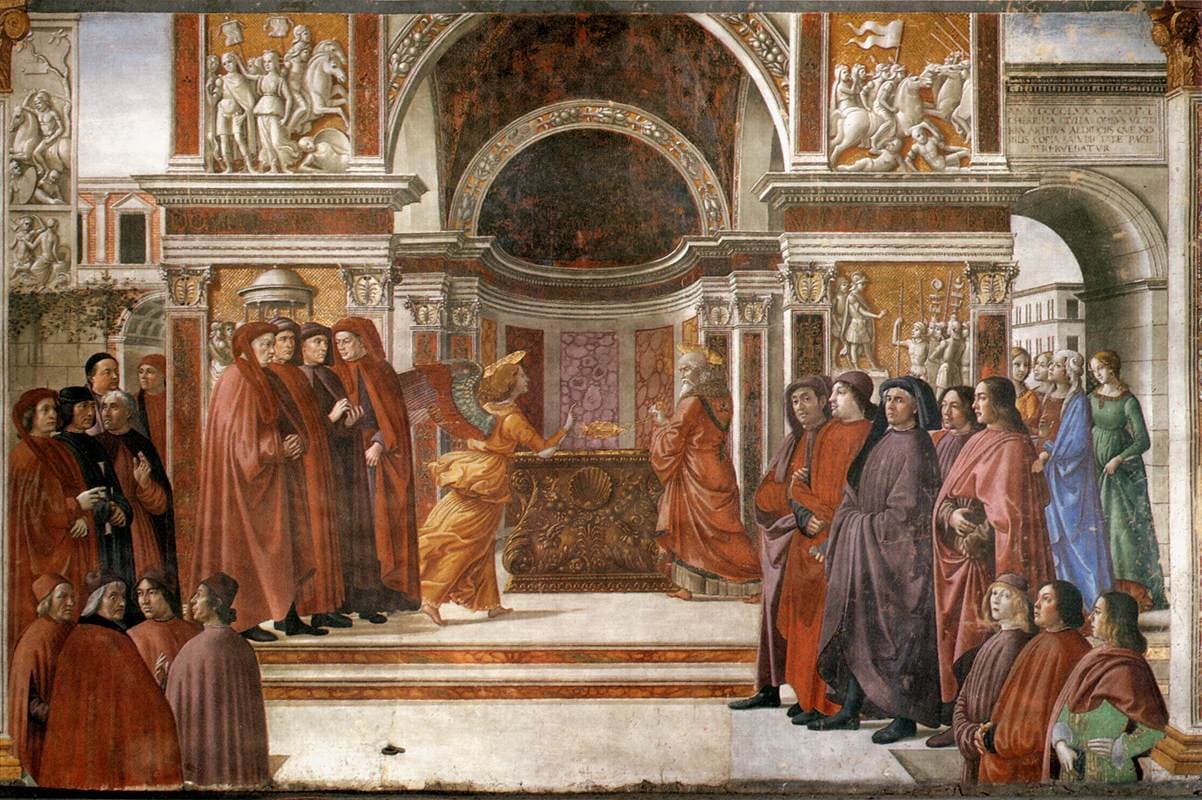
Luke calls Simeon, who was waiting for the consolation of Israel, devout with eulabes, a Greek word for careful piety.
The fear of the LORD is pure, enduring forever; the judgments of the LORD are true, being altogether righteous.
- The word
- יִרְאָה (yirah), H3374
- First appears
- Genesis 20:11 “Abraham replied, “I thought to myself, ‘Surely there…”
Summary
Scripture's words for fear cover every fear a person can feel, from panic in danger to awe before God, and one noun can carry both within a single chapter. The Greek noun for alarm before an angel also names the reverence of the church. Two rarer Greek words, eulabeia and eulabes, name reverence and devotion.
- The verb yare and its adjective carry most of the Old Testament's teaching on fearing God.
- In 1 John 4:18 the fear that perfect love drives out is the fear that involves punishment.
- Hebrews 5:7 says that Jesus was heard because of His reverence, and the Greek word there is eulabeia.
The First Fear of God in Scripture
Abraham's answer to Abimelech in Genesis 20 holds the first use of the noun.
The fear of the Lord is the value Scripture calls the beginning of wisdom, and a reader meets it through a handful of Hebrew and Greek words. An English reader sees one word, fear, where the original languages use several, and the choice of word bears on how a verse is read.
This word study asks how the two Testaments use yirah, phobos and the words beside them, and how a reader can tell terror from reverence in a given verse. It gives the count and sense of nine words and follows them from Genesis to 1 John.
Abraham replied, “I thought to myself, ‘Surely there is no fear of God in this place. They will kill me on account of my wife.’The Hebrew reads yirat Elohim, the noun joined to the word for God, in a sentence where Abraham judges a foreign city by it.
Where the Words Stand
Common verbs and rare nouns stand side by side, from words found across the canon to words found in a single book.
Luke uses the verb phobeo and the noun phobos more often than any other book of the New Testament.
| Word | Sense in Strong's dictionary | Uses | Books with the most uses | A verse where it stands |
|---|---|---|---|---|
| Hebrew | ||||
| yare, יָרֵא, H3372, verb | to fear | 315 | Psalms 45, Deuteronomy 37, Isaiah 25; 34 books in all | “Fear the LORD, you His saints” (Psalm 34:9) |
| yare, יָרֵא, H3373, adjective | fearing | 64 | Psalms 28, 2 Kings 5, Proverbs 4, Ecclesiastes 4; 16 books in all | “fearing God and shunning evil” (Job 1:1) |
| yirah, יִרְאָה, H3374, noun | fear (also used as infinitive) | 45 | Proverbs 14, Psalms 8, Isaiah 6, Job 5; 13 books in all | “The fear of the LORD is Zion’s treasure.” (Isaiah 33:6) |
| pachad, פָּחַד, H6342, verb | to be startled (by a sudden alarm) | 25 | Isaiah 8, Psalms 5, Job 3, Jeremiah 3; 8 books in all | “They will come trembling to the LORD and to His goodness” (Hosea 3:5) |
| Greek | ||||
| phobeo, φοβέω, G5399, verb | to frighten, i.e. (passively) to be alarmed | 95 | Luke 23, Matthew 18, Acts 14, Mark 12; 14 books in all | “fear God, honor the king” (1 Peter 2:17) |
| phobos, φόβος, G5401, noun | alarm or fright | 46 | Luke 7, Romans 5, Acts 5, 2 Corinthians 5; 16 books in all | “Submit to one another out of reverence for Christ.” (Ephesians 5:21) |
| eulabeia, εὐλάβεια, G2124, noun | properly, caution, i.e. (religiously) reverence (piety) | 2 | Hebrews alone | “worship God acceptably with reverence and awe” (Hebrews 12:28) |
| eulabes, εὐλαβής, G2126, adjective | taking well (carefully), i.e. circumspect (religiously, pious) | 4 | Acts 3, Luke 1 | “righteous and devout” (Luke 2:25) |
| deilia, δειλία, G1167, noun | timidity | 1 | 2 Timothy alone | “For God has not given us a spirit of fear” (2 Timothy 1:7) |
phobeo, φοβέω, G5399, verb, phobos, φόβος, G5401, noun, eulabeia, εὐλάβεια, G2124, noun, eulabes, εὐλαβής, G2126, adjective, deilia, δειλία, G1167, noun
The counts are those of the STEP Bible tagging, and a printed concordance may differ by one or two. Some verses hold a word twice, so a word's uses can outnumber its verses.
Yirah book by book1 figure
Proverbs holds more uses of yirah than any other book, and the Psalms hold the next most.
The thirteen counts as a table
| Book | Uses |
|---|---|
| Proverbs | 14 |
| Psalms | 8 |
| Isaiah | 6 |
| Job | 5 |
| Nehemiah | 2 |
| Ezekiel | 2 |
| Jonah | 2 |
| Genesis | 1 |
| Exodus | 1 |
| Deuteronomy | 1 |
| 2 Samuel | 1 |
| 2 Chronicles | 1 |
| Jeremiah | 1 |
13 bars from zero, one for each book where yirah (H3374) stands, in the order of their counts.
From Terror to Worship
Hebrew and Greek both join the verb of fearing to its own noun, and the accounts of Jonah, the shepherds and the disciples show the pattern.
Then the men were even more afraid and said to him, “What have you done?” The men knew that he was fleeing from the presence of the LORD, because he had told them.The verse stands at the turn of the story, when the sailors learn who sent the storm.
Then the men feared the LORD greatly, and they offered a sacrifice to the LORD and made vows to Him.The writer uses the same three Hebrew words again, with the LORD now named as the one they fear.
Jerome read the change in the sailors in his Commentary on Jonah. He wrote, "Before the anger of the Lord the sailors implored their gods under the effect of their fear". He added, "after his anger they fear the Lord, that is they revere and worship Him".
When Zechariah saw him, he was startled and gripped with fear.Luke's Greek makes phobos the subject that falls upon Zechariah while he serves as priest before God.
Just then an angel of the Lord stood before them, and the glory of the Lord shone around them, and they were terrified.The Greek words here are ephobethesan phobon megan, the verb, its noun and the word for great.
In both accounts the angel's first words answer the fear before they give the news, and Origen gave the reason.
“A new face suddenly presenting itself to the human eye, troubles and startles the mind. The angel knowing this to be the nature of man, first dispels the alarm, as it follows, But the angel said unto him, Fear not. The angel not only soothes his fears, but gladdens him with good tidings, adding, For thy prayer is heard, and thy wife Elisabeth shall bear a son.”
Origen of Alexandria · Catena Aurea by Aquinas · on Luke 1:12 to 13Patristic
Mark uses the same three Greek words in Mark 4:41, which the Berean text renders "Overwhelmed with fear".
Luke 1:12, Luke 2:9, Origen of Alexandria
The Gloss and the Sentence
Paul and Peter use phobos in letters to churches, and Barnes traced the same range for yirah.
Strong's dictionary glosses phobos as "alarm or fright". A gloss gives a word's common sense, and the sentence around the word decides its sense in each verse.
Therefore, beloved, since we have these promises, let us cleanse ourselves from everything that defiles body and spirit, perfecting holiness in the fear of God.Paul writes to believers he calls beloved and who hold God's promises, so this phobos belongs to the children of God.
Since you call on a Father who judges each one’s work impartially, conduct yourselves in reverent fear during your stay as foreigners.Peter grounds this fear in calling on God as Father, so the word names a child's reverence before a Judge who is also his Father.
Albert Barnes, in his Notes on Psalm 19:9, wrote that yirah "means properly fear, terror", then "reverence, or holy fear", and "hence, reverence toward God, piety, religion".
The Berean text shows the same range in its English, rendering yirah as reverence in Psalm 5:7 and as worship in Isaiah 29:13.
Yare, Yirah and Eulabeia
Moses and the angel at Moriah use the verb and its adjective, and Hebrews names reverence with a rarer Greek word.
In Psalm 19:9 and in Proverbs, the fear of the LORD joins the noun yirah to the divine name, Yahweh.
And now, O Israel, what does the LORD your God ask of you but to fear the LORD your God by walking in all His ways, to love Him, to serve the LORD your God with all your heart and with all your soul,The verse shows the weight of the verb, since Moses sets it first in his summary of what the LORD asks of Israel.
The adjective first describes a man in Genesis 22:12, where the angel tells Abraham, "now I know that you fear God".
Hebrews uses eulabeia a second time in Hebrews 12:28, beside deous, a Greek noun the Berean text renders awe.
The Fear That Love Drives Out
Romans, 2 Timothy and 1 John name a fear from which believers are set free, beside the fear of God they keep.
For you did not receive a spirit of slavery that returns you to fear, but you received the Spirit of sonship, by whom we cry, “Abba! Father!”Paul ties this phobos to slavery, so the fear he rules out is a slave's dread of his master.
The STEP Bible tagging glosses the word of 2 Timothy 1:7 as cowardice, so the spirit God has not given is the spirit of the coward.
There is no fear in love, but perfect love drives out fear, because fear involves punishment. The one who fears has not been perfected in love.The verse holds the noun phobos three times, more often than any other verse of the New Testament, and the verb once.
Augustine asked in his ninth homily on 1 John how this verse agrees with the psalm that says the fear of the LORD endures forever. He wrote that the psalm "shows us an eternal fear, but a chaste". He heard the two texts as one music and wrote, "There is then an unison there, there is a harmony, only it requires one that can hear".
Those Who Feared the LORD
Malachi records a scroll of remembrance written for those who feared the LORD.
At that time those who feared the LORD spoke with one another, and the LORD listened and heard them. So a scroll of remembrance was written before Him regarding those who feared the LORD and honored His name.The prophet uses the adjective twice of the faithful, and their fear goes together with honoring the LORD's name.
Sources
Scripture is the Berean Standard Bible.
- James Strong, The Exhaustive Concordance of the Bible, with its dictionaries of the Hebrew and Greek words of the original (1890)
- STEP Bible, Translators Amalgamated Hebrew Old Testament and Greek New Testament, the tagged texts (Tyndale House, Cambridge), CC BY 4.0.
- Jerome, Commentary on Jonah, chapter 1, on Jonah 1:16.
- Origen of Alexandria, on Luke 1:12 to 13, as Thomas Aquinas gathers him in the Catena Aurea.
- Albert Barnes, Notes, Explanatory and Practical, on the Old and New Testaments (1832 to 1869), on Psalm 19:9.
- Augustine of Hippo, Ten Homilies on the First Epistle of John, homily 9, on 1 John 4:18.
Keep Studying
In this value2