
Jeremiah 40:1
in Jeremiah 40This is the word that came to Jeremiah from the LORD after Nebuzaradan captain of the guard had released him at Ramah, having found him bound in chains among all the captives of Jerusalem and Judah who were being exiled to Babylon.
BSB
The same verse in ASV and KJV ▾
ASV
The word which came to Jeremiah from Jehovah, after that Nebuzaradan the captain of the guard had let him go from Ramah, when he had taken him being bound in chains among all the captives of Jerusalem and Judah, that were carried away captive unto Babylon.
KJV
The word that came to Jeremiah from the Lord, after that Nebuzar–adan the captain of the guard had let him go from Ramah, when he had taken him being bound in chains among all that were carried away captive of Jerusalem and Judah, which were carried away captive unto Babylon.
⋯
This verse in Jeremiah 40
Commentary
5 notes on this verseJeremiah, who was sanctified in the womb and was known in his mother's belly, enjoyed the high privilege because he was predestined to the blessing of virginity. And when all were captured and even the vessels of the temple were plundered by the king of Babylon, he alone was liberated by the enemy, did not know the insults of captivity and was supported by the conquerors; and Nebuchadnezzar, though he gave Nebuzaradan no charge concerning the Holy of Holies, did give him charge concerning Jeremiah.
This site's exposition
let him go from Ramah
on Jeremiah 40:1-3
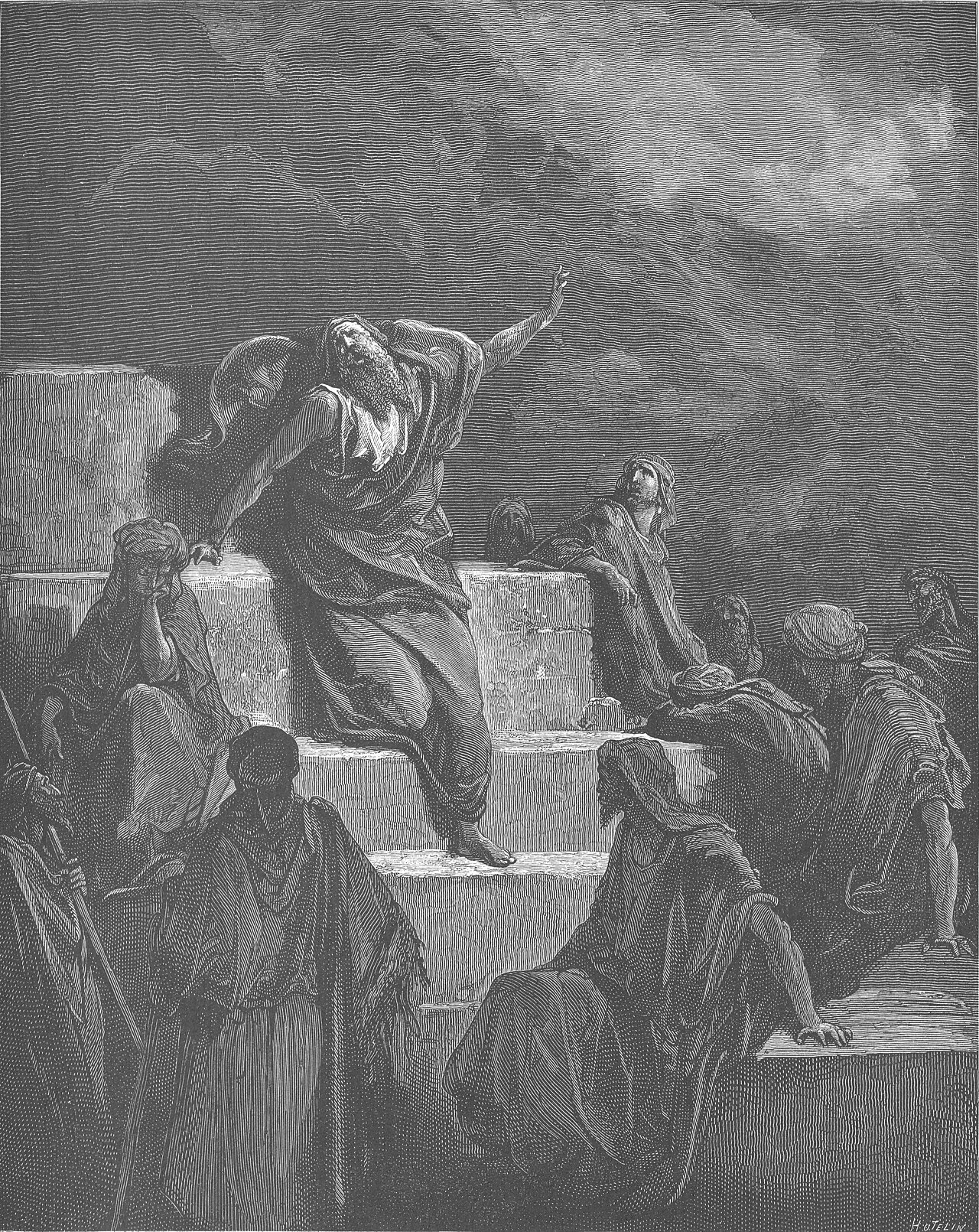
The scene opens with Jeremiah already in chains among the captives bound for Babylon, caught up in the general deportation from Ramah despite Nebuchadnezzar's earlier order that he be treated well. Nebuzaradan's speech is the chapter's surprise, a Babylonian captain of the guard stating Judah's fall in the very terms Jeremiah himself had preached for forty years, the Lord hath brought it, and done according as he hath said, because ye have sinned against the Lord. Henry and Gill both note the irony that a pagan officer speaks truer theology than the false prophets Jeremiah opposed, confessing the Lord's hand in the judgment the nation's own priests denied.
The record, by era
The Puritans and the Awakening2 voices
The word which came to Jeremiah from the Lord,.... The word of prophecy, as the Targum; but there being no prophecy in this and the following chapter, only a narration of facts, this is generally referred to what came ten days after, and which begins Jer 42:7; so Jarchi and Kimchi; all between being included in a parenthesis, or a relation of facts preparatory, to lead on to it; though Abarbinel takes it to be a general title to all histories and prophecies in this book, from henceforward to the end of it.
Ramah - Ramah was a city in the tribe of Benjamin near Gibeon. Babylon - Jeremiah was by mistake and expressly contrary to the king's orders carried amongst the other prisoners; probably the captain of the guard at that place called over his prisoners, and among them found the prophet contrary to his expectation.
The Nineteenth Century1 voice
A commentator
Albert Barnes1798–1870
Notes, Explanatory and Practical, on the Old and New Testaments (1832-1869)
As what follows is mainly a historical narrative, it seems that the title “The word ...” was appropriate not merely to a prediction of the future, but to an account of the past, if written by a prophet. The Jews regarded history as inspired if written by a seer, and thus their historical books are called “the early prophets.” Ramah - Probably all the prisoners of note were collected at Ramah indiscriminately, and examined there.
How the passage was read
What the Jewish commentators add
The word that came What is stated at the end of the section (42:7): “And it was at the end of ten days that the word of the Lord came etc.,” but he first wrote on account of what it was said to him.
1 more on this passage, in their own words ▾
“The Lord your God spoke” Why are you troubled about them? Did you not prophesy to them and they did not hearken? As it is stated in Pesikta d’Rav Kahana (p. 113a).
This section is reception history: how the passage was read and kept in the Jewish tradition. Where a reading parts from an essential of the Christian faith, the section says so at that point.
Texts and citation data: Sefaria; each excerpt follows its version’s licence. 6 further sources are cited on this chapter that carry no English text this site may quote or only restate the verse.
The words behind it
27 Hebrew wordsEvery Hebrew word of this verse in the order it stands, with what it means and the door to its own study. The last column counts the times a word stands in the whole Bible: the rarer the word, the more the places it appears belong together.
| Hebrew | Sound | Meaning | Word study | In the Bible |
|---|---|---|---|---|
| הַדָּבָ֞ר | hadavar | the word | H1697 → | 1440 times |
| אֲשֶׁר־ | ʾasher- | which | H834 → | 5497 times |
| הָיָ֤ה | hayah | it came | H1961 → | 3559 times |
| אֶֽל־ | ʾel- | to | H413 → | 5510 times |
| יִרְמְיָ֙הוּ֙ | yirmeyahu | Jeremiah | H3414 → | 147 times |
| מֵאֵ֣ת | meet | from with | H854 → | 929 times |
| יְהוָ֔ה | yahweh | Yahweh | H3068 → | 6520 times |
| אַחַ֣ר׀ | ʾachar | after | H310 → | 715 times |
| שַׁלַּ֣ח | shalach | set free | H7971 → | 845 times |
| אֹת֗וֹ | ʾoto | <obj.> him | H853 → | 10935 times |
| נְבוּזַרְאֲדָ֛ן | nevuzaradan | Nebuzaradan | H5018 → | 16 times |
| רַב־ | rav- | [the] chief of | H7227 → | 454 times |
| טַבָּחִ֖ים | tabachim | [the] bodyguards | H2876 → | 32 times |
| מִן־ | min- | from | H4480 → | 1188 times |
| הָֽרָמָ֑ה | haramah | <the> Ramah | H7414 → | |
| בְּקַחְתּ֣וֹ | bekachto | when took he | H3947 → | 966 times |
| אֹת֗וֹ | ʾoto | <obj.> him | H853 → | 10935 times |
| וְהֽוּא־ | vehu'- | and he | H1931 → | 1879 times |
| אָס֤וּר | ʾasur | [was] bound | H631 → | 72 times |
| בָּֽאזִקִּים֙ | bazikim | with <the> chains | H246 → | |
| בְּת֨וֹךְ | betokh | in among | H8432 → | 418 times |
| כָּל־ | kol- | all | H3605 → | 5413 times |
| גָּל֤וּת | galut | [the] exile[s] of | H1546 → | 15 times |
| יְרוּשָׁלִַ֙ם֙ | yerushalim | Jerusalem | H3389 → | 643 times |
| וִֽיהוּדָ֔ה | vihudah | and Judah | H3063 → | 819 times |
| הַמֻּגְלִ֖ים | hamuglim | who were being taken into exile | H1540 → | 186 times |
| בָּבֶֽלָה׃ | bavelah | Babylon towards | H894 → | 262 times |
הַדָּבָ֞רthe word
hadavarH1697 →1440 times
אֲשֶׁר־which
ʾasher-H834 →5497 times
הָיָ֤הit came
hayahH1961 →3559 times
אֶֽל־to
ʾel-H413 →5510 times
יִרְמְיָ֙הוּ֙Jeremiah
yirmeyahuH3414 →147 times
מֵאֵ֣תfrom with
meetH854 →929 times
יְהוָ֔הYahweh
yahwehH3068 →6520 times
אַחַ֣ר׀after
ʾacharH310 →715 times
שַׁלַּ֣חset free
shalachH7971 →845 times
אֹת֗וֹ<obj.> him
ʾotoH853 →10935 times
נְבוּזַרְאֲדָ֛ןNebuzaradan
nevuzaradanH5018 →16 times
רַב־[the] chief of
rav-H7227 →454 times
טַבָּחִ֖ים[the] bodyguards
tabachimH2876 →32 times
מִן־from
min-H4480 →1188 times
הָֽרָמָ֑ה<the> Ramah
haramahH7414 →
בְּקַחְתּ֣וֹwhen took he
bekachtoH3947 →966 times
אֹת֗וֹ<obj.> him
ʾotoH853 →10935 times
וְהֽוּא־and he
vehu'-H1931 →1879 times
אָס֤וּר[was] bound
ʾasurH631 →72 times
בָּֽאזִקִּים֙with <the> chains
bazikimH246 →
בְּת֨וֹךְin among
betokhH8432 →418 times
כָּל־all
kol-H3605 →5413 times
גָּל֤וּת[the] exile[s] of
galutH1546 →15 times
יְרוּשָׁלִַ֙ם֙Jerusalem
yerushalimH3389 →643 times
וִֽיהוּדָ֔הand Judah
vihudahH3063 →819 times
הַמֻּגְלִ֖יםwho were being taken into exile
hamuglimH1540 →186 times
בָּבֶֽלָה׃Babylon towards
bavelahH894 →262 times
A shaded row is a word that stands 400 times or fewer in the Bible.
The walk
8 stopsEach card is a verse this one points to, and under it the verses that one points to in turn. Where several paths arrive at the same place, that place is listed first: the text keeps returning to it.
Through
Jeremiah 31:15This is what the LORD says: “A voice is heard in Ramah, mourning and great weeping, Rachel weeping for her children, and refusing to be comforted, because they are no more.”
it leads to
- Matthew 2:16–18
When Herod saw that he had been outwitted by the Magi, he was filled with rage. Sending orders, he put to death all the boys in Bethlehem and its vicinity who were two years…
- Psalms 77:2
In the day of trouble I sought the Lord; through the night my outstretched hands did not grow weary; my soul refused to be comforted.
- Matthew 2:16–18
Through
Acts 21:13Then Paul answered, “Why are you weeping and breaking my heart? I am ready not only to be bound, but also to die in Jerusalem for the name of the Lord Jesus.”
it leads to
- Acts 20:24
But I consider my life of no value to me, if only I may finish my course and complete the ministry I have received from the Lord Jesus—the ministry of testifying to the good…
- Philippians 2:17
But even if I am being poured out like a drink offering on the sacrifice and service of your faith, I am glad and rejoice with all of you.
- Philippians 1:20–21
I eagerly expect and hope that I will in no way be ashamed, but will have complete boldness so that now as always Christ will be exalted in my body, whether by life or…
- Acts 20:24
Through
Ephesians 6:20for which I am an ambassador in chains. Pray that I may proclaim it fearlessly, as I should.
it leads to
- 2 Corinthians 5:20
Therefore we are ambassadors for Christ, as though God were making His appeal through us. We implore you on behalf of Christ: Be reconciled to God.
- Colossians 4:4
Pray that I may declare it clearly, as I should.
- 2 Timothy 2:9
for which I suffer to the extent of being chained like a criminal. But the word of God cannot be chained!
- 2 Corinthians 5:20
About Jeremiah
Who and where
5 names in this verse with a page on the site.
- PersonPatriarchsJudahJacob's fourth son who pledges himself for Benjamin; the tribe that carries the scepter to Shiloh (49:10) and the line to Christ (…
- PersonLate monarchy / ExileJeremiahPriest of Anathoth called before birth to uproot and to plant; the weeping prophet of Jerusalem's fall who bought a field in the s…
- PlaceBabil Governorate (archaeological site)BabylonAncient Mesopotamian city and imperial capital; site of the Israelite exile and a recurring biblical symbol of worldly power.
- PlaceHill country of EphraimRamahSamuel's home town, the seat of his circuit as judge, the place David fled to, and the prophet's burial place.
- PlaceJerusalemJerusalemThe city David took from the Jebusites and made his capital, where Solomon built the temple, where Christ was crucified and rose,…
This page draws on Albert Barnes, Notes, Explanatory and Practical, on the Old and New Testaments (1832-1869); Jerome, Against Jovinianus 1.33; John Gill, Exposition of the Old Testament; John Gill, Exposition of the Old Testament (1748-1763); John Wesley, Explanatory Notes upon the Old Testament and Matthew Henry, Commentary on the Whole Bible.