
Jeremiah 35:10
in Jeremiah 35But we have lived in tents and have obeyed and done exactly as our forefather Jonadab commanded us.
BSB
The same verse in ASV and KJV ▾
ASV
but we have dwelt in tents, and have obeyed, and done according to all that Jonadab our father commanded us.
KJV
But we have dwelt in tents, and have obeyed, and done according to all that Jonadab our father commanded us.
⋯
This verse in Jeremiah 35
Commentary
3 notes on this verseBut we have dwelt in tents,.... Ever since, until very lately, when they had taken up their dwelling in Jerusalem; the reason of which is presently given: and have obeyed, and done according to all Jonadab our father commanded us; and should it be objected, that in one point they had not obeyed, in that they had left their tents, and now dwelt in Jerusalem; they had this to say in answer to it, and as the reason of their so doing, as follows:
This site's exposition
We will drink no wine
on Jeremiah 35:6-12
The Rechabites answer with their whole history: Jonadab the son of Rechab, the ally who rode with Jehu against Baal two centuries earlier, bound his sons to a permanent discipline, no wine, no houses, no fields, a tent-dwelling life kept so they would remain strangers in the land. They report keeping it whole, we, our wives, our sons, nor our daughters, for as long as the command has stood, and explain their presence in Jerusalem as a wartime exception forced by the Chaldean and Syrian armies rather than a change of heart. Gill and Clarke both read the clan's fidelity across two centuries as the whole force of the object lesson, an ancestral rule about wine kept perfectly against a covenant with the living God kept hardly at all.
The record, by era
The Puritans and the Awakening1 voice
They had in their respective generations all of them obeyed the voice of Jonadab their father, had done according to all that he commanded them. They drank no wine, though they dwelt in a country where was plenty of it; their wives and children drank no wine, for those that are temperate themselves should take care that all under their charge should be so too.
How the passage was read
What the Jewish commentators add
On the verses either side of this one
And it came to pass when Nebuchadrezzar..came up Perforce we came to the city. Therefore, we are now dwelling in houses.
This section is reception history: how the passage was read and kept in the Jewish tradition. Where a reading parts from an essential of the Christian faith, the section says so at that point.
Texts and citation data: Sefaria; each excerpt follows its version’s licence. 6 further sources are cited on this chapter that carry no English text this site may quote or only restate the verse.
The words behind it
9 Hebrew wordsEvery Hebrew word of this verse in the order it stands, with what it means and the door to its own study. The last column counts the times a word stands in the whole Bible: the rarer the word, the more the places it appears belong together.
| Hebrew | Sound | Meaning | Word study | In the Bible |
|---|---|---|---|---|
| וַנֵּ֖שֶׁב | vaneshev | and we have dwelt | H3427 → | 1079 times |
| בָּֽאֳהָלִ֑ים | boohalim | in <the> tents | H168 → | 345 times |
| וַנִּשְׁמַ֣ע | vanishma' | and we have obeyed | H8085 → | 1159 times |
| וַנַּ֔עַשׂ | vanaas | and we have done | H6213 → | 2628 times |
| כְּכֹ֥ל | kekhol | according to all | H3605 → | 5413 times |
| אֲשֶׁר־ | ʾasher- | that | H834 → | 5497 times |
| צִוָּ֖נוּ | tzivanu | he commanded us | H6680 → | 494 times |
| יוֹנָדָ֥ב | yonadav | Jonadab | H3122 → | 7 times |
| אָבִֽינוּ׃ | ʾavinu | ancestor our | H1 → | 1212 times |
וַנֵּ֖שֶׁבand we have dwelt
vaneshevH3427 →1079 times
בָּֽאֳהָלִ֑יםin <the> tents
boohalimH168 →345 times
וַנִּשְׁמַ֣עand we have obeyed
vanishma'H8085 →1159 times
וַנַּ֔עַשׂand we have done
vanaasH6213 →2628 times
כְּכֹ֥לaccording to all
kekholH3605 →5413 times
אֲשֶׁר־that
ʾasher-H834 →5497 times
צִוָּ֖נוּhe commanded us
tzivanuH6680 →494 times
יוֹנָדָ֥בJonadab
yonadavH3122 →7 times
אָבִֽינוּ׃ancestor our
ʾavinuH1 →1212 times
A shaded row is a word that stands 400 times or fewer in the Bible.
About Jeremiah
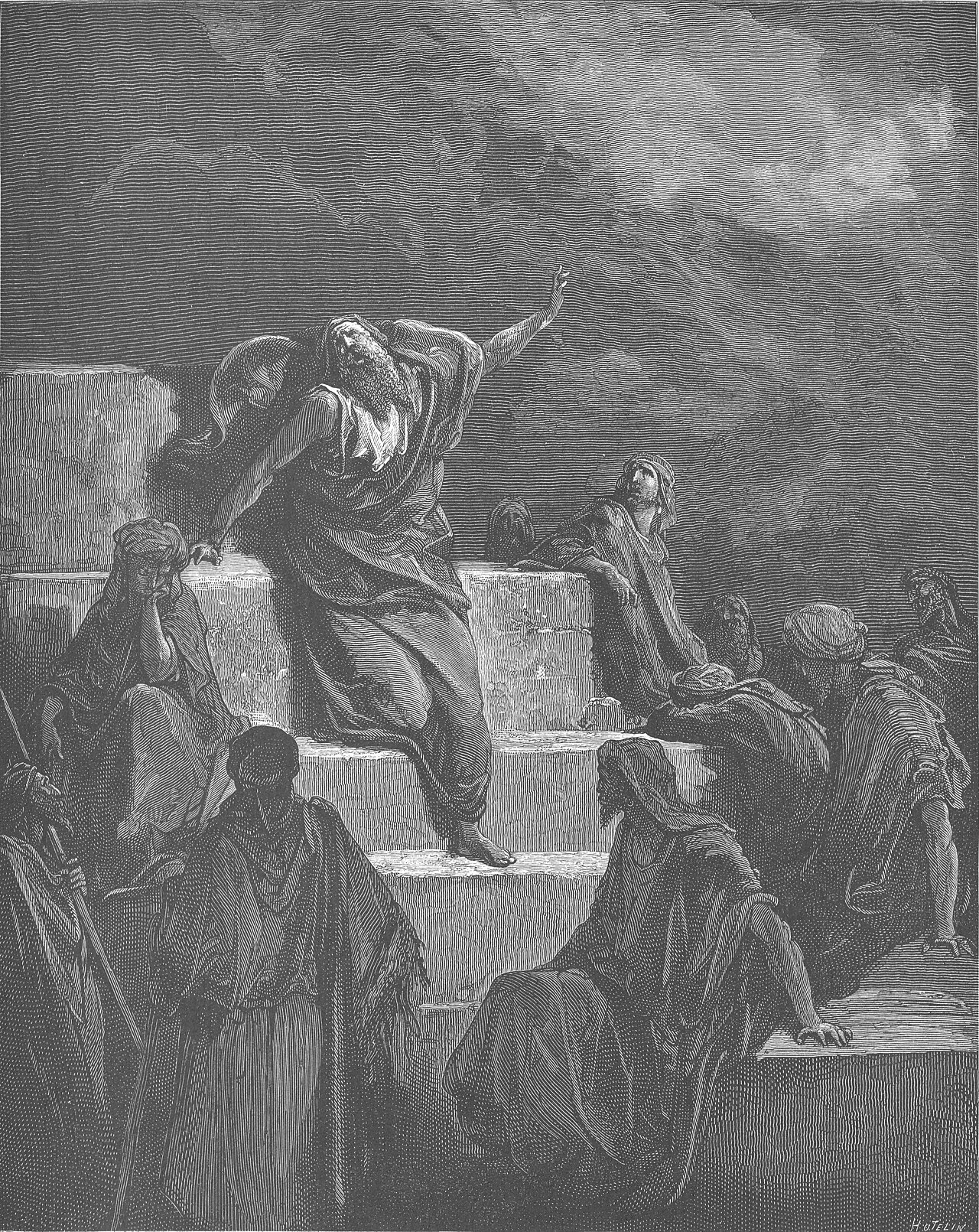
This page draws on Adam Clarke, Commentary on the Bible; John Gill, Exposition of the Old Testament (1748-1763); John Gill, Exposition of the Old Testament and Matthew Henry, Commentary on the Whole Bible.