
Judges 4:18
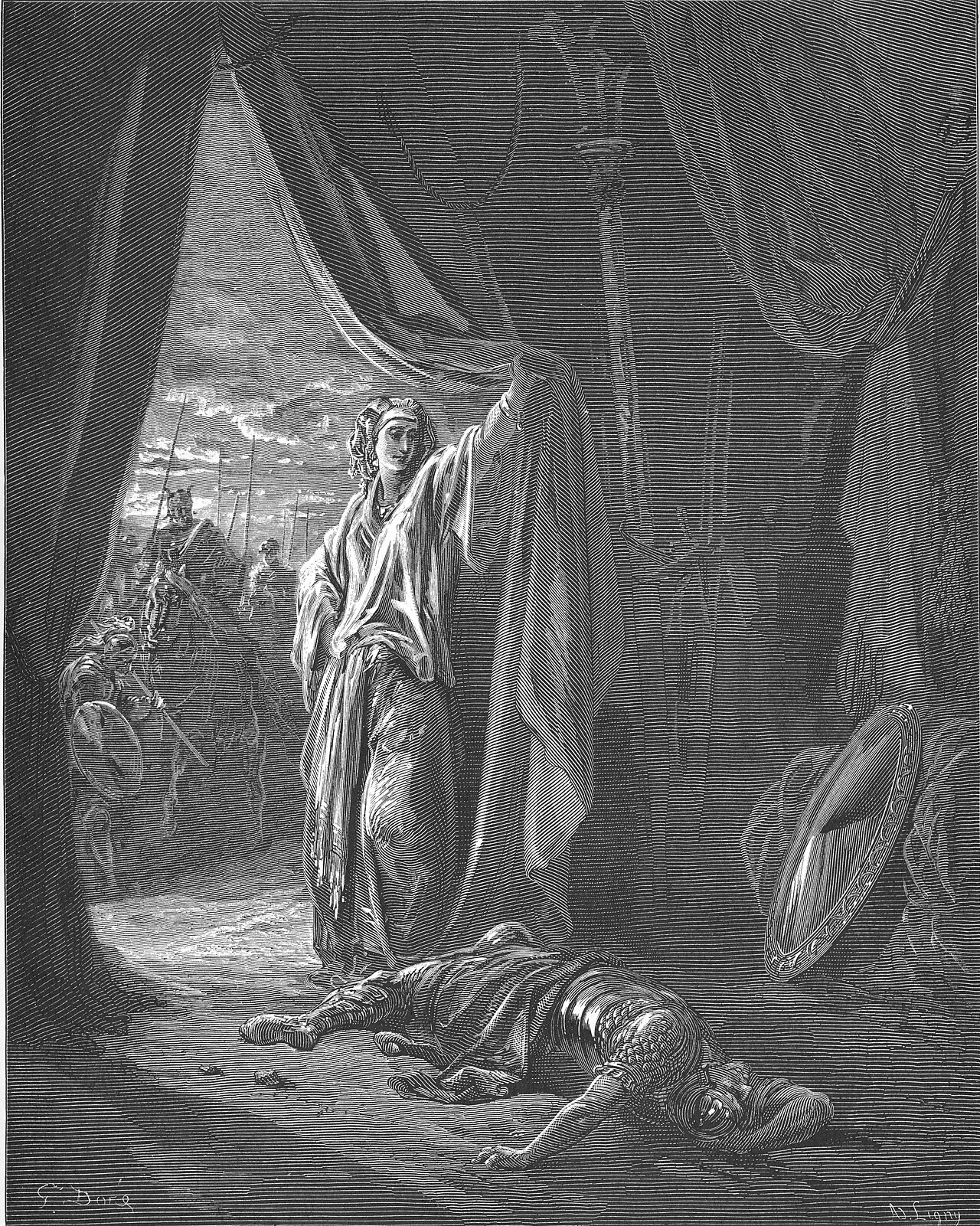
in Judges 4Jael went out to greet Sisera and said to him, “Come in, my lord. Come in with me. Do not be afraid.” So he entered her tent, and she covered him with a blanket.
BSB
The same verse in ASV and KJV ▾
ASV
And Jael went out to meet Sisera, and said unto him, Turn in, my lord, turn in to me; fear not. And he turned in unto her into the tent, and she covered him with a rug.
KJV
And Jael went out to meet Sisera, and said unto him, Turn in, my lord, turn in to me; fear not. And when he had turned in unto her into the tent, she covered him with a mantle.
⋯
This verse in Judges 4
Commentary
5 notes on this verseJael went out to meet Sisera - He preferred the woman’s tent because of secrecy; for, according to the etiquette of the eastern countries, no person ever intrudes into the apartments of the women. And in every dwelling the women have a separate apartment.
This site's exposition
to the tent of Jael
on Judges 4:17-18
The peace between Jabin and the house of Heber is stated before Sisera reaches the tent, so the reader is told why he runs to that door. Adam Clarke notes that a man would not enter the women's quarters without leave, which made it the one place a pursuer would pass by. Jael goes out to meet him, tells him to fear not, and covers him with a mantle, which is what a host does for a guest.
The record, by era
The Puritans and the Awakening3 voices
Was he weary? she finds him a very convenient place to repose himself in, and recruit his strength. Was he thirsty? well he might. Did he want a little water to cool his tongue? the best liquor her tent afforded was at his service, and that was milk (
quarantine:debris (2026-07-29) — unbalanced-parens
And Jael went out to meet Sisera,....
All expressions of care for his safety. Only when he desired her to tell a lie for him, and to say he was not there, she declined making any such promise,
How the passage was read
What the Jewish commentators add
On the verses either side of this one
And Sisera had fled: He did not flee to the place that his camp fled, as they fled towards their land, which was Haroshet-hagoyim; and Barak and his people chased after them and smote them with the edge of the sword. But Sisera knew that he could not escape by [just] fleeing, for they would catch up to him. So he fled to another place, in which they would not notice him and chase after him.
This section is reception history: how the passage was read and kept in the Jewish tradition. Where a reading parts from an essential of the Christian faith, the section says so at that point.
Texts and citation data: Sefaria; each excerpt follows its version’s licence. 4 further sources are cited on this chapter that carry no English text this site may quote or only restate the verse.
The words behind it
17 Hebrew wordsEvery Hebrew word of this verse in the order it stands, with what it means and the door to its own study. The last column counts the times a word stands in the whole Bible: the rarer the word, the more the places it appears belong together.
| Hebrew | Sound | Meaning | Word study | In the Bible |
|---|---|---|---|---|
| וַתֵּצֵ֣א | vatetze' | and she went out | H3318 → | 1067 times |
| יָעֵל֮ | yael | Jael | H3278 → | 6 times |
| לִקְרַ֣את | likrat | to meet | H7122 → | 139 times |
| סִֽיסְרָא֒ | sisera' | Sisera | H5516 → | 21 times |
| וַתֹּ֣אמֶר | vatomer | and she said | H559 → | 5305 times |
| אֵלָ֗יו | ʾelav | to him | H413 → | 5510 times |
| סוּרָ֧ה | surah | turn aside ! | H5493 → | 299 times |
| אֲדֹנִ֛י | ʾadoni | O lord my | H113 → | 333 times |
| סוּרָ֥ה | surah | turn aside ! | H5493 → | 299 times |
| אֵלַ֖י | ʾelai | to me | H413 → | 5510 times |
| אַל־ | ʾal- | may not | H408 → | 724 times |
| תִּירָ֑א | tira' | you be afraid | H3372 → | 315 times |
| וַיָּ֤סַר | vaiyasar | and he turned aside | H5493 → | 299 times |
| אֵלֶ֙יהָ֙ | ʾeleiha | to her | H413 → | 5510 times |
| הָאֹ֔הֱלָה | haohelah | the tent towards | H168 → | 345 times |
| וַתְּכַסֵּ֖הוּ | vatekhasehu | and she covered him | H3680 → | |
| בַּשְּׂמִיכָֽה׃ | basemikhah | with the covering | H8063 → |
וַתֵּצֵ֣אand she went out
vatetze'H3318 →1067 times
יָעֵל֮Jael
yaelH3278 →6 times
לִקְרַ֣אתto meet
likratH7122 →139 times
סִֽיסְרָא֒Sisera
sisera'H5516 →21 times
וַתֹּ֣אמֶרand she said
vatomerH559 →5305 times
אֵלָ֗יוto him
ʾelavH413 →5510 times
סוּרָ֧הturn aside !
surahH5493 →299 times
אֲדֹנִ֛יO lord my
ʾadoniH113 →333 times
סוּרָ֥הturn aside !
surahH5493 →299 times
אֵלַ֖יto me
ʾelaiH413 →5510 times
אַל־may not
ʾal-H408 →724 times
תִּירָ֑אyou be afraid
tira'H3372 →315 times
וַיָּ֤סַרand he turned aside
vaiyasarH5493 →299 times
אֵלֶ֙יהָ֙to her
ʾeleihaH413 →5510 times
הָאֹ֔הֱלָהthe tent towards
haohelahH168 →345 times
וַתְּכַסֵּ֖הוּand she covered him
vatekhasehuH3680 →
בַּשְּׂמִיכָֽה׃with the covering
basemikhahH8063 →
A shaded row is a word that stands 400 times or fewer in the Bible.
The walk
5 stopsEach card is a verse this one points to, and under it the verses that one points to in turn. Where several paths arrive at the same place, that place is listed first: the text keeps returning to it.
Through
2 Kings 6:19And Elisha told them, “This is not the way, and this is not the city. Follow me, and I will take you to the man you are seeking.” And he led them to Samaria.
it leads to
- Matthew 16:24
Then Jesus told His disciples, “If anyone wants to come after Me, he must deny himself and take up his cross and follow Me.
- 2 Samuel 16:18–19
“Not at all,” Hushai answered. “For the one chosen by the LORD, by the people, and by all the men of Israel—his I will be, and with him I will remain.
- Mark 8:34
Then Jesus called the crowd to Him along with His disciples, and He told them, “If anyone wants to come after Me, he must deny himself and take up his cross and follow Me.
- Luke 24:16
But their eyes were kept from recognizing Him.
- Luke 9:23
Then Jesus said to all of them, “If anyone wants to come after Me, he must deny himself and take up his cross daily and follow Me.
- Matthew 16:24
Where this verse is studied
About Judges
This page draws on Adam Clarke, Commentary on the Bible; John Gill, Exposition of the Old Testament (1748-1763); Keil and Delitzsch, Biblical Commentary on the Old Testament: Joshua, Judges, Ruth and Matthew Henry, Commentary on the Whole Bible.