
Isaiah 7:8
in Isaiah 7For the head of Aram is Damascus, and the head of Damascus is Rezin. Within sixty-five years Ephraim will be shattered as a people.
BSB
The same verse in ASV and KJV ▾
ASV
For the head of Syria is Damascus, and the head of Damascus is Rezin; and within threescore and five years shall Ephraim be broken in pieces, so that it shall not be a people:
KJV
For the head of Syria is Damascus, and the head of Damascus is Rezin; and within threescore and five years shall Ephraim be broken, that it be not a people.
⋯
This verse in Isaiah 7
Commentary
9 notes on this verseBut it is hard to allow that. Others make it to be sixty-five years from the time that the prophet Amos first foretold the ruin of the kingdom of the ten tribes; and some late interpreters make it to look as far forward as the last desolation of that country by Esarhaddon, which was about sixty-five years after this; then Ephraim was so broken that it was no more a people.
This site's exposition
It shall not stand, neither shall it come to pass
on Isaiah 7:7-9
The message is flat refusal of the coalition's plan: it shall not stand, neither shall it come to pass, because Syria and Ephraim are named by their capitals, Damascus and Samaria, and by the men who lead them, Rezin and Remaliah's son, exhausted powers rather than fixed threats. The sixty-five year span set for Ephraim's dissolution as a people looks past the present war toward the later Assyrian deportations and resettlement, and the commentators differ on which event closes the count. Verse 9 ends on a Hebrew wordplay the English cannot fully carry, the same root standing behind believe and be established, so that unbelief and instability are named as one failure.
The record, by era
The Church Fathers1 voice
(Verse 3, 4 and following) And the Lord said to Isaiah: Go out to meet Ahaz, you and your son Shear-Jashub, at the end of the conduit of the upper pool on the highway to the Fuller's Field. And say to him: Take heed, be quiet, do not fear, and do not let your heart be faint because of these two smoldering stumps of firebrands, at the fierce anger of Rezin and Syria, and the son of Remaliah.
The Medieval Church1 voice
Third, as to the destruction of the enemies; and first, as to the Assyrians: but the head of Syria, as if to say: but in the meantime, and before they are destroyed, the head of Syria is Damascus, and the head of Damascus is Rasin, …
The Puritans and the Awakening2 voices
For the head of Syria is Damascus,....
The confirmation of this by a sign which God gave to Ahaz, when he refused to ask one, referring to Christ, and our redemption by him,
The Nineteenth Century1 voice
A commentator
Jamieson, Fausset & Brown1802–1910
Commentary Critical and Explanatory on the Whole Bible (1871)
proposed
But the final one which utterly "broke" up Israel so as to be "not a people," accompanied by a colonization of Samaria with foreigners, was under Esar-haddon, who carried away Manasseh, king of Judah, also, in the twenty-second year of his reign, sixty-five years from the utterance of this prophecy (compare Ezr 4:2, 3, 10, with 2Ki 17:24;
quarantine:debris (2026-07-29) — unbalanced-parens
2 more voices on this verse
The Nineteenth Century2 voices
For the head of Syria, etc. - “Though the head of Syria be Damascus, And the head of Damascus Retsin; Yet within threescore and five years Ephraim shall be broken, that he be no more a people: And the head of Ephraim be Samaria; And the head of Samaria Remaliah’s son. “Here are six lines, or three distichs, the order of which seems to have been disturbed by a transposition, occasioned by three of the lines beginning with the same word וראש verosh, “and the head,” which three lines ought not to have been separated by any other line intervening; but a copyist, having written the first of them, and casting his eye on the third, might easily proceed to write after the first line beginning with וראש verosh, that which ought to have followed the third line beginning with וראש verosh.
A commentator
Albert Barnes1798–1870
Notes, Explanatory and Practical, on the Old and New Testaments (1832-1869)
proposed
For the head of Syria - The “capital.” The “head” is often used in this sense. Is Damascus - For an account of this city, see the notes at Isa 17:1; compare the notes at Act 9:2. The sense of this passage is, ‘Do not be alarmed as if Rezin was about to enlarge his kingdom, by taking Judea and making Jerusalem his capital. The revolution which these kings contemplate cannot be accomplished. The kingdoms of Syria and Israel shall not be enlarged by the conquest of Judah. The center of their power shall remain where it is now, and their dominion shall not be extended by conquest. The capital of Syria is, and shall continue to be, Damascus. The king of Syria shall be confined within his present limits, and Jerusalem, therefore, shall be safe.’ The head of Damascus - The “ruler, or king” of Damascus is Rezin. And within threescore and five years - There has been some inquiry why “Ephraim” is mentioned here, as the prophet in the former part of the verse was speaking of “Syria.” But it should be remembered that he was speaking of Syria and Ephraim as “confederate.” It was natural, therefore, to intimate, in close connection, that no fear was to be apprehended from either of them. There has been much difficulty experienced in establishing the fact of the exact fulfillment of this, and in fixing the precise event to which it refers. One catastrophe happened to the kingdom of Ephraim or Israel within one or two years of this time, when Tiglath-pileser, king of Assyria, invaded the land and carried no small part of the people to Assyria; 2Ki 15:29. Another occurred in the next reign, the reign of Hoshea, king of Israel, when Shalmaneser king of Assyria took Samaria, and carried Israel away captive into Assyria; 2Ki 17:1-6. This occurred in the twelfth year of Ahaz. […]
The words behind it
14 Hebrew wordsEvery Hebrew word of this verse in the order it stands, with what it means and the door to its own study. The last column counts the times a word stands in the whole Bible: the rarer the word, the more the places it appears belong together.
| Hebrew | Sound | Meaning | Word study | In the Bible |
|---|---|---|---|---|
| כִּ֣י | ki | for | H3588 → | 4482 times |
| רֹ֤אשׁ | rosh | [is] [the] head of | H7218 → | 599 times |
| אֲרָם֙ | ʾaram | Aram | H758 → | 143 times |
| דַּמֶּ֔שֶׂק | damesek | Damascus | H1834 → | 45 times |
| וְרֹ֥אשׁ | verosh | and [is] [the] head of | H7218 → | 599 times |
| דַּמֶּ֖שֶׂק | damesek | Damascus | H1834 → | 45 times |
| רְצִ֑ין | retzin | Rezin | H7526 → | 11 times |
| וּבְע֗וֹד | uveod | and in yet | H5750 → | 490 times |
| שִׁשִּׁ֤ים | shishim | sixty | H8346 → | |
| וְחָמֵשׁ֙ | vechamesh | and five | H2568 → | 343 times |
| שָׁנָ֔ה | shanah | year[s] | H8141 → | 877 times |
| יֵחַ֥ת | yechat | it will be shattered | H2865 → | 52 times |
| אֶפְרַ֖יִם | ʾefrayim | Ephraim | H669 → | 180 times |
| מֵעָֽם׃ | meam | from a people | H5971 → | 1873 times |
כִּ֣יfor
kiH3588 →4482 times
רֹ֤אשׁ[is] [the] head of
roshH7218 →599 times
אֲרָם֙Aram
ʾaramH758 →143 times
דַּמֶּ֔שֶׂקDamascus
damesekH1834 →45 times
וְרֹ֥אשׁand [is] [the] head of
veroshH7218 →599 times
דַּמֶּ֖שֶׂקDamascus
damesekH1834 →45 times
רְצִ֑יןRezin
retzinH7526 →11 times
וּבְע֗וֹדand in yet
uveodH5750 →490 times
שִׁשִּׁ֤יםsixty
shishimH8346 →
וְחָמֵשׁ֙and five
vechameshH2568 →343 times
שָׁנָ֔הyear[s]
shanahH8141 →877 times
יֵחַ֥תit will be shattered
yechatH2865 →52 times
אֶפְרַ֖יִםEphraim
ʾefrayimH669 →180 times
מֵעָֽם׃from a people
meamH5971 →1873 times
A shaded row is a word that stands 400 times or fewer in the Bible.
The walk
8 stopsEach card is a verse this one points to, and under it the verses that one points to in turn. Where several paths arrive at the same place, that place is listed first: the text keeps returning to it.
Through
Isaiah 8:4For before the boy knows how to cry ‘Father’ or ‘Mother,’ the wealth of Damascus and the plunder of Samaria will be carried off by the king of Assyria.”
it leads to
- Romans 9:11
Yet before the twins were born or had done anything good or bad, in order that God’s plan of election might stand,
- 2 Kings 16:9
So the king of Assyria responded to him, marched up to Damascus, and captured it. He took its people to Kir as captives and put Rezin to death.
- 2 Kings 17:5–6
Then the king of Assyria invaded the whole land, marched up to Samaria, and besieged it for three years.
- Isaiah 7:15–16
By the time He knows enough to reject evil and choose good, He will be eating curds and honey.
- Romans 9:11
Through
Ezra 4:2they approached Zerubbabel and the heads of the families, saying, “Let us build with you because, like you, we seek your God and have been sacrificing to Him since the time of King Esar-haddon…
it leads to
- 2 Kings 19:37
One day, while he was worshiping in the temple of his god Nisroch, his sons Adrammelech and Sharezer put him to the sword and escaped to the land of Ararat. And his son Esar-haddon…
- 2 Kings 17:24
Then the king of Assyria brought people from Babylon, Cuthah, Avva, Hamath, and Sepharvaim and settled them in the towns of Samaria to replace the Israelites. They took possession of Samaria and lived in…
- Galatians 2:4
This issue arose because some false brothers had come in under false pretenses to spy on our freedom in Christ Jesus, in order to enslave us.
- 2 Kings 19:37
Through
Genesis 14:15During the night, Abram divided his forces and routed Chedorlaomer’s army, pursuing them as far as Hobah, north of Damascus.
it leads to
- Acts 9:2
and requested letters to the synagogues in Damascus, so that if he found any men or women belonging to the Way, he could bring them as prisoners to Jerusalem.
- Acts 9:2
Where this verse is studied
On this page
Studies6
About Isaiah
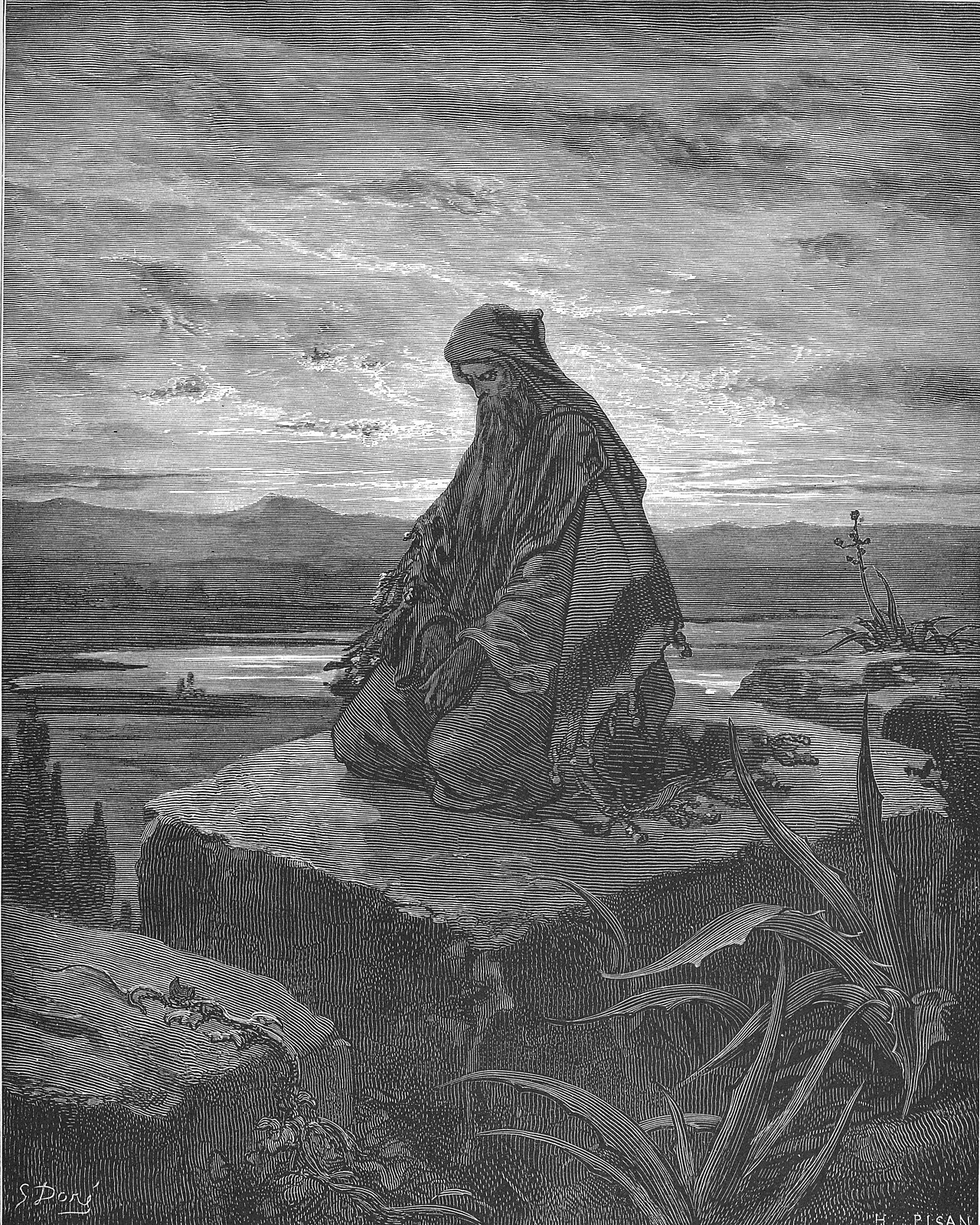
Who and where
2 names in this verse with a page on the site.
This page draws on 9 works. Open the list of works
This page draws on Adam Clarke, Commentary on the Bible; Albert Barnes, Notes on the Book of Isaiah; Albert Barnes, Notes, Explanatory and Practical, on the Old and New Testaments (1832-1869); Franz Delitzsch, Biblical Commentary on the Prophecies of Isaiah; Jamieson, Fausset & Brown, Commentary Critical and Explanatory on the Whole Bible; Jerome, Commentary on Isaiah; John Gill, Exposition of the Old Testament (1748-1763); Matthew Henry, Commentary on the Whole Bible and Thomas Aquinas, Commentary on Isaiah.