
Genesis 12:11
in Genesis 12As he was about to enter Egypt, he said to his wife Sarai, “Look, I know that you are a beautiful woman,
BSB
The same verse in ASV and KJV ▾
ASV
And it came to pass, when he was come near to enter into Egypt, that he said unto Sarai his wife, Behold now, I know that thou art a fair woman to look upon:
KJV
And it came to pass, when he was come near to enter into Egypt, that he said unto Sarai his wife, Behold now, I know that thou art a fair woman to look upon:
⋯
This verse in Genesis 12
Commentary
10 notes on this verseThere came a famine, and so he went to Egypt. He knew that in Egypt the dissipation of youth was widespread, characterized by lust, impudent desires and unrestrained passions. He understood that among such men the modesty of his wife would be defenseless and that her beauty would be a danger for him. So he told his wife to say that she was his sister. By this we are taught that it is not so much beauty that one should seek in a wife, for this often leads to the death of the husband.
This site's exposition
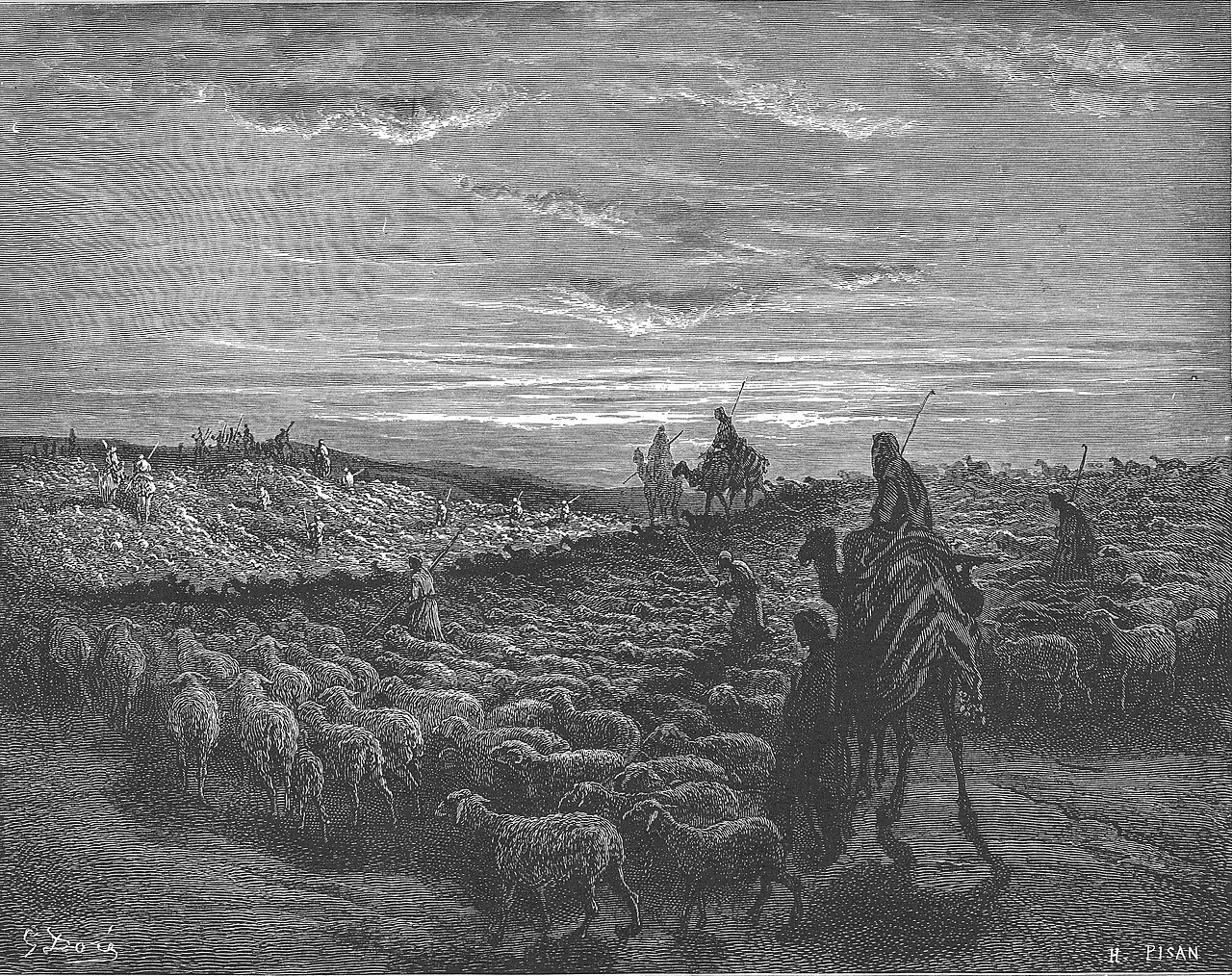
As he was about to enter Egypt
on Genesis 12:11-12
At the border Abram tells Sarai what he expects, that the Egyptians will see a beautiful woman and want her. He reads himself as the one obstacle, the husband they will kill to take the wife. The promise of verse 2 has no place in the plan.
The record, by era
The Church Fathers2 voices
Abraham gave a human reason as human beings do. Nevertheless, because Sarah thought it was Abraham who was sterile, she was taken to the palace.
On the literal level Abraham made an intelligent compromise with the lustfulness of the Egyptians, being certain that God, who had made him leave his own country, would watch over his marriage.
The Medieval Church1 voice
And when he was about to enter Egypt, he said to Sarai his wife: "I know that you are a beautiful woman, and that when the Egyptians see you, they will say that you are his wife, and they will kill me and keep you …
The Puritans and the Awakening2 voices
Abram heartily espoused God's cause, and here God promiseth to interest himself in his. In thee shall all the families of the earth be blessed - This was the promise that crowned all the rest, for it points at the Messiah, in whom all the promises are yea and amen. So Abram departed - He was not disobedient to the heavenly vision.
And it came to pass, when he was come near to enter into Egypt,....
3 more voices on this verse
The Nineteenth Century3 voices
Thou art a fair woman to look upon - Widely differing in her complexion from the swarthy Egyptians, and consequently more likely to be coveted by them. It appears that Abram supposed they would not scruple to take away the life of the husband in order to have the undisturbed possession of the wife. The age of Sarai at this time is not well agreed on by commentators, some making her ninety, while others make her only sixty-five.
A commentator
Jamieson, Fausset & Brown1802–1910
Commentary Critical and Explanatory on the Whole Bible (1871)
The counsel of Abram to her was true in words, but it was a deception, intended to give an impression that she was no more than his sister. His conduct was culpable and inconsistent with his character as a servant of God: it showed a reliance on worldly policy more than a trust in the promise; and he not only sinned himself, but tempted Sarai to sin also.
A commentator
Jamieson, Fausset & Brown1802–1910
Commentary Critical and Explanatory on the Whole Bible (1871)
proposed
The counsel of Abram to her was true in words, but it was a deception, intended to give an impression that she was no more than his sister. His conduct was culpable and inconsistent with his character as a servant of God: it showed a reliance on worldly policy more than a trust in the promise; and he not only sinned himself, but tempted Sarai to sin also.
How the passage was read
What the Jewish commentators add
BEHOLD NOW, I KNOW, ETC. SAY, I PRAY, THOU ART MY SISTER. I do not know why Abraham was more fearful for her now than before.
1 more on this passage, in their own words ▾
Now Abraham went down to Egypt on account of the famine to dwell there in order to keep himself alive in the days of the drought, but the Egyptians oppressed him for no reason [and attempted] to take his wife.
This section is reception history: how the passage was read and kept in the Jewish tradition. Where a reading parts from an essential of the Christian faith, the section says so at that point.
Texts and citation data: Sefaria; each excerpt follows its version’s licence. 4 further sources are cited on this chapter that carry no English text this site may quote or only restate the verse.
The words behind it
17 Hebrew wordsEvery Hebrew word of this verse in the order it stands, with what it means and the door to its own study. The last column counts the times a word stands in the whole Bible: the rarer the word, the more the places it appears belong together.
| Hebrew | Sound | Meaning | Word study | In the Bible |
|---|---|---|---|---|
| וַיְהִ֕י | vayhi | and it was | H1961 → | 3559 times |
| כַּאֲשֶׁ֥ר | kaasher | just as | H834 → | 5497 times |
| הִקְרִ֖יב | hikriv | he drew near | H7126 → | 280 times |
| לָב֣וֹא | lavo' | to enter | H935 → | 2568 times |
| מִצְרָ֑יְמָה | mitzrayemah | Egypt <towards> | H4714 → | 641 times |
| וַיֹּ֙אמֶר֙ | vaiyomer | and he said | H559 → | 5305 times |
| אֶל־ | ʾel- | to | H413 → | 5510 times |
| שָׂרַ֣י | sarai | Sarai | H8297 → | 17 times |
| אִשְׁתּ֔וֹ | ʾishto | wife his | H802 → | 781 times |
| הִנֵּה־ | hineh- | here! | H2009 → | 843 times |
| נָ֣א | na' | please | H4994 → | 404 times |
| יָדַ֔עְתִּי | yada'ti | I know | H3045 → | 945 times |
| כִּ֛י | ki | that | H3588 → | 4482 times |
| אִשָּׁ֥ה | ʾishah | [are] a woman | H802 → | 781 times |
| יְפַת־ | yefat- | beautiful of | H3303 → | 42 times |
| מַרְאֶ֖ה | mareh | appearance | H4758 → | 103 times |
| אָֽתְּ׃ | ʾat | you | H859 → | 1094 times |
וַיְהִ֕יand it was
vayhiH1961 →3559 times
כַּאֲשֶׁ֥רjust as
kaasherH834 →5497 times
הִקְרִ֖יבhe drew near
hikrivH7126 →280 times
לָב֣וֹאto enter
lavo'H935 →2568 times
מִצְרָ֑יְמָהEgypt <towards>
mitzrayemahH4714 →641 times
וַיֹּ֙אמֶר֙and he said
vaiyomerH559 →5305 times
אֶל־to
ʾel-H413 →5510 times
שָׂרַ֣יSarai
saraiH8297 →17 times
אִשְׁתּ֔וֹwife his
ʾishtoH802 →781 times
הִנֵּה־here!
hineh-H2009 →843 times
נָ֣אplease
na'H4994 →404 times
יָדַ֔עְתִּיI know
yada'tiH3045 →945 times
כִּ֛יthat
kiH3588 →4482 times
אִשָּׁ֥ה[are] a woman
ʾishahH802 →781 times
יְפַת־beautiful of
yefat-H3303 →42 times
מַרְאֶ֖הappearance
marehH4758 →103 times
אָֽתְּ׃you
ʾatH859 →1094 times
A shaded row is a word that stands 400 times or fewer in the Bible.
The walk
8 stopsEach card is a verse this one points to, and under it the verses that one points to in turn. Where several paths arrive at the same place, that place is listed first: the text keeps returning to it.
Through
Proverbs 21:30There is no wisdom, no understanding, no counsel that can prevail against the LORD.
it leads to
- Acts 5:39
But if it is from God, you will not be able to stop them. You may even find yourselves fighting against God.”
- Proverbs 19:21
Many plans are in a man’s heart, but the purpose of the LORD will prevail.
- Jeremiah 9:23
This is what the LORD says: “Let not the wise man boast in his wisdom, nor the strong man in his strength, nor the wealthy man in his riches.
- Isaiah 14:27
The LORD of Hosts has purposed, and who can thwart Him? His hand is outstretched, so who can turn it back?
- 1 Corinthians 3:19–20
For the wisdom of this world is foolishness in God’s sight. As it is written: “He catches the wise in their craftiness.”
- Acts 5:39
Through
Genesis 26:7But when the men of that place asked about his wife, he said, “She is my sister.” For he was afraid to say, “She is my wife,” since he thought to himself, “The men…
it leads to
- Genesis 24:16
Now the girl was very beautiful, a virgin who had not had relations with any man. She went down to the spring, filled her jar, and came up again.
Reached by 2 separate paths from here.
- Proverbs 29:25
The fear of man is a snare, but whoever trusts in the LORD is set securely on high.
- Genesis 20:2
Abraham said of his wife Sarah, “She is my sister.” So Abimelech king of Gerar had Sarah brought to him.
- Genesis 24:16
Where this verse is studied
On this page
Studies10
About Genesis
Who and where
1 name in this verse with a page on the site.
This page draws on 9 works. Open the list of works
This page draws on Adam Clarke, Commentary on the Bible; Ambrose of Milan, ON ABRAHAM 1.2.6; Bede, Commentary on Genesis (Hexaemeron); Didymus the Blind, On Genesis; Ephrem the Syrian, COMMENTARY ON GENESIS 9:3; Jamieson, Fausset & Brown, Commentary Critical and Explanatory on the Whole Bible; John Calvin, Commentary on Genesis; John Gill, Exposition of the Old Testament (1748-1763) and John Wesley, Explanatory Notes upon the Old Testament.