
Ezra 9:12
in Ezra 9Now, therefore, do not give your daughters in marriage to their sons or take their daughters for your sons. Never seek their peace or prosperity, so that you may be strong and may eat the good things of the land, leaving it as an inheritance to your sons forever.’
BSB
The same verse in ASV and KJV ▾
ASV
now therefore give not your daughters unto their sons, neither take their daughters unto your sons, nor seek their peace or their prosperity for ever; that ye may be strong, and eat the good of the land, and leave it for an inheritance to your children for ever.
KJV
Now therefore give not your daughters unto their sons, neither take their daughters unto your sons, nor seek their peace or their wealth for ever: that ye may be strong, and eat the good of the land, and leave it for an inheritance to your children for ever.
⋯
This verse in Ezra 9
Commentary
6 notes on this verseNow therefore give not your daughters unto their sons, nor take their daughters unto your sons,.... That is, in marriage, see Deu 7:3, where the prohibition is expressed in the same language: nor seek their peace or their wealth for ever; that is, as long as they continue in their idolatries and impurities, see Deu 23:6, that ye may be strong, and eat the good of the land, and leave it for an inheritance to your children for ever; that they might be strengthened and established in the land into which they were brought, and enjoy all the good things it produced, and leave their children in the possession of it, to hold at least until the Messiah came, see Isa 1:19.
This site's exposition
what can we say after this
on Ezra 9:10-12
The confession turns to helplessness, asking "what can we say after this". He then states the law almost word for word from Deuteronomy 7:3. The stated ground is strength and the land as an inheritance, and Nehemiah 10:28 later receives those who separate themselves to the Law.
This site's exposition
Never seek their peace or prosperity
Gill finds the command against seeking their peace at Deuteronomy 23:6, and limits it to the time the peoples kept their idolatries and impurity. He takes forever to run at least until the Messiah came.
The record, by era
The Puritans and the Awakening2 voices
For sin appears sin, appears exceedingly sinful, when we compare it with the law which is broken by it. Nothing could be more express: Give not your daughters to their sons, nor take their daughters to your sons. The reason given is because, if they mingled with those nations, they would pollute themselves.
Ezra, like Barnabas when he came to Jerusalem and saw the grace of God to his brethren there, no doubt was glad, and exhorted them all that with purpose of heart they would cleave to the Lord, Acts xi.
The Nineteenth Century1 voice
A commentator
Jamieson, Fausset & Brown1802–1910
Commentary Critical and Explanatory on the Whole Bible (1871)
proposed
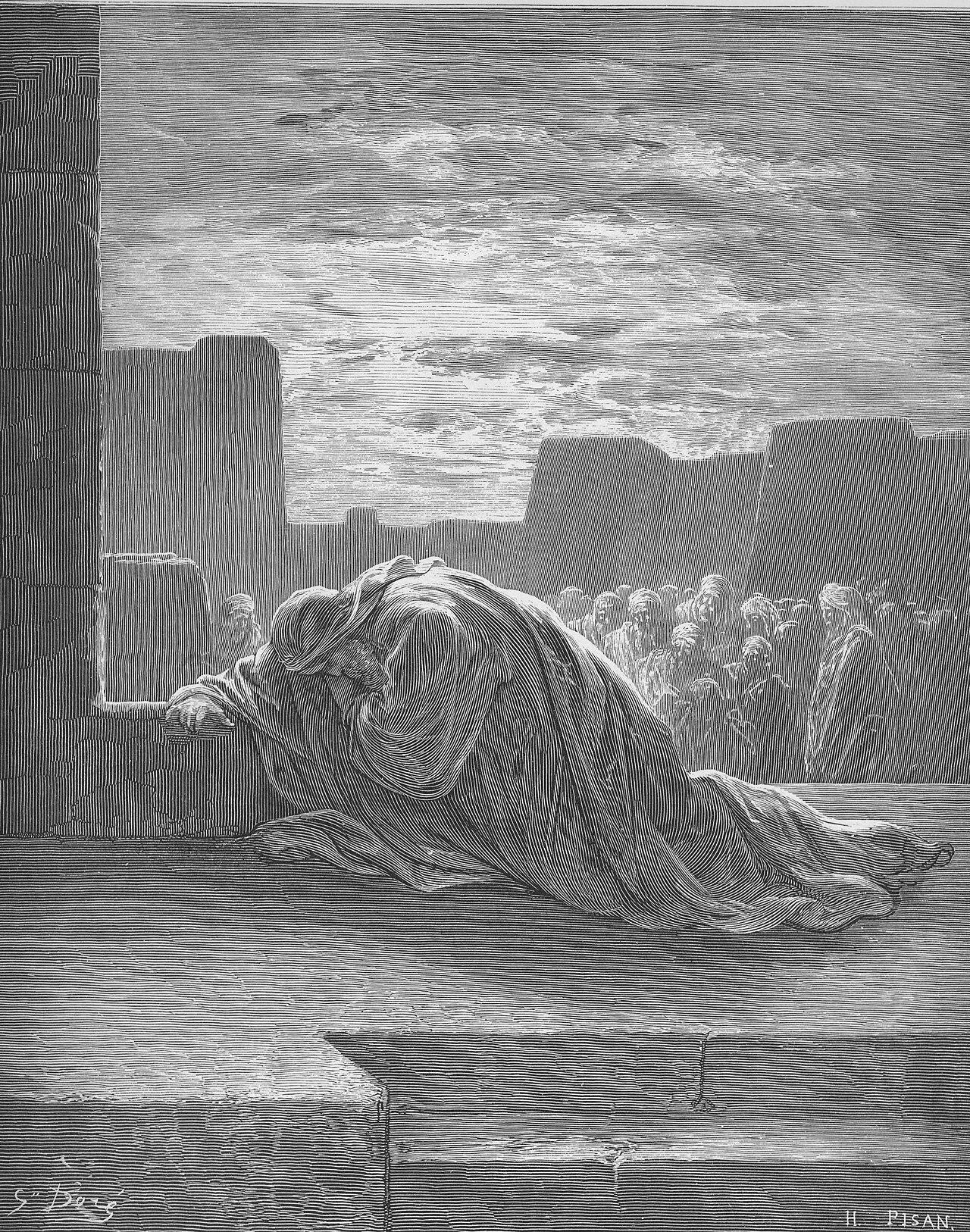
I fell upon my knees, and spread out my hands unto the Lord my God--The burden of his prayer, which was dictated by a deep sense of the emergency, was that he was overwhelmed at the flagrant enormity of this sin, and the bold impiety of continuing in it after having, as a people, so recently experienced the heavy marks of the divine displeasure.
How the passage was read
What the Jewish commentators add
and you shall cause..to inherit You shall give the land to your children as an inheritance to eternity.
1 more on this passage, in their own words ▾
And after all that has come upon us after all the calamity that has befallen us because of our evil deeds.
This section is reception history: how the passage was read and kept in the Jewish tradition. Where a reading parts from an essential of the Christian faith, the section says so at that point.
Texts and citation data: Sefaria; each excerpt follows its version’s licence. 3 further sources are cited on this chapter that carry no English text this site may quote or only restate the verse.
The words behind it
25 Hebrew wordsEvery Hebrew word of this verse in the order it stands, with what it means and the door to its own study. The last column counts the times a word stands in the whole Bible: the rarer the word, the more the places it appears belong together.
| Hebrew | Sound | Meaning | Word study | In the Bible |
|---|---|---|---|---|
| וְ֠עַתָּה | veatah | and therefore | H6258 → | 433 times |
| בְּֽנוֹתֵיכֶ֞ם | benoteikhem | daughters your | H1323 → | 588 times |
| אַל־ | ʾal- | may not | H408 → | |
| תִּתְּנ֣וּ | titenu | you give | H5414 → | 2011 times |
| לִבְנֵיהֶ֗ם | livneihem | to sons their | H1121 → | 4930 times |
| וּבְנֹֽתֵיהֶם֙ | uvenoteihem | and daughters their | H1323 → | 588 times |
| אַל־ | ʾal- | may not | H408 → | |
| תִּשְׂא֣וּ | tisu | you take | H5375 → | 656 times |
| לִבְנֵיכֶ֔ם | livneikhem | for sons your | H1121 → | 4930 times |
| וְלֹֽא־ | velo'- | and not | H3808 → | 5168 times |
| תִדְרְשׁ֧וּ | tidreshu | you must seek | H1875 → | 164 times |
| שְׁלֹמָ֛ם | shelomam | peace their | H7965 → | |
| וְטוֹבָתָ֖ם | vetoatam | and good their | H2896 → | 538 times |
| עַד־ | ʾad- | until | H5704 → | 1261 times |
| עוֹלָ֑ם | olam | perpetuity | H5769 → | 438 times |
| לְמַ֣עַן | lemaan | so that | H4616 → | |
| תֶּחֶזְק֗וּ | techezku | you may be strong | H2388 → | 291 times |
| וַאֲכַלְתֶּם֙ | vaakhaltem | and you will eat | H398 → | 810 times |
| אֶת־ | ʾet- | <obj.> | H853 → | 10935 times |
| ט֣וּב | tuv | [the] good thing[s] of | H2898 → | |
| הָאָ֔רֶץ | haaretz | the land | H776 → | 2504 times |
| וְהוֹרַשְׁתֶּ֥ם | vehorashtem | and you will cause to inherit [it] | H3423 → | |
| לִבְנֵיכֶ֖ם | livneikhem | <to> sons your | H1121 → | 4930 times |
| עַד־ | ʾad- | until | H5704 → | 1261 times |
| עוֹלָֽם׃ | olam | perpetuity | H5769 → | 438 times |
וְ֠עַתָּהand therefore
veatahH6258 →433 times
בְּֽנוֹתֵיכֶ֞םdaughters your
benoteikhemH1323 →588 times
אַל־may not
ʾal-H408 →
תִּתְּנ֣וּyou give
titenuH5414 →2011 times
לִבְנֵיהֶ֗םto sons their
livneihemH1121 →4930 times
וּבְנֹֽתֵיהֶם֙and daughters their
uvenoteihemH1323 →588 times
אַל־may not
ʾal-H408 →
תִּשְׂא֣וּyou take
tisuH5375 →656 times
לִבְנֵיכֶ֔םfor sons your
livneikhemH1121 →4930 times
וְלֹֽא־and not
velo'-H3808 →5168 times
תִדְרְשׁ֧וּyou must seek
tidreshuH1875 →164 times
שְׁלֹמָ֛םpeace their
shelomamH7965 →
וְטוֹבָתָ֖םand good their
vetoatamH2896 →538 times
עַד־until
ʾad-H5704 →1261 times
עוֹלָ֑םperpetuity
olamH5769 →438 times
לְמַ֣עַןso that
lemaanH4616 →
תֶּחֶזְק֗וּyou may be strong
techezkuH2388 →291 times
וַאֲכַלְתֶּם֙and you will eat
vaakhaltemH398 →810 times
אֶת־<obj.>
ʾet-H853 →10935 times
ט֣וּב[the] good thing[s] of
tuvH2898 →
הָאָ֔רֶץthe land
haaretzH776 →2504 times
וְהוֹרַשְׁתֶּ֥םand you will cause to inherit [it]
vehorashtemH3423 →
לִבְנֵיכֶ֖ם<to> sons your
livneikhemH1121 →4930 times
עַד־until
ʾad-H5704 →1261 times
עוֹלָֽם׃perpetuity
olamH5769 →438 times
A shaded row is a word that stands 400 times or fewer in the Bible.
The walk
8 stopsEach card is a verse this one points to, and under it the verses that one points to in turn. Where several paths arrive at the same place, that place is listed first: the text keeps returning to it.
Through
Proverbs 13:22A good man leaves an inheritance to his children’s children, but the sinner’s wealth is passed to the righteous.
it leads to
- Ecclesiastes 2:26
To the man who is pleasing in His sight, He gives wisdom and knowledge and joy, but to the sinner He assigns the task of gathering and accumulating that which he will hand over…
- Job 27:16–17
Though he heaps up silver like dust and piles up a wardrobe like clay,
- Proverbs 28:8
He who increases his wealth by interest and usury lays it up for one who is kind to the poor.
- Psalms 37:25
I once was young and now am old, yet never have I seen the righteous abandoned or their children begging for bread.
- Psalms 112:2
His descendants will be mighty in the land; the generation of the upright will be blessed.
- Ecclesiastes 2:26
Through
Deuteronomy 7:3Do not intermarry with them. Do not give your daughters to their sons or take their daughters for your sons,
it leads to
- 1 Kings 11:2
These women were from the nations about which the LORD had told the Israelites, “You must not intermarry with them, for surely they will turn your hearts after their gods.” Yet Solomon clung to…
- Joshua 23:12–13
For if you turn away and cling to the rest of these nations that remain among you, and if you intermarry and associate with them,
- Exodus 34:15–16
Do not make a covenant with the inhabitants of the land, for when they prostitute themselves to their gods and sacrifice to them, they will invite you, and you will eat their sacrifices.
- 1 Kings 11:2
Where this verse is studied
On this page
Studies1
About Ezra
This page draws on Jamieson, Fausset & Brown, Commentary Critical and Explanatory on the Whole Bible; John Gill, Exposition of the Old Testament (1748-1763); John Gill, Exposition of the Old Testament and Matthew Henry, Commentary on the Whole Bible.