
Ezra 9:8
in Ezra 9But now, for a brief moment, grace has come from the LORD our God to preserve for us a remnant and to give us a stake in His holy place. Even in our bondage, our God has given us new life and light to our eyes.
BSB
The same verse in ASV and KJV ▾
ASV
And now for a little moment grace hath been showed from Jehovah our God, to leave us a remnant to escape, and to give us a nail in his holy place, that our God may lighten our eyes, and give us a little reviving in our bondage.
KJV
And now for a little space grace hath been shewed from the Lord our God, to leave us a remnant to escape, and to give us a nail in his holy place, that our God may lighten our eyes, and give us a little reviving in our bondage.
⋯
This verse in Ezra 9
Commentary
9 notes on this verseAnd now for a little space - This interval in which they were returning from servitude to their own land. Grace hath been showed - God has disposed the hearts of the Persian kings to publish edicts in our favor. To leave us a remnant to escape - The ten tribes are gone irrecoverably into captivity; a great part even of Judah and Benjamin had continued beyond the Euphrates: so that Ezra might well say, there was but a remnant which had escaped. A nail in his holy place - Even so much ground as to fix our tent-poles in.
This site's exposition
From the days of our fathers
on Ezra 9:7-9
The guilt runs from the days of the fathers to the exile. Against that he sets present grace, come "for a brief moment" with a remnant and a stake in His holy place. Clarke takes the stake as ground enough for a tent peg.
This site's exposition
for a brief moment
Henry reads for a brief moment as a warning: the grace was recent and might soon end. That made the new guilt worse. Clarke explains the remnant: the ten tribes were gone into captivity, and much of Judah and Benjamin still lived beyond the Euphrates.
The record, by era
The Puritans and the Awakening4 voices
Observe, [1.] The time of mercy: Now for a little space, that is, "It is but a little while since we had our liberty, and it is not likely to continue long." This greatly aggravated their sin, that they were so lately in the furnace and that they knew not how soon they might return to it again; and could they yet be secure? [2.] The fountain of mercy: Grace has been shown us from the Lord.
A little space - It is but a little while since God hath delivered us, and yet we are already returned to our sin. A remnant - The far greatest part of the Israelitish nation were yet in captivity.
And now, for a little space, grace hath been showed from the Lord our God,....
Ezra, like Barnabas when he came to Jerusalem and saw the grace of God to his brethren there, no doubt was glad, and exhorted them all that with purpose of heart they would cleave to the Lord, Acts xi.
The Nineteenth Century1 voice
A commentator
Jamieson, Fausset & Brown1802–1910
Commentary Critical and Explanatory on the Whole Bible (1871)
proposed
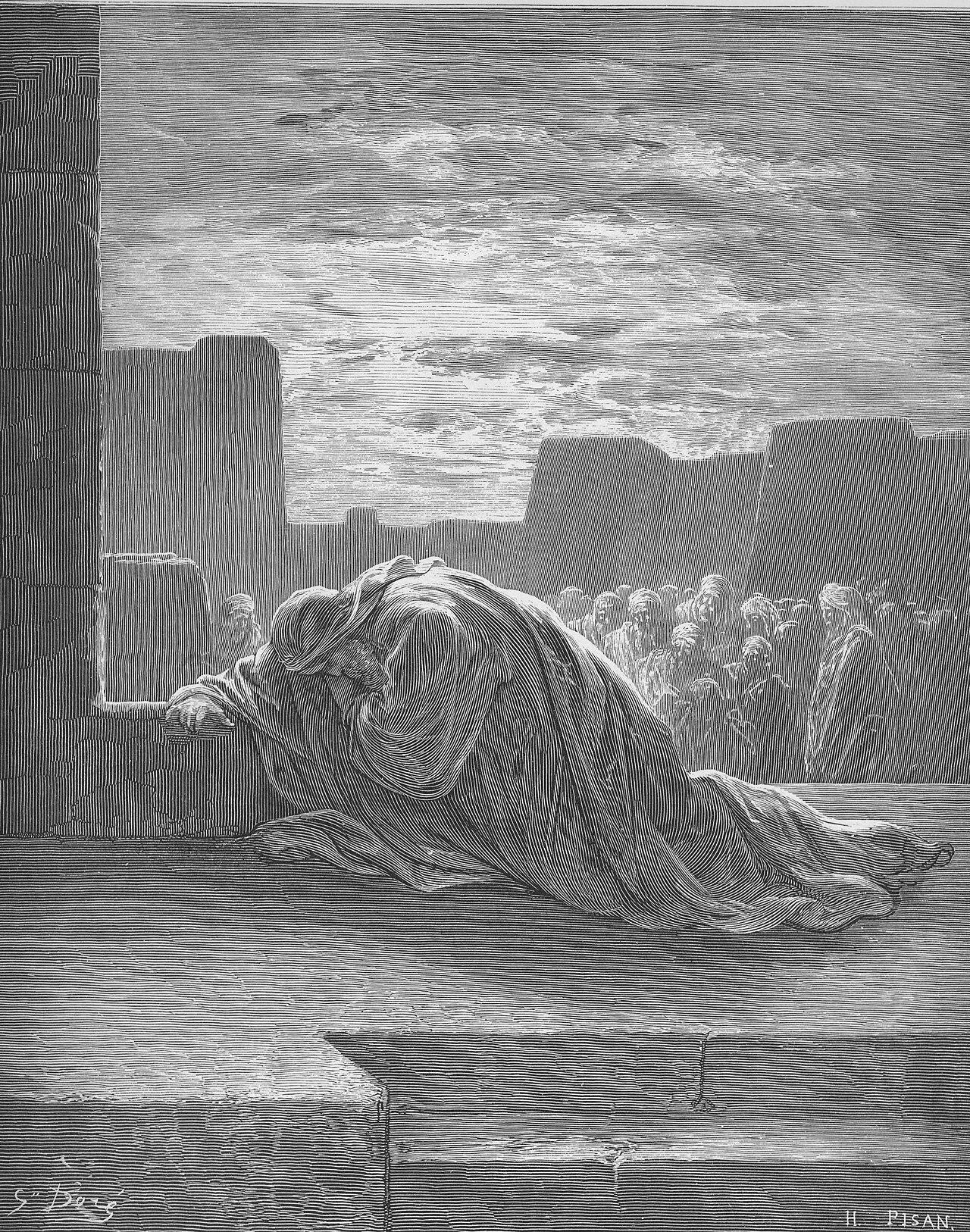
I fell upon my knees, and spread out my hands unto the Lord my God--The burden of his prayer, which was dictated by a deep sense of the emergency, was that he was overwhelmed at the flagrant enormity of this sin, and the bold impiety of continuing in it after having, as a people, so recently experienced the heavy marks of the divine displeasure.
1 more voice on this verse
The Nineteenth Century1 voice
A commentator
Albert Barnes1798–1870
Notes, Explanatory and Practical, on the Old and New Testaments (1832-1869)
proposed
The “little space” was above 60 years, counting from the second year of Darius Ezr 4:24, or about 80 years, counting from the first year of Cyrus Ezr 1:1. This does not seem to Ezra much in the “lifetime” of a nation. A remnant to escape - Rather, “a remnant that has escaped.” The “remnant” is the new community that has returned from the captivity. A nail - Compare the marginal note and reference. The metaphor is probably drawn from a tent-pin, which is driven into the earth to make the tent firm and secure.
The words behind it
23 Hebrew wordsEvery Hebrew word of this verse in the order it stands, with what it means and the door to its own study. The last column counts the times a word stands in the whole Bible: the rarer the word, the more the places it appears belong together.
| Hebrew | Sound | Meaning | Word study | In the Bible |
|---|---|---|---|---|
| וְעַתָּ֡ה | veatah | and now | H6258 → | 433 times |
| כִּמְעַט־ | kimat- | like a little of | H4592 → | |
| רֶגַע֩ | rega' | a moment | H7281 → | |
| הָיְתָ֨ה | hayetah | it has come | H1961 → | 3559 times |
| תְחִנָּ֜ה | techinah | favor | H8467 → | |
| מֵאֵ֣ת׀ | meet | from with | H854 → | |
| יְהוָ֣ה | yahweh | Yahweh | H3068 → | 6520 times |
| אֱלֹהֵ֗ינוּ | ʾeloheinu | God our | H430 → | 2601 times |
| לְהַשְׁאִ֥יר | lehashir | to leave | H7604 → | 133 times |
| לָ֙נוּ֙ | lanu | to us | ||
| פְּלֵיטָ֔ה | peleitah | an escaped remnant | H6413 → | 28 times |
| וְלָתֶת־ | velatet- | and to give | H5414 → | 2011 times |
| לָ֥נוּ | lanu | to us | ||
| יָתֵ֖ד | yated | a tent peg | H3489 → | |
| בִּמְק֣וֹם | bimkom | in [the] place of | H4725 → | 401 times |
| קָדְשׁ֑וֹ | kadesho | holiness his | H6944 → | 469 times |
| לְהָאִ֤יר | lehair | to light up | H215 → | |
| עֵינֵ֙ינוּ֙ | ʾeineinu | eyes our | H5869 → | |
| אֱלֹהֵ֔ינוּ | ʾeloheinu | God our | H430 → | 2601 times |
| וּלְתִתֵּ֛נוּ | uletitenu | and to give to us | H5414 → | 2011 times |
| מִֽחְיָ֥ה | michyah | reviving | H4241 → | |
| מְעַ֖ט | meat | a little | H4592 → | |
| בְּעַבְדֻתֵֽנוּ׃ | beavdutenu | in servitude our | H5659 → |
וְעַתָּ֡הand now
veatahH6258 →433 times
כִּמְעַט־like a little of
kimat-H4592 →
רֶגַע֩a moment
rega'H7281 →
הָיְתָ֨הit has come
hayetahH1961 →3559 times
תְחִנָּ֜הfavor
techinahH8467 →
מֵאֵ֣ת׀from with
meetH854 →
יְהוָ֣הYahweh
yahwehH3068 →6520 times
אֱלֹהֵ֗ינוּGod our
ʾeloheinuH430 →2601 times
לְהַשְׁאִ֥ירto leave
lehashirH7604 →133 times
לָ֙נוּ֙to us
lanu
פְּלֵיטָ֔הan escaped remnant
peleitahH6413 →28 times
וְלָתֶת־and to give
velatet-H5414 →2011 times
לָ֥נוּto us
lanu
יָתֵ֖דa tent peg
yatedH3489 →
בִּמְק֣וֹםin [the] place of
bimkomH4725 →401 times
קָדְשׁ֑וֹholiness his
kadeshoH6944 →469 times
לְהָאִ֤ירto light up
lehairH215 →
עֵינֵ֙ינוּ֙eyes our
ʾeineinuH5869 →
אֱלֹהֵ֔ינוּGod our
ʾeloheinuH430 →2601 times
וּלְתִתֵּ֛נוּand to give to us
uletitenuH5414 →2011 times
מִֽחְיָ֥הreviving
michyahH4241 →
מְעַ֖טa little
meatH4592 →
בְּעַבְדֻתֵֽנוּ׃in servitude our
beavdutenuH5659 →
A shaded row is a word that stands 400 times or fewer in the Bible.
The walk
8 stopsEach card is a verse this one points to, and under it the verses that one points to in turn. Where several paths arrive at the same place, that place is listed first: the text keeps returning to it.
Through
Habakkuk 3:2O LORD, I have heard the report of You; I stand in awe, O LORD, of Your deeds. Revive them in these years; make them known in these years. In Your wrath, remember mercy!
it leads to
- Psalms 85:6
Will You not revive us again, that Your people may rejoice in You?
- Psalms 90:13–17
Return, O LORD! How long will it be? Have compassion on Your servants.
- Hosea 6:2–3
After two days He will revive us; on the third day He will raise us up, that we may live in His presence.
- Lamentations 3:32
Even if He causes grief, He will show compassion according to His abundant loving devotion.
- Isaiah 51:9–11
Awake, awake, put on strength, O arm of the LORD. Wake up as in days past, as in generations of old. Was it not You who cut Rahab to pieces, who pierced through the…
- Psalms 85:6
Through
Hosea 6:2After two days He will revive us; on the third day He will raise us up, that we may live in His presence.
it leads to
- 2 Kings 20:5
“Go back and tell Hezekiah the leader of My people that this is what the LORD, the God of your father David, says: ‘I have heard your prayer; I have seen your tears. I…
- 1 Corinthians 15:4
that He was buried, that He was raised on the third day according to the Scriptures,
- Ezekiel 37:11–13
Then He said to me, “Son of man, these bones are the whole house of Israel. Look, they are saying, ‘Our bones are dried up, and our hope has perished; we are cut off.’
- 2 Kings 20:5
Where this verse is studied
On this page
Studies1
About Ezra
This page draws on Adam Clarke, Commentary on the Bible; Albert Barnes, Notes, Explanatory and Practical, on the Old and New Testaments (1832-1869); Jamieson, Fausset & Brown, Commentary Critical and Explanatory on the Whole Bible; John Gill, Exposition of the Old Testament (1748-1763); John Wesley, Explanatory Notes upon the Old Testament and Matthew Henry, Commentary on the Whole Bible.