
Ezra 1:3
in Ezra 1Whoever among you belongs to His people, may his God be with him, and may he go to Jerusalem in Judah and build the house of the LORD, the God of Israel; He is the God who is in Jerusalem.
BSB
The same verse in ASV and KJV ▾
ASV
Whosoever there is among you of all his people, his God be with him, and let him go up to Jerusalem, which is in Judah, and build the house of Jehovah, the God of Israel (he is God), which is in Jerusalem.
KJV
Who is there among you of all his people? his God be with him, and let him go up to Jerusalem, which is in Judah, and build the house of the Lord God of Israel, (he is the God,) which is in Jerusalem.
⋯
This verse in Ezra 1
Commentary
2 notes on this verseThis sounds a little vain-glorious, for there were many kingdoms of the earth which he had nothing to do with; but he means that God had given him all that was given to Nebuchadnezzar, whose dominion, Daniel says, was to the end of the earth, Dan. iv.
This site's exposition
let him go up to Jerusalem
on Ezra 1:3-4
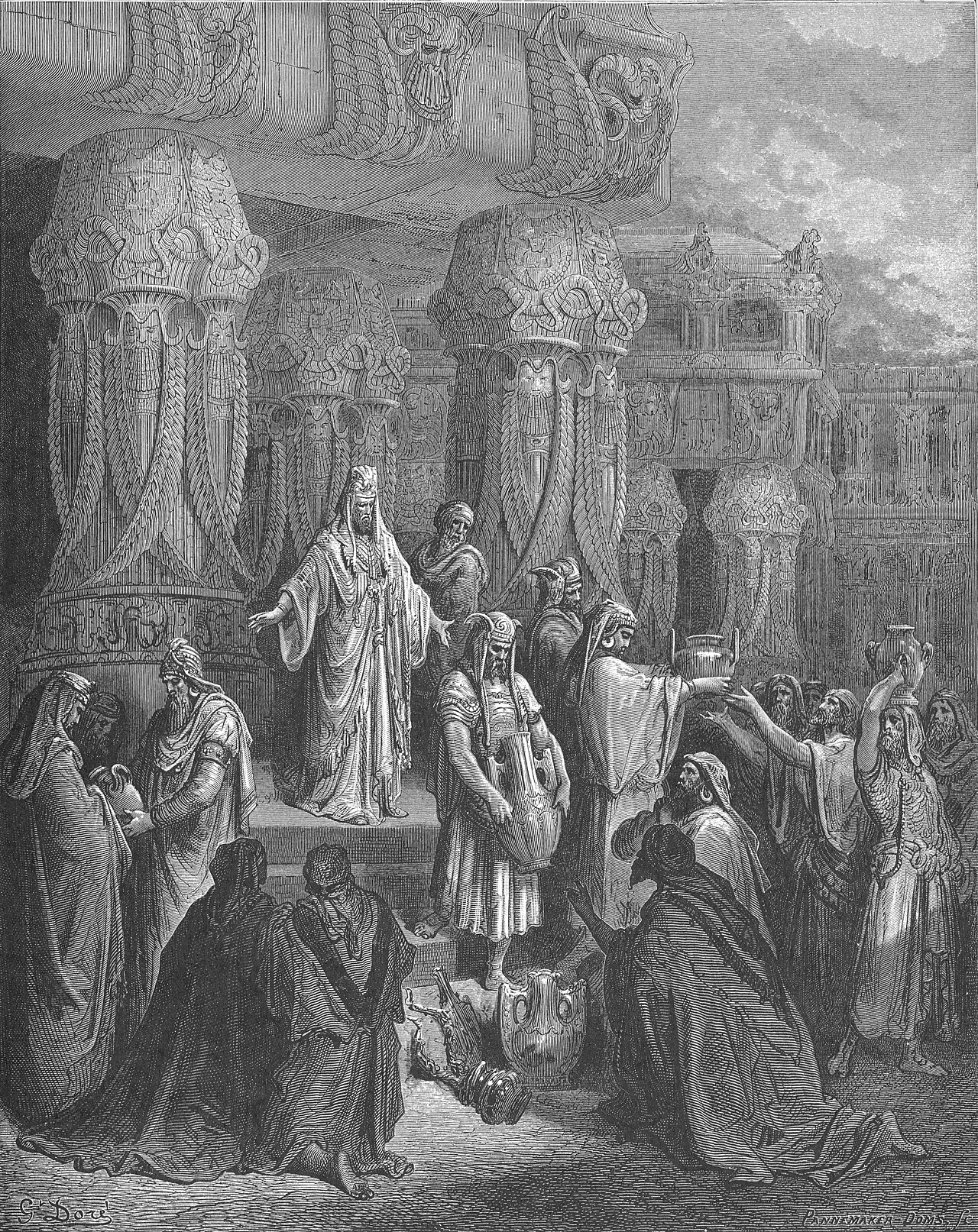
Cyrus's proclamation turns from praise to summons: whoever among the Lord's people wishes may go up to Jerusalem and build the house of the Lord God of Israel, and his God be with him. Those who stay behind are given a role of their own, to help their neighbors who go with silver, gold, goods and beasts, besides whatever is freely offered for the house of God. The command falls on conscience rather than compulsion, for Cyrus commands no one, he only opens the road and asks the ones who remain to fund the ones who take it.
How the passage was read
What the Jewish commentators add
On the verses either side of this one
So said Cyrus, the king of Persia..delivered to me that I am the king and ruler over all the kingdoms.
1 more on this passage, in their own words ▾
And whoever remains and every Jew who remains in his place, who cannot ascend because he has no money.
This section is reception history: how the passage was read and kept in the Jewish tradition. Where a reading parts from an essential of the Christian faith, the section says so at that point.
Texts and citation data: Sefaria; each excerpt follows its version’s licence. 3 further sources are cited on this chapter that carry no English text this site may quote or only restate the verse.
The words behind it
21 Hebrew wordsEvery Hebrew word of this verse in the order it stands, with what it means and the door to its own study. The last column counts the times a word stands in the whole Bible: the rarer the word, the more the places it appears belong together.
| Hebrew | Sound | Meaning | Word study | In the Bible |
|---|---|---|---|---|
| מִֽי־ | mi- | who? | H4310 → | |
| בָכֶ֣ם | vakhem | [is] among you | ||
| מִכָּל־ | mikol | from all | H3605 → | 5413 times |
| עַמּ֗וֹ | amo | people his | H5971 → | 1873 times |
| יְהִ֤י | yehi | may he be | H1961 → | 3559 times |
| אֱלֹהָיו֙ | ʾelohav | God his | H430 → | 2601 times |
| עִמּ֔וֹ | imo | with him | H5973 → | 1050 times |
| וְיַ֕עַל | veyaal | and let him go up | H5927 → | 890 times |
| לִירוּשָׁלִַ֖ם | lirushalim | to Jerusalem | H3389 → | 643 times |
| אֲשֶׁ֣ר | ʾasher | which | H834 → | 5497 times |
| בִּיהוּדָ֑ה | bihudah | [is] in Judah | H3063 → | 819 times |
| וְיִ֗בֶן | veyiven | and let him build | H1129 → | 376 times |
| אֶת־ | ʾet- | <obj.> | H853 → | 10935 times |
| בֵּ֤ית | beit | [the] house of | H1004 → | 2046 times |
| יְהוָה֙ | yahweh | Yahweh | H3068 → | 6520 times |
| אֱלֹהֵ֣י | ʾelohei | [the] God of | H430 → | 2601 times |
| יִשְׂרָאֵ֔ל | yisrael | Israel | H3478 → | 2507 times |
| ה֥וּא | hu' | he | H1931 → | 1879 times |
| הָאֱלֹהִ֖ים | haelohim | [is] <the> God | H430 → | 2601 times |
| אֲשֶׁ֥ר | ʾasher | who | H834 → | 5497 times |
| בִּירוּשָׁלִָֽם׃ | birushalim | [is] in Jerusalem | H3389 → | 643 times |
מִֽי־who?
mi-H4310 →
בָכֶ֣ם[is] among you
vakhem
מִכָּל־from all
mikolH3605 →5413 times
עַמּ֗וֹpeople his
amoH5971 →1873 times
יְהִ֤יmay he be
yehiH1961 →3559 times
אֱלֹהָיו֙God his
ʾelohavH430 →2601 times
עִמּ֔וֹwith him
imoH5973 →1050 times
וְיַ֕עַלand let him go up
veyaalH5927 →890 times
לִירוּשָׁלִַ֖םto Jerusalem
lirushalimH3389 →643 times
אֲשֶׁ֣רwhich
ʾasherH834 →5497 times
בִּיהוּדָ֑ה[is] in Judah
bihudahH3063 →819 times
וְיִ֗בֶןand let him build
veyivenH1129 →376 times
אֶת־<obj.>
ʾet-H853 →10935 times
בֵּ֤ית[the] house of
beitH1004 →2046 times
יְהוָה֙Yahweh
yahwehH3068 →6520 times
אֱלֹהֵ֣י[the] God of
ʾeloheiH430 →2601 times
יִשְׂרָאֵ֔לIsrael
yisraelH3478 →2507 times
ה֥וּאhe
hu'H1931 →1879 times
הָאֱלֹהִ֖ים[is] <the> God
haelohimH430 →2601 times
אֲשֶׁ֥רwho
ʾasherH834 →5497 times
בִּירוּשָׁלִָֽם׃[is] in Jerusalem
birushalimH3389 →643 times
A shaded row is a word that stands 400 times or fewer in the Bible.
The walk
8 stopsEach card is a verse this one points to, and under it the verses that one points to in turn. Where several paths arrive at the same place, that place is listed first: the text keeps returning to it.
Through
Joshua 1:9Have I not commanded you to be strong and courageous? Do not be afraid; do not be discouraged, for the LORD your God is with you wherever you go.”
it leads to
- Genesis 28:15
Look, I am with you, and I will watch over you wherever you go, and I will bring you back to this land. For I will not leave you until I have done what…
- Jeremiah 1:7–8
But the LORD told me: “Do not say, ‘I am only a child.’ For to everyone I send you, you must go, and all that I command you, you must speak.
- Psalms 27:1–2
The LORD is my light and my salvation— whom shall I fear? The LORD is the stronghold of my life— whom shall I dread?
- Joshua 1:6–7
Be strong and courageous, for you shall give these people the inheritance of the land that I swore to their fathers I would give them.
- Deuteronomy 20:1
When you go out to war against your enemies and see horses, chariots, and an army larger than yours, do not be afraid of them; for the LORD your God, who brought you out…
- Genesis 28:15
Through
Matthew 28:20and teaching them to obey all that I have commanded you. And surely I am with you always, even to the end of the age.”
it leads to
- Isaiah 41:10
Do not fear, for I am with you; do not be afraid, for I am your God. I will strengthen you; I will surely help you; I will uphold you with My right hand…
- Joshua 1:5
No one shall stand against you all the days of your life. As I was with Moses, so will I be with you; I will never leave you nor forsake you.
- Acts 18:9–10
One night the Lord spoke to Paul in a vision: “Do not be afraid; keep on speaking; do not be silent.
- Isaiah 41:10
Where this verse is studied
On this page
About Ezra
Who and where
2 names in this verse with a page on the site.
- PersonPatriarchsJudahJacob's fourth son who pledges himself for Benjamin; the tribe that carries the scepter to Shiloh (49:10) and the line to Christ (…
- PlaceJerusalemJerusalemThe city David took from the Jebusites and made his capital, where Solomon built the temple, where Christ was crucified and rose,…
This page draws on Adam Clarke, Commentary on the Bible and Matthew Henry, Commentary on the Whole Bible.