
Ezekiel 7:12
in Ezekiel 7The time has come; the day has arrived. Let the buyer not rejoice and the seller not mourn, for wrath is upon the whole multitude.
BSB
The same verse in ASV and KJV ▾
ASV
The time is come, the day draweth near: let not the buyer rejoice, nor the seller mourn; for wrath is upon all the multitude thereof.
KJV
The time is come, the day draweth near: let not the buyer rejoice, nor the seller mourn: for wrath is upon all the multitude thereof.
⋯
This verse in Ezekiel 7
Commentary
4 notes on this verse(Verse 12.) The time has come, the day is approaching. It is not only said of Jerusalem that the time of its captivity has come and the day has approached when it will be besieged by the Babylonian army, but also to the one who was rejoicing in his built and expanded storehouses, the Lord speaks: Fool, tonight your soul will be taken from you; and the things which you have prepared, whose will they be (Luke 12:20)? From where the Apostle also says: The time, he says, has been shortened (1 Corinthians 7:29).
This site's exposition
the rod hath blossomed, pride hath budded
on Ezekiel 7:10-12
The image turns botanical: the rod hath blossomed, pride hath budded, a picture of ripeness rather than decay, the nation's own arrogance grown to the point of harvest. Verse 11 adds violence is risen up into a rod of wickedness, the same word rod now bearing the opposite weight, an instrument of punishment rather than a budding plant, and verse 12 turns to daily commerce, let not the buyer rejoice, nor the seller mourn. Fairbairn reads the market language as the ordinary transactions of Jerusalem's last days rendered pointless, since neither buyer nor seller will keep what changes hands in a city about to fall.
The record, by era
The Nineteenth Century2 voices
Let not the buyer rejoice, nor the seller mourn - Such is now the state of public affairs, that he who through want has been obliged to sell his inheritance, need not mourn on the account; as of this the enemy would soon have deprived him. And he who has bought it need not rejoice in his bargain, as he shall soon be stripped of his purchase, and either fall by the sword, or be glad to flee for his life.
A commentator
Jamieson, Fausset & Brown1802–1910
Commentary Critical and Explanatory on the Whole Bible (1871)
Spiritually this holds good now, seeing that "the time is short"; "they that rejoice should be as though they rejoiced not, and they that buy as though they possessed not": Paul (1Co 7:30) seems to allude to Ezekiel here. Jer 32:15, 37, 43, seems to contradict Ezekiel here. But Ezekiel is speaking of the parents, and of the present;
How the passage was read
What the Jewish commentators add
neither will the seller mourn Although one who sells his field usually grieves, he will not grieve because you are destined to go into exile.
2 more on this passage, in their own words ▾
The violence has arisen, etc. The violence in your hands has risen upon you as a staff of wickedness to destroy you.
For the seller will not return to that which was sold Once he goes into exile, he will not return and will no longer see the field that he had sold; so why should he mourn?
This section is reception history: how the passage was read and kept in the Jewish tradition. Where a reading parts from an essential of the Christian faith, the section says so at that point.
Texts and citation data: Sefaria; each excerpt follows its version’s licence. 4 further sources are cited on this chapter that carry no English text this site may quote or only restate the verse.
The words behind it
15 Hebrew wordsEvery Hebrew word of this verse in the order it stands, with what it means and the door to its own study. The last column counts the times a word stands in the whole Bible: the rarer the word, the more the places it appears belong together.
| Hebrew | Sound | Meaning | Word study | In the Bible |
|---|---|---|---|---|
| בָּ֤א | ba' | it has come | H935 → | 2568 times |
| הָעֵת֙ | haet | the time | H6256 → | 296 times |
| הִגִּ֣יעַ | higia' | it has arrived | H5060 → | 150 times |
| הַיּ֔וֹם | haiyom | the day | H3117 → | 2304 times |
| הַקּוֹנֶה֙ | hakoneh | the buyer | H7069 → | |
| אַל־ | ʾal- | may not | H408 → | 724 times |
| יִשְׂמָ֔ח | yismach | he rejoice | H8055 → | 155 times |
| וְהַמּוֹכֵ֖ר | vehamokher | and the seller | H4376 → | 80 times |
| אַל־ | ʾal- | may not | H408 → | 724 times |
| יִתְאַבָּ֑ל | yitabal | he mourn | H56 → | 39 times |
| כִּ֥י | ki | for | H3588 → | 4482 times |
| חָר֖וֹן | charon | anger | H2740 → | |
| אֶל־ | ʾel- | [is] against | H413 → | 5510 times |
| כָּל־ | kol- | all | H3605 → | 5413 times |
| הֲמוֹנָֽהּ׃ | hamonah | multitude its | H1995 → | 83 times |
בָּ֤אit has come
ba'H935 →2568 times
הָעֵת֙the time
haetH6256 →296 times
הִגִּ֣יעַit has arrived
higia'H5060 →150 times
הַיּ֔וֹםthe day
haiyomH3117 →2304 times
הַקּוֹנֶה֙the buyer
hakonehH7069 →
אַל־may not
ʾal-H408 →724 times
יִשְׂמָ֔חhe rejoice
yismachH8055 →155 times
וְהַמּוֹכֵ֖רand the seller
vehamokherH4376 →80 times
אַל־may not
ʾal-H408 →724 times
יִתְאַבָּ֑לhe mourn
yitabalH56 →39 times
כִּ֥יfor
kiH3588 →4482 times
חָר֖וֹןanger
charonH2740 →
אֶל־[is] against
ʾel-H413 →5510 times
כָּל־all
kol-H3605 →5413 times
הֲמוֹנָֽהּ׃multitude its
hamonahH1995 →83 times
A shaded row is a word that stands 400 times or fewer in the Bible.
The walk
5 stopsEach card is a verse this one points to, and under it the verses that one points to in turn. Where several paths arrive at the same place, that place is listed first: the text keeps returning to it.
Through
Ezekiel 7:10Behold, the day is here! It has come! Doom has gone out, the rod has budded, arrogance has bloomed.
it leads to
- Isaiah 10:5
Woe to Assyria, the rod of My anger; the staff in their hands is My wrath.
- 1 Thessalonians 5:3
While people are saying, “Peace and security,” destruction will come upon them suddenly, like labor pains on a pregnant woman, and they will not escape.
- James 4:6
But He gives us more grace. This is why it says: “God opposes the proud, but gives grace to the humble.”
- Proverbs 16:18
Pride goes before destruction, and a haughty spirit before a fall.
- Numbers 17:8
The next day Moses entered the Tent of the Testimony and saw that Aaron’s staff, representing the house of Levi, had sprouted, put forth buds, blossomed, and produced almonds.
- Isaiah 10:5
About Ezekiel
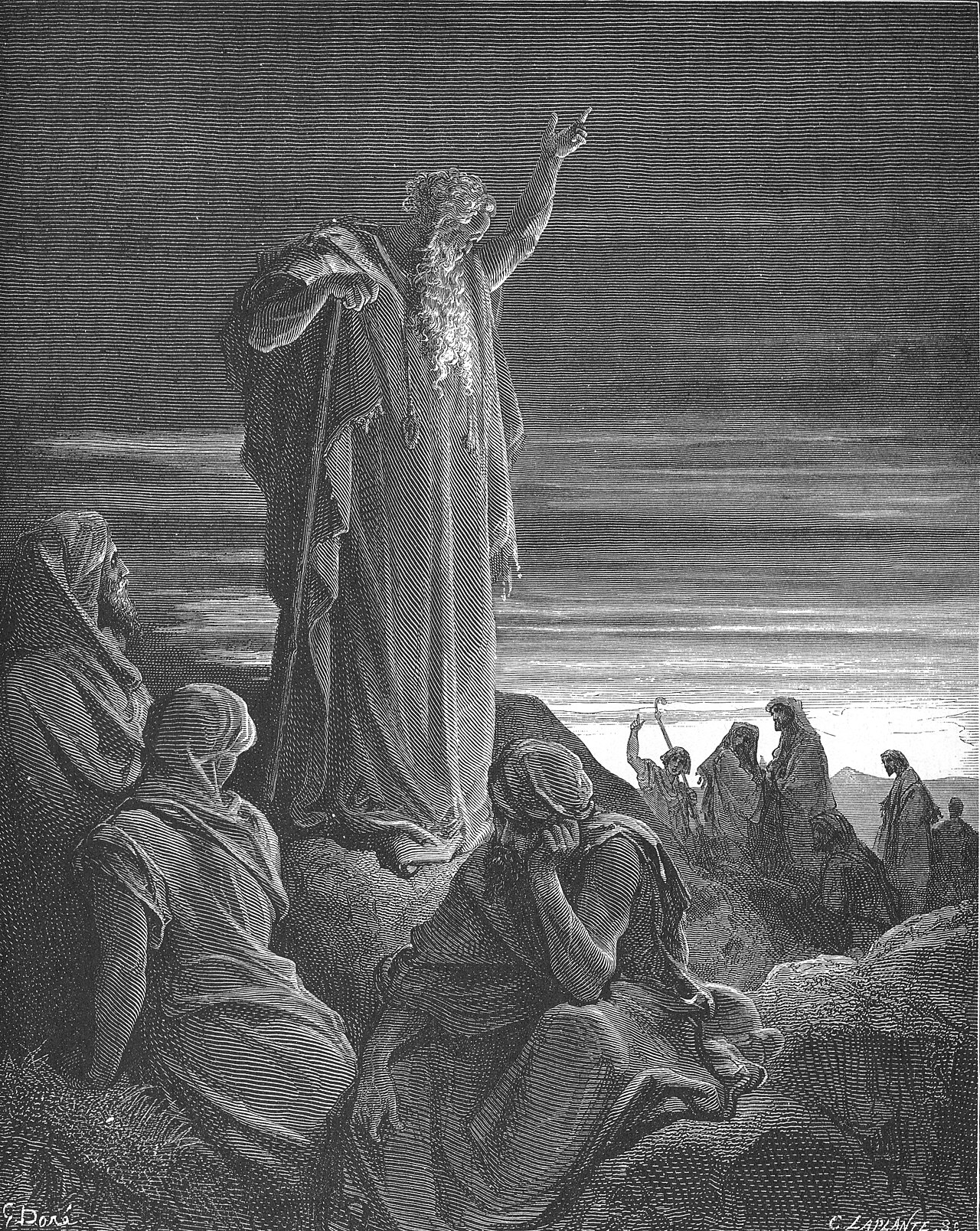
This page draws on Adam Clarke, Commentary on the Bible; Carl Friedrich Keil, Biblical Commentary on the Prophecies of Ezekiel; Jamieson, Fausset & Brown, Commentary Critical and Explanatory on the Whole Bible; Jerome, Commentary on Ezekiel and Patrick Fairbairn, An Exposition of Ezekiel.