
Ezekiel 43:25
in Ezekiel 43For seven days you are to provide a male goat daily for a sin offering; you are also to provide a young bull and a ram from the flock, both unblemished.
BSB
The same verse in ASV and KJV ▾
ASV
Seven days shalt thou prepare every day a goat for a sin-offering: they shall also prepare a young bullock, and a ram out of the flock, without blemish.
KJV
Seven days shalt thou prepare every day a goat for a sin offering: they shall also prepare a young bullock, and a ram out of the flock, without blemish.
⋯
This verse in Ezekiel 43
Commentary
7 notes on this verseSeven days shalt thou prepare every day a goat for a sin offering,.... By this it appears that the altar was seven days a consecrating and cleansing; and that on each day a goat was prepared and offered, typical of Christ, as before observed. Here Kimchi owns that this was not according to the order of Moses, or was done by those that came out of the captivity of Babylon; and is obliged to confess that there will be a change or an innovation in the order of sacrifices in time to come, or under the Messiah.
This site's exposition
on the second day thou shalt offer
on Ezekiel 43:22-27
Seven full days purge and purify the altar before it is used for Israel's own worship, a pattern that mirrors the seven days Aaron and his sons spent at the tabernacle door before their ministry began (Leviticus 8:33-35). Salt is cast on the offerings, the covenant of salt the reader would already know from Leviticus 2:13 and Numbers 18:19, a sign that what is sealed here is covenant and not decoration. On the eighth day the priests make Israel's own burnt offerings and peace offerings for the first time, and the chapter closes on the Lord's own words, I will accept you, the recognition formula's family of promises landing here as acceptance rather than only knowledge.
The record, by era
The Church Fathers1 voice
(v. 23 seqq.) 'When you have completed cleansing it, you shall offer an unblemished calf from the herd and an unblemished ram from the flock. You shall present them before the Lord, and the priests shall sprinkle salt on them and offer them as a burnt offering to the Lord. For seven days you shall make atonement for the altar and consecrate it; then the altar shall be most holy, and whatever touches the altar shall become holy.'
The Puritans and the Awakening2 voices
He has seen the temple, and sees it to be very spacious and splendid; but, till the glory of God comes into it, it is but like the dead bodies he had seen in vision ( ch. xxxvii. ), that had no breath till the Spirit of life entered into them. Here therefore he sees the house filled with God's glory. He has a vision of the glory of God (
quarantine:debris (2026-07-29) — unbalanced-parens
It is observable that there are several differences between the rites of dedication here and those which were appointed Exod. xxix. , to intimate that the ceremonial institutions were mutable things, and the changes in them were earnests of their period in Christ. Only here, according to the general law, that all the sacrifices must be seasoned with salt ( Lev. ii.
quarantine:debris (2026-07-29) — unbalanced-parens
The Nineteenth Century2 voices
A commentator
Jamieson, Fausset & Brown1802–1910
Commentary Critical and Explanatory on the Whole Bible (1871)
The expressions, "blood" (Eze 43:18), and "for a sin offering" (Eze 43:19, 21, 22), prove this. In the literal sense they can only apply to the second temple. Under the Christian dispensation they would directly oppose the doctrine taught in Heb 10:1-18, namely, that Christ has by one offering for ever atoned for sin.
Seven days shalt thou prepare - These are, in general, ordinances of the Law; and may be seen by consulting the parallel passages. All these directions are given that they might follow them, when they should be put in possession of their own land. For in several cases the prophet enters into particulars, as if he had supposed that the book of the law had perished.
The words behind it
14 Hebrew wordsEvery Hebrew word of this verse in the order it stands, with what it means and the door to its own study. The last column counts the times a word stands in the whole Bible: the rarer the word, the more the places it appears belong together.
| Hebrew | Sound | Meaning | Word study | In the Bible |
|---|---|---|---|---|
| שִׁבְעַ֣ת | shivat | seven | H7651 → | 394 times |
| יָמִ֔ים | yamim | days | H3117 → | 2304 times |
| תַּעֲשֶׂ֥ה | taaseh | you will offer | H6213 → | 2628 times |
| שְׂעִיר־ | seir- | a male goat of | H8163 → | 59 times |
| חַטָּ֖את | chatat | a sin offering | H2403 → | 295 times |
| לַיּ֑וֹם | laiyom | for the day | H3117 → | 2304 times |
| וּפַ֧ר | ufar | and a young bull | H6499 → | 132 times |
| בֶּן־ | ben- | a young one of | H1121 → | 4930 times |
| בָּקָ֛ר | bakar | cattle | H1241 → | 183 times |
| וְאַ֥יִל | veayil | and a ram | H352 → | 187 times |
| מִן־ | min- | from | H4480 → | 1188 times |
| הַצֹּ֖אן | hatzon | the flock | H6629 → | 274 times |
| תְּמִימִ֥ים | temimim | unblemished | H8549 → | 91 times |
| יַעֲשֽׂוּ׃ | yaasu | they will offer | H6213 → | 2628 times |
שִׁבְעַ֣תseven
shivatH7651 →394 times
יָמִ֔יםdays
yamimH3117 →2304 times
תַּעֲשֶׂ֥הyou will offer
taasehH6213 →2628 times
שְׂעִיר־a male goat of
seir-H8163 →59 times
חַטָּ֖אתa sin offering
chatatH2403 →295 times
לַיּ֑וֹםfor the day
laiyomH3117 →2304 times
וּפַ֧רand a young bull
ufarH6499 →132 times
בֶּן־a young one of
ben-H1121 →4930 times
בָּקָ֛רcattle
bakarH1241 →183 times
וְאַ֥יִלand a ram
veayilH352 →187 times
מִן־from
min-H4480 →1188 times
הַצֹּ֖אןthe flock
hatzonH6629 →274 times
תְּמִימִ֥יםunblemished
temimimH8549 →91 times
יַעֲשֽׂוּ׃they will offer
yaasuH6213 →2628 times
A shaded row is a word that stands 400 times or fewer in the Bible.
The walk
8 stopsEach card is a verse this one points to, and under it the verses that one points to in turn. Where several paths arrive at the same place, that place is listed first: the text keeps returning to it.
Through
Leviticus 8:35You must remain at the entrance to the Tent of Meeting day and night for seven days and keep the LORD’s charge so that you will not die, for this is what I have…
it leads to
- Numbers 9:19
Even when the cloud lingered over the tabernacle for many days, the Israelites kept the LORD’s charge and did not set out.
- 1 Kings 2:3
And keep the charge of the LORD your God to walk in His ways and to keep His statutes, commandments, ordinances, and decrees, as is written in the Law of Moses, so that you…
- Numbers 3:7
They are to perform duties for him and for the whole congregation before the Tent of Meeting, attending to the service of the tabernacle.
- Deuteronomy 11:1
You shall therefore love the LORD your God and always keep His charge, His statutes, His ordinances, and His commandments.
- 2 Corinthians 7:1
Therefore, beloved, since we have these promises, let us cleanse ourselves from everything that defiles body and spirit, perfecting holiness in the fear of God.
- Numbers 9:19
Through
Leviticus 8:33You must not go outside the entrance to the Tent of Meeting for seven days, until the days of your ordination are complete; for it will take seven days to ordain you.
it leads to
- Exodus 29:35
This is what you are to do for Aaron and his sons based on all that I have commanded you, taking seven days to ordain them.
- Exodus 29:30
The son who succeeds him as priest and enters the Tent of Meeting to minister in the Holy Place must wear them for seven days.
- Leviticus 14:8
The one being cleansed must wash his clothes, shave off all his hair, and bathe with water; then he will be ceremonially clean. Afterward, he may enter the camp, but he must remain outside…
- Exodus 29:35
Where this verse is studied
On this page
Studies5
About Ezekiel
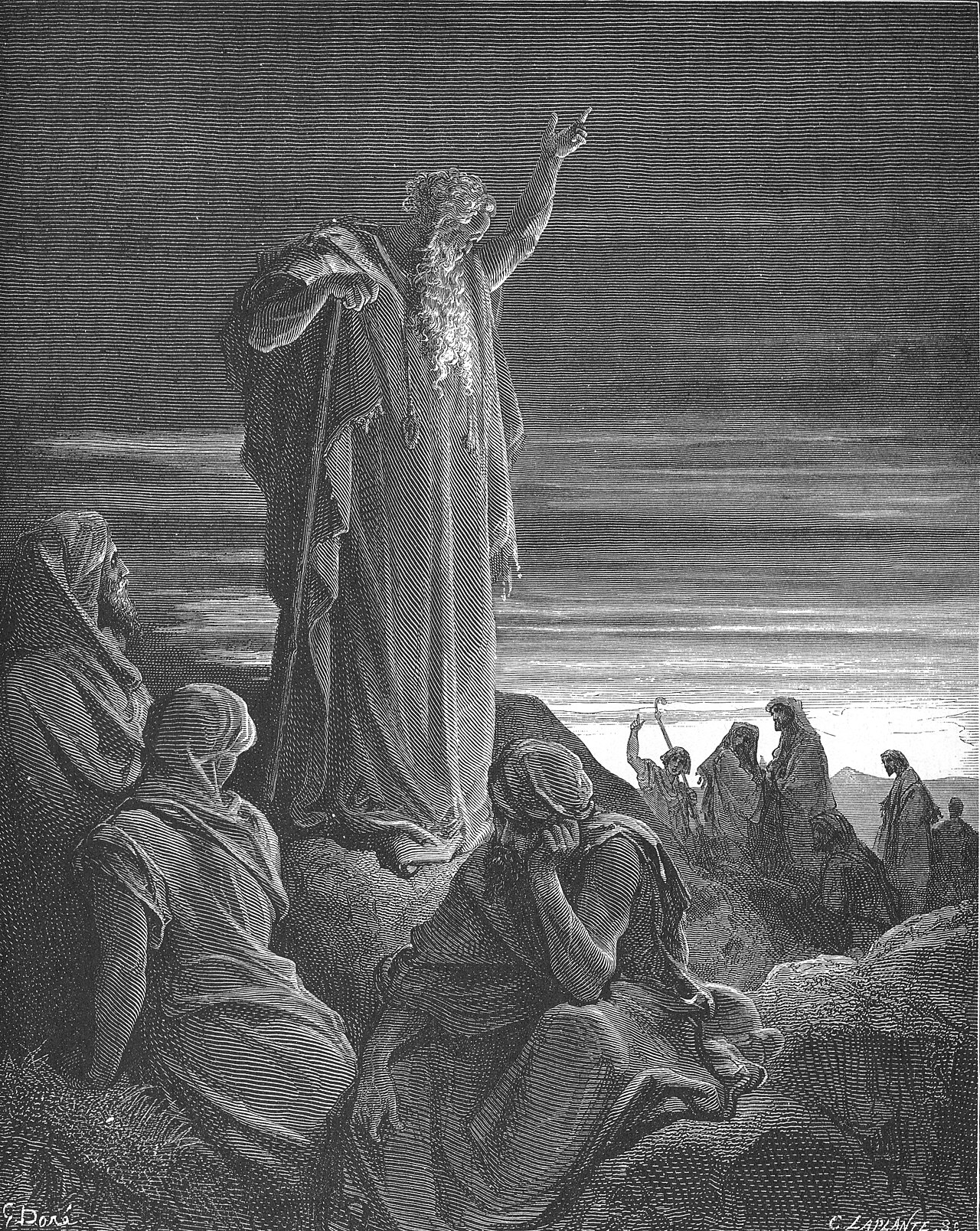
This page draws on Adam Clarke, Commentary on the Bible; Carl Friedrich Keil, Biblical Commentary on the Prophecies of Ezekiel; Jamieson, Fausset & Brown, Commentary Critical and Explanatory on the Whole Bible; Jerome, Commentary on Ezekiel; John Gill, Exposition of the Old Testament (1748-1763) and Matthew Henry, Commentary on the Whole Bible.