
Ezekiel 27:18
in Ezekiel 27Because of your many products and your great wealth of goods, Damascus traded with you wine from Helbon, wool from Zahar,
BSB
The same verse in ASV and KJV ▾
ASV
Damascus was thy merchant for the multitude of thy handiworks, by reason of the multitude of all kinds of riches, with the wine of Helbon, and white wool.
KJV
Damascus was thy merchant in the multitude of the wares of thy making, for the multitude of all riches; in the wine of Helbon, and white wool.
⋯
This verse in Ezekiel 27
Commentary
6 notes on this verse(Verse 18.) Your Damascene merchant in the multitude of your works: in the abundance of different goods: in rich wine, in the finest wool. LXX: Your Damascene merchant in the multitude of your works, from the abundance of all your strength: wine from Helbon, and wool from Miletus. Regarding the rich wine, which Symmachus, Aquila, and Theodotion interpreted, and in the Hebrew text itself, it says, wine from Helbon. And again, when we settled ourselves in the best colored wool, both the Eagle and Theodotius transferred to the wool market of Soor.
This site's exposition
Syria was thy merchant
on Ezekiel 27:16-18
Syria supplies emeralds, purple and fine linen, and then the list turns to Judah and the land of Israel, they were thy merchants, naming Israel not as a special covenant nation here but as one trading partner among many, selling wheat, honey, oil and balm like any other supplier in the ledger. Damascus follows with the wine of Helbon and white wool, the list moving north to south and back without pause for the nation the rest of the book treats as central. Henry reads Israel's appearance in this ordinary commercial list as part of the chapter's irony, a people meant for a holy calling reduced in Tyre's own accounting to one line among trading nations.
The record, by era
The Puritans and the Awakening3 voices
It is the wisdom of a nation to encourage art and industry, and not to bear hard upon the handicraft-tradesmen; for it contributes much to the wealth and honour of a nation to send abroad wares of their own making, which may bring them in the multitude of all riches. [8.] All this made Tyrus very great and very proud: The ships of Tarshish did sing of thee in they market (
quarantine:debris (2026-07-29) — unbalanced-parens
), which is designed to make its ruin the more lamentable. A prediction of its fall and ruin, and the confusion and consternation which all its neighbours shall thereby be put into,
quarantine:debris (2026-07-29) — leading-punctuation+unbalanced-parens
Damascus was thy merchant in the multitude of the wares of thy making,....
The Nineteenth Century1 voice
Damascus wine of Helbon - Now called by the Turks Haleb, and by us Aleppo. White wool - Very fine wool: wool of a fine quality. Some think Milesian wool is meant.
The words behind it
11 Hebrew wordsEvery Hebrew word of this verse in the order it stands, with what it means and the door to its own study. The last column counts the times a word stands in the whole Bible: the rarer the word, the more the places it appears belong together.
| Hebrew | Sound | Meaning | Word study | In the Bible |
|---|---|---|---|---|
| דַּמֶּ֧שֶׂק | damesek | Damascus | H1834 → | 45 times |
| סֹחַרְתֵּ֛ךְ | sochartekh | [was] trader your | H5503 → | 21 times |
| בְּרֹ֥ב | bero | in [the] abundance of | H7230 → | 149 times |
| מַעֲשַׂ֖יִךְ | maasayikh | products your | H4639 → | 236 times |
| מֵרֹ֣ב | mero | from [the] abundance of | H7230 → | 149 times |
| כָּל־ | kol- | all | H3605 → | 5413 times |
| ה֑וֹן | hon | wealth | H1952 → | 26 times |
| בְּיֵ֥ין | beyein | for [the] wine of | H3196 → | |
| חֶלְבּ֖וֹן | chelbon | Helbon | H2463 → | |
| וְצֶ֥מֶר | vetzemer | and wool of | H6785 → | 16 times |
| צָֽחַר׃ | tzachar | Zahar | H6713 → |
דַּמֶּ֧שֶׂקDamascus
damesekH1834 →45 times
סֹחַרְתֵּ֛ךְ[was] trader your
sochartekhH5503 →21 times
בְּרֹ֥בin [the] abundance of
beroH7230 →149 times
מַעֲשַׂ֖יִךְproducts your
maasayikhH4639 →236 times
מֵרֹ֣בfrom [the] abundance of
meroH7230 →149 times
כָּל־all
kol-H3605 →5413 times
ה֑וֹןwealth
honH1952 →26 times
בְּיֵ֥יןfor [the] wine of
beyeinH3196 →
חֶלְבּ֖וֹןHelbon
chelbonH2463 →
וְצֶ֥מֶרand wool of
vetzemerH6785 →16 times
צָֽחַר׃Zahar
tzacharH6713 →
A shaded row is a word that stands 400 times or fewer in the Bible.
The walk
8 stopsEach card is a verse this one points to, and under it the verses that one points to in turn. Where several paths arrive at the same place, that place is listed first: the text keeps returning to it.
Through
Acts 9:2and requested letters to the synagogues in Damascus, so that if he found any men or women belonging to the Way, he could bring them as prisoners to Jerusalem.
it leads to
- Acts 19:9
But when some of them stubbornly refused to believe and publicly maligned the Way, Paul took his disciples and left the synagogue to conduct daily discussions in the lecture hall of Tyrannus.
- Acts 19:23
About that time there arose a great disturbance about the Way.
- Acts 24:14
I do confess to you, however, that I worship the God of our fathers according to the Way, which they call a sect. I believe everything that is laid down by the Law and…
- Acts 22:4–5
I persecuted this Way even to the death, detaining both men and women and throwing them into prison,
- Acts 24:22
Then Felix, who was well informed about the Way, adjourned the hearing and said, “When Lysias the commander comes, I will decide your case.”
- Acts 19:9
Through
Isaiah 7:8For the head of Aram is Damascus, and the head of Damascus is Rezin. Within sixty-five years Ephraim will be shattered as a people.
it leads to
- Isaiah 17:1–3
This is the burden against Damascus: “Behold, Damascus is no longer a city; it has become a heap of ruins.
- Genesis 14:15
During the night, Abram divided his forces and routed Chedorlaomer’s army, pursuing them as far as Hobah, north of Damascus.
- Isaiah 17:1–3
Through
Genesis 15:2But Abram replied, “O Lord GOD, what can You give me, since I remain childless, and the heir of my house is Eliezer of Damascus?”
it leads to
- Genesis 25:21
Later, Isaac prayed to the LORD on behalf of his wife, because she was barren. And the LORD heard his prayer, and his wife Rebekah conceived.
- Genesis 25:21
About Ezekiel
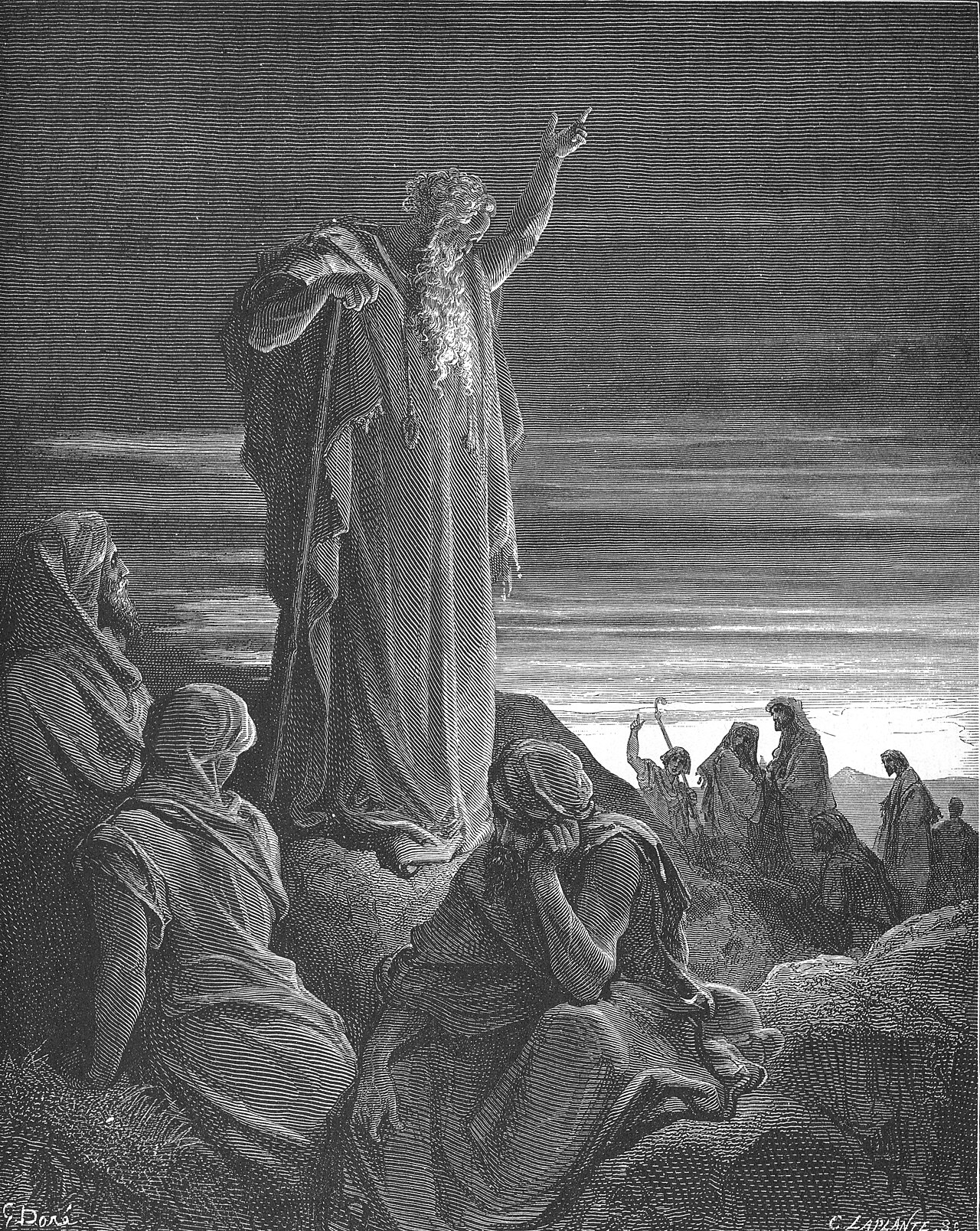
Who and where
1 name in this verse with a page on the site.
This page draws on Adam Clarke, Commentary on the Bible; Carl Friedrich Keil, Biblical Commentary on the Prophecies of Ezekiel; Jerome, Commentary on Ezekiel; John Gill, Exposition of the Old Testament (1748-1763) and Matthew Henry, Commentary on the Whole Bible.