
Ezekiel 18:12
in Ezekiel 18He oppresses the poor and needy; he commits robbery and does not restore a pledge. He lifts his eyes to idols; he commits abominations.
BSB
The same verse in ASV and KJV ▾
ASV
hath wronged the poor and needy, hath taken by robbery, hath not restored the pledge, and hath lifted up his eyes to the idols, hath committed abomination,
KJV
Hath oppressed the poor and needy, hath spoiled by violence, hath not restored the pledge, and hath lifted up his eyes to the idols, hath committed abomination,
⋯
This verse in Ezekiel 18
Commentary
5 notes on this verse(Ver. 10 and following) But if he has fathered a son who is a robber, shedding blood, and he has committed one of these (or, as the Septuagint has translated, if he has committed sins: if he has not walked in the way of his righteous father), and he does all these things, not abstaining from them, but rather feasting on the mountains, defiling the wife of his neighbor, oppressing the needy and the poor, seizing plunder, not returning pledges, lifting his eyes to idols, committing abominations, engaging in usury, and taking more, will he live?
This site's exposition
If he beget a son that is a robber, a shedder of blood
on Ezekiel 18:10-13
The same just man's son may turn violent and idolatrous, and the verdict shifts entirely with him, shall he then live? he shall not live, his own sins alone condemning him regardless of his father's record. Clarke reads the case as pointedly answering the sour-grape proverb, a righteous father's merit does not carry a wicked son past his own guilt. The phrase his blood shall be upon him fixes responsibility on the man himself, the same formula the watchman charge in chapters 3 and 33 uses for a hearer who will not turn.
The record, by era
The Puritans and the Awakening1 voice
Hath oppressed the poor and needy,.... Who are weak, and have none to help them, and stand by them, and so are oppressed by such a man.
The Nineteenth Century2 voices
A commentator
Jamieson, Fausset & Brown1802–1910
Commentary Critical and Explanatory on the Whole Bible (1871)
His pious parentage, so far from excusing, aggravates his guilt. robber--or literally, "a breaker," namely, through all constraints of right. doeth the like to any one--The Hebrew and the parallel (Eze 18:18) require us to translate rather, "doeth to his brother any of these things," namely, the things which follow in Eze 18:11, &c. [MAURER].
A commentator
Jamieson, Fausset & Brown1802–1910
Commentary Critical and Explanatory on the Whole Bible (1871)
proposed
oppressed the poor--an aggravation to his oppressions, that they were practised against the poor; whereas in Eze 18:7 the expression is simply "oppressed any." abomination--singular number referring to the particular one mentioned at the end of Eze 18:6.
quarantine:debris (2026-07-29) — starts-lowercase
How the passage was read
What the Jewish commentators add
On the verses either side of this one
And he does not do all these All these good deeds that his father did.
This section is reception history: how the passage was read and kept in the Jewish tradition. Where a reading parts from an essential of the Christian faith, the section says so at that point.
Texts and citation data: Sefaria; each excerpt follows its version’s licence. 5 further sources are cited on this chapter that carry no English text this site may quote or only restate the verse.
The words behind it
14 Hebrew wordsEvery Hebrew word of this verse in the order it stands, with what it means and the door to its own study. The last column counts the times a word stands in the whole Bible: the rarer the word, the more the places it appears belong together.
| Hebrew | Sound | Meaning | Word study | In the Bible |
|---|---|---|---|---|
| עָנִ֤י | ʾani | [the] poor | H6041 → | 73 times |
| וְאֶבְיוֹן֙ | veevyon | and [the] needy | H34 → | 61 times |
| הוֹנָ֔ה | honah | he has oppressed | H3238 → | 20 times |
| גְּזֵל֣וֹת | gezelot | robberies | H1500 → | 6 times |
| גָּזָ֔ל | gazal | he has robbed | H1497 → | 30 times |
| חֲבֹ֖ל | chavol | a pledge | H2258 → | 4 times |
| לֹ֣א | lo' | not | H3808 → | 5168 times |
| יָשִׁ֑יב | yashiv | he returned | H7725 → | 1056 times |
| וְאֶל־ | veel- | and to | H413 → | 5510 times |
| הַגִּלּוּלִים֙ | hagilulim | the idols | H1544 → | 48 times |
| נָשָׂ֣א | nasa' | he has lifted up | H5375 → | 656 times |
| עֵינָ֔יו | ʾeinav | eyes his | H5869 → | 887 times |
| תּוֹעֵבָ֖ה | toevah | abomination | H8441 → | 117 times |
| עָשָֽׂה׃ | ʾasah | he has done | H6213 → | 2628 times |
עָנִ֤י[the] poor
ʾaniH6041 →73 times
וְאֶבְיוֹן֙and [the] needy
veevyonH34 →61 times
הוֹנָ֔הhe has oppressed
honahH3238 →20 times
גְּזֵל֣וֹתrobberies
gezelotH1500 →6 times
גָּזָ֔לhe has robbed
gazalH1497 →30 times
חֲבֹ֖לa pledge
chavolH2258 →4 times
לֹ֣אnot
lo'H3808 →5168 times
יָשִׁ֑יבhe returned
yashivH7725 →1056 times
וְאֶל־and to
veel-H413 →5510 times
הַגִּלּוּלִים֙the idols
hagilulimH1544 →48 times
נָשָׂ֣אhe has lifted up
nasa'H5375 →656 times
עֵינָ֔יוeyes his
ʾeinavH5869 →887 times
תּוֹעֵבָ֖הabomination
toevahH8441 →117 times
עָשָֽׂה׃he has done
ʾasahH6213 →2628 times
A shaded row is a word that stands 400 times or fewer in the Bible.
The walk
8 stopsEach card is a verse this one points to, and under it the verses that one points to in turn. Where several paths arrive at the same place, that place is listed first: the text keeps returning to it.
Through
Amos 4:1Hear this word, you cows of Bashan on Mount Samaria, you women who oppress the poor and crush the needy, who say to your husbands, “Bring us more to drink.”
it leads to
- Psalms 22:12
Many bulls surround me; strong bulls of Bashan encircle me.
- Amos 6:1
Woe to those at ease in Zion and those secure on Mount Samaria, the distinguished ones of the foremost nation, to whom the house of Israel comes.
- Ezekiel 39:18
You will eat the flesh of the mighty and drink the blood of the princes of the earth as though they were rams, lambs, goats, and bulls—all the fattened animals of Bashan.
- Amos 5:11
Therefore, because you trample on the poor and exact from him a tax of grain, you will never live in the stone houses you have built; you will never drink the wine from the…
- Psalms 22:12
Through
Zechariah 7:10Do not oppress the widow or the fatherless, the foreigner or the poor. And do not plot evil in your hearts against one another.’
it leads to
- Jeremiah 5:28
They have grown fat and sleek, and have excelled in the deeds of the wicked. They have not taken up the cause of the fatherless, that they might prosper; nor have they defended the…
- Jeremiah 5:28
Through
Ezekiel 8:17“Son of man,” He said to me, “do you see this? Is it not enough for the house of Judah to commit the abominations they are practicing here, that they must also fill the…
it leads to
- Ezekiel 9:9
He replied, “The iniquity of the house of Israel and Judah is exceedingly great. The land is full of bloodshed, and the city is full of perversity. For they say, ‘The LORD has forsaken…
- Ezekiel 9:9
Through
Ezekiel 8:6“Son of man,” He said to me, “do you see what they are doing—the great abominations that the house of Israel is committing—to drive Me far from My sanctuary? Yet you will see even…
it leads to
- Ezekiel 5:11
Therefore as surely as I live, declares the Lord GOD, because you have defiled My sanctuary with all your detestable idols and abominations, I Myself will withdraw My favor; I will not look upon…
- Ezekiel 5:11
Through
2 Kings 21:11“Since Manasseh king of Judah has committed all these abominations, acting more wickedly than the Amorites who preceded him, and with his idols has caused Judah to sin,
it leads to
- 1 Kings 21:26
He committed the most detestable acts by going after idols, just like the Amorites whom the LORD had driven out before the Israelites.)
- 1 Kings 21:26
About Ezekiel
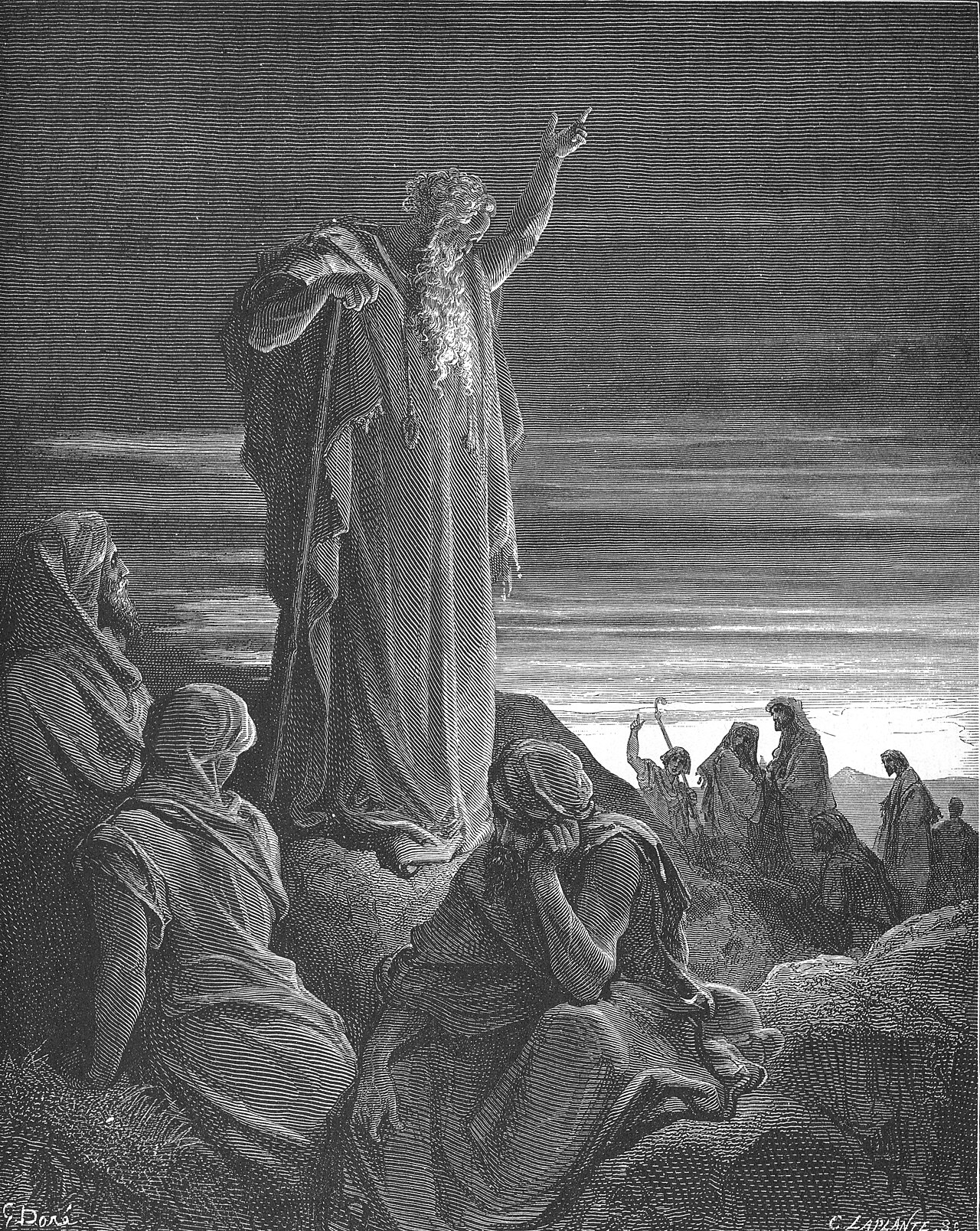
This page draws on Adam Clarke, Commentary on the Bible; Jamieson, Fausset & Brown, Commentary Critical and Explanatory on the Whole Bible; Jerome, Commentary on Ezekiel; John Gill, Exposition of the Old Testament and John Gill, Exposition of the Old Testament (1748-1763).