
Exodus 18:6
in Exodus 18He sent word to Moses, “I, your father-in-law Jethro, am coming to you with your wife and her two sons.”
BSB
The same verse in ASV and KJV ▾
ASV
and he said unto Moses, I, thy father-in-law Jethro, am come unto thee, and thy wife, and her two sons with her.
KJV
And he said unto Moses, I thy father in law Jethro am come unto thee, and thy wife, and her two sons with her.
⋯
This verse in Exodus 18
Commentary
5 notes on this verseAnd he said unto Moses - That is, by a messenger; in consequence of which Moses went out to meet him, as is stated in the next verse, for an interview had not yet taken place. This is supported by reading הנה hinneh, behold, for אני ani, I, which is the reading of the Septuagint and Syriac, and several Samaritan MSS.; instead therefore of I, thy father, we should read, Behold thy father, etc. - Kennicott’s Remarks.
This site's exposition
came with his sons and his wife
on Exodus 18:5-6
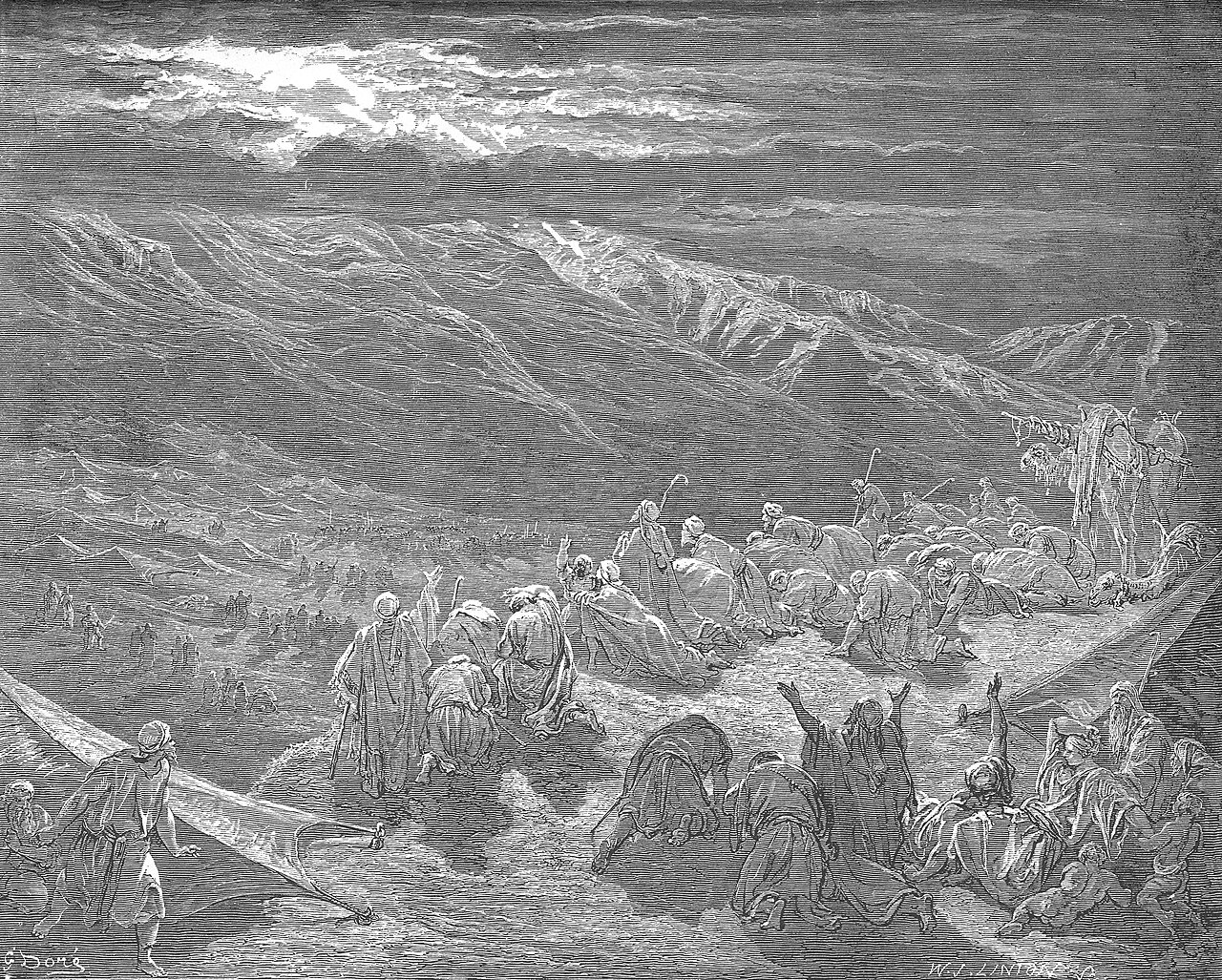
Jethro reaches Moses at the mount of God, which Exodus 3:1 calls Horeb and names as the place where Moses was keeping this same man's flock when he saw the bush. God's answer to Moses there was a token that could only be checked at the end of the errand, that when thou hast brought forth the people out of Egypt, ye shall serve God upon this mountain. The people are camped at that mountain when Jethro walks in, so the sign of Exodus 3:12 has now come due.
The record, by era
The Puritans and the Awakening2 voices
Moses had now a great deal both of honour and care put upon him, and it was fit that his wife should be with him to share with him in both. Notice is taken of the significant names of his two sons. The eldest was called Gershom (
quarantine:debris (2026-07-29) — unbalanced-parens
And he said unto Moses,....
The Nineteenth Century1 voice
A commentator
Albert Barnes1798–1870
Notes, Explanatory and Practical, on the Old and New Testaments (1832-1869)
proposed
And he said ... - Or according to the Greek Version, “And it was told to Moses, saying, Lo, thy father in law Jether is come.”
The words behind it
12 Hebrew wordsEvery Hebrew word of this verse in the order it stands, with what it means and the door to its own study. The last column counts the times a word stands in the whole Bible: the rarer the word, the more the places it appears belong together.
| Hebrew | Sound | Meaning | Word study | In the Bible |
|---|---|---|---|---|
| וַיֹּ֙אמֶר֙ | vaiyomer | and he said | H559 → | 5305 times |
| אֶל־ | ʾel- | to | H413 → | 5510 times |
| מֹשֶׁ֔ה | mosheh | Moses | H4872 → | 765 times |
| אֲנִ֛י | ʾani | I | H589 → | 874 times |
| חֹתֶנְךָ֥ | chotenkha | father-in-law your | H2859 → | 33 times |
| יִתְר֖וֹ | yitro | Jethro | H3503 → | 9 times |
| בָּ֣א | ba' | [am] coming | H935 → | 2568 times |
| אֵלֶ֑יךָ | ʾeleikha | to you | H413 → | 5510 times |
| וְאִ֨שְׁתְּךָ֔ | veishtekha | and wife your | H802 → | 781 times |
| וּשְׁנֵ֥י | ushenei | and [the] two | H8147 → | 768 times |
| בָנֶ֖יהָ | vaneiha | sons her | H1121 → | 4930 times |
| עִמָּֽהּ׃ | ʾimah | with her | H5973 → | 1050 times |
וַיֹּ֙אמֶר֙and he said
vaiyomerH559 →5305 times
אֶל־to
ʾel-H413 →5510 times
מֹשֶׁ֔הMoses
moshehH4872 →765 times
אֲנִ֛יI
ʾaniH589 →874 times
חֹתֶנְךָ֥father-in-law your
chotenkhaH2859 →33 times
יִתְר֖וֹJethro
yitroH3503 →9 times
בָּ֣א[am] coming
ba'H935 →2568 times
אֵלֶ֑יךָto you
ʾeleikhaH413 →5510 times
וְאִ֨שְׁתְּךָ֔and wife your
veishtekhaH802 →781 times
וּשְׁנֵ֥יand [the] two
usheneiH8147 →768 times
בָנֶ֖יהָsons her
vaneihaH1121 →4930 times
עִמָּֽהּ׃with her
ʾimahH5973 →1050 times
A shaded row is a word that stands 400 times or fewer in the Bible.
About Exodus
Who and where
1 name in this verse with a page on the site.
This page draws on Adam Clarke, Commentary on the Bible; Albert Barnes, Notes, Explanatory and Practical, on the Old and New Testaments (1832-1869); John Gill, Exposition of the Old Testament; John Gill, Exposition of the Old Testament (1748-1763); Keil and Delitzsch, Biblical Commentary on the Old Testament: The Pentateuch and Matthew Henry, Commentary on the Whole Bible.