
Deuteronomy 14:23
in Deuteronomy 14And you are to eat a tenth of your grain, new wine, and oil, and the firstborn of your herds and flocks, in the presence of the LORD your God at the place He will choose as a dwelling for His Name, so that you may learn to fear the LORD your God always.
BSB
The same verse in ASV and KJV ▾
ASV
And thou shalt eat before Jehovah thy God, in the place which he shall choose, to cause his name to dwell there, the tithe of thy grain, of thy new wine, and of thine oil, and the firstlings of thy herd and of thy flock; that thou mayest learn to fear Jehovah thy God always.
KJV
And thou shalt eat before the Lord thy God, in the place which he shall choose to place his name there, the tithe of thy corn, of thy wine, and of thine oil, and the firstlings of thy herds and of thy flocks; that thou mayest learn to fear the Lord thy God always.
⋯
This verse in Deuteronomy 14
Commentary
4 notes on this verseThis site's exposition
Thou shalt truly tithe all the increase
on Deuteronomy 14:22-27
Numbers 18:21 gave the tithe to the Levites, and the tithe here is eaten by the man who brings it, at the place the Lord shall choose to place his name. Readers have taken that two ways: the older Jewish reckoning, which Josephus and Clarke follow, counts a second tithe distinct from the Levites' tenth, while others read one tithe described from another angle in another book. When the road is long the produce may be sold, the money bound up in the hand and carried, and spent at the sanctuary on oxen, sheep, wine or strong drink, whatsoever thy soul desireth. The reason attached to the meal is that thou mayest learn to fear the Lord thy God always, which makes the feast itself the lesson.
The record, by era
The Puritans and the Awakening2 voices
): That thou mayest learn to fear the Lord thy God always; it was to keep them right and firm to their religion, (1.) By acquainting them with the sanctuary, the holy things, and the solemn services that were there performed.
quarantine:debris (2026-07-29) — leading-punctuation+unbalanced-parens
And thou shalt eat before the Lord thy God, in the place which he shall choose to place his name there,....
The Nineteenth Century1 voice
A commentator
Jamieson, Fausset & Brown1802–1910
Commentary Critical and Explanatory on the Whole Bible (1871)
proposed
Thou shalt truly tithe all the increase of thy seed--The dedication of a tenth part of the year's produce in everything was then a religious duty. It was to be brought as an offering to the sanctuary; and, where distance prevented its being taken in kind, it was by this statute convertible into money.
How the passage was read
On Deuteronomy 14:22-29On Deuteronomy 14:22-29
The tithe system behind the mint and cumin
The Torah's tithe was agricultural: a tenth of grain, wine, and oil, eaten before the LORD or given, in the third year, to the Levite, the sojourner, the fatherless, and the widow. The oral tradition extended the duty far beyond the named crops. The Mishnah's tractate on tithes opens with the general rule: “whatever is food, and is looked after, and grows from the land, is liable for tithes” (Maasrot 1:1). Under that rule even kitchen herbs were tithed, a scruple carried out leaf by leaf.
That is the practice behind Jesus' words about tithing “mint and dill and cumin” (Matthew 23:23). Read His sentence whole: “these you ought to have done, without neglecting the others.” He affirms the scruple and indicts the inversion of weight, the tithed herb beside the neglected justice, mercy, and faithfulness. The woe is about proportion, not about tithing.
This section is reception history: how the passage was read and kept in the Jewish tradition. Where a reading parts from an essential of the Christian faith, the section says so at that point.
The words behind it
25 Hebrew wordsEvery Hebrew word of this verse in the order it stands, with what it means and the door to its own study. The last column counts the times a word stands in the whole Bible: the rarer the word, the more the places it appears belong together.
| Hebrew | Sound | Meaning | Word study | In the Bible |
|---|---|---|---|---|
| וְאָכַלְתָּ֞ | veakhalta | and you will eat | H398 → | 810 times |
| לִפְנֵ֣י׀ | lifnei | <to> before | H6440 → | 2123 times |
| יְהוָ֣ה | yahweh | Yahweh | H3068 → | 6520 times |
| אֱלֹהֶ֗יךָ | ʾeloheikha | God your | H430 → | 2601 times |
| בַּמָּק֣וֹם | bamakom | in the place | H4725 → | 401 times |
| אֲשֶׁר־ | ʾasher- | where | H834 → | 5497 times |
| יִבְחַר֮ | yivchar | he will choose | H977 → | 171 times |
| לְשַׁכֵּ֣ן | leshaken | to cause to dwell | H7931 → | 129 times |
| שְׁמ֣וֹ | shemo | name his | H8034 → | 864 times |
| שָׁם֒ | sham | there | H8033 → | 834 times |
| מַעְשַׂ֤ר | ma'sar | [the] tithe of | H4643 → | 32 times |
| דְּגָֽנְךָ֙ | deganekha | grain your | H1715 → | 40 times |
| תִּֽירֹשְׁךָ֣ | tiroshekha | new wine your | H8492 → | 38 times |
| וְיִצְהָרֶ֔ךָ | veyitzharekha | and fresh oil your | H3323 → | 23 times |
| וּבְכֹרֹ֥ת | uvekhorot | and [the] firstborn<s> of | H1060 → | 122 times |
| בְּקָרְךָ֖ | bekarecha | herd your | H1241 → | 183 times |
| וְצֹאנֶ֑ךָ | vetzonekha | and flock your | H6629 → | 274 times |
| לְמַ֣עַן | lemaan | so that | H4616 → | 272 times |
| תִּלְמַ֗ד | tilmad | you may learn | H3925 → | 85 times |
| לְיִרְאָ֛ה | leyirah | to fear | H3372 → | 315 times |
| אֶת־ | ʾet- | <obj.> | H853 → | 10935 times |
| יְהוָ֥ה | yahweh | Yahweh | H3068 → | 6520 times |
| אֱלֹהֶ֖יךָ | ʾeloheikha | God your | H430 → | 2601 times |
| כָּל־ | kol- | all | H3605 → | 5413 times |
| הַיָּמִֽים׃ | haiyamim | the days | H3117 → | 2304 times |
וְאָכַלְתָּ֞and you will eat
veakhaltaH398 →810 times
לִפְנֵ֣י׀<to> before
lifneiH6440 →2123 times
יְהוָ֣הYahweh
yahwehH3068 →6520 times
אֱלֹהֶ֗יךָGod your
ʾeloheikhaH430 →2601 times
בַּמָּק֣וֹםin the place
bamakomH4725 →401 times
אֲשֶׁר־where
ʾasher-H834 →5497 times
יִבְחַר֮he will choose
yivcharH977 →171 times
לְשַׁכֵּ֣ןto cause to dwell
leshakenH7931 →129 times
שְׁמ֣וֹname his
shemoH8034 →864 times
שָׁם֒there
shamH8033 →834 times
מַעְשַׂ֤ר[the] tithe of
ma'sarH4643 →32 times
דְּגָֽנְךָ֙grain your
deganekhaH1715 →40 times
תִּֽירֹשְׁךָ֣new wine your
tiroshekhaH8492 →38 times
וְיִצְהָרֶ֔ךָand fresh oil your
veyitzharekhaH3323 →23 times
וּבְכֹרֹ֥תand [the] firstborn<s> of
uvekhorotH1060 →122 times
בְּקָרְךָ֖herd your
bekarechaH1241 →183 times
וְצֹאנֶ֑ךָand flock your
vetzonekhaH6629 →274 times
לְמַ֣עַןso that
lemaanH4616 →272 times
תִּלְמַ֗דyou may learn
tilmadH3925 →85 times
לְיִרְאָ֛הto fear
leyirahH3372 →315 times
אֶת־<obj.>
ʾet-H853 →10935 times
יְהוָ֥הYahweh
yahwehH3068 →6520 times
אֱלֹהֶ֖יךָGod your
ʾeloheikhaH430 →2601 times
כָּל־all
kol-H3605 →5413 times
הַיָּמִֽים׃the days
haiyamimH3117 →2304 times
A shaded row is a word that stands 400 times or fewer in the Bible.
The walk
5 stopsEach card is a verse this one points to, and under it the verses that one points to in turn. Where several paths arrive at the same place, that place is listed first: the text keeps returning to it.
Through
Deuteronomy 4:10The day you stood before the LORD your God at Horeb, the LORD said to me, “Gather the people before Me to hear My words, so that they may learn to fear Me all…
it leads to
- Exodus 19:9
The LORD said to Moses, “Behold, I will come to you in a dense cloud, so that the people will hear when I speak with you, and they will always put their trust in…
- Hebrews 12:18–19
For you have not come to a mountain that can be touched and that is burning with fire; to darkness, gloom, and storm;
- Exodus 19:16
On the third day, when morning came, there was thunder and lightning. A thick cloud was upon the mountain, and a very loud blast of the ram’s horn went out, so that all the…
- Deuteronomy 17:19
It is to remain with him, and he is to read from it all the days of his life, so that he may learn to fear the LORD his God by carefully observing all…
- Exodus 20:20
“Do not be afraid,” Moses replied. “For God has come to test you, so that the fear of Him may be before you, to keep you from sinning.”
- Exodus 19:9
About Deuteronomy
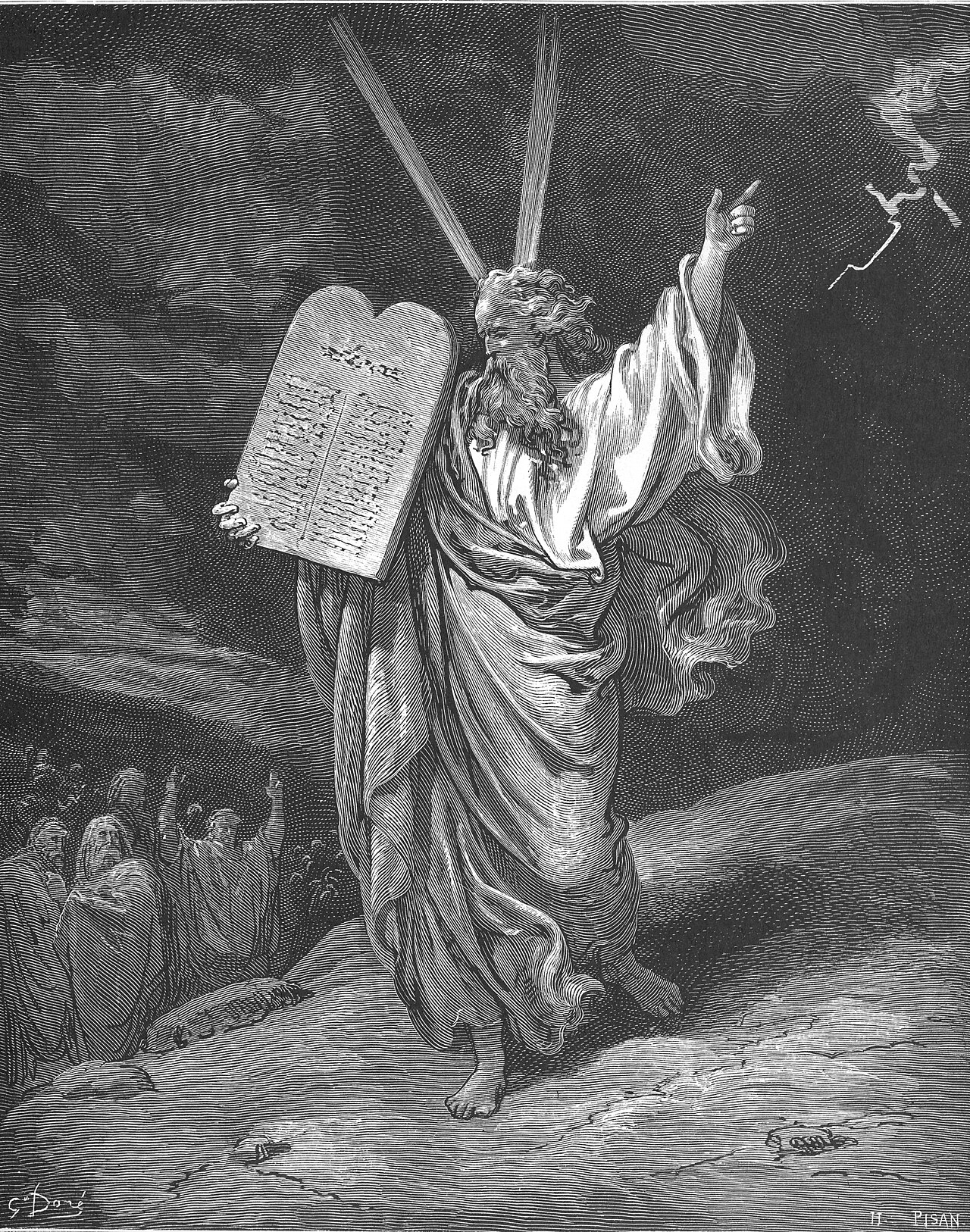
This page draws on Adam Clarke, Commentary on the Bible; Jamieson, Fausset & Brown, Commentary Critical and Explanatory on the Whole Bible; John Gill, Exposition of the Old Testament (1748-1763) and Matthew Henry, Commentary on the Whole Bible.