
Daniel 6:5
in Daniel 6Finally these men said, “We will never find any charge against this Daniel, unless we find something against him concerning the law of his God.”
BSB
The same verse in ASV and KJV ▾
ASV
Then said these men, We shall not find any occasion against this Daniel, except we find it against him concerning the law of his God.
KJV
Then said these men, We shall not find any occasion against this Daniel, except we find it against him concerning the law of his God.
⋯
This verse in Daniel 6
Commentary
8 notes on this verseVerse 5. "Therefore those men said: 'We will not find any pretext against Daniel, except perhaps in the law of his God.'" Blessed indeed is a life so led that even enemies can find no cause for accusation, except perhaps in matter pertaining to God's law.
This site's exposition
sought to find occasion against Daniel
on Daniel 6:4-5
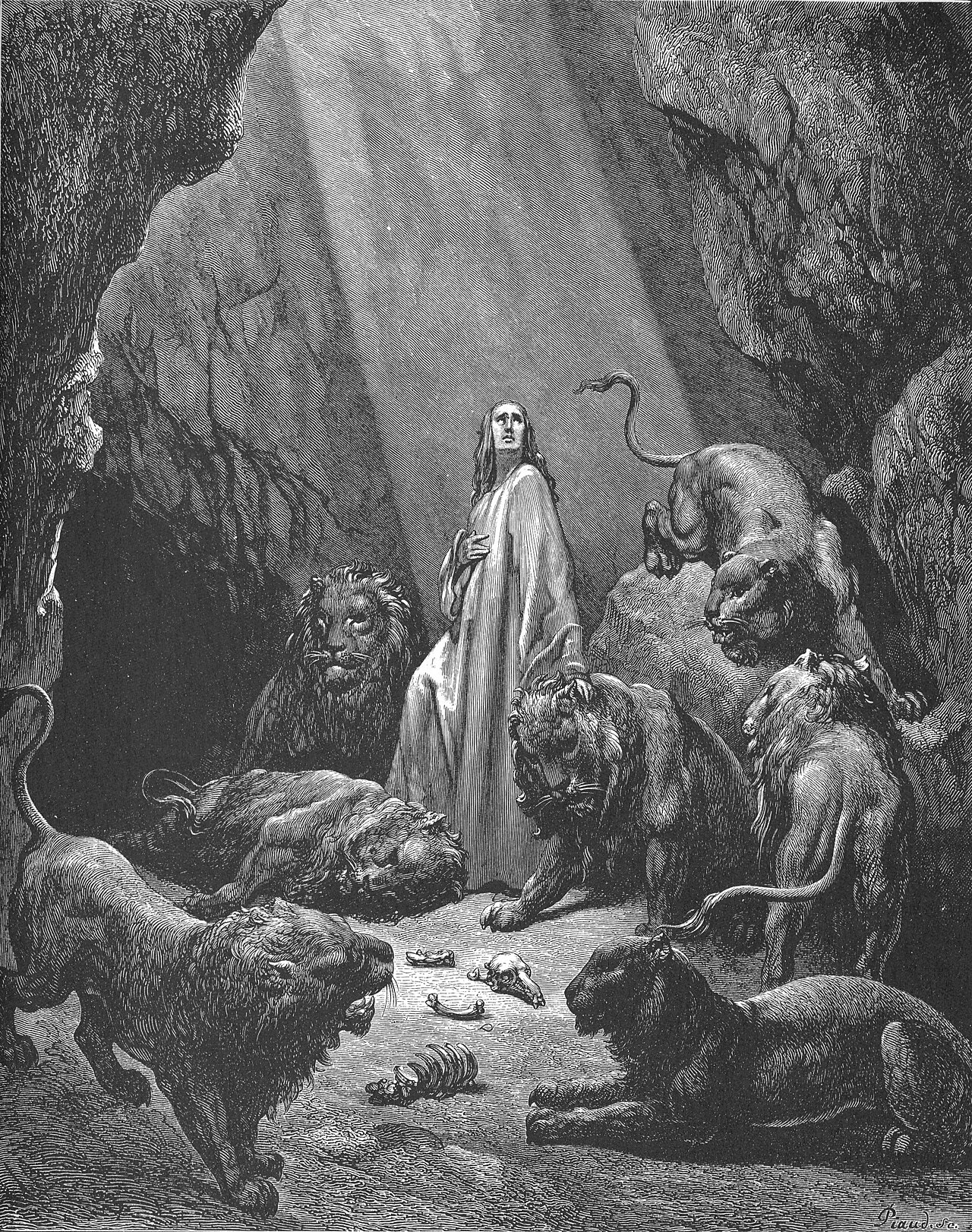
The presidents and princes search Daniel's public record for an occasion and find none, neither error nor fault, a verdict the text states plainly before the conspirators state their own conclusion in verse 5: they will not find occasion against this Daniel except against him concerning the law of his God. Henry reads this as one of Scripture's clearest tributes to a man's integrity, an enemy search that comes up empty being a harder compliment than any friend could pay, and the conspirators' own words concede it. The plot that follows is therefore built on Daniel's virtue rather than any vice, using his faithfulness as the very lever against him.
The record, by era
The Church Fathers1 voice
For then how many were they who pretended to be friends with Daniel, who wickedly hated him in heart? They falsely-sent gifts with other intentions and they ordered to give befitting gifts, wishing to test his sincerity, in order to have for the king a future pretext against him that they might appeal to the king that he was obliging himself to the king's possessions, and he in this way be killed as a plotter. And so at all times they resourcefully sought a cause against him. And not finding anything they later deliberated together, saying, "We have not found a pretext against Daniel except in the laws of his God." [Daniel 6:5]
The Puritans and the Awakening3 voices
It is observable that, when Daniel's enemies could find no occasion against him concerning the kingdom, they had so much sense of justice left that they did not suborn witnesses against him to accuse him of crimes he was innocent of, and to swear treason upon him, wherein they shame many that were called Jews and are called Christians.
Commentary on Chapter VI 2. Daniel was first - Belshazzar's promise to Daniel was, that he should be the third ruler in the kingdom, chap. v, 7, 16, 29. The first was general of the army, the second president of the palace, the third of the land and provinces.
Then said these men,....
The Nineteenth Century1 voice
A commentator
Jamieson, Fausset & Brown1802–1910
Commentary Critical and Explanatory on the Whole Bible (1871)
proposed
It is the highest testimony to a godly man's walk, when his most watchful enemies can find no ground of censure save in that he walks according to the law of God even where it opposes the ways of the world.
1 more voice on this verse
The Nineteenth Century1 voice
A commentator
Albert Barnes1798–1870
Notes, Explanatory and Practical, on the Old and New Testaments (1832-1869)
proposed
We shall not find any occasion ... - We shall not find any pretext or any cause by which he may be humbled and degraded. They were satisfied of his integrity, and they saw it was vain to hope to accomplish their purposes by any attack on his moral character, or any charge against him in respect to the manner in which he had discharged the duties of his office.
The words behind it
16 Hebrew wordsEvery Hebrew word of this verse in the order it stands, with what it means and the door to its own study. The last column counts the times a word stands in the whole Bible: the rarer the word, the more the places it appears belong together.
| Hebrew | Sound | Meaning | Word study | In the Bible |
|---|---|---|---|---|
| אֱ֠דַיִן | ʾedayin | then | H116 → | 57 times |
| גֻּבְרַיָּ֤א | guvraiya' | men the | H1400 → | 21 times |
| אִלֵּךְ֙ | ʾilekh | these | H479 → | 14 times |
| אָֽמְרִ֔ין | ʾamerin | [were] saying | H560 → | 71 times |
| דִּ֣י | di | that | H1768 → | 345 times |
| לָ֧א | la' | not | H3809 → | 82 times |
| נְהַשְׁכַּ֛ח | nehashkach | we will find | H7912 → | 18 times |
| לְדָנִיֵּ֥אל | ledaniyel | to Daniel | H1841 → | 57 times |
| דְּנָ֖ה | denah | this | H1836 → | 58 times |
| כָּל־ | kol- | any | H3606 → | 82 times |
| עִלָּ֑א | ʾila' | occasion | H5931 → | 3 times |
| לָהֵ֕ן | lahen | except | H3861 → | 7 times |
| הַשְׁכַּ֥חְנָֽה | hashkachnah | we have found | H7912 → | 18 times |
| עֲל֖וֹהִי | alohi | concerning him | H5922 → | 104 times |
| בְּדָ֥ת | bedat | in [the] law of | H1882 → | 14 times |
| אֱלָהֵֽהּ׃ ס | ʾelaheh | God his | H426 → | 95 times |
אֱ֠דַיִןthen
ʾedayinH116 →57 times
גֻּבְרַיָּ֤אmen the
guvraiya'H1400 →21 times
אִלֵּךְ֙these
ʾilekhH479 →14 times
אָֽמְרִ֔ין[were] saying
ʾamerinH560 →71 times
דִּ֣יthat
diH1768 →345 times
לָ֧אnot
la'H3809 →82 times
נְהַשְׁכַּ֛חwe will find
nehashkachH7912 →18 times
לְדָנִיֵּ֥אלto Daniel
ledaniyelH1841 →57 times
דְּנָ֖הthis
denahH1836 →58 times
כָּל־any
kol-H3606 →82 times
עִלָּ֑אoccasion
ʾila'H5931 →3 times
לָהֵ֕ןexcept
lahenH3861 →7 times
הַשְׁכַּ֥חְנָֽהwe have found
hashkachnahH7912 →18 times
עֲל֖וֹהִיconcerning him
alohiH5922 →104 times
בְּדָ֥תin [the] law of
bedatH1882 →14 times
אֱלָהֵֽהּ׃ סGod his
ʾelahehH426 →95 times
A shaded row is a word that stands 400 times or fewer in the Bible.
The walk
8 stopsEach card is a verse this one points to, and under it the verses that one points to in turn. Where several paths arrive at the same place, that place is listed first: the text keeps returning to it.
Through
1 Samuel 24:17and said to David, “You are more righteous than I, for you have rewarded me with good, though I have rewarded you with evil.
it leads to
- Matthew 5:44
But I tell you, love your enemies and pray for those who persecute you,
- 1 Samuel 26:21
Then Saul replied, “I have sinned. Come back, David my son. I will never harm you again, because today you considered my life precious. I have played the fool and have committed a grave…
- Genesis 38:26
Judah recognized the items and said, “She is more righteous than I, since I did not give her to my son Shelah.” And he did not have relations with her again.
- Romans 12:20–21
On the contrary, “If your enemy is hungry, feed him; if he is thirsty, give him a drink. For in so doing, you will heap burning coals on his head.”
- Matthew 5:44
Through
Esther 3:8Then Haman informed King Xerxes, “There is a certain people scattered and dispersed among the peoples of every province of your kingdom. Their laws are different from everyone else’s, and they do not obey…
it leads to
- Ezra 4:12–15
Let it be known to the king that the Jews who came from you to us have returned to Jerusalem. And they are rebuilding that rebellious and wicked city, restoring its walls, and repairing…
- Acts 16:20–21
They brought them to the magistrates and said, “These men are Jews and are throwing our city into turmoil
- Jeremiah 50:17
Israel is a scattered flock, chased away by lions. The first to devour him was the king of Assyria; the last to crush his bones was Nebuchadnezzar king of Babylon.”
- Zechariah 7:14
But I scattered them with a whirlwind among all the nations that they had not known, and the land was left desolate behind them so that no one could come or go. Thus they…
- Ezra 4:12–15
Where this verse is studied
On this page
About Daniel
Who and where
1 name in this verse with a page on the site.
This page draws on Albert Barnes, Notes, Explanatory and Practical, on the Old and New Testaments (1832-1869); Hippolytus of Rome, Commentary on Daniel 3.20.1-2; Jamieson, Fausset & Brown, Commentary Critical and Explanatory on the Whole Bible; Jerome, St. Jerome, Commentary on Daniel, CHAPTER SIX; John Gill, Exposition of the Old Testament; John Gill, Exposition of the Old Testament (1748-1763); John Wesley, Explanatory Notes upon the Old Testament and Matthew Henry, Commentary on the Whole Bible.